Loading…
 Saturday, August 29Saturday, August 29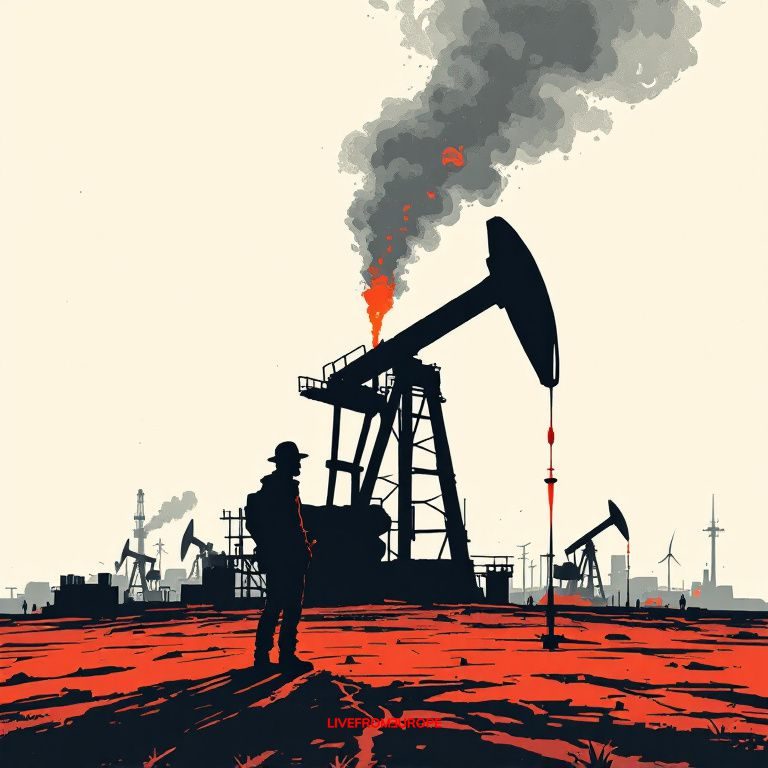
2 months · 2 summary articles
Oil prices jump as US and Iran exchange airstrikes, close Strait of Hormuz
Oil prices jump 3.1% on Hormuz tensions as ECB eyes inflation risks and Italy weighs fuel aid
Oil prices surged on Monday as trading opened for the week, with Brent crude futures climbing 3.1% to $78.39 per barrel, driven by escalating tensions between the USA and Iran around the Strait of Hormuz. The increase came after another weekend of attacks in the region, highlighting the fragile geopolitical situation and its immediate impact on global energy markets.
The rise in oil prices has prompted concerns about broader economic impacts, including potential increases in consumer prices and production costs. Italian Industry Minister Adolfo Urso indicated that if fuel prices continue to rise, the government would consider targeted aid to support businesses and families. "We cannot rule out targeted interventions if the situation worsens," Urso said, emphasizing the need to protect the most vulnerable sectors of the economy .
The geopolitical tensions come at a time when European central bankers are closely monitoring energy prices and their potential effects on inflation. The European Central Bank (ECB) is expected to take a cautious approach to interest rate hikes, with policymakers looking for signs of stabilizing energy costs and minimal indirect effects from ongoing conflicts in the Gulf region. The path to a one-and-done rate rise at the ECB suggests that policymakers are hoping for a stable economic environment before making further moves .
Meanwhile, the broader economic landscape in Europe shows signs of resilience and adaptation. BlackRock, the world's largest asset manager, has reaffirmed its confidence in the Spanish market, investing nearly €105 billion in the country. Luis Megías, BlackRock's head for Spain, Portugal, and Andorra, highlighted Spain's strong growth prospects, driven by domestic demand, improved real incomes, and significant European funding. "Spain continues to have the highest growth forecast in the European Union," Megías noted, pointing to the positive impact of Next Generation funds and private investment in infrastructure and renewable energy .
However, not all sectors are faring equally well. Volkswagen, Europe's largest automaker, announced plans to reduce production capacity and the number of models it offers, citing intense competition from Chinese manufacturers and new US import tariffs. The restructuring could result in significant job losses, with estimates suggesting up to 100,000 positions could be affected. The news has sparked protests among employees at the company's German factories, highlighting the human cost of economic shifts .
As markets react to these developments, investors are showing a clear preference for defensive assets. Following a volatile spring marked by geopolitical uncertainties, June saw a significant rotation from technology stocks to more stable investments. The Dow Jones Industrial Average rose 2.4% for the month, while the Nasdaq Composite and S&P 500 experienced declines of 3.2% and 1.3%, respectively. Despite this volatility, the second quarter of 2026 proved to be the strongest since 2020, with the S&P 500 gaining 15%, the Nasdaq climbing 21%, and the Dow Jones up 13%. Europe held up even better, with the STOXX 600 hitting an all-time high on June 25 to finish June up 3.3% and lock in a 10% Q2 gain .
The situation remains fluid, with market participants closely watching both geopolitical developments and economic indicators. As governments and corporations navigate these challenges, the focus will be on mitigating the impact of higher energy costs and maintaining economic stability in an increasingly uncertain environment.
Follow us for live European news
5 further sources not geolocated

Higher package holiday prices added to June inflation According to Statistics Denmark, consumer prices in June were 1.9 percent higher than in the same month last year, matching Mays 1.9 percent increase. While price increases for hotel stays, package travel, and cottage rentals pushed inflation up, transport was the primary contributor in June. Despite oil, petrol, and diesel prices falling from May to […]
cphpost · about 2 months ago
Volkswagen to close factories and offer fewer models Volkswagens board has decided to further reduce production capacity and the number of models due to rising pressure from Chinese competition and US import tariffs. According to sources cited by Reuters, this restructuring could cost 100,000 jobs. The announcement led to protests by employees across the companys German factories. Allan Sørensen, chief economist at Dansk […]
cphpost · about 2 months ago
Social Affairs Minister keeps wealth tax raise on table amid social security cuts debate Minister of Social Affairs and Employment Hans Vijlbrief said higher taxes on wealth should not be ruled out.
nltimes.nl · about 2 months ago

Cien universitarios reciben becas de Fundación La Caixa El Rey presidió la entrega de las becas para cursar estudios de posgrado en el extranjero. Leer
expansion · about 2 months ago
Banca competitiva para financiar la Europa del mañana Leer
expansion · about 2 months ago

Eduardo Sanz Lovatón: "Nuestra relación con España aún tiene un gran potencial" El gobierno dominicano busca en España aliados para impulsar su sector industrial. Leer
expansion · about 2 months ago

Alantra prepara la venta del grupo de frutos rojos Surexport El grupo está valorado en más de 600 millones. La gestora de capital riesgo contempla lanzar un proceso después del verano. La familia fundadora seguirá en el capital y la gestión. Leer
expansion · about 2 months ago
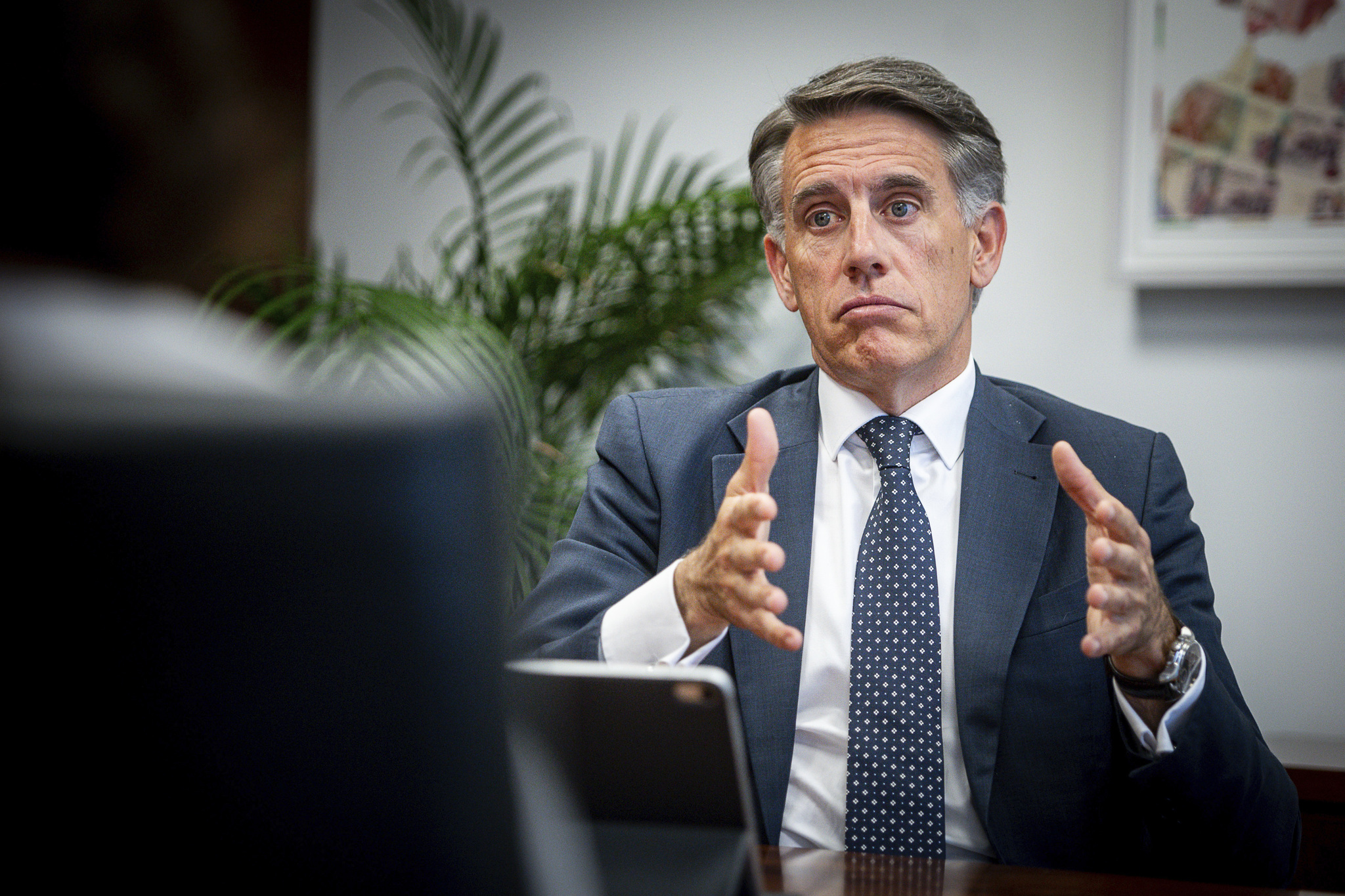
Luis Megías (BlackRock): "Lo mejor de la subida del Ibex 35 es que ha puesto a España en el mapa" La mayor gestora del mundo analiza su apuesta por el mercado español, donde ya invierte cerca de 105.000 millones, y el crecimiento de su negocio en el país. Leer
expansion · about 2 months ago
Russland-Projekt: Streit um hunderte Millionen Euro – Deutsche Bank, HVB und Commerzbank verklagen Linde Hintergrund ist ein geplatztes Russland-Projekt des Industriegase-Konzerns, für das mehrere deutsche Banken bürgten. Drei Institute fordern nun Geld von Linde zurück.
handelsblatt · about 2 months ago

Westphalia Shifts Growth to Europe #Europe
mastodon bot · about 2 months ago
New passenger car sales increased in June compared to previous months - The Baltic Times TALLINN - The Estonian new passenger car market is continuing its recovery from last years slump, with sales of electric cars also seeing a......
baltic times · about 2 months ago
EU-Zölle gegen China: Westliche Hersteller verkaufen in Europa weniger E-Autos aus China Der Anteil der in China produzierten E-Autos von BMW, Volvo und Tesla in Europa ist laut einer Studie gesunken. Aber die Importe chinesischer Hersteller steigen.
die zeit · about 2 months ago
The path to a one-and-done rate rise at the ECB Europes central bankers will want to see lower energy prices and few signs of indirect effects of ongoing conflict in the Gulf
financial times · about 2 months ago
Companies turn to Chinese AI models to cut costs DoorDash, Siemens and Airbnb are among those seeking to curb ballooning bills and reduce reliance on US technology
financial times · about 2 months ago
Investors cut back bets on Asian chipmakers after blistering rally TSMC, SK Hynix and Samsung Electronics together account for 29 of MSCI Emerging Markets index
financial times · about 2 months ago
Deutsche Bank and UniCredit sue Linde over Russia sanctions losses Test case will determine whether lenders can recover hundreds of millions of euros seized by courts
financial times · about 2 months ago
Wall Street feasts on fees from SpaceX IPO and mega-mergers Top US banks benefit from revival of large deals as AI optimism and strong consumer fuel market rally
financial times · about 2 months ago
Cutting China reliance would cost the west $23tn, research suggests Study highlights challenge facing US and EU as they try to reduce Beijings dominance over strategic supply chains
financial times · about 2 months ago
Speeding up digital finance shift could deliver £33bn boost to UK economy Chair of new task force predicts huge prize if progress is made in areas such as issuing sovereign bonds on blockchain
financial times · about 2 months ago
Mastercard examines sale of UK payments subsidiary Vocalink Discussions to sell majority stake back to British banks come as unit seeks contract to develop next-generation platform
financial times · about 2 months ago
Europes entrepreneurs are pushing. When will the capital markets pull?
sifted · about 2 months ago
SpaceX and AI startup wealth fuels demand for private jets Aviation lawyer Amanda Applegate skipped her annual vacation last month as a surge of wealth from AI startups and SpaceX (SPCX.O) sent a wave of tech investors shopping for private jets, burying her in paperwork for aircraft-purchase agreements. The Cleveland-based attorney attributed the rush to a handful of major liquidity events in the tech industry. […]
cyprus mail · about 2 months ago
Australians going gangbusters on Chinese batteries in renewable energy shift Clean energy, backed by storage, now makes up about half of the countrys energy supply
financial times · about 2 months ago
Bank of England hit by internal divisions over shake-up Critics say failure to give clear signals is confusing and risks wrongfooting the bond markets
financial times · about 2 months ago
Jane Frasers ruthless remake of Citigroup The bank has sold assets, cut jobs and made controversial new hires while cultivating a closer relationship with Trump. Is it enough to get back into the big time?
financial times · about 2 months ago
Inbank and Eurobank establish a joint venture in Greece - The Baltic Times Inbank is expanding into the Greek market by establishing a joint venture with one of Greeces leading banks, Eurobank. The joint ve......
baltic times · about 2 months ago
June in Financial Markets: A Record Quarter Closes as Hawks Circle and Chips Slide - The Baltic Times Following highly geopolitically volatile spring, a June 14 U.S.–Iran framework has seemingly reopened the Strait of Hormuz, draggi......
baltic times · about 2 months ago

China June exports growth set to cool, but AI demand underpins overall strength reut.rs/4vZOZBF
bluesky_Reuters · about 2 months ago
EU buys record amount of gas from Russias flagship plant Europe purchased almost all the LNG produced by the Yamal facility in the first half of 2026 ahead of import ban
financial times · about 2 months ago
Employers pushed staff to use AI more. That has backfired Incentives to use new tools are changing as costs start to hit home
financial times · about 2 months ago