 Tuesday, June 23Tuesday, June 23
A gunman inspired by the misogynistic "incel" ideology opened fire in Montreal’s Côte-des-Neiges neighbourhood on Monday, killing three people—including a police officer—before being shot dead by authorities. The 22 June attack, which left two others wounded, has sent shockwaves through Canada, reviving painful memories of similar violence and prompting urgent debate over the threat posed by extremist online subcultures.
Police confirmed that the suspect, dressed in camouflage, targeted the area around the Jewish quarter shortly after 14:00 local time. Among the dead are a 32-year-old constable from the Service de police de la Ville de Montréal and a 45-year-old civilian; the gunman was also killed in the confrontation. Two additional victims remain hospitalised with non-life-threatening injuries. Investigators recovered 124 shell casings and linked the weapon used—a 9mm pistol—to at least two prior unsolved shootings in the province, according to ballistic evidence cited by Greek prosecutors .
A 100-page manifesto left at the scene reveals the attacker’s ideological motivations, which experts describe as a toxic blend of incel rhetoric, far-left slogans, virulent misogyny, racism, and antisemitism. Researchers Marion Jacquet-Vaillant and Nicolas Lebourg, who analysed the document, characterised it as “a manifesto incel mâtiné de mots de gauche,” underscoring the hybrid nature of modern extremist narratives . The text repeatedly rails against feminism, blaming women for his personal and societal failures, while also espousing conspiratorial and hate-filled tropes.
The attack comes amid growing concern in Canada about the radicalisation of men who self-identify with the “involuntary celibate” movement, a loosely organised online community that has inspired multiple fatal attacks worldwide. Authorities have not yet formally classified the incident as terrorism, but the manifesto’s contents and the targeting of a densely populated urban area have intensified scrutiny of far-right and gendered extremism. “It is not the first attack of this kind in Canada,” noted a report by *Der Standard*, pointing to prior cases linked to similar ideologies .
Political leaders and women’s rights groups have condemned the violence, calling for stronger measures to monitor online radicalisation and disrupt extremist networks. Quebec Premier François Legault described the shooting as “a tragedy that shakes us all,” while advocacy organisations urged social media platforms to take more decisive action against content that promotes hatred and violence. Investigators continue to piece together the suspect’s digital footprint, including social media activity and potential connections to international incel forums.
As Montreal mourns, the broader question lingers: how many more manifestos of hate will precede the next act of violence?

Αποκαλυπτική η βαλλιστική για το μακελειό στα Βορίζια: 124 κάλυκες, 13 όπλα και το «ένοχο» 9άρι που συνδέει τρεις υποθέσεις
protothema · about 2 hours ago
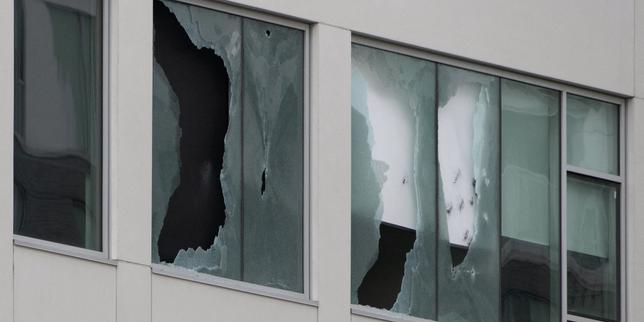
VIDEO Les images de la fusillade de Montréal, le tireur a laissé un manifeste inspiré du courant « incel » La fusillade survenue lundi 22 juin a fait trois morts, dont un policier, un résident et lassaillant. Dans un manifeste dune centaine de pages, le tireur faisait part de sa haine des femmes.
le monde · about 2 hours ago

Nőgyűlölő lehetett a montreali lövöldöző Egy terepszínű ruhát viselő férfi hétfőn tüzet nyitott a montreali zsidó negyedben, a támadás folyamán az elkövetővel együtt hárman vesztették életüket, ketten pedig megsebesültek.
hvg.hu · about 2 hours ago
Matières fécales, dans la mode jusquau cou Les Canadiens Hannah Rose et Steven Raj ont donné un nom répulsif à leur marque pour mieux perturber lindustrie du luxe.
liberation · about 2 hours ago

Terror aus der "Incel"-Szene: Ein Anschlag und sein Manifest wecken in Kanada böse Erinnerungen Drei Menschen sind am Montag in Montréal erschossen worden. Ein Manifest des Täters legt als Motiv unter anderem Hass auf Feminismus nahe. Es ist nicht der erste Anschlag dieser Art in Kanada
der standard · about 2 hours ago

La haine des femmes a encore tué : une fusillade fait trois morts à Montréal Le Québec a vécu 22 juin une tragédie rare : un homme a ouvert le feu dans louest de Montréal, faisant deux morts – dont un seul est confirmé comme étant de son fait – et une blessée, avant dêtre abattu. Le Journal de Montréal rend compte des premiers éléments de lenquête portant sur le manifeste quil a laissé derrière lui, qui laisse penser quil a agi au nom de lidéologie incel.
courrier international · about 2 hours ago
«Cest un manifeste incel mâtiné de mots de gauche» : les écrits de lauteur de lattentat de Montréal Le tueur de lattaque perpétrée lundi 22 juin au Canada, qui avait produit un long manifeste, remet en lumière la menace du terrorisme masculiniste. Les chercheurs Marion Jacquet-Vaillant et Nicolas Lebourg décrivent une vision du monde profondément misogyne, raciste et antisémite.
liberation · about 2 hours ago
Mode aus alter Bettwäsche: Warum sind Vintage-Stoffe so begehrt? [premium] Hochwertige Vintage-Textilien sind eine knapper werdende Ressource, ihr Qualität macht sie umso begehrter – auch bei Kreativen wie Katharina Hajos und Kasa Schild von Laricha.
die presse · about 2 hours ago