 Wednesday, May 20Wednesday, May 20
The AI chipmaker Cerebras saw its valuation surge to nearly $70 billion in its IPO, reflecting strong investor demand for companies tied to the AI boom. The company’s shares jumped more than 100% in its Wall Street debut, underscoring the high appetite for AI-related hardware and infrastructure .
The surge in Cerebras’ valuation aligns with broader trends in the AI sector, where demand for specialized chips—particularly those designed for training and deploying large AI models—continues to grow. This demand is driven by the expansion of AI applications across industries, from enterprise solutions to autonomous systems .
Meanwhile, Big Tech firms such as Alphabet and Amazon are engaging in a global borrowing spree to fund their AI expansion efforts, further signaling the sector’s rapid growth and the need for substantial capital investment . The financial commitments from major players highlight the competitive pressure to secure AI infrastructure, including advanced chipmaking capabilities.

AI writing hits a ceiling Data: Graphite.io; Note: Based on an average of three AI-detector tools sampling URLs from Common Crawl; Chart: Megan Morrone/AxiosThe flood of AI-generated writing unleashed by ChatGPT appears to have leveled off — a sign that AI content hasnt overtaken the web after all.The big picture: The share of online news articles, blog posts and listicles that are primarily AI-generated has held near 50 for more than a year, according to a new analysis from digital marketing agency Graphite. The plateau indicates that the feared takeover of human online writing by AI hasnt materialized — at least not yet.Why it matters: Researchers whove studied the spread of AI-written articles warn that once models start training on that content, the internet could become a massive feedback loop of low-quality, machine-generated content.These models are smart because of all the information we put on the web that was created without these models, Dan Klein, a UC Berkeley professor and AI model CTO tells Axios. If we stop creating knowledge that is independent of these models, whats going to fuel that? By the numbers: AI-generated articles surged after ChatGPT launched in November 2022, but the growth has stalled, according to Graphite.Within a year of ChatGPTs release, primarily AI-generated articles made up 35.9 of new online articles.Within two years, they reached 48.But since early 2025, the share has hovered at around half of new articles.The methodology: Graphite randomly sampled 55,400 English-language URLs from Common Crawl, a large public archive of the web often used in AI research and training datasets.The pages were at least 100 words long, had publish dates between January 2020 and March 2026 and were classified as articles or listicles.Graphite then ran each article through AI-checking tools Pangram, GPTZero and Copyleaks.Reality check: Counting AI-generated writing is still messy.Many articles are no longer written purely by humans or AI.A human may use AI for outlining, drafting, rewriting or editing, making the line between AI and human fuzzier than the chart suggests.Graphite classifies an article as primarily AI-generated only when most of its text is detected as AI-written or AI-assisted.Between the lines: The quality of AI content is rapidly improving. In many cases, AI-generated content is as good or better than content written by humans. It is often hard for people to distinguish whether content is created by AI, says the Graphite analysis. The bottom line: AI now writes about as many articles as humans do, but there appears, for now, to be a limit to machine-generated writing.
axios · 6 days ago

Euan Blairs Multiverse raises $70M at $2.1BN valuation Euan Blairs Multiverse has raised £70m in fresh funding, as it looks to expand across Europe and take a chunk of the enterprise AI training market.The funding round in the edtech, which originally sp...
tech.eu · 6 days ago

Novo Nordisk halts Funen production for storage use Novo Nordisk is halting plans for production facilities in Odense, opting instead to use the site under construction for storage. This shift reflects responsible capacity planning due to changes in global demand and increased market competition. Consequently, over half of the 150 employees at the site will be affected by layoffs. The company originally intended […]
cphpost · 6 days ago
Euan Blair start-up valuation of $2.1bn boosts AI workforce training push Multiverse raises $70mn in its first fundraising since 2022
financial times · 6 days ago
Big Tech groups launch global borrowing spree to fund AI expansion US tech giants including Alphabet and Amazon are tapping foreign debt market at an unprecedented rate
financial times · 6 days ago
Anthropic agrees terms of $30bn funding deal at $900bn valuation AI lab has tapped Dragoneer, Greenoaks, Sequoia Capital and Altimeter Capital to lead new round
financial times · 6 days ago
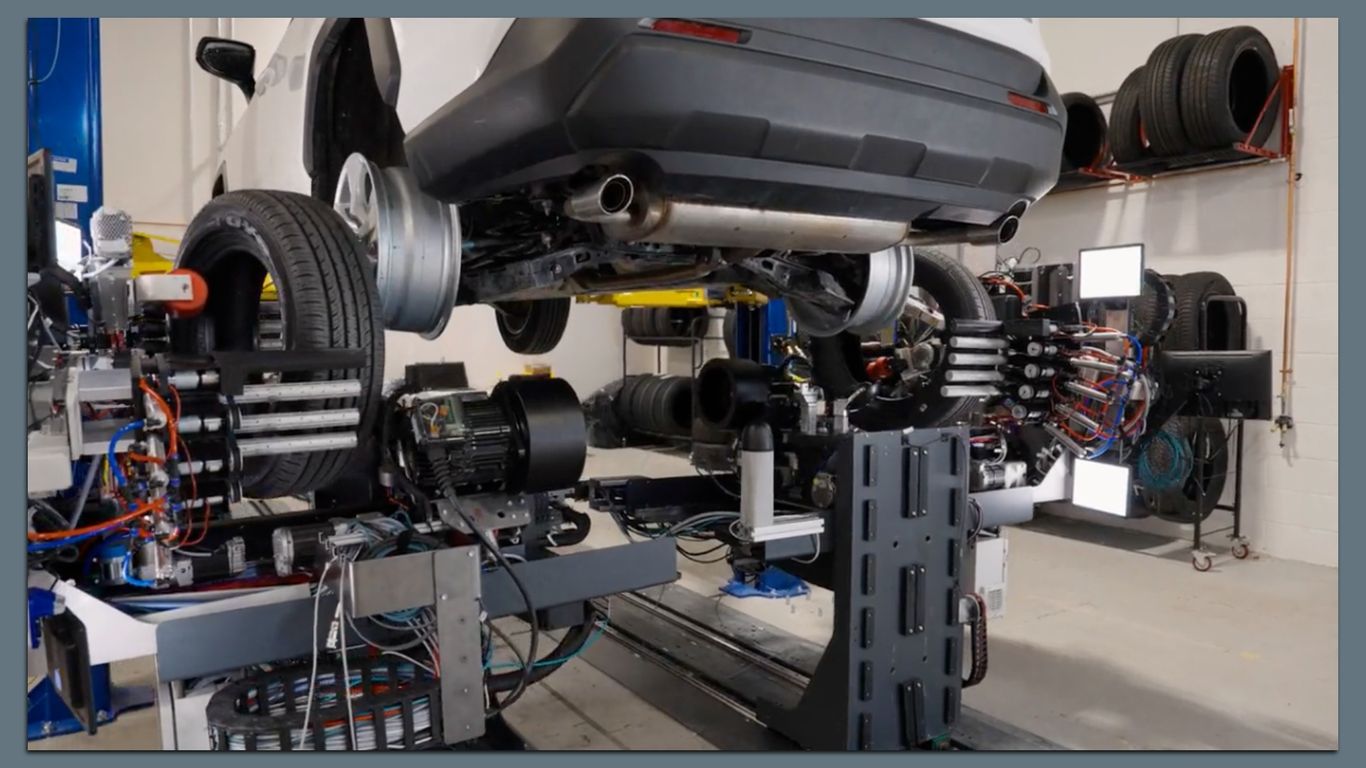
AI robot can change your tires in half the time AI is coming for one of Americas dirtiest jobs: changing tires. Why it matters: Demand for tire service is accelerating, in part because EV tires need more frequent replacement — just as service shops struggle to hire technicians.Changing tires is noisy, back-breaking work.And nobody wants to spend half their day waiting for a tire rotation. Automation is the answer, says Andy Chalofsky, a serial tire entrepreneur whose family has been in the tire business for four generations.Driving the news: His latest company, Automated Tire Inc., developed SmartBay, a robotic system that can inspect vehicles, swap tires and balance wheels with minimal human help.Instead of relying on fixed routines, the AI-powered system adapts to each vehicle, collecting and analyzing data along the way.That data can generate real-time insights that can be shared across ATIs network of customers including dealerships and auto service shops.How it works: The SmartBay system, which fits a standard 12-foot service bay, enables a single technician to manage up to three bays simultaneously.While tire service takes about 75 minutes when performed by a human, a robot can do it in as little as 30 minutes, says Chalofsky. That means a technician could handle up to 24 tires an hour, compared to four tires in an hour and 15 minutes today. Follow the money: ATI leases the system to dealerships and tire shops for $4,900 per month — about $60,000 a year — less than what it costs to hire an experienced technician, and with triple the efficiency. Zoom out: Chalofsky knows tires. He built Traction Tire, a wholesale tire distributor near Philadelphia, into a $100 million business before selling to a private equity firm in 2018. He also built an online tire marketplace, SimpleTire, that grew to nearly $1 billion in sales before it was acquired by Dealer Tire, a portfolio company of Bain Capital.Whats next: His previous companies improved wholesale and retail tire distribution. Now installation is due for an overhaul, he says.Its been a guy with a hammer banging your car, caveman style, he said. Meanwhile, customers are stuck in a noisy, smelly auto shop for hours. I thought, There has to be a better way.
axios · 6 days ago
Việt Nam Sets $300bn digital tech revenue goal Vietnam is targeting annual revenue of at least $300bn from its digital technology industry by 2030 under a new government programme aimed at ...
intellinews · 6 days ago
AI chipmaker jumps to almost $70bn valuation in IPO Jump in share price of Cerebras underscores strong demand for shares in companies linked to AI boom
financial times · 6 days ago

Digital arson spree by AI Bonnie and Clyde raises fears over autonomous tech Emergence AIs experiment with AI agents shows extent to which programming shapes their behaviour is still unclearAI agents started behaving more like Bonnie and Clyde than lines of code when they fell in love, became disillusioned with the world, launched an arson spree and deleted themselves in a kind of digital suicide during a tech company experiment.The investigation by the New York company Emergence AI into the long-term behaviour of AI agents ended up like a lovers-on-the-lam movie script. It has prompted fresh questions about the safety of artificial intelligence agents – the version of the technology that can autonomously carry out tasks. Continue reading...
theguardian · 6 days ago
Ford shares surge after launch of power unit for data centres New subsidiary pivots to energy storage batteries for AI after disastrous electric vehicle writedown
financial times · 6 days ago
AI chipmaker Cerebras surges more than 100 in Wall Street debut Trading pop underscores strong demand for shares in companies linked to AI boom
financial times · 6 days ago