 Sunday, June 28Sunday, June 28
2 days · 3 summary articles
Magnitude-6.1 earthquake strikes northeastern Japan as typhoons batter Pacific coast
Typhoons force more than two million in western Japan to evacuate as earthquake strikes Afghanistan
Over two million under evacuation as typhoons trigger landslide alert in western Japan
A 6.1-magnitude earthquake struck Afghanistan’s Hindu Kush region on Saturday, sending panicked residents into the streets, while twin typhoons forced more than two million people in western Japan to evacuate as landslides and flooding threatened lives. The tremors, felt across Afghanistan and Pakistan, caused no immediate reports of casualties, according to seismological agencies and local authorities.
The quake, with its epicentre near the Hindu Kush range, registered a magnitude of 6.1 at a depth of 201 kilometres, the Euro-Mediterranean Seismological Centre reported . Residents in Kabul and eastern Afghanistan described chaotic scenes as people fled homes, with women and children crying in the streets . The US Geological Survey confirmed the quake’s strength and location .
Meanwhile, Japan faced compounding natural disasters as Typhoons Higos and Mekkhala barrelled toward its western coast, prompting evacuation orders for over two million people. Authorities in Kyoto’s Seika town issued a Level 5 emergency alert—the highest on Japan’s scale—after a landslide struck, with forecasters warning of up to 300 millimetres of additional rainfall . The Japan Meteorological Agency reported no tsunami threat from a separate 6.1-magnitude quake that jolted northeastern Japan early Sunday .
The Philippines also experienced seismic activity, with a 6.5-magnitude quake striking Mindanao at a depth of 52.4 kilometres, though no casualties or damage were immediately reported . The Pacific Ring of Fire’s volatility underscored the global scale of the weekend’s geological unrest.
In Afghanistan, officials have yet to assess the full impact of the Hindu Kush quake, while Japan’s disaster response teams are bracing for further landslides and flooding as the typhoons advance. The twin crises highlight the fragility of infrastructure in disaster-prone regions and the urgent need for coordinated emergency preparedness.
Follow us for live European news
1 further source not geolocated

Over 2 million under evacuation orders as twin typhoons hit Japan More than two million people across western Japan were under evacuation orders Friday as Typhoons Higos and Mekkhala brought heavy rain and landslide risks. Authorities issued a Level 5 emergency alert in Kyotos Seika town after a landslide struck, with up to 300mm more rainfall expected.
yenisafak · about 8 hours ago
Magnitude 6.5 earthquake strikes southern Philippines A magnitude 6.5 earthquake struck Mindanao island near Sarangani, Davao Occidental, at a depth of 52.4 km. No immediate reports of casualties or damage have been received. The Philippines, located on the Pacific Ring of Fire, is prone to frequent seismic activity.
yenisafak · about 8 hours ago
Kraftig jordskjelv i Japan Et jordskjelv med en styrke på 6,1 rammet det nordøstlige Japan tidlig søndag.
aftenposten · about 8 hours ago
Typhoon Mekkhala threatens Japan as Higos weakens, flood risks persist The Japan Meteorological Agency warned Saturday that Typhoon Mekkhala threatens to make landfall on the eastern coast later in the day, forecasting up to 250 millimeters of rain and warning of severe flooding and landslide risks as the nation remains on high alert following Typhoon Higos.
yenisafak · about 9 hours ago
M6.1 quake jolts northeastern Japan; no tsunami warning issued A magnitude-6.1 earthquake rattled northeastern Japan early Sunday, according to the Japan Meteorological Agency, the latest in a series of major temblors hitting the region. No tsunami warning…
japantoday · about 13 hours ago
Strong quake shakes central Japan near Mt Fuji Chief Cabinet Secretary Minoru Kihara said no abnormalities had been detected at nuclear facilities, including Chubu Electric Powers Hamaoka nuclear power plant.
intellinews · about 15 hours ago
2 typhoons pass along Japans Pacific coast; 1 dead in landslide Two typhoons passed along Japans Pacific coast on Saturday, leaving one dead and three injured, the weather agency and local authorities said. Typhoon Higos and Typhoon Mekkhal and…
japantoday · about 16 hours ago
Σεισμός 6,1 Ρίχτερ στο Αφγανιστάν, «κόσμος έτρεχε πανικόβλητος έξω από τα σπίτια, γυναίκες και παιδιά έκλαιγαν», δείτε βίντεο
protothema · about 17 hours ago

20h. Registado um sismo no Afeganistão O abalo foi registado com epicentro na região de Kush, no Afeganistão. Ainda, uma corrente de ar quente vai ficar mesmo por cima do país segundo avança o IPMA.
observador · about 17 hours ago
20h. Portugal vai sentir uma nova onda de calor Uma corrente de ar quente vai ficar mesmo por cima do país segundo avança o IPMA. Ainda, foi registado um sismo no Afeganistão.
observador · about 18 hours ago
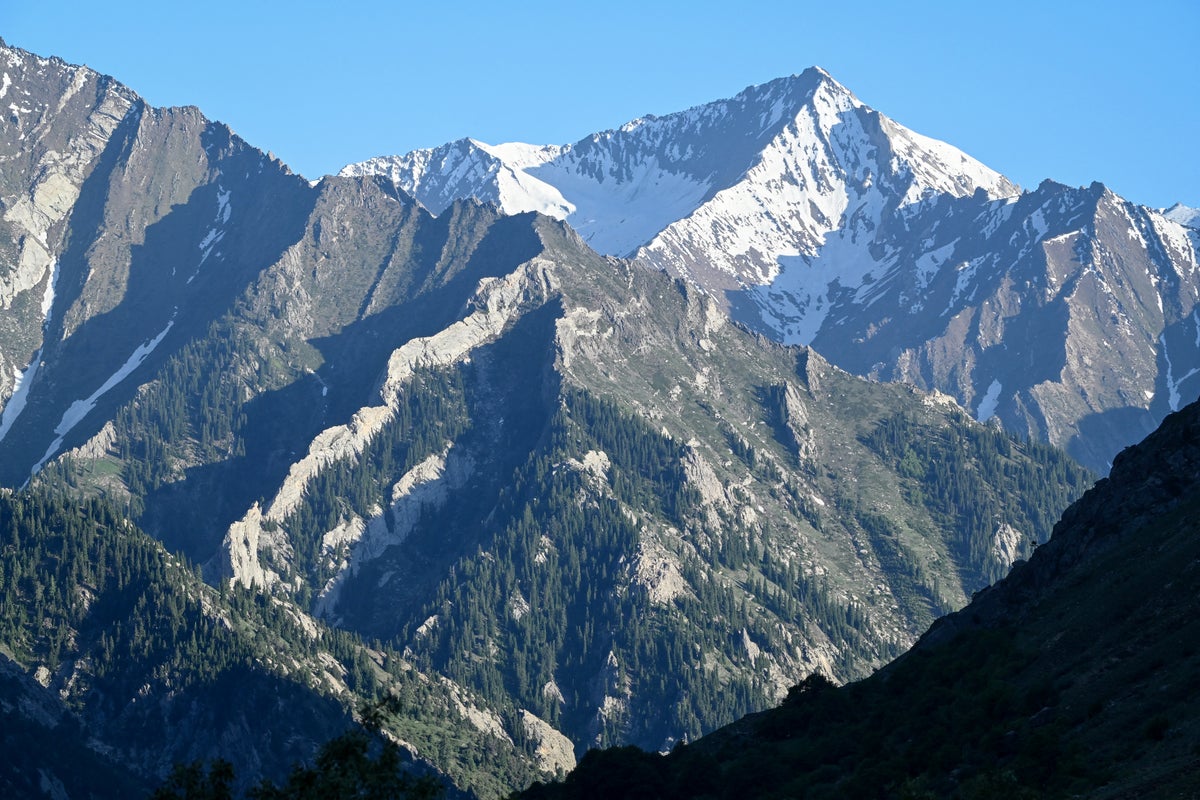
Strong earthquake shakes Pakistan and Afghanistan as residents flee their homes The tremors sent panicked residents across Pakistan fleeing their homes
independent · about 19 hours ago
Tropical Storm Mekkhala leaves Taiwan underwater Tropical Storm Mekkhala has triggered severe flooding across parts of Taiwan.
aljazeera · about 20 hours ago

Sismo de magnitude 6.1 sentido no Afeganistão e Paquistão Foi registado um sismo de magnitude 6.1 com epicentro na região de Kush, no Afeganistão. O abalo foi também sentido no vizinho Paquistão.
observador · about 21 hours ago
Terramoto de magnitude 6,1 atingiu o Afeganistão e o Paquistão Sismo teve hipocentro a 201 quilómetros de profundidade, de acordo com o Centro Sismológico Euro-Mediterrânico e foi sentido em ambos os países. Não há registos imediatos de vítimas mortais.
publico · about 22 hours ago
Beben der Stärke 6,1 erschüttert Afghanistan Bisher gibt es weder Berichte über mögliche Opfer noch über das Ausmaß der Schäden.
die presse · about 22 hours ago
USGS: Beben der Stärke 6,1 in Afghanistan
orf.at · about 22 hours ago

Strong earthquake hits Hindu Kush, shaking Afghanistan and Pakistan reut.rs/4y7Aqxs
bluesky bot · about 22 hours ago
Nach dem Tōhoku-Erdbeben von 2011 rückte Japan ein Stück nach Osten Schuld an dem Phänomen war eine Welle, die am Erdkern abprallte – ein Vorgang, den Seismologen so noch nie dokumentiert haben
der standard · about 23 hours ago

Un séisme de magnitude 6,1 frappe lest de lAfghanistan Un séisme de magnitude 6,1 a frappé lest de lAfghanistan samedi, a indiqué lInstitut détudes géologiques des Etats-Unis (USGS), des journalistes de lAFP à Kaboul y ressentant des secousses. ...
la libre · about 23 hours ago
Jordskjelv på 6,1 i Nord-Pakistan og Afghanistan Et kraftig jordskjelv ble kjent i Kabul, Nord-Pakistan og østlige Afghanistan lørdag ettermiddag.
aftenposten · about 23 hours ago