Loading…
 Saturday, September 26Saturday, September 26
3 months · 3 summary articles
Death toll from Venezuela twin quakes rises to 2,954 as search operations wind down
Death toll from Venezuelas twin quakes rises to nearly three thousand
Death toll from Venezuelas twin earthquakes rises to 2,295 as nation mourns
The death toll from Venezuela’s twin earthquakes has risen to nearly 3,000, as officials confirmed 2,954 fatalities and 16,592 injuries on Saturday, marking the deadliest seismic disaster in the country since 1900. The figures, released by interim President Delcy Rodríguez and National Assembly President Jorge Rodríguez, reflect the devastation wrought by the 7.2 and 7.5-magnitude quakes that struck Yaracuy state on June 24, just 39 seconds apart. The tremors, the strongest in Venezuela in over a century, destroyed 190 buildings and left more than 16,000 people homeless in coastal towns like La Guaira, where families continue to dig through rubble by hand in search of missing relatives.
Rescue operations, now in their second week, have yielded 6,462 survivors, but the window for finding additional victims is rapidly closing. Authorities recorded 942 aftershocks, including a 43-year-old security guard pulled alive from the ruins of a collapsed shopping center in Maiquetía on Thursday—eight days after the initial quake. International teams from 31 countries, including Turkey, Slovakia, and Vietnam, have scaled back their efforts, though some continue to assist in recovery. Turkey’s disaster agency TIKA delivered search equipment on Saturday, with shelter supplies to follow, while Slovakia’s rescue team was honored by Rodríguez for their contributions.
The disaster has exposed systemic weaknesses in Venezuela’s crisis response, with critics arguing the government’s delayed and disjointed relief efforts have compounded the suffering. Foreign Policy noted that the quakes “revealed a hollow state,” highlighting the collapse of infrastructure and the absence of coordinated aid. Meanwhile, the United Nations estimates up to 50,000 people remain missing, though Rodríguez has not confirmed this figure. Health officials warn of looming disease outbreaks and water shortages as displaced families shelter in parks and temporary camps.
The economic fallout is also mounting. Rodríguez announced emergency measures on Saturday to stabilize the country’s finances amid the crisis, though details remain scarce. The International Monetary Fund has pledged funds for reconstruction, but Venezuela’s ongoing political and economic turmoil complicates recovery efforts. In La Guaira, where entire neighborhoods were leveled, volunteers like Francisco Sasia, a 38-year-old interpreter and rescuer, told Agence France-Presse that teams are “still working, still finding bodies” despite dwindling hope. “We still believe we’ll find people alive,” he said. “We won’t give up.”
With the official mourning period extended to seven days, Venezuela faces a long road to recovery. The earthquakes have left scars not only on the landscape but on a nation already grappling with deepening instability. As international aid winds down, the burden shifts to local communities to navigate the wreckage—both literal and political.
Follow us for live European news
4 further sources not geolocated

Naturkatastrophe: Erdbeben in Venezuela: Opferzahl steigt auf fast 3.000 Tote Eineinhalb Wochen nach den schweren Erdbeben werden weiter Leichen aus den Trümmern geborgen. Die Rettungskräfte geben die Suche nach Verschütteten trotz geringer Erfolgsaussichten nicht auf.
handelsblatt · 3 months ago
:format(jpg)/f.elconfidencial.com%2Foriginal%2F405%2F0ec%2Fa3b%2F4050eca3b3cf3e632cf6941e8d2c7ac5.jpg)
Registrado un ligero terremoto en varias localidades de Badajoz El epicentro del temblor se ha situado cerca de Cheles y apenas se ha sentido en Oliva de la Frontera, Valverde de Leganés y Barcarrota
el confidencial · 3 months ago

États-Unis, Mali, Venezuela et Tour de France : les informations de la nuit Les principales actualités de ces dernières heures vues par la presse internationale.
courrier international · 3 months ago
6.1-magnitude earthquake strikes off Japans Okinawa A magnitude 6.1 earthquake struck off Japans southwestern islands near Okinawa on Friday, with no immediate reports of casualties, damage, or tsunami threat. The quake occurred at a shallow depth of 10 kilometres, about 136 kilometres north-northeast of Hirara.
yenisafak · 3 months ago
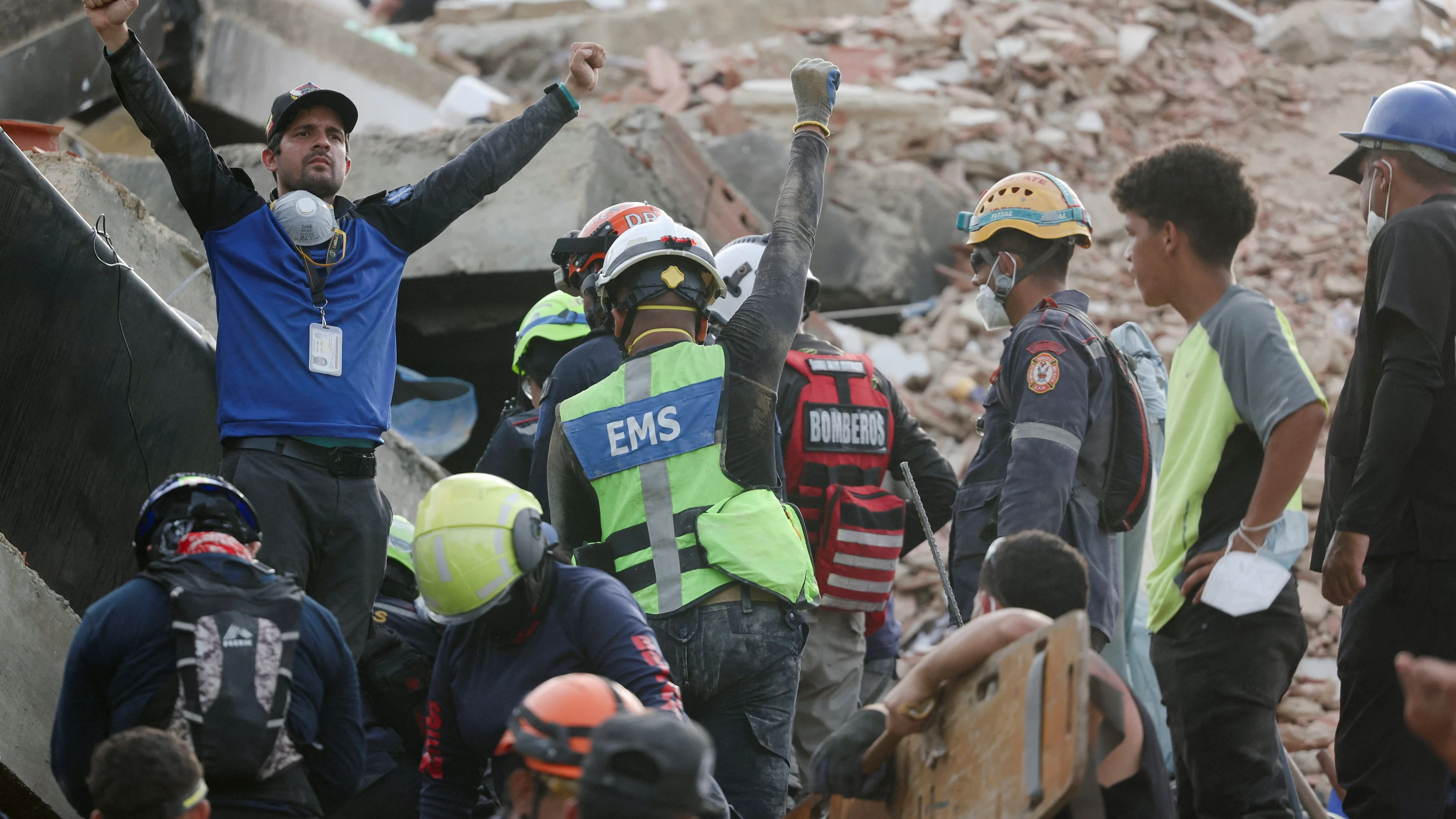
Erdbeben in Venezuela: Totenzahl in Venezuela steigt auf fast 3.000 Eineinhalb Wochen nach den schweren Erdbeben werden immer noch Leichen aus den Trümmern geborgen. Die Rettungskräfte geben die Suche nach Verschütteten trotz geringer Erfolgsaussichten nicht auf.
faz · 3 months ago

Venezuela anuncia medidas económicas após sismos A presidente interina do país, Delcy Rodríguez
observador · 3 months ago

Detectado un seísmo de magnitud 2,7 en la costa del Tarragona que no llegó a ser percibido El terremoto se registró de madrugada, con epicentro mar adentro y a solo cinco kilómetros de profundidad
la vanguardia · 3 months ago
Venezuela earthquake death toll rises to 2,645 The death toll from the twin earthquakes that struck northern Venezuela last month has risen to 2,645, with 12,666 injured. Over 3,300 international rescue workers have been deployed, and more than 890 aftershocks have been recorded.
yenisafak · 3 months ago
Do Česka se vrátili záchranáři z USAR týmu, který pomáhal po zemětřesení ve Venezuele Do Česka se v neděli ráno vrátil USAR tým, který pomáhal s prohledáváním sutin po zemětřesení ve Venezuele. Na palubě armádního Airbusu A319 bylo 57 záchranářů a osm služebních psů. Zbylá část záchranářů v neděli přiletí s většinou materiálu později.
irozhlas.cz · 3 months ago
Σχεδόν 3.000 νεκροί από τον διπλό σεισμό στη Βενεζουέλα, σταματούν οι έρευνες ξένων ομάδων για επιζώντες, δείτε βίντεο
protothema · 3 months ago
6.2 magnitude quake strikes off Indonesias North Maluku Indonesian authorities said a 6.2 magnitude earthquake struck off North Maluku province on Friday morning, noting that no tsunami warning was issued despite the tremors significant depth and that initial assessments indicated no immediate casualties or infrastructure damage.
yenisafak · 3 months ago
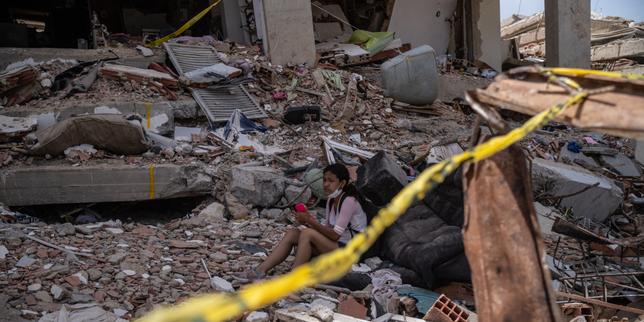
Séisme au Venezuela : le bilan salourdit à près de 3 000 morts Au moins 2 954 personnes ont été tuées et 16 592 blessées dans le double tremblement de terre de 7,5 sur léchelle de Richter, le plus puissant dans le pays depuis 1900.
le monde · 3 months ago
Death toll from Venezuela twin earthquakes approaches 3,000 as rescue window closes The death toll from the twin earthquakes that struck northern Venezuela has reached nearly 3,000, according to a new preliminary official report released on Saturday. Concurrently, international search and rescue teams are gradually scaling down their operations to locate survivors in the debris of collapsed buildings. La Guaira, located 40 kilometres from Caracas, sustained the […]
in-cyprus · 3 months ago
Počet obetí ničivých zemetrasení vo Venezuele dosiahol takmer 3000. Prezidentka ocenila aj Slovákov Bilancia katastrofálneho zemetrasenia vo Venezuele dramaticky rastie, úrady hlásia tisíce mŕtvych aj zranených a desiatky tisíc poškodených budov.
aktuality.sk · 3 months ago
Ziekte-uitbraken dreigen na aardbeving Venezuela, dodental stijgt naar 3.000 Het dodental van de aardbeving in Venezuela is zaterdag verder opgelopen tot bijna 3.000. De zoek- en reddingsacties voor levende mensen onder het puin zijn bijna afgelopen. Daarmee ontstaan nieuwe zorgen over ziekte-uitbraken en watertekorten.
nu.nl · 3 months ago
Türkiye delivers rescue equipment to quake-hit Venezuela Culture and Tourism Minister Mehmet Nuri Ersoy said search and rescue equipment has been delivered to Venezuelan authorities through TIKA for areas affected by the June 24 earthquakes that claimed over 2,600 lives, adding that shelter supplies will follow in the coming days.
yenisafak · 3 months ago
Au Venezuela, le bilan du double séisme monte à près de 3 000 morts Au moins 2 954 personnes ont été tuées et 16 592 blessées dans les tremblements de terre du 24 juin, selon les derniers chiffres avancés par le gouvernement intérimaire.
liberation · 3 months ago

6h. Venezuela. Portugal cumpre dia de luto nacional Balanço mais recente das autoridades venezuelanas aponta para 2.954 vítimas mortais. Entre elas, 93 são portugueses ou lusodescendentes. Ainda, a atualização dos incêndios em Portugal.
observador · 3 months ago
La solidarietà è immediata davanti alle tragedie naturali, come in Venezuela: perché non si fa lo stesso a Gaza? di Rosamaria Fumarola Il Venezuela vive tempi difficili e non mi riferisco solo al terremoto che lo ha duramente colpito pochi giorni fa. A proposito di questultimo, sono stata molto colpita dalla solidarietà dimostrata nellimmediatezza degli accadimenti da tutti, affinché sostegno concreto fosse assicurato subito alla popolazione. A parte la considerazione banale che una crisi […] Larticolo La solidarietà è immediata davanti alle tragedie naturali, come in Venezuela: perché non si fa lo stesso a Gaza? proviene da Il Fatto Quotidiano.
il fatto quotidiano · 3 months ago
Venezuela maavärina ohvrite arv tõusis ametlikel andmetel pea 3000-ni Venezuela laastavas kaksikmaavärinas hukkunute arv on laupäeval avaldatud ametlike andmete kohaselt tõusnud ligi 3000-ni.
postimees · 3 months ago
Erdbeben in Venezuela: Regierung in Venezuela meldet fast 3.000 Tote nach Erdbeben Venezuelas Interimspräsidentin Delcy Rodríguez hat die offizielle Zahl der Toten nach den Beben erneut korrigiert. Der IWF will Gelder für den Wiederaufbau freigeben.
die zeit · 3 months ago

Número de mortos no sismo sobe para 2.954 Os dois sismos de magnitude elevada registaram-se no dia 24 de junho. Houve pelo menos 192 réplicas
observador · 3 months ago
Potresni sunek v bližini Postojne Ob 21. 49 so seizmografi državne mreže potresnih opazovalnic zaznali potres z magnitudo 2,3 v bližini Postojne.
rtv slovenia · 3 months ago

Death toll from Venezuela quakes rises to 2,954 reut.rs/3T1HbAC
bluesky_Reuters · 3 months ago
Venezuela: Über 2.900 Todesopfer durch Beben
orf.at · 3 months ago

Sobe para 93 número de portugueses mortos no sismo Dois sismos abalaram o país no passado dia 24 de junho
observador · 3 months ago

Venezuela quake death toll nears 3,000
news.yahoo.com · 3 months ago

Venezuelans in Ireland: Every day were receiving messages that more people havent been found Dublin community recalls horror of finding out about devastating earthquakes last month
irish times · 3 months ago

As Venezuela death toll rises, survivor recounts days beneath the rubble
news.yahoo.com · 3 months ago
Número de mortes dos sismos na Venezuela sobe para 2954 Balanço oficial aponta ainda 16.592 feridos e 16.309 desalojados. Em La Guaira, famílias escavam os escombros à mão, sem maquinaria, à procura de parentes soterrados.
publico · 3 months ago