 Saturday, June 20Saturday, June 20
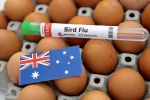
Australia on Saturday confirmed its first mainland case of the highly pathogenic H5N1 bird flu strain after a migratory seabird tested positive near Esperance, in Western Australia. The discovery, announced by Agriculture Minister Julie Collins, marks the first detection of the virus on the Australian continent, which had previously remained free of the disease.
The infected bird, identified as a brown skua, was found on a remote beach south of Perth and underwent testing that confirmed the presence of the lethal H5N1 subtype. “This is a concerning development, though not unexpected given the global spread of this virus,” Collins said in a statement released on Saturday. The case follows earlier detections in Antarctica and surrounding islands, raising concerns about the potential for further spread via migratory routes.
Prime Minister Anthony Albanese described the detection as “concerning” and pledged immediate government action to contain the outbreak. “We are working closely with state and territory authorities, as well as wildlife and agricultural agencies, to assess the situation and implement appropriate biosecurity measures,” Albanese said, echoing statements made earlier in the day. Authorities have not yet confirmed whether the virus has spread to domestic poultry or wild bird populations beyond the initial case.
The H5N1 strain, known for its high mortality rate in birds and potential to infect mammals, has caused widespread outbreaks across Europe, Asia, and the Americas in recent years. While human infections remain rare, public health experts warn of the risk of spillover events, particularly in communities with close contact to infected animals. Australia’s Chief Veterinary Officer has urged poultry farmers and bird owners to enhance biosecurity and report any signs of illness immediately.
In response, Western Australia’s Department of Primary Industries and Regional Development has established a control zone around the detection site and is conducting surveillance of wild and domestic birds within a 10-kilometre radius. The department confirmed that no commercial poultry farms are located within the restricted area. Meanwhile, national biosecurity protocols have been elevated to “emergency response” level, with increased screening at airports and ports.
Global health and agricultural bodies, including the World Organisation for Animal Health (WOAH), have been notified. “This underscores the need for international cooperation in monitoring and responding to zoonotic diseases,” a WOAH spokesperson said. Australia’s status as one of the last regions free of H5N1 had been a point of pride for its agricultural sector, which exports billions of dollars’ worth of poultry and egg products annually.
As the situation develops, authorities are urging the public to avoid contact with sick or dead wild birds and to report sightings to local wildlife agencies. The government has also reiterated that the risk to human health is currently low, but remains under close watch.
3 further sources not geolocated

Foot-and-mouth situation stabilising, no new cases detected, vet chief says The foot-and-mouth disease situation in Cyprus is stabilising and no new positive cases have emerged from checks carried out so far, Cyprus Veterinary Association president Demetris Epaminondas said on Saturday. All samples taken from Limassol and the most recent samples from Nicosia tested negative, Epaminondas said. A countrywide surveillance campaign is now set to begin […]
in-cyprus · about 3 hours ago
FMD situation stable, says veterinary association The situation regarding the outbreak of the foot and mouth disease (FMD) remains stable, with vaccinations ongoing and no new cases detected, veterinary association chairman Demetris Epaminondas said on Saturday. All samples taken from Limassol and the most recent ones from Nicosia were negative, he said. Epaminondas announced that an island-wide surveillance campaign would be […]
cyprus mail · about 3 hours ago
Η Αυστραλία επιβεβαίωσε το πρώτο της κρούσμα γρίπης των πτηνών H5N1 Εξετάσεις που έγιναν επιβεβαίωσαν ότι ένα θαλασσοπούλι, ένα καφέ σκούα, που βρέθηκε ενώ νοσούσε κοντά στην Έσπερανς, πόλη που βρίσκεται περίπου 570 χιλιόμετρα νοτιοδυτικά της Περθ, πρωτεύουσας της Δυτικής Αυστραλίας, έφερε το θανατηφόρο στέλεχος του ιού
protothema · about 3 hours ago

Australia detects first case of contagious H5 bird flu Australian prime minister Anthony Albanese said the detection of the case was concerning.
thejournal · about 3 hours ago
Banned rat and mouse poison easily available online in Netherlands Private individuals can easily buy mouse and rat poison online and have it delivered to their homes in the Netherlands, even though they arent allowed to use these poisons, BNR
nltimes.nl · about 3 hours ago
Australia pledges action on H5N1 after bird flu case confirmed Australia confirmed its first mainland H5N1 bird flu case in a seabird near Esperance, WA.
aljazeera · about 3 hours ago
Australia a confirmat primul caz al tulpinii H5 a gripei aviare. Virusul a fost descoperit la o pasăre migratoare Un prim caz al tulpinii contagioase H5 a gripei aviare a fost detectat pe continentul australian, care fusese anterior ferit de boală, a anunţat sâmbătă ministrul Agriculturii, Julie Collins.
digi24 · about 3 hours ago
Austrália potvrdila prvý prípad nebezpečnej vtáčej chrípky H5N1 na pevninskej časti svojho územia Vysoko nákazlivý a agresívny vírus vtáčej chrípky typu H5N1 bol po prvýkrát oficiálne potvrdený na pevninskej časti Austrálie. Podľa austrálskej ministerky poľnohospodárstva Julie Collinsovej bol test pozitívny u pomorníka antarktického, ktorého našli na odľahlej pláži južne od mesta Perth.
aktuality.sk · about 3 hours ago
Ravit | Ravihevosen näytteestä löytyi kiellettyä ainetta, suomalaisvalmentaja sanoo että tieto tuli järkytyksenä Ystävien tuki sai Jukka Hakkaraisen jatkamaan.
helsingin sanomat · about 3 hours ago

Doù vient lobsession des Allemands pour leau gazeuse ? Outre-Rhin, leau pétillante est la norme, leau plate lexception. Dailleurs, si vous demandez un verre deau à un Allemand, ce quil vous donnera contiendra probablement du gaz carbonique. Cela sexplique par des raisons historiques et culturelles, analyse le chercheur en sciences sociales Gunther Hirschfelder dans les pages du Süddeutsche Zeitung Magazin. Dans la République fédérale, leau gazeuse est depuis longtemps associée à la pureté.
courrier international · about 3 hours ago
Food Safety Agency of BiH: Condition Good, but Risk Must Be Reduced to a Minimum Sanin Tanković, the Director of the Food Safety Agency of Bosnia and Herzegovina, stated that the state of food safety in Bosnia and Herzegovina is generally good, but that risk can never be completely eliminated and must be reduced to the lowest possible level so as not to jeopardize citizens health. Tanković made this statement […] The post Food Safety Agency of BiH: Condition Good, but Risk Must Be Reduced to a Minimum appeared first on Sarajevo Times.
sarajevo times · about 3 hours ago
Mees, kes ujuda ei osanud, aerutas ometi kanuuga Saksamaalt Austraaliasse 1939. aasta septembris jõudis süstaga mees Austraalias Torrese väinas asuva Thursday saare randa. Tema veidi räsitud välimusel oli hea põhjus – reis oli alanud seitse aastat ja neli kuud tagasi teisel pool maakera, Saksamaal.
postimees · about 3 hours ago
Bacterii periculoase descoperite pe o plajă din Bulgaria frecventată de români Autoritățile sanitare din Bulgaria au interzis temporar înotul pe una dintre plajele din Varna, stațiune preferată de mulți turiști români, după ce analizele de laborator au indicat prezența unor bacterii periculoase în apa mării.
adevarul · about 3 hours ago
Duitse politie stopt Nederlandse automobilist met zelfgemaakt zwaailicht De Duitse politie heeft vrijdagavond een 21-jarige Nederlander staande gehouden bij de plaats Bad Camberg, omdat hij met zelfgemaakte zwaailichten rondreed. Hij werd door andere weggebruikers gespot terwijl hij met zwaailichten over de snelweg reed.
nu.nl · about 3 hours ago
Behörden in Australien melden ersten Vogelgrippe-Fall auf Festland Die Krankheit wurde bei einem Zugvogel im Westen des Landes festgestellt. Dies sei zwar "enttäuschend", komme aber nicht unerwartet, so die Landwirtschaftsministerin
der standard · about 3 hours ago