Loading…
 Saturday, September 26Saturday, September 26
3 months · 4 summary articles
President Rodrigo Paz of Bolivia declared a nationwide state of emergency on Saturday, deploying the military to clear road blockades that have paralysed the country for 50 days and left at least 14 people dead. The move grants the armed forces sweeping powers to restore public order, hours after Paz reached a tentative agreement with the Central Bolivian Workers’ Union (COB) to end the protests that have choked supply lines to La Paz and other cities.
The crisis began in early May after Paz’s government scrapped fuel subsidies, triggering nationwide demonstrations led by farmers, transport workers and supporters of former president Evo Morales. Blockades on key highways have cut off food, medicine and fuel deliveries, pushing inflation higher and shuttering businesses. The COB and government announced a deal on Friday night to lift the blockades in exchange for wage protections and social guarantees, yet Morales-aligned groups vowed to continue protests, arguing the concessions fall short.
Under the emergency decree, the military is authorised to remove barricades, enforce curfews and detain organisers, effectively suspending civil liberties across all nine departments. Defence minister Celso Torrico confirmed troops are already patrolling highways in Santa Cruz and Cochabamba, the epicentres of the unrest. “The priority is to reopen roads and prevent further economic collapse,” Torrico told reporters in La Paz.
Left-wing legislators condemned the measure as an authoritarian overreach. “Declaring war on your own people will not solve the fuel crisis or the lack of jobs,” said opposition senator Leonilda Zurita. Rights groups report at least 14 fatalities since mid-May, including three soldiers killed in clashes near Yunguyo. The government has not released an official toll.
International observers warn the emergency risks deepening divisions. The United Nations human rights office urged Paz to ensure military operations comply with international law, while the Organisation of American States called for dialogue. Bolivia’s Catholic bishops issued a statement urging both sides to avoid further bloodshed.
With the decree in force until at least 20 July, analysts say Paz faces a stark choice: suppress dissent and risk prolonged unrest, or negotiate a broader package that addresses the structural causes of the crisis. The COB has called for a national summit next week to finalise the agreement, but Morales’ Movement for Socialism party has rejected participation unless Paz resigns. The coming days will determine whether the military intervention restores order or entrenches Bolivia’s deepest political and economic turmoil in a decade.
Follow us for live European news
3 further sources not geolocated

Militärblockade: Boliviens Präsident verhängt Ausnahmezustand Seit Wochen protestieren Menschen in Bolivien gegen die Regierung. Nach 50 Tagen Blockaden und wohl mindestens 14 Toten greift Präsident Paz zu drastischen Mitteln.
handelsblatt · 3 months ago
Protest în Piaţa Victoriei: „România e sub asediu. Manifestanții au scandat împotriva preşedintelui Nicuşor Dan Câteva mii de persoane au participat, vineri seară, în Piaţa Victoriei, la o manifestaţie anunţată de mai multe asociaţii neguvernamentale şi intitulată „E nevoie să apărăm democraţia. Manifestanţii au spus că vor justiţie şi nu corupţie şi că „România e sub asediu. Jandarmeria i-a îndemnat pe participanţi să respecte indicaţiile forţelor de ordine, să se dezică de orice persoane care ar putea încălca legea sau care ar putea îndemna la încălcări ale acesteia şi să le semnaleze de îndată către forţele de ordine prezente.
digi24 · 3 months ago
Bolivijska vlada podpisala sporazum s sindikati. Predsednik razglasil izredno stanje. Bolivijski predsednik Rodrigo Paz je po 50 dneh protivladnih protestov, ki so ohromili državo, razglasil izredno stanje v državi. Le nekaj ur pred tem je z glavno sindikalno organizacijo v Boliviji sklenil sporazum, da bi "umiril napetosti".
rtv slovenia · 3 months ago

Presidente da Bolívia decreta "estado de emergência" O anúncio da medida ocorreu horas depois de o executivo chegar a um acordo com a Central Operária Boliviana (COB) para pôr fim às mobilizações que se iniciaram há 50 dias.
observador · 3 months ago
Starea de urgență, declarată într-o țară sud-americană cu circulația paralizată de 50 de zile. Președintele pregătește intervenția armatei Criza din Bolivia s-a agravat sâmbătă, când președintele Rodrigo Paz a declarat starea de urgență, ceea ce permite mobilizarea armatei pentru a elimina blocajele rutiere și a restabili ordinea, după ce protestele au paralizat economia în ultimele 50 de zile, transmite Reuters. Declararea stării de urgență îi oferă lui Paz instrumente constituționale mai ample pentru …
hotnews.ro · 3 months ago
Massenproteste in Bolivien: Präsident Rodrigo Paz verhängt landesweiten Ausnahmezustand Der rechte Präsident will wochenlangen Protest durch das Militär beenden. Es soll Straßenblockaden abräumen. Linke Demonstrant:innen fordern den Rücktritt von Paz. mehr...
taz.de · 3 months ago
Stare de urgență în Bolivia după săptămâni de blocaje: președintele Rodrigo Paz trimite armata pe străzi Președintele bolivian Rodrigo Paz a anunțat, sâmbătă, impunerea stării de urgență în Bolivia „pentru a elibera drumurile țării, după șapte săptămâni de proteste și blocaje rutiere din partea sectoarelor agricultorilor și a celor având legătură cu fostul președinte Evo Morales, care îi cer demisia.
digi24 · 3 months ago
Prezident Rodrigo Paz vyhlásil v Bolívii výnimočný stav: Krajinu paralyzovali šesťtýždňové protesty Bolívia prechádza najťažšou politickou a hospodárskou skúškou za posledné desaťročia. Prezident Rodrigo Paz reagoval na šesť týždňov trvajúce nepokoje nekompromisným krokom a v sobotu vyhlásil výnimočný stav na celom území krajiny.
aktuality.sk · 3 months ago
Bolivia declares state of emergency, escalating a 50-day blockade crisis Bolivias President Rodrigo Paz has declared a state of emergency, escalating a fifty-day blockade crisis that has ground the countrys economy to a halt. The move clears the way for military deployment nationwide. It comes hours after Paz struck a deal with the countrys main trade union federation to end protests that triggered shortages of food, medicine and fuel across the capital. Story by Charlotte Lam.
france24 · 3 months ago
Boliivia president kuulutas välja eriolukorra Boliivia president Rodrigo Paz kuulutas täna välja eriolukorra, mis võimaldab relvajõudude laialdasemat kasutamist protestijate rajatud teetõkete eemaldamiseks ja avaliku korra taastamiseks. Juba ligi 50 päeva kestnud meeleavaldused on halvanud riigi majandust.
postimees · 3 months ago
Bolivias president utlyser nödläge efter veckor av protester Bolivias president Rodrigo Paz utlyser nödläge på lördagen, som ett sätt att återställa ordningen efter veckor av protester och vägblockader i landet.
expressen · 3 months ago

Paz decreta el estado de excepción en Bolivia tras seis semanas de protestas El presidente boliviano ha ordenado a la Policía y a las Fuerzas Armadas restablecer la libre circulación, recuperar el control de las carreteras y garantizar la seguridad de la población
la vanguardia · 3 months ago

Dans une Bolivie en proie aux blocages, la colère et la frustration nourrissent un rejet de la démocratie Après plus dun mois de blocage du pays par des organisations sociales qui exigent la démission du président de centre droit, Rodrigo Paz, de plus en plus de Boliviens demandent de la fermeté, voire un système autoritaire qui ramène lordre et la paix publique, raconte ce chroniqueur du média libéral Brújula Digital, qui craint que la crise ne dérape.
courrier international · 3 months ago
Transféré dans un autre hôpital, le chef Raoni dans un état «grave mais stable» Le célèbre cacique, connu pour sa lutte pour la défense de la forêt amazonienne, suit désormais un traitement spécialisé. Agé de 94 ans, il avait été placé en soins intensifs en fin de semaine dernière.
liberation · 3 months ago
En Bolivie, le président met le pays sous cloche après six semaines de blocages routiers Le gouvernement et le principal syndicat de Bolivie ont signé un accord. Dautres organisations veulent durcir le mouvement contre labsence de réponses à la crise économique.
liberation · 3 months ago
Marine von El Salvador beschlagnahmt über sechs Tonnen Kokain Die Beschlagnahmung stelle laut Präsident Nayib Bukele einen „nationalen Rekord auf. Das beschlagnahmte Kokain sei rund 167 Millionen Dollar (145 Millionen Euro) wert.
die presse · 3 months ago
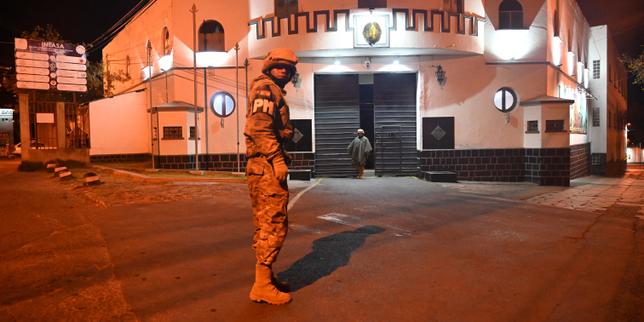
Bolivie : le président, Rodrigo Paz, décrète létat dexception après six semaines de contestation Cette décision survient quelques heures seulement après la signature dun accord avec la principale centrale syndicale du pays, que certains secteurs mobilisés rejettent.
le monde · 3 months ago
Militärblockade: Boliviens Präsident verhängt Ausnahmezustand Nach 50 Tagen Blockaden und mindestens 14 Toten greift Präsident Paz zu drastischen Mitteln – trotz Einigung mit Gewerkschaften halten Morales-nahe Gruppen ihre Proteste aufrecht.
handelsblatt · 3 months ago

Bolivias president declares state of emergency over blockade crisis
news.yahoo.com · 3 months ago
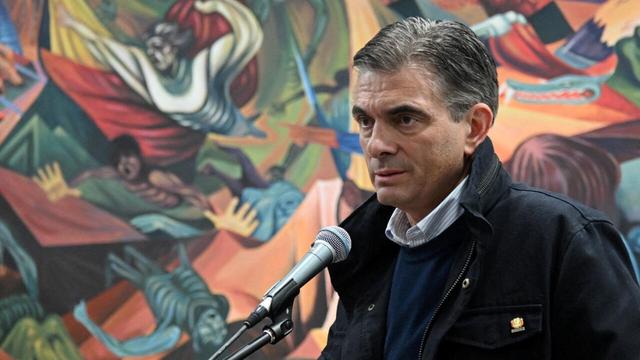
⚡ NEWSBolivia declares state of emergency over anti-government blockadesBolivian President Rodrigo Paz declared a state of emergency, granting military powers to clear road blockades. The move follows nearly two months of protests that have paralysed the economy and fueled demands for his resignation.📰 #GeoWire
mastodon bot · 3 months ago