 Monday, May 18Monday, May 18
Europe’s reliance on liquefied natural gas (LNG) has shifted significantly toward the U.S., with nearly two-thirds of the continent’s LNG imports expected to come from American suppliers in 2026. This marks a sharp increase from pre-war levels, as the U.S. accounted for 57% of Europe’s LNG imports in 2025, according to a report by the Institute for Energy Economics and Financial Analysis (IEEFA) . Despite this shift, the EU’s imports of Russian LNG have surged to their highest levels since early 2022, raising concerns about continued energy dependencies .
The global energy shock, exacerbated by the conflict in the Middle East, has heightened inflation risks in the eurozone, according to the European Central Bank’s chief economist. The widespread nature of the energy price surge may lead to slower economic growth and persistently higher inflation, complicating monetary policy responses . In the U.S., wholesale inflation has surged to 6%—the fastest rise since Russia’s invasion of Ukraine—driven by soaring fuel and freight costs linked to the Iran war. Producer prices rose 1.4% in April alone, with core inflation (excluding food, energy, and trade services) reaching 4.4% over the past year, signaling broad-based price pressures . The Federal Reserve’s ability to cut interest rates this year has become increasingly unlikely, with some policymakers even warning of potential rate hikes to curb inflation .
In Croatia, inflation has become a politically charged issue, with public frustration growing over rising costs despite official claims of economic growth. The disconnect between economic data and lived experience has fueled dissatisfaction, turning inflation into a major political challenge . Meanwhile, Europe’s energy transition faces hurdles due to its dependence on China for power storage technology, with ministers acknowledging the need to address infrastructure gaps to avoid wasting clean energy .

Cuba has run out of diesel and fuel oil, energy minister says, as US blockade pushes island to brink Minister Vicente de la O Levy says Cuba is open to anyone that wants to sell us fuel as rolling power blackouts increaseCuba has completely run out of diesel and fuel oil, the countrys energy minister said on Wednesday, as Havana faces its worst rolling blackouts in decades amid a US blockade that has strangled the island of fuel.We have absolutely no fuel (oil), and absolutely no diesel, the energy minister, Vicente de la O Levy, said on state media, adding that the national grid was in a critical state. We have no reserves. Fuel oil is a product derived from crude oil distillation used to generate heat or power. Continue reading...
theguardian · 4 days ago
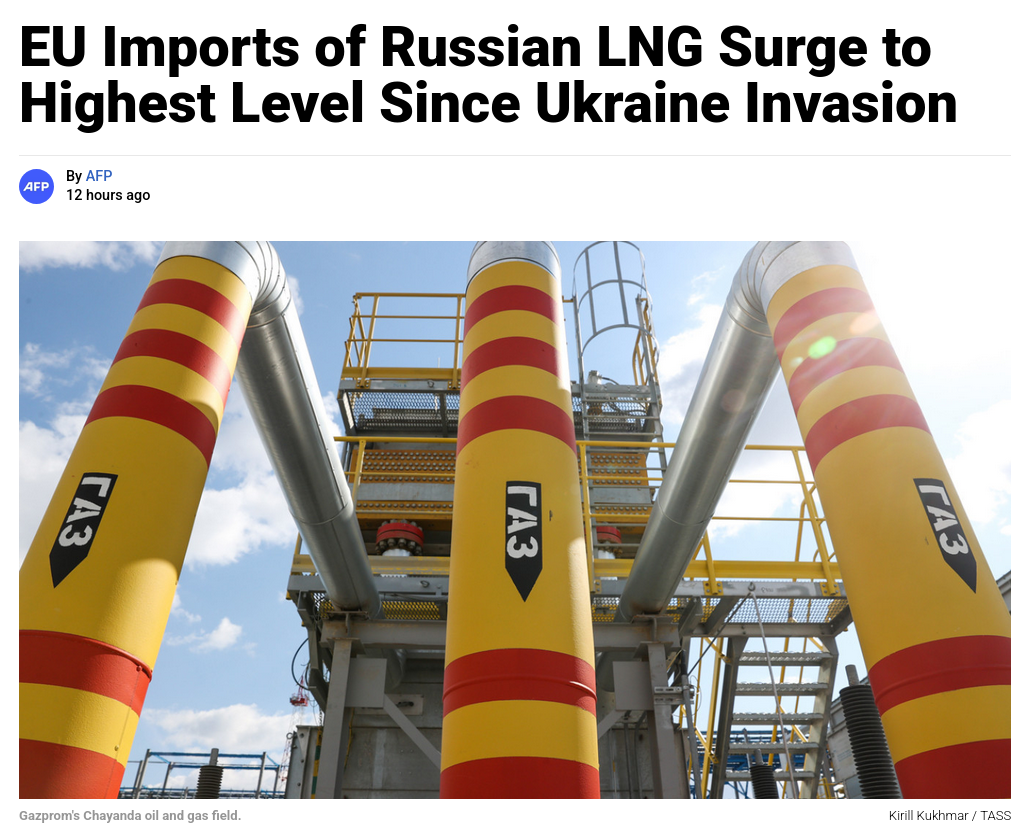
The European Unions imports of Russian liquefied natural gas climbed to their highest levels since early 2022 in the first quarter of this year, according to a report by the Institute for Energy Economics and Financial Analysis (IEEFA). #Russia #EU
mastodon bot · 4 days ago

Price shocks from the Iran war power solar sales in energy-hungry Asia Soaring costs for fuel due to the Iran war are leading consumers in hard-hit Asia toward rooftop solar power, a likely windfall for China as the worlds largest provider of solar technology. FRANCE 24s Sharon Gaffney speaks with Maria-Eugenia Sanin, Economics Professor at Université Paris-Est Créteil, about reliance on China for renewables. She says that countries dont need to be independent in the whole value chain.
france24 · 4 days ago
Croatias Housing Market Splits into Two Realities May the 14th, 2026 – Croatias housing market has been a burning topic for some time now, and it seems it has well and truly split into two parallel realities. A very clear pattern has been emerging over the last few years. Croatias housing market exists in two realities, one involves coastal properties becoming increasingly ... Read more The post Croatias Housing Market Splits into Two Realities appeared first on Total Croatia.
total croatia news · 4 days ago
Croatias Inflation Problem Is Turning Political May the 14th, 2026 – Croatias inflation problem is rapidly turning into a political beast rather than a mere cash-strapped saga. The numbers and the public mood are telling a very confusing story that the majority are growing sick of. Everywhere you turn, youll see read headlines about how Croatias economy is growing. Youll read ... Read more The post Croatias Inflation Problem Is Turning Political appeared first on Total Croatia.
total croatia news · 4 days ago
US sells 30-year bonds at 5 yield for first time since 2007 The $25bn auction comes hours after data showing sharpest rise in producer prices since Russias invasion of Ukraine
financial times · 4 days ago

Global Nature of Energy Shock Raises Inflation Risk, ECBs Lane Says The global nature of the rise in energy prices that has accompanied the conflict in the Middle East may lead to slower growth and higher inflation in the eurozone than had the impact been more contained, the European Central Banks chief economist said.
wsj · 4 days ago
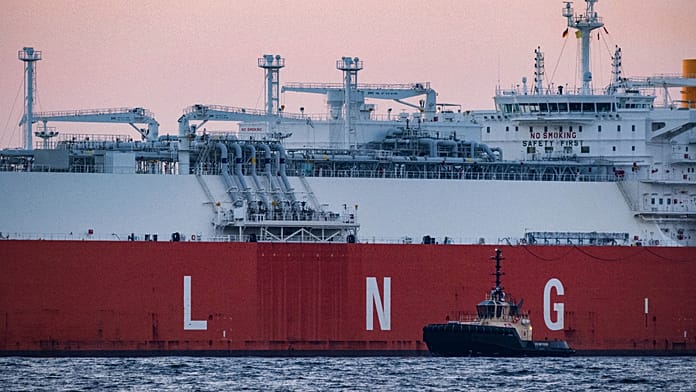
Two-thirds of Europes LNG imports to come from the US amid increased reliance Europe is expected to source almost two-thirds of its liquefied natural gas imports from the US in 2026, according to a new report by the Institute for Energy Economics and Financial Analysis (IEEFA).
euronews · 4 days ago

Energy ministers confront Europes dependence on Chinas power storage dominance Energy ministers recognised the strategic importance of energy storage for the blocs energy transition. Currently, the EU is producing significant amounts of clean power that are wasted due to a lack of storage infrastructure.
euronews · 4 days ago
![The U.S. inflation problem is getting worse Data: Bureau of Labor Statistics; Chart: Neil Irwin/AxiosAmericas inflation problem is getting worse, not better, as 2026 progresses. New wholesale price data — on the heels of Tuesdays consumer price report — confirm it.Why it matters: The evidence of continued price pressures stretches far beyond the energy price spike that occurred following the Iran war, and suggests ongoing pressures across a range of goods and services.It is getting harder and harder to chalk up the inflationary impulse evident in a wide range of data solely to the one-time effects of tariffs and the blockade of the Strait of Hormuz.That makes the chance of a Federal Reserve interest rate cut at any point this year increasingly remote, barring a stark turnabout in the inflation trend or labor market conditions.By the numbers: The Producer Price Index for final demand rose 1.4 in April alone, and is up 6 over the last 12 months.Even excluding volatile food, energy and trade services, the index was up a whopping 4.4 over the last year, the highest 12-month increase since 2023.Prices for services were up significantly, thanks to a 5 rise in transportation and warehousing prices — a sign that higher fuel prices are already having second-order effects on what it costs for other goods.What theyre saying: [Wednesdays] report suggests that while the move higher in prices received by producers is primarily being driven by energy, we are also seeing a broader increase across other core components of the inflation basket, analyst Richard de Chazal of William Blair wrote in a note.State of play: As Kevin Warsh prepares to take charge of the Fed, the economic environment is simply not cooperating with President Trumps desire for further interest rate cuts.Many of Warshs soon-to-be colleagues are warning that the next policy move could be a rate increase.I believe it will likely be important to maintain the current slightly restrictive monetary policy stance for some time, Boston Fed president Susan Collins said Wednesday morning at the Economic Club of Boston.More than five years of above-target inflation has reduced my patience for looking through another supply shock, she added. And while it is not my most likely outlook, I could envision a scenario in which some policy tightening is needed to ensure that inflation returns durably to 2 in a timely manner.Of note: The CME FedWatch tool, based on futures prices, now implies 34 odds that the Feds target rate will end this year higher than it is now, versus 16 odds a week ago.The bottom line: For a new Fed chair who is keen to lower rates, this data represents a growing obstacle to that goal, de Chazal wrote.](https://graphics.axios.com/hermesv2/2026-05-13-1037-change-in-producer/fallbacks/2026-05-13-1037-change-in-producer-fallback.png)
The U.S. inflation problem is getting worse Data: Bureau of Labor Statistics; Chart: Neil Irwin/AxiosAmericas inflation problem is getting worse, not better, as 2026 progresses. New wholesale price data — on the heels of Tuesdays consumer price report — confirm it.Why it matters: The evidence of continued price pressures stretches far beyond the energy price spike that occurred following the Iran war, and suggests ongoing pressures across a range of goods and services.It is getting harder and harder to chalk up the inflationary impulse evident in a wide range of data solely to the one-time effects of tariffs and the blockade of the Strait of Hormuz.That makes the chance of a Federal Reserve interest rate cut at any point this year increasingly remote, barring a stark turnabout in the inflation trend or labor market conditions.By the numbers: The Producer Price Index for final demand rose 1.4 in April alone, and is up 6 over the last 12 months.Even excluding volatile food, energy and trade services, the index was up a whopping 4.4 over the last year, the highest 12-month increase since 2023.Prices for services were up significantly, thanks to a 5 rise in transportation and warehousing prices — a sign that higher fuel prices are already having second-order effects on what it costs for other goods.What theyre saying: [Wednesdays] report suggests that while the move higher in prices received by producers is primarily being driven by energy, we are also seeing a broader increase across other core components of the inflation basket, analyst Richard de Chazal of William Blair wrote in a note.State of play: As Kevin Warsh prepares to take charge of the Fed, the economic environment is simply not cooperating with President Trumps desire for further interest rate cuts.Many of Warshs soon-to-be colleagues are warning that the next policy move could be a rate increase.I believe it will likely be important to maintain the current slightly restrictive monetary policy stance for some time, Boston Fed president Susan Collins said Wednesday morning at the Economic Club of Boston.More than five years of above-target inflation has reduced my patience for looking through another supply shock, she added. And while it is not my most likely outlook, I could envision a scenario in which some policy tightening is needed to ensure that inflation returns durably to 2 in a timely manner.Of note: The CME FedWatch tool, based on futures prices, now implies 34 odds that the Feds target rate will end this year higher than it is now, versus 16 odds a week ago.The bottom line: For a new Fed chair who is keen to lower rates, this data represents a growing obstacle to that goal, de Chazal wrote.
axios · 4 days ago
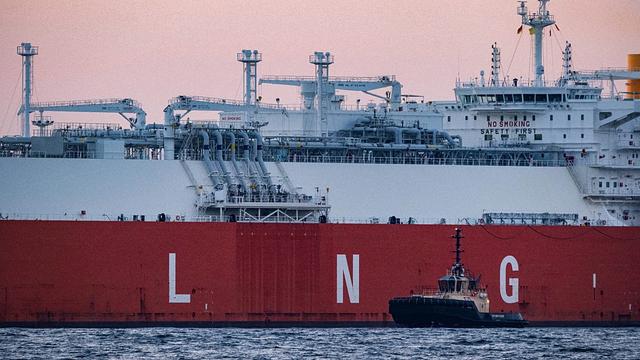
Two-thirds of Europes LNG imports will come from the US this year.Europe is expected to source almost two-thirds of its liquefied natural gas imports from the US in 2026, according to a new report by the Institute for Energy Economics and Financial Analysis (IEEFA).According to IEEFA, the US already accounted for 57 of Europes LNG imports in 2025, a sharp increase compared with pre-war levels. #LNG #Energy
mastodon bot · 4 days ago
US wholesale inflation hits 6 as Iran war sends fuel and freight costs soaring Producer price index rises at fastest rate since Russias full-scale invasion of Ukraine
financial times · 4 days ago