
Palestinian leader sets November 28 date for first legislative elections in two decades
Palestinian President Mahmoud Abbas has set November 28 as the date for long-overdue legislative elections, marking the first such vote in the Palestinian territories in two decades if it proceeds as scheduled. In a decree published Thursday, Abbas called for “free and direct parliamentary elections” to choose members of the Palestinian Legislative Council, urging participation from Palestinians in East Jerusalem, the West Bank, and Gaza. The announcement, carried by the official Wafa news agency, follows years of delays and political paralysis in the Palestinian Authority, which has not held legislative elections since Hamas’s victory in 2006.
The last parliamentary vote took place on January 25, 2006, when Hamas won a decisive majority, defeating Abbas’s Fatah party. The resulting legislative council has not convened since 2007, after Hamas violently seized control of Gaza and Fatah consolidated power in the West Bank. The Palestinian Legislative Council, established under the 1996 Oslo Accords, has functioned only intermittently, with no elections held in 1996 or 2006 outside the single 2006 vote. The council’s prolonged inactivity has left the Palestinian Authority without a functioning parliament for nearly two decades.
Abbas, now 90, was elected president in 2005 for a four-year term that expired in 2009. He has since ruled by decree, a practice that has drawn criticism both domestically and internationally. In 2021, he announced plans for legislative and presidential elections, scheduled for May and July of that year, but postponed them indefinitely due to Israel’s refusal to guarantee voting rights for Palestinians in East Jerusalem, which Israel has occupied since 1967. In April of this year, Palestinians in the West Bank participated in municipal elections—the first since the October 2023 outbreak of war in Gaza—but legislative elections have remained stalled.
The decree’s timing reflects mounting pressure on Abbas’s administration to implement reforms demanded by international donors, who increasingly tie financial and diplomatic support to governance improvements. The Palestinian Authority has faced widespread criticism over corruption, institutional paralysis, and eroding legitimacy. In June, Abbas, re-elected as leader of Fatah despite his advanced age, reiterated plans for legislative elections this year and presidential elections in early 2027, though no date has been set for the latter.
International observers note that the planned vote could signal a tentative step toward restoring democratic processes in the Palestinian territories, but its success hinges on Israel’s willingness to permit voting in East Jerusalem and on Hamas’s participation. Hamas, which has controlled Gaza since 2007, has not yet indicated whether it will contest the elections. The group’s exclusion from previous ballots and its violent takeover of Gaza in 2007 have left deep divisions in Palestinian politics.
Analysts warn that without broader political reconciliation and guarantees for inclusive participation, the elections risk deepening fragmentation rather than restoring democratic governance. The Palestinian Authority’s ability to organize a credible vote across the West Bank, Gaza, and East Jerusalem remains uncertain, given the ongoing Israeli occupation and the entrenched divisions between Fatah and Hamas.
For now, the decree sets a clear date, but the path to holding the elections remains fraught with challenges. If realized, the November 28 vote would represent a rare moment of democratic renewal in a political landscape long dominated by division and authoritarian rule.
Follow us for live European news
- 2
- 2
- 1
- 1
- 1
- 1
- 1
- 1
- 1
4 further sources not geolocated
Articles

Kazakhstans new constitution takes effect, election date set Kazakhstans new Constitution entered into force on July 1, prompting President Kassym-Jomart Tokayev to set August 23 as the date for parliamentary elections required under the new framework. The Constitution, adopted in a nationwide referendum on March 15, replaces the countrys bicameral legislature with a single-chamber parliament. Tokayev signed the decree calling elections shortly after […]
in-cyprus · about 2 hours ago
Abas za november razpisal parlamentarne volitve v Palestini. Na zadnjih, leta 2006, je zmagal Hamas. Palestinski predsednik Mahmud Abas je z odlokom za 28. november razpisal volitve v palestinski zakonodajni svet. Volitve, če bodo izvedene, bodo prve na palestinskih ozemljih v preteklih dveh desetletjih. Na zadnjih je prepričljivo zmagal Hamas.
rtv slovenia · about 2 hours ago
Μετά από 20 χρόνια οι Παλαιστίνιοι ψηφίζουν ξανά, κοινοβουλευτικές εκλογές στις 28 Νοεμβρίου
protothema · about 2 hours ago
Palestinienii, chemați la vot. Primele alegeri parlamentare din ultimele două decenii Preşedintele palestinian Mahmoud Abbas a stabilit data de 28 noiembrie pentru următoarele alegeri parlamentare, conform unui decret publicat joi, iar dacă ele vor avea loc, acest lucru va marca primul astfel de vot în teritoriile palestiniene din ultimele două decenii, relatează agenția France Presse. „Decretul prezidenţial solicită poporului palestinian din Ierusalim, Cisiordania şi Fâşia Gaza …
hotnews.ro · about 2 hours ago
Palestinci budou na konci listopadu volit. V Jeruzalémě, na Západním břehu i v Gaze Palestinský prezident Mahmúd Abbás dnes vydal dekret, ve kterém stanovil datum konání parlamentních voleb na palestinských územích na 28. listopadu. Jestliže se hlasování uskuteční, bude se jednat o p...
respekt · about 2 hours ago
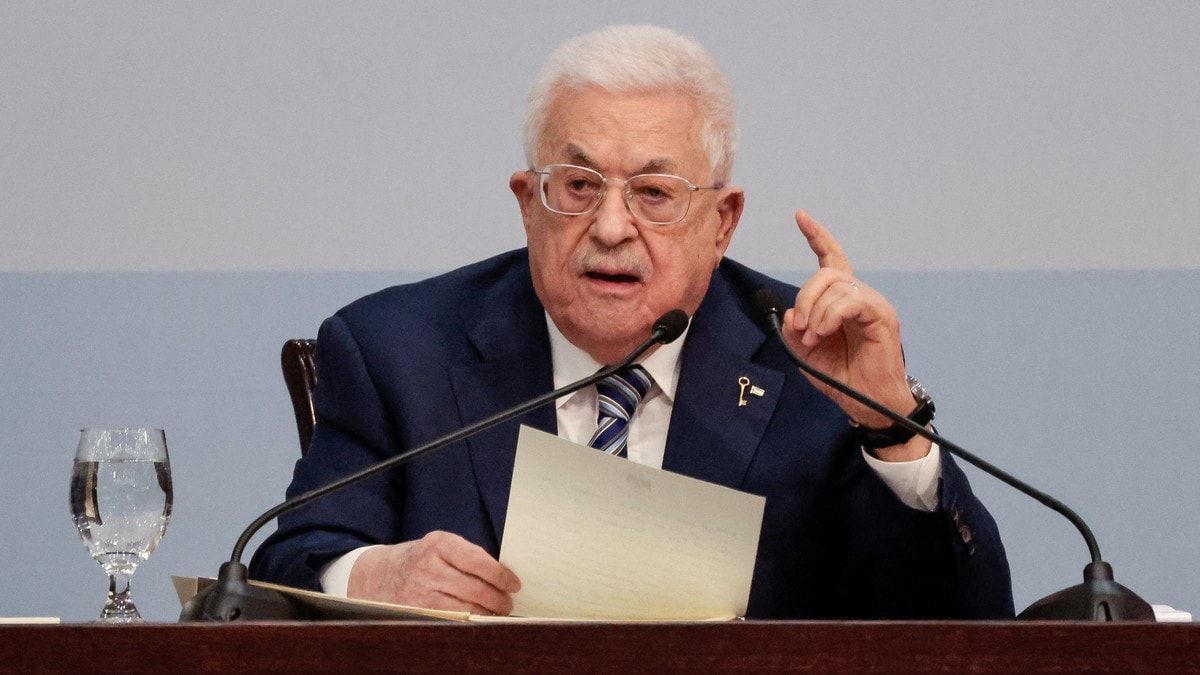
Abbas: Valg i Palestina i november Den 28. november skal palestinere stemme over hvem de mener bør sitte i Palestinas lovgivende forsamling, som er parlamentet til de palestinske selvstyremyndighetene. Datoen fremgår i et dekret fra Palestinas president Mahmoud Abbas torsdag, melder det palestinske nyhetsbyrået Wafa, ifølge AFP. Palestinere i Øst-Jerusalem, på Gazastripen og på den okkuperte Vestbredden har stemmerett. Det kan bli første gang på 20 år at de får stemme over hvem som skal sitte i forsamlingen. Palestinas lovgivende forsamling ble opprettet i 1996 som et resultat av Oslo-avtalene mellom Israel og den palestinske frigjøringsorganisasjonen (PLO). Det har kun vært to valg til forsamlingen i dets historie, i 1996 og 2006. Abbas har flere ganger tidligere utstedt dekret om nye valg, men disse har stadig blitt utsatt på ubestemt tid.
nrk · about 2 hours ago
Palestinernes president varsler valg i november Palestinas president Mahmoud Abbas utlyser parlamentsvalg 28. november.
aftenposten · about 2 hours ago
Les élections législatives palestiniennes auront lieu le 28 novembre à Jérusalem, en Cisjordanie et dans la bande de Gaza Le président palestinien Mahmoud Abbas a fixé au 28 novembre la date des prochaines élections législatives, marquant, si elles ont lieu, le premier vote de ce type dans les territoires palestiniens depuis deux décennies.
liberation · about 2 hours ago
Voľby sa vracajú do Palestíny po ére Hamasu a Fatahu. Abbás stanovuje termín hlasovania na 28. november Mahmúd Abbás po takmer dvoch dekádach vyhlasuje parlamentné voľby na 28. november. Kľúčové hlasovanie môže rozhodnúť o budúcnosti palestínskych inštitúcií.
aktuality.sk · about 2 hours ago
Palästinenser sollen nach 20 Jahren wieder Parlament wählen
orf.at · about 2 hours ago

Date set for first Palestinian election in more than 20 years
news.yahoo.com · about 2 hours ago
Palestinian Authority President sets first Palestinian election date in decades According to a presidential decree published Thursday, Palestinian Authority President Mahmoud Abbas has set the date for an upcoming legislative council election on November 28. If held, it will be the first of its kind in several decades; the last election was held in 2006, when Hamas won over Abbas Fatah. The decree calls on […]
cphpost · about 2 hours ago

🇵🇸 🗳️ Palestinian president Mahmoud Abbas has issued a decree setting legislative elections for November 28, which if they take place, would mark the first such vote in two decades. ➡️ u.afp.com/SKbi
bluesky_AFP English · about 2 hours ago

Eleições palestinianas marcadas para 28 de novembro As últimas eleições para o Conselho Legislativo Palestiniano realizaram-se em 2006
observador · about 2 hours ago
V Palestině proběhnou první volby po 20 letech. Prezident Abbás je stanovil na 28. listopadu Palestinský prezident Mahmúd Abbás ve čtvrtek vydal dekret, ve kterém stanovil datum konání parlamentních voleb na palestinských územích na 28. listopadu. Jestliže se hlasování uskuteční, bude se jednat o první volby do Palestinské legislativní rady po 20 letech, připomíná agentura AFP.
irozhlas.cz · about 2 hours ago