 Saturday, July 4Saturday, July 4
Qatar’s Foreign Minister Mohammed bin Abdulrahman Al Thani met Syrian counterpart Faisal Mekdad in Doha on Saturday, reaffirming Doha’s support for Damascus’s sovereignty and reconstruction while discussing regional security amid escalating tensions over the Strait of Hormuz. The talks, held as Iran rejects Western-led maritime initiatives and Gulf states harden their positions, underscore Qatar’s evolving role in Syria’s post-war diplomacy.
During the meeting, Al Thani reiterated Qatar’s backing for Syria’s “unity, sovereignty, and reconstruction efforts,” emphasizing Doha’s commitment to the Syrian people’s “aspirations for stability and long-term recovery” . The discussions come as Syria’s foreign minister, Asaad al-Shaibani, arrived in Doha for the first high-level bilateral engagement since the regional realignment following Iran’s recent conflict with Israel and the U.S. The timing reflects Qatar’s growing diplomatic engagement with Damascus, which has seen increased Arab outreach to Syria despite lingering Western skepticism.
Meanwhile, the geopolitical backdrop remains fraught with maritime disputes. Iran’s parliament speaker, Mohammad Bagher Qalibaf, warned on Friday that Tehran would not tolerate U.S. interference in the Strait of Hormuz, declaring during a meeting with a Chinese delegation in Tehran that the Islamic Republic would maintain control over the strategic waterway . Qalibaf’s remarks followed Iran’s rejection of a joint UK-France proposal to secure the Strait with Oman, with Iranian officials dismissing the initiative as “adventurism” that would destabilize the region .
The UK and France, in a joint statement, announced their readiness to deploy a multinational mission to support freedom of navigation in the Strait, framing the effort as a response to the “vacuum” left by U.S.-Iran tensions . Oman has agreed to collaborate with the two European powers to ensure safe passage through its territorial waters, though Iran insists security in the Strait remains the sole responsibility of littoral states .
The diplomatic maneuvering coincides with Iran’s ongoing mourning for Supreme Leader Ayatollah Ali Khamenei, whose death in a February Israeli strike has intensified regional instability . Meanwhile, the Saudi-led coalition in Yemen has pledged a “unprecedented” response to Houthi threats, following the arrival of an Iranian civilian flight in Sanaa—a rare diplomatic overture amid escalating cross-border tensions .
Turkey’s foreign minister, Hakan Fidan, also engaged in regional diplomacy, holding talks with Syrian counterpart Faisal Mekdad and Kurdish officials in Ankara to address security concerns . The flurry of diplomatic activity underscores the fragile balance of power in the Middle East, where economic interests, security imperatives, and shifting alliances are reshaping traditional fault lines.
Follow us for live European news
4 further sources not geolocated

🇹🇼🇨🇳- Taiwan has recently conducted a major resilience exercise this week centered on a hypothetical scenario involving a Chinese blockade, a full-scale invasion, civil unrest, sabotage, disinformation campaigns, and an earthquake. The drill involved more than 370 government and military officials in Nantou and evaluated civil-military coordination, backup operations, food rationing, counter-drone defenses, responses to compromised broadcasts, and reactions to disrupted infrastructure.
telegram_GeoPWatch · about 2 hours ago
Israel approves 13 new illegal settlements in occupied West Bank Israels Security Cabinet approved a plan on Thursday to establish 13 new illegal settlements in the central occupied West Bank, drawing sharp condemnation from Palestinian officials who warned the move would fragment the territory and sever East Jerusalem from its Palestinian surroundings.
yenisafak · about 2 hours ago
Syria begins restoration of historic Omari Mosque after ICESCO listing Syrian authorities have launched restoration of the Omari Mosque in Daraa after its inclusion on the ICESCO heritage list. The 7th-century mosque, one of the oldest Islamic landmarks in the Levant, sustained extensive damage during the civil war. The designation opens the way for international cooperation.
yenisafak · about 2 hours ago
Fidan meets KRG deputy PM in Ankara for talks Turkish Foreign Minister Hakan Fidan held talks with Qubad Talabani, deputy prime minister of Iraqs Kurdish Regional Government, in Ankara. Talabani expressed satisfaction with Türkiyes commitment to the peace process with the PKK and reaffirmed the PUKs full support for its success.
yenisafak · about 2 hours ago
Pakistan PM Shehbaz Sharif meets Albayrak Group delegation to boost ties Pakistan Prime Minister Shehbaz Sharif held a high-level meeting with a delegation from Turkeys leading Albayrak Group, led by the companys chairman, Ahmet Albayrak, to discuss expanding cooperation across multiple strategic sectors.The delegation, received by the prime minister, also included prominent figures such as Albayrak Group board member Mesut Albayrak, vice chairman Dr. Nurettin Canikli, Albayrak Construction and Ports general manager Yunus Yılmaz, protocol manager Ümit Yazmacı, and several other senior executives.During the talks, both sides deliberated on ways to further develop bilateral collaboration in key areas such as infrastructure, ports, media, and investment. The discussions also touched on broader strategic domains, with a strong emphasis on the mutual determination to deepen the robust partnership and strengthen economic relations between Pakistan and Turkey.The meeting underscored the shared vision of both nations to translate their fraternal ties into tangible economic outcomes, reaffirming their commitment to advancing joint ventures and leveraging Turkish expertise in Pakistans ongoing development projects.
yenisafak · about 2 hours ago
Erdoğan meets Pakistani PM Sharif in Istanbul for talks President Recep Tayyip Erdoğan received Pakistani Prime Minister Shehbaz Sharif at Vahdettin Palace in Istanbul for bilateral and delegation-level talks. Foreign Minister Hakan Fidan and intelligence chief İbrahim Kalın attended the closed-door meeting, with a joint press conference expected.
yenisafak · about 2 hours ago
🇸🇾🇶🇦- The Prime Minister and Foreign Minister of Qatar, Mohammed bin Abdulrahman Al Thani, met with the Syrian Foreign Minister, Asaad al-Shaibani, in Doha to discuss bilateral cooperation and the latest developments in Syria. During the meeting, Al Thani reaffirmed Qatars support for Syrias unity, sovereignty, and reconstruction efforts, emphasizing Dohas backing for the Syrian peoples aspirations for stability, state-building, and long-term recovery.
telegram_GeoPWatch · about 2 hours ago
Could Israel really build settlements in Gaza? - Grenada Chronicle – Daily Grenada And Caribbean News
gdeltproject.org · about 2 hours ago
ÜLEVAADE ⟩ Araabia Ühendemiraadid varustab Sudaani kodusõda Araabia Ühendemiraate süüdistatakse Sudaani kodusõja toetamises relvade ja palgasõduritega, et kullatulu teenida.
postimees · about 2 hours ago
Sin avances sobre el futuro de Ormuz La mayoría de los barcos mercantes que han podido salir del golfo Pérsico tras el parón forzoso de tres meses eran de bandera iraní. Leer
expansion · about 2 hours ago
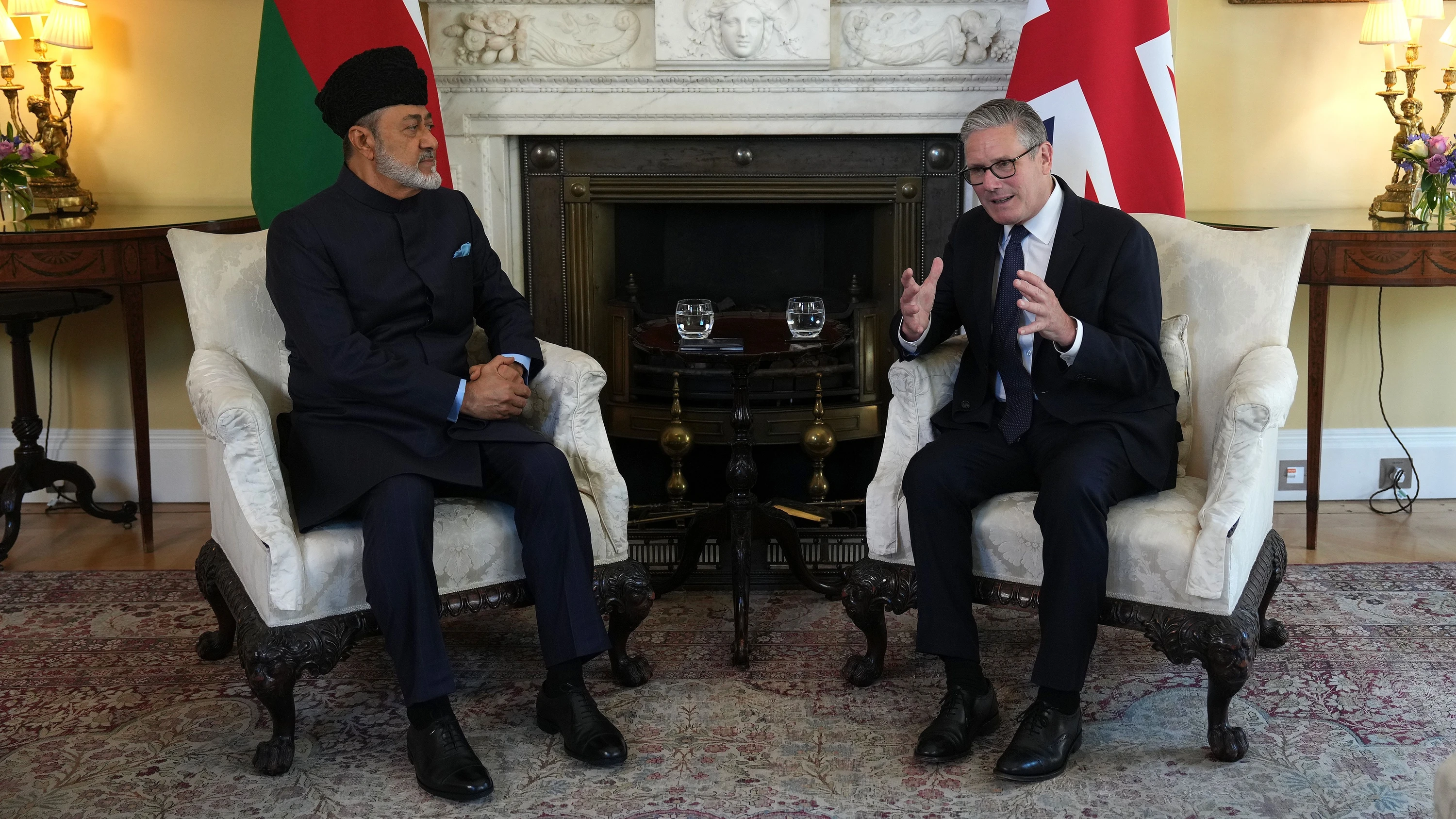
Liveblog Irankrieg: Paris und London wollen Straße von Hormus mit Oman absichern Gespräche über Möglichkeiten für sichere Passage der Meerenge +++ Höchste Sicherheitsstufe in Iran während Trauerfeiern für Khamenei +++ Mindestens fünf Tote bei Bombenexplosion in Damaskus +++ alle Entwicklungen im Liveblog
faz · about 2 hours ago
⚡️🇮🇷🇱🇧🇱🇧🇵🇸🇵🇸 - Abbas Aragchi, Irans Foreign Minister holds a meeting with Hezbollah Delegations and Hamass Top Council in Irans Tehran.
telegram_GeoPWatch · about 2 hours ago
Nabatieh recovery begins amid ongoing southern Lebanon tensions
aljazeera · about 2 hours ago
Neue Initiative: Paris und London wollen Straße von Hormus mit Oman absichern Nach der iranischen Ablehnung einer internationalen Marinemission suchen Frankreich und Großbritannien gemeinsam mit Oman nach Wegen für eine sichere Schifffahrt in der Straße von Hormus.
handelsblatt · about 2 hours ago
Iran rejects UK-France Hormuz statement, warns against foreign forces Irans deputy foreign minister has rejected a joint UK-France statement on the Strait of Hormuz, warning against any foreign military presence in the waterway and insisting that security rests with the littoral states. He called the statement an adventurism that would bear consequences.
yenisafak · about 2 hours ago
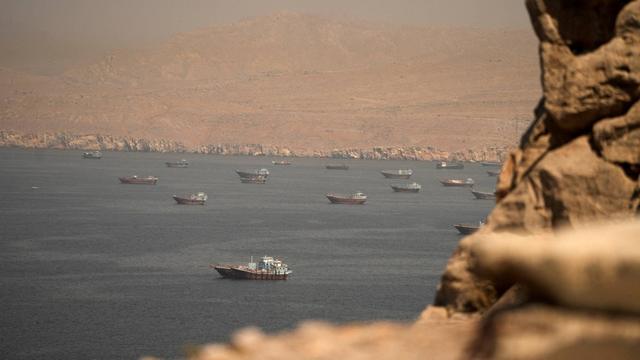
"Some leading European powers now accept that ships transiting the vital Strait of Hormuz will have to pay fees to Iran and Oman, according to people familiar with the matter.The prospect of some sort of service fee in the aftermath of the U.S. and Israeli war with the Islamic Republic was described as a given by two of the people, who asked not to be identified discussing private deliberations.Privately, some Gulf Arab officials hold the same view, they said, though this is not necessarily the formal position of their governments.Its unclear what type or the amount of fees any nation would be willing to accept. The U.S. and Gulf Arab countries, meanwhile, continue to insist that Iran and Oman cannot impose charges of any kind for the Hormuz strait. Concerns include adhering to international maritime law and the risk it creates a precedent for other countries to impose fees on different waterways." #MiddleEast #Iran #StraitOfHormuz
mastodon bot · about 2 hours ago
#Iran #UK #France France and the United Kingdom have expressed their readiness to deploy a multinational military mission to support freedom of navigation in the Strait of Hormuz. This initiative aims to restore safe transit for ships and uphold international law. It can be assumed that Europe came to the conclusion that after the war and against the background of negotiations there was a vacuum. If the security of the Strait of Hormuz is determined solely by agreements between Washington and Tehran, the EU will find itself in the position of an observer, although it is the European economy that is highly dependent on energy supplies through this route. Trump has emphasized many times that it is not the United States, but Europe that needs Middle Eastern oil. Subscribe to @OSINTdefender Chat room
telegram_OSINTdefender · about 2 hours ago
⚡️🇮🇱❌🇱🇧 - Since the morning, the IDF has shelled with artillery southern Lebanons Deir Seryan, Qantara and the Ali AlTaher hills near Nabatiye. No comments from either side.
telegram_GeoPWatch · about 2 hours ago
🇸🇾🇶🇦- Syrian Foreign Minister Asaad Al-Shaibani has arrived in Doha for a meeting with Qatari Prime Minister and Minister of Foreign Affairs, Mohammed bin Abdulrahman Al Thani.
telegram_GeoPWatch · about 2 hours ago
Kersverse Iraakse premier oogst lof met arrestatie van 47 politici, maar hoe oprecht is hij eigenlijk?
de morgen · about 2 hours ago
Iran envoy tells UN US military in Gulf brings nothing but insecurity Irans ambassador to the United Nations said Washingtons military footprint in the Persian Gulf generates insecurity rather than stability, warning that foreign interference endangers maritime safety while technical talks continue on reopening the strategic Strait of Hormuz.
yenisafak · about 2 hours ago
Trump: Iran has agreed to just about everything we need Trump told CNBC that Iranian negotiators have accepted nearly all American demands during ongoing talks, adding that Washington seeks only to prevent nuclear weapons acquisition rather than pursue regime change, even as he defended recent military strikes against the Islamic Republic.
yenisafak · about 2 hours ago
Saudi-led coalition pledges unprecedented force against Houthi threats Threats escalate after Houthis block Saudi warplanes, allowing Iranian plane to land in Sanaa for first time in decade.
aljazeera · about 2 hours ago
Israel tightens solitary confinement of jailed Fatah leader Barghouti Marwan Barghoutis office said Thursday that Israeli prison authorities have tightened solitary confinement conditions for the jailed Fatah leader at Ganot Prison, describing the measures as "systematic arbitrary practices" targeting the prominent Palestinian detainee since the start of Israels war on Gaza.
yenisafak · about 2 hours ago
US pulls troops from Nigeria but keeps intelligence cooperation Gen. Dagvin Anderson said Washington has withdrawn most forces deployed for the Lake Chad Basin operation while maintaining intelligence sharing to support Abujas counterterrorism efforts, noting the mission achieved its immediate objectives.
yenisafak · about 2 hours ago
Israeli army ends Givati Brigade mission in southern Lebanon The Israeli military announced Thursday that the Givati Brigade has completed its eight-month deployment in southern Lebanon, as troops begin redeploying under a US-brokered framework agreement with Beirut that provides for phased withdrawals but sets no timeline for a full pullout.
yenisafak · about 2 hours ago
Iran: We will not allow US interference in Hormuz Parliament Speaker Mohammad Bagher Qalibaf has declared that Iran will not permit any US interference in the Strait of Hormuz. During a meeting with a senior Chinese delegation in Tehran, he also warned that Israel is seeking to undermine the Iran-US memorandum of understanding.
yenisafak · about 2 hours ago
Fidan, Syrian counterpart discuss regional developments Turkish Foreign Minister Hakan Fidan held a phone call with Syrian Foreign Minister Asaad Hassan al‑Shaibani to exchange views on recent developments in the region, Turkish diplomatic sources said. No further details were provided.
yenisafak · about 2 hours ago
Netanyahu, Trump agree to meet in US amid strained ties Israeli Prime Minister Benjamin Netanyahu and US President Donald Trump agreed during a phone call to hold a meeting in the United States "in the near future," Netanyahus office confirmed. The conversation also touched on US-Israel ties and regional developments, with no date yet set for the visit.
yenisafak · about 2 hours ago
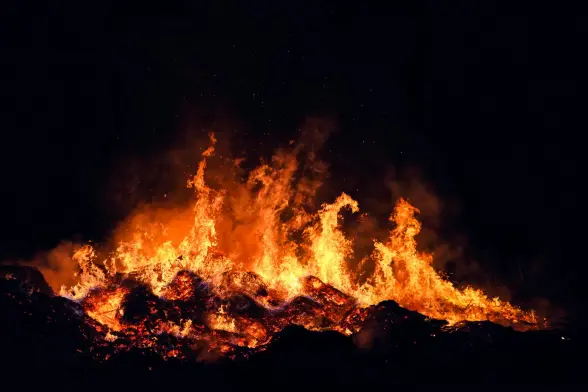
Dark Fleet Tankers 2026: Shadow Fleet Moving Sanctioned Oil1,900+ vessels move Iran and Russia oil in plain sight. Sweden seized one. US seized 7M barrels. Heres exactly how the ghost fleet operates — and who profits. #WorldNews #ForeignPolicy
mastodon bot · about 2 hours ago