
Labour elects Andy Burnham as leader and next UK prime minister: unchallenged win after Starmer resignation

Story Timeline
3 months · 12 summary articles
Andy Burnham has been declared the new leader of Britain's [Labour Party](en.wikipedia.org](en.wikipedia.org))) and is set to become the country's next prime minister on Monday, succeeding Keir Starmer.
Burnham, the former mayor of Greater Manchester, secured the leadership with overwhelming support from Labour lawmakers. He received backing from 349 out of 401 Labour Party lawmakers and was announced as the new leader at a special party conference on Friday.
Burnham's path to leadership was cemented after he won a byelection in Makerfield with 55% of the vote. His victory in this constituency was seen as a proof point that he could win anywhere in the country.
Burnham's ascent to the leadership comes at a time of political upheaval and economic stagnation in the UK. He has promised to bring a "new era of possibility" to the country and has pledged to focus on social justice and devolve power from Westminster to local communities.
In his speech, Burnham praised his predecessor Keir Starmer's endeavors but signaled a departure from what he described as "four decades of neo-liberalism." He has promised to be "distinctively Labour" and to fix the big things that politics has neglected, principally social care.
Burnham's leadership comes after Starmer's resignation, which was prompted by political missteps and heavy losses in local elections. Burnham's leadership was unchallenged, as he was the only candidate to secure enough support from Labour lawmakers.
Burnham's experience as the mayor of Greater Manchester, where the city's economy grew at roughly twice the rate of the country as a whole, is seen as a key factor in his leadership bid. He has promised to bring "Manchesterism" — his brand of business-friendly, locally empowered social democracy — to the rest of the UK.
During his time as mayor, Burnham oversaw significant economic growth in Greater Manchester. The city's economy grew at roughly twice the rate of the country as a whole, and Burnham is credited with fostering a vibrant hospitality scene and supporting local businesses. For example, Hip Pop, a local soda and kombucha brand that started in Burnham's kitchen in 2019, is now stocked by most major UK supermarkets and sold in several other European countries.
Burnham has also promised to address the country's economic challenges. Britain's economy is struggling, public services are strained, and improvements in living standards have slowed to a crawl in recent decades. Political instability is the new normal, and the national mood is bleak.
Burnham's leadership has been welcomed by some as a potential antidote to the country's woes. He is seen as a natural communicator with an easy-going vibe and a gift for galvanizing people. However, others are anxious about how prepared he can possibly be for government, given the speed of the transition and the secrecy of his plans.
Burnham will formally become prime minister on Monday when he meets King Charles III at Buckingham Palace for a formal go-ahead. Until then, Keir Starmer remains caretaker prime minister.
The transition of power comes after Starmer announced his resignation on June 22, following a series of political missteps and heavy losses in local elections. Burnham was the only candidate to secure enough support from Labour lawmakers to replace Starmer as leader of the governing party.
Burnham's leadership has been described as a potential circuit breaker for Britain, which is facing economic stagnation and political instability. He has promised to bring hope to the British people and purpose to the floundering government.
In his speech on Friday, Burnham said, "I am going to give Britain the circuit breaker it needs." He has also promised to be bold and to tax land, not bricks, as part of his economic plan.
Burnham's leadership has been supported by many within the Labour Party, who see him as a charismatic and experienced leader. However, some Labour MPs are already anxious about how prepared he can possibly be for government, given the speed of the transition and the secrecy of his plans.
Burnham's experience as a member of parliament and a cabinet minister for many years before becoming mayor of Greater Manchester is seen as a key asset. He is also known for his smart-casual fashion choices and his relatable personality.
Burnham's leadership comes at a time when Britain is facing significant economic and political challenges. The country's economy is struggling, public services are strained, and improvements in living standards have slowed to a crawl in recent decades. Political instability is the new normal, and the national mood is bleak.
Burnham has promised to address these challenges by focusing on social justice and devolving power from Westminster to local communities. He has also promised to be "distinctively Labour" and to fix the big things that politics has neglected, principally social care.
Burnham's leadership has been welcomed by some as a potential antidote to the country's woes. He is seen as a natural communicator with an easy-going vibe and a gift for galvanizing people. However, others are anxious about how prepared he can possibly be for government, given the speed of the transition and the secrecy of his plans.
Burnham will formally become prime minister on Monday when he meets King Charles III at Buckingham Palace for a formal go-ahead. Until then, Keir Starmer remains caretaker prime minister.
Follow us for live European news
- 3
- 3
- 1
- 1
- 1
- 1
- 1
- 1
- 1
- 1
- 1
- 1
- 1
5 further sources not geolocated
Articles

DeChambeau gets two-stroke penalty at Open, drops to fifth place reut.rs/4yuputR
bluesky_Reuters · 2 months ago

Andy Burnham : Britain hopes this former mayor will save its economy
gdelt bot · 2 months ago
Golfer Straka zur Halbzeit der British Open auf Rang 25, Wiesberger verpasst Cut An der Spitze liegt Lucas Herbert. Der Australier hat wie der US-Amerikaner Burns mit einer 62er-Runde einen neuen Major-Rekord aufgestellt
der standard · 2 months ago

What will Andy Burnham need to do now he becomes prime minister ?
gdelt bot · 2 months ago

He knows what he thinks: how ready is Andy Burnham to become PM?
bluesky_The Guardian · 2 months ago

Ranních 5 minut: V Praze se zřítila betonová plastika | Novým lídrem britských labouristů je Andy Burnham | Vedení ODS odmítlo Dvořáka na kandidátce V Praze se zřítila betonová plastika | Novým lídrem britských labouristů je Andy Burnham | Vedení ODS odmítlo Dvořáka na kandidátce Máte připomínku nebo jste našli chybu? Napište nám prosím na editori@denikn.cz.
denik n · 2 months ago
UK by-election sees record 34 candidates as Farage seeks return The Reform UK leader seeks to regain his seat after resigning amid gifts controversy.
aljazeera · 2 months ago
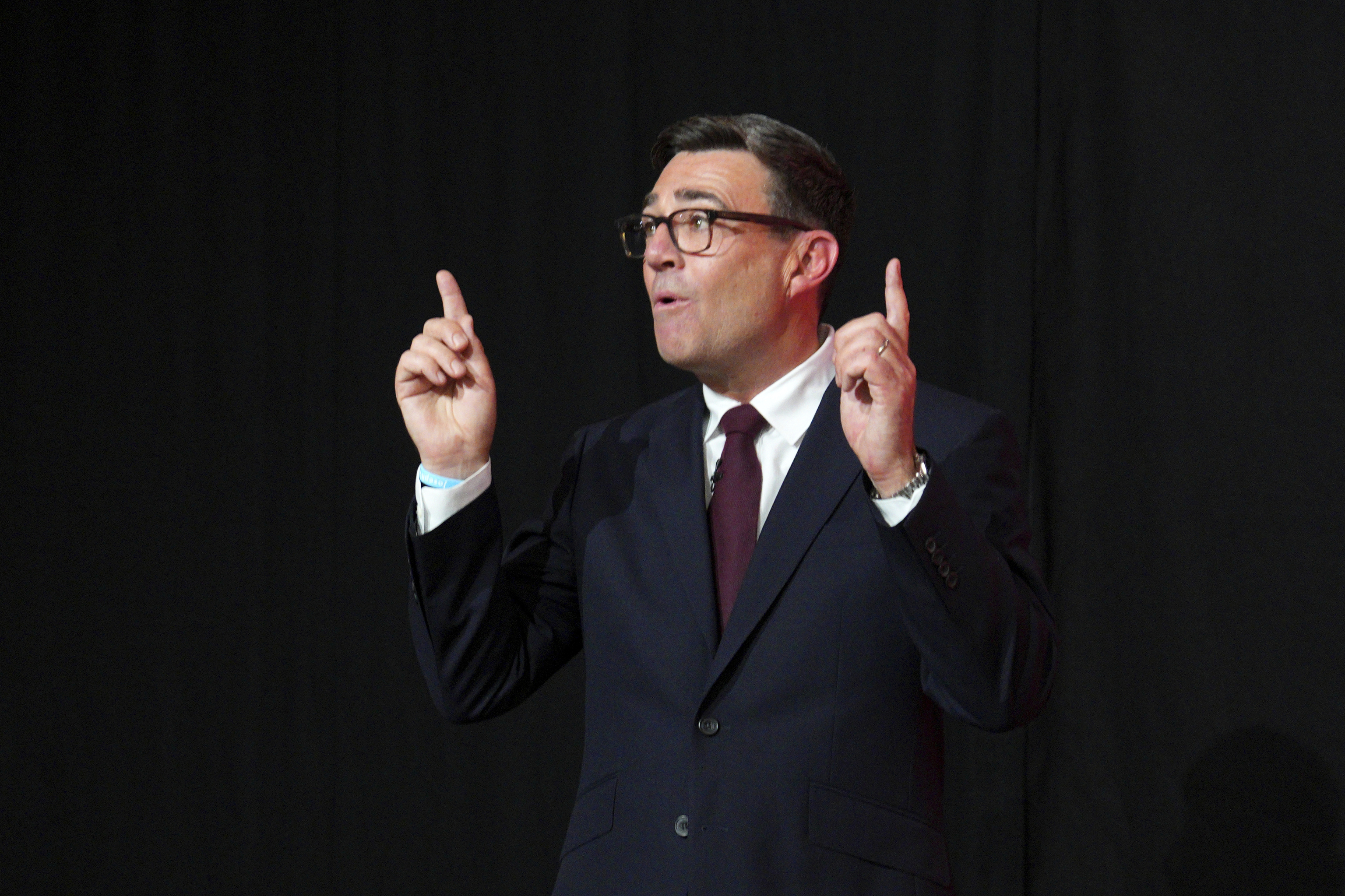
Andy Burnham y su Manchesterismo: el eslogan de un político en busca de una política El sucesor de Keir Starmer trata de exportar el éxito de su marca municipal a una potencia en crisis fiscal permanente. Pese a su retórica de izquierdas, se rodea de antiguos nombres de Tony Blair mientras confía el Tesoro a la ministra musulmana Shabana Mahmood Leer
elmundo · 2 months ago

Why Jonathan Edwards is keeping score at the Open Championship
bluesky_The Times · 2 months ago
Why Britain is getting a new prime minister without a general election Veteran Labour Party politician Andy Burnham is set to become Britains next prime minister on Monday
abcnews · 2 months ago
Andy Burnham must not bow to Trump Our posture on the world stage needs radical change
new statesman · 2 months ago
Burnham vows Labour will win by being boldly, authentically us Andy Burnham pledged on Friday to steer Britains Labour Party in a distinctively left-wing direction, promising to unite the movement and devolve power from Westminster to local communities after being elected leader with a mandate to rebuild trust in politics and constitutional reform.
yenisafak · 2 months ago
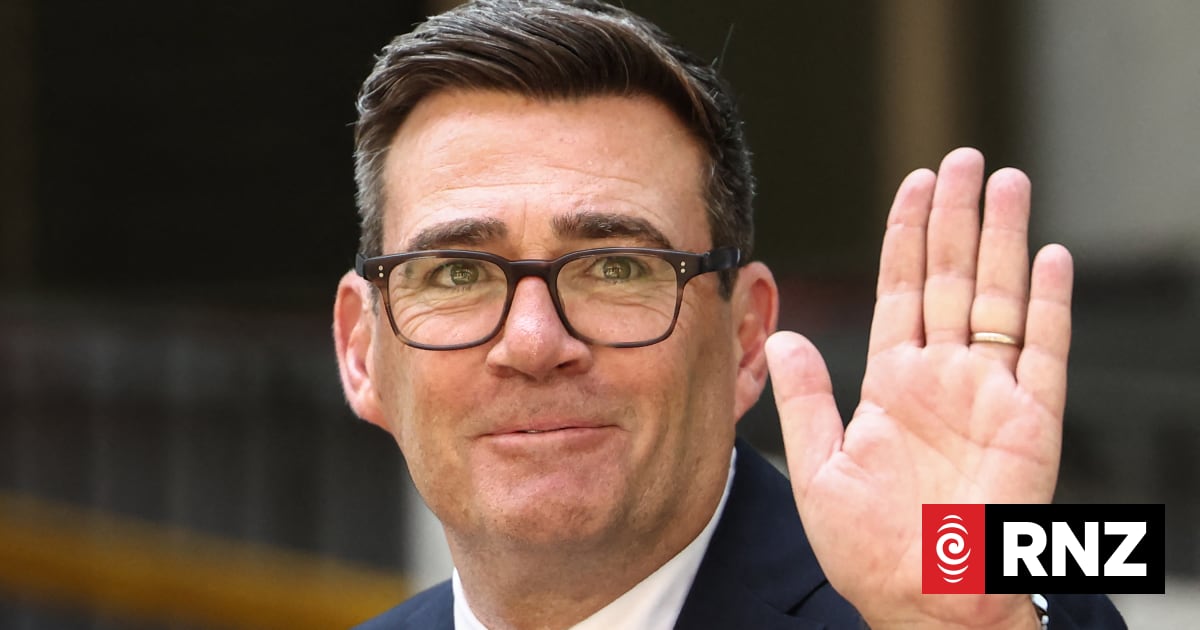
Analysis : Can Britain new leader survive the traps awaiting him ?
gdelt bot · 2 months ago
Bryson DeChambeau threatens to quit Open after being given two-shot penalty
telegraph · 2 months ago
Neuer Chef für Labour: Der britische König Charles bekommt Konkurrenz Die Labour-Partei inthronisiert Andy Burnham als Vorsitzenden. Er will an alte Traditionen der Partei anknüpfen. Das Motto lautet: Labour für alle! mehr...
taz.de · 2 months ago
Londra, Burnham è leader: Redistribuiamo le ricchezze, basta con il neoliberismo Lex sindaco di Manchester eletto capo dai laburisti. Lunedì sarà premier. Ringrazia Starmer e omaggia Kinnock, promette devoluzione e parla agli operai. I tabloid: Ci riporta agli anni 70
corriere · 2 months ago
Two-shot penalty fires up Open contender DeChambeau Bryson DeChambeau says the decision to give him a two-shot penalty for "inadvertently improving his lie", "fires me up" for the final two rounds of the championship this weekend.
bbc sport · 2 months ago
The Burnham era begins: Mahmood set for chancellor Plus, Starmers farewell
financial times · 2 months ago
The Rolling Stones egalează un record istoric al Beatles. Noul album „Foreign Tongues a ajuns pe primul loc în Marea Britanie Trupa The Rolling Stones a obținut al 15-lea loc întâi în Clasamentul oficial al albumelor din Marea Britanie cu noul lor album „Foreign Tongues, ajungând astfel la egalitate cu recordul deținut de The Beatles, transmite Reuters.
digi24 · 2 months ago

How Britains Andy Burnham went from King of the North to inheriting the 10 Downing Street throne
bluesky_EUobserver · 2 months ago
How about that! - best shots from second round at The Open Enjoy the best shots from the second round of the 2026 Open Championship, featuring Sam Burns and Matt Fitzpatrick.
bbc sport · 2 months ago
How Birkdale crowd helped carry Fleetwood into contention Home favourite Tommy Fleetwood praises the support of the fans at Royal Birkdale as Scotlands Robert MacIntyre quietly fires himself into contention in round two of the 154th Open Championship.
bbc sport · 2 months ago
DeChambeau hit with shock two-stroke penalty at The Open Bryson DeChambeau has been hit with a costly two-stroke penalty following his second round at The Open Championship for illegally improving his lie on the fifth hole. Following a lengthy review with officials at Royal Birkdale, the American saw his score revised to a triple-bogey seven, dropping him to five under par and a tie for fifth place after a 68.
bbc sport · 2 months ago
DeChambeau disagrees with two-shot penalty at Open Bryson DeChambeau says the decision to give him a two-shot penalty for "inadvertently improving his lie", "fires me up" for the final two rounds of the championship this weekend.
bbc sport · 2 months ago
Opinion | Britains Newest New Prime Minister Andy Burnham, the seventh PM since 2016, has to earn a mandate.
wsj · 2 months ago
Andy Burnham declared leader of UKs Labour Party, pledges to restore hope Andy Burnham was officially declared leader of Britains governing Labour Party on Friday, promising to bring hope to the British people and purpose to the floundering government as…
japantoday · 2 months ago
Eye on the ball Naoyuki Kataoka of Japan plays his shot from the rough on the 3rd hole after finding his ball during the second day of the British Open Golf championships…
japantoday · 2 months ago
Herbert takes Open lead, equals Burns round of 62 Lucas Herbert stormed into the lead at the British Open on Friday after the Australian and American Sam Burns equalled the record for the lowest round in major…
japantoday · 2 months ago
Green boss Polanski says Burnham cant sit on the fence like Starmer Zack Polanski hits back in POLITICO interview after Andy Burnham says Labour wont try to out-Green the Greens.
politico.eu · 2 months ago
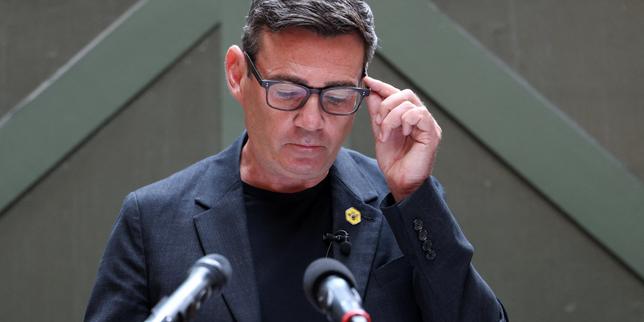
Andy Burnham, Britains next prime minister, puts social justice at top of agenda The Makerfield MP has been declared Labour leader and is set to succeed Keir Starmer on Monday. His platform remains vague and he will have to contend with tight public finances.
le monde · 2 months ago