
Labour elects Burnham as UK leader, set to become next prime minister

Story Timeline
3 months · 13 summary articles
Andy Burnham is set to become the new leader of the [Labour](en.wikipedia.org](en.wikipedia.org))) Party and the next Prime Minister of the United Kingdom. The former mayor of Greater Manchester will be elected as the leader of the Labour Party today and will be appointed as Prime Minister by King Charles III on Monday.
Burnham, known for his down-to-earth style and ability to connect with voters, has been described as a skilled communicator who can effectively convey unpopular decisions to both his party and the public. He has promised to focus on decentralization, aiming to transfer more powers to the regions, particularly in areas like housing and transport infrastructure.
During his campaign, Burnham pledged his commitment to proportional representation, a position he has held for many years. This promise has garnered support from a significant portion of the Parliamentary Labour Party, with over a quarter of Labour MPs and nearly 200 parliamentarians from across all parties supporting a national commission on electoral reform.
Burnham's political career includes serving as the mayor of Greater Manchester since 2017, where he gained popularity for his hands-on approach and ability to deliver tangible results. He is often referred to as the "King of the North" due to his strong influence in the region. During his tenure as mayor, Manchester experienced significant growth, with the region's economy expanding at twice the rate of the rest of the country. He has also been praised for his transformation of the city's public transportation system, which he brought back under public control.
The political landscape in the UK has been marked by instability, with Burnham becoming the seventh Prime Minister in ten years. His predecessor, Keir Starmer, resigned after facing multiple challenges and failing to inspire the public with his leadership style.
Burnham's approach to governance, often described as "Manchesterism," aims to combine economic growth with social welfare and equality. He has promised to establish a "number 10" in Manchester to decentralize power from Westminster.
In a recent campaign speech, Burnham stated, "I am committed to proportional representation," reiterating a position he has held for many years. This stance has received support from within the Labour Party and across the political spectrum.
Follow us for live European news
- 6
- 3
- 2
- 1
- 1
- 1
- 1
- 1
- 1
- 1
- 1
2 further sources not geolocated
Articles

Britische Politik: Der neue Labour-Chef: Was Burnham besser machen muss Wieder muss ein Neuer versuchen, die britische Politik zu retten. Heute wird Andy Burnham zum Labour-Vorsitzenden ernannt - was muss sich unter dem charismatischen Ex-Bürgermeister ändern?
handelsblatt · 2 months ago
Kontroverse nach Baby-News: Erste Unions-Politikerin fordert Rücktritt von Jens Spahn Die CDU ist strikt gegen eine Zulassung von Leihmutterschaften. Dass ihr Frontmann im Bundestag nun privat einen anderen Weg gegangen ist, sorgt in der Politik teils für Fassungslosigkeit.
tagesspiegel · 2 months ago
Kontroverse nach Baby-News: Kritik an Spahn wegen Leihmutterschaft im Ausland Die CDU ist strikt gegen eine Zulassung von Leihmutterschaften. Dass ihr Frontmann im Bundestag nun privat einen anderen Weg gegangen ist, sorgt in der Politik teils für Fassungslosigkeit.
handelsblatt · 2 months ago
US lawmaker calls Türkiyes potential return to F-35 program very promising Republican Rep. Mike Turner has described discussions on Türkiyes potential reinstatement in the F-35 fighter jet program as encouraging. He emphasized that Türkiyes return would be crucial given its role as a strong NATO ally and its previous contribution to production.
yenisafak · 2 months ago

Leihmutterschaft in den USA – Wie gefährlich ist Jens Spahns Doppelmoral für die Union? Der CDU-Politiker Jens Spahn stellte sich jahrelang gegen Leihmutterschaftsmodelle. Nun sind Spahn und sein Ehemann über diesen Weg Eltern geworden. Auch aus den eigenen Reihen regt sich lautstarke Kritik.
welt.de · 2 months ago
Abgeordnetenhauswahl in Berlin: Berliner CDU verbessert sich in Umfrage nach Verzicht von Kai Wegner Nach dem Rückzug von Kai Wegner als Spitzenkandidat gewinnt die CDU in einer Umfrage deutlich hinzu. Erstplatziert bleibt aber die Linke mit Spitzenkandidatin Elif Eralp.
die zeit · 2 months ago

August Wolters: Teilverbot? Das gab es schon mal Vor 66 Jahren löste ein CDU-Innenminister in Rheinland-Pfalz einen rechtsextremen Landesverband auf – ein Fall, der heute kaum noch bekannt ist.
faz · 2 months ago

Baby von US-Leihmutter bringt CDU-Mann Jens Spahn unter Druck Unions-Fraktionschef Spahn und sein Ehemann sind mithilfe einer Leihmutter in den USA Eltern geworden. Das missfällt vielen in der CDU, denn dort lehnt man diese Möglichkeit zur Fortpflanzung ab
der standard · 2 months ago

Deutschland-Liveblog: Kritik an Spahn wegen Leihmutterschaft im Ausland Neue Debatte über eine Legalisierung der Leihmutterschaft +++ Unionspolitiker will geplante höhere Sektsteuer verhindern +++ Grüne fordern europäischen Hitze-Krisengipfel +++ alle Entwicklungen im Liveblog
faz · 2 months ago

AfD-Chefs Weidel und Chrupalla fordern Abbruch der Listenwahl in Nordrhein-Westfalen Die AfD-Bundesspitze fordert den Abbruch der Aufstellungsversammlung der AfD für die Landtagswahl in Nordrhein-Westfalen und eine Neuwahl der Landesliste.
welt.de · 2 months ago

Au Royaume-Uni, le Labour sévite une guerre interne: "Un gouvernement Burnham mettra probablement davantage laccent sur laide sociale…" Lancien maire du Grand Manchester, Andy Burnham, sera nommé chef du Parti travailliste ce vendredi sans avoir à faire face à aucun adversaire. ...
la libre · 2 months ago

UK Labour party to crown Burnham as leader and next PM
bluesky_Euractiv · 2 months ago
Burnham soll Starmer an Spitze von britischer Labour-Partei ablösen Andy Burnham soll der Nachfolger von Keir Starmer werden und bereits am Montag von König Charles III. angelobt werden. Burnham wird der siebente britische Regierungschef in zehn Jahren.
die presse · 2 months ago
Burnham vor Kür zu Labour-Chef Der langjährige Bürgermeister des Großraums Manchester, Andy Burnham, soll am Freitag zum Chef der britischen Labour-Partei gekürt werden und drei Tage später das Amt des Premierministers von Keir Starmer übernehmen. Labour befindet sich seit Monaten im Krisenmodus. Burnhams Unterstützerinnen und Unterstützer hoffen, dass dem als „König des Nordens bezeichneten 56-Jährigen nun die Trendwende gelingt.
orf.at · 2 months ago
Andy Burnham: Von Manchester in die Downing Street Andy Burnham war Bürgermeister von Manchester. Jetzt will er Labour-Chef werden – und auch britischer Premier. Schafft er das? Und: Neue Regeln beim EU-Emissionshandel
die zeit · 2 months ago
The year-long plan to make Burnham Labour leader Project ABC, Andy by conference, succeeds with two months to spare
financial times · 2 months ago

How Andy Burnham Becomes Britains New Prime Minister Andy Burnham is set to officially become the next prime minister on Monday, but a number of things have to happen before then. Heres how everything is expected to play out.
new york times · 2 months ago
Nach heftigen Streitigkeiten bei AfD-Wahlparteitag: Weidel und Chrupalla fordern Neuwahl der NRW-Kandidatenliste Bei der Aufstellung von Landtagskandidaten für die NRW-Wahl im kommenden Jahr hat es AfD-intern geknallt. Die Bundesspitze fordert nun einen Neustart des Verfahrens.
tagesspiegel · 2 months ago
Jens Spahn: Kritik an Jens Spahn hält nach Familienzuwachs durch Leihmutter an Nachdem CDU-Politiker Spahn dank einer US-Leihmutter Vater wurde, mehren sich kritische Stimmen. Grüne, Linke und FDP thematisieren Glaubwürdigkeit und Doppelstandards.
die zeit · 2 months ago
AfD Nordrhein-Westfalen: Wie die AfD-Spitze versucht einen Machtkampf zu schlichten Am vergangenen Wochenende wollte die AfD in Nordrhein-Westfalen ihre Bewerber für die Landtagswahl bestimmen – doch es kam zur Eskalation. Die Parteispitze drängt nun darauf, neu zu wählen.
sueddeutsche · 2 months ago
Kungen i norr tar över Labour – och landet På fredagen väntas Andy Burnham bli vald till partiledare för brittiska Labour, och sedan bli landets nye ledare.Frågan är om kungen i norr blir lika populär som premiärminister som han var som borgmästare i Manchester.
svenska dagbladet · 2 months ago
AfD: AfD-Chefs fordern Neuwahl der NRW-Kandidatenliste Bei der Aufstellung von Landtagskandidaten für die NRW-Wahl im kommenden Jahr hat es AfD-intern geknallt. Die Bundesspitze fordert nun einen Neustart des Verfahrens.
handelsblatt · 2 months ago
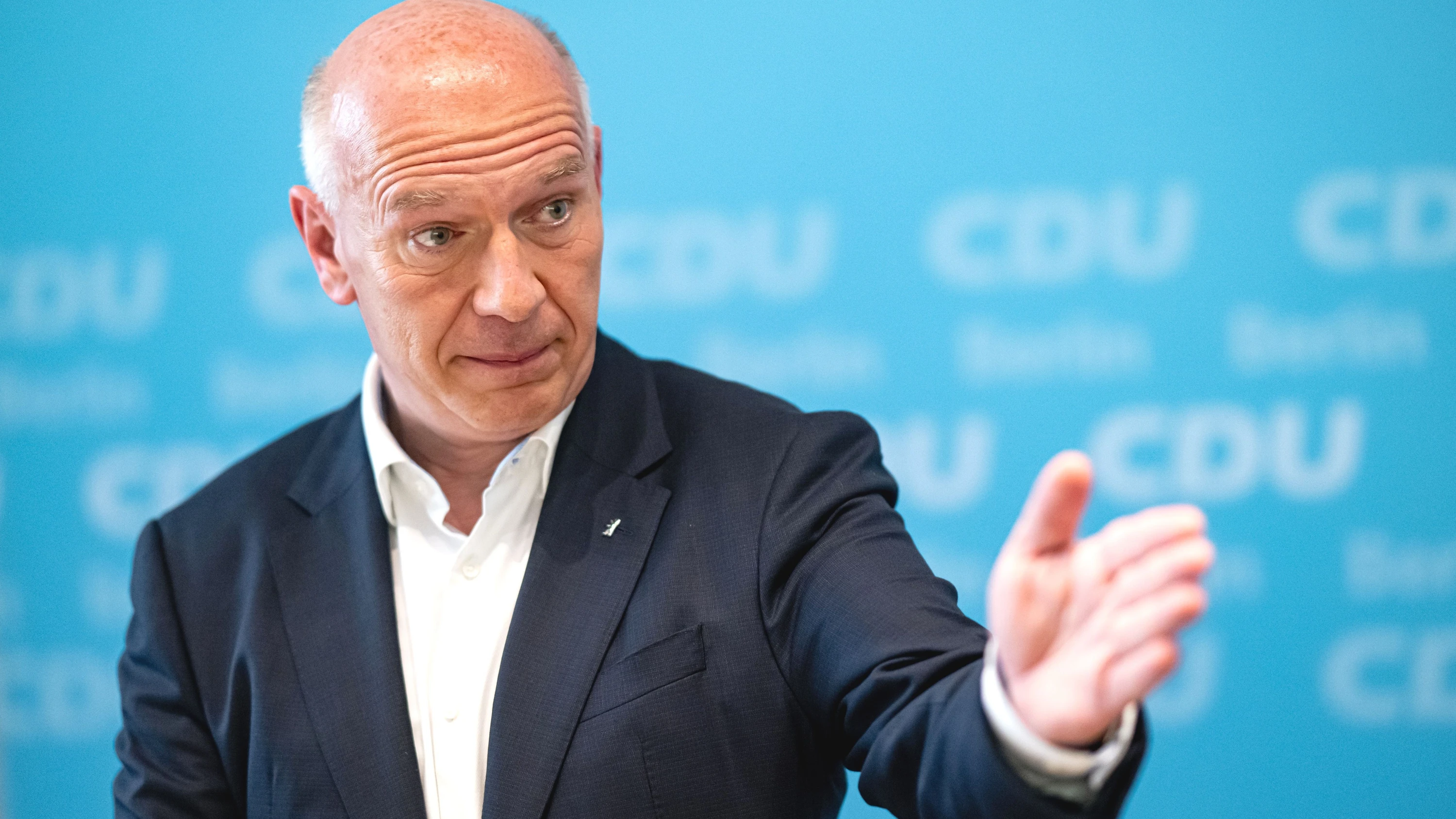
Deutschland-Liveblog: Berliner CDU legt nach Wegner-Rückzug zu Berliner CDU gewinnt laut Umfrage drei Prozentpunkte hinzu +++ Spahn und sein Mann sind Eltern geworden – Debatte über Leihmutterschaft +++ alle Entwicklungen im Liveblog
faz · 2 months ago
Japan changes imperial succession law but keeps ban on female emperor Japans parliament on Friday enacted changes to imperial succession rules, allowing male distant relatives to rejoin the imperial family and women to retain royal status after marrying commoners. The legislation, however, keeps the ban on female emperors despite opinion polls showing broad public support for allowing women to ascend the Chrysanthemum Throne.
france24 · 2 months ago
![Mike Johnsons government funding gambit House Speaker Mike Johnson (R-La.) wants to hold a conspicuously early vote on a short-term funding bill next week — more than two months before the government runs out of money.Why it matters: Johnson may be setting himself up to win in September by losing in July.A failed vote on a short-term spending stopgap could potentially strengthen the GOP leaders hand in another difficult challenge: securing $67 billion for the Pentagon to replenish its munitions through the reconciliation process, according to conservative lawmakers.An early defeat on a continuing resolution would give Johnson a pretext to shoehorn a spending stopgap bill into a September reconciliation package.Call it Reconciliation 3.0 Plus."The Dems know, OK, if we dont do the CR, well do it in a [reconciliation] bill," Rep. Eric Burlison (R-Mo.) told Axios.What were watching: Johnson and Senate Majority Leader John Thune (R-S.D.) are on starkly different wavelengths when it comes to a third reconciliation package."Youve got to think long and hard about this. Its a much easier proposition in the House," Thune said Thursday.But pairing a continuing resolution with reconciliation could have two advantages. First, it makes it harder for House Republicans to oppose the package.It would also present the Senate with a take-it-or-leave-it choice: accept the House reconciliation bill or share the blame for a government shutdown.Zoom out: Republicans are increasingly worried about spending the final month of the midterm campaign defending a government shutdown.House Republicans have little confidence Democrats will provide the votes needed to pass a funding extension.The planned July vote is designed to put both Democrats and the Senate on notice that Republicans dont believe they can count on bipartisan support for a continuing resolution.The other side: GOP senators are deeply skeptical about pivoting to a CR in July.They want to give the regular appropriations process time to work. And they are aware that public talk of a stopgap measure risks undercutting bipartisan negotiations over full-year spending bills.Driving the news: Johnson said Thursday he plans to bring a clean continuing resolution to the House floor next week before lawmakers leave for the August recess. (The Senate is scheduled to remain in session for two additional weeks.)But theres little reason to believe it will pass.House Minority Leader Hakeem Jeffries (D-N.Y.) didnt rule out Democratic support for a clean CR but warned Republicans against taking a "my-way-or-the-highway approach."Meanwhile, some conservatives are threatening to oppose any must-pass spending bill that doesnt include the SAVE America Act. Johnson told reporters he "hasnt decided" whether to attach the measure.Between the lines: Conservatives have been pushing leaders to use reconciliation to fund parts of the government, and a failed CR vote could give Johnson political cover with frustrated appropriators.But the strategy has its detractors."Ive heard it talked about, and I think its a bad idea," Rep. David Valadao (R-Calif.), an Appropriations Committee member, told Axios last month about using reconciliation for appropriations.Yes, but: That entire strategy rests on Republicans actually passing a third reconciliation bill — a prospect about which many lawmakers remain skeptical.The bottom line: Even if the continuing resolution fails, forcing the vote allows Johnson to argue that Republicans exhausted the normal appropriations process before turning to reconciliation.](https://images.axios.com/nVKzemcwMIkIxD1Qj1hlzjkx2kA=/0x50:4000x2300/1366x768/2026/07/16/1784232538996.jpeg)
Mike Johnsons government funding gambit House Speaker Mike Johnson (R-La.) wants to hold a conspicuously early vote on a short-term funding bill next week — more than two months before the government runs out of money.Why it matters: Johnson may be setting himself up to win in September by losing in July.A failed vote on a short-term spending stopgap could potentially strengthen the GOP leaders hand in another difficult challenge: securing $67 billion for the Pentagon to replenish its munitions through the reconciliation process, according to conservative lawmakers.An early defeat on a continuing resolution would give Johnson a pretext to shoehorn a spending stopgap bill into a September reconciliation package.Call it Reconciliation 3.0 Plus."The Dems know, OK, if we dont do the CR, well do it in a [reconciliation] bill," Rep. Eric Burlison (R-Mo.) told Axios.What were watching: Johnson and Senate Majority Leader John Thune (R-S.D.) are on starkly different wavelengths when it comes to a third reconciliation package."Youve got to think long and hard about this. Its a much easier proposition in the House," Thune said Thursday.But pairing a continuing resolution with reconciliation could have two advantages. First, it makes it harder for House Republicans to oppose the package.It would also present the Senate with a take-it-or-leave-it choice: accept the House reconciliation bill or share the blame for a government shutdown.Zoom out: Republicans are increasingly worried about spending the final month of the midterm campaign defending a government shutdown.House Republicans have little confidence Democrats will provide the votes needed to pass a funding extension.The planned July vote is designed to put both Democrats and the Senate on notice that Republicans dont believe they can count on bipartisan support for a continuing resolution.The other side: GOP senators are deeply skeptical about pivoting to a CR in July.They want to give the regular appropriations process time to work. And they are aware that public talk of a stopgap measure risks undercutting bipartisan negotiations over full-year spending bills.Driving the news: Johnson said Thursday he plans to bring a clean continuing resolution to the House floor next week before lawmakers leave for the August recess. (The Senate is scheduled to remain in session for two additional weeks.)But theres little reason to believe it will pass.House Minority Leader Hakeem Jeffries (D-N.Y.) didnt rule out Democratic support for a clean CR but warned Republicans against taking a "my-way-or-the-highway approach."Meanwhile, some conservatives are threatening to oppose any must-pass spending bill that doesnt include the SAVE America Act. Johnson told reporters he "hasnt decided" whether to attach the measure.Between the lines: Conservatives have been pushing leaders to use reconciliation to fund parts of the government, and a failed CR vote could give Johnson political cover with frustrated appropriators.But the strategy has its detractors."Ive heard it talked about, and I think its a bad idea," Rep. David Valadao (R-Calif.), an Appropriations Committee member, told Axios last month about using reconciliation for appropriations.Yes, but: That entire strategy rests on Republicans actually passing a third reconciliation bill — a prospect about which many lawmakers remain skeptical.The bottom line: Even if the continuing resolution fails, forcing the vote allows Johnson to argue that Republicans exhausted the normal appropriations process before turning to reconciliation.
axios · 2 months ago

Der neue Labour - Chef : Was Burnham besser machen muss
gdelt bot · 2 months ago
Economic growth remains fragile as Britain faces political change Britains economy eked out minimal growth in May as the services industry expanded but other sectors shrank, suggesting fragile confidence among businesses against the backdrop of the Iran war and a change of prime minister at home. Gross domestic product expanded by 0.1 per cent in May, in line with the median forecast in a […]
cyprus mail · 2 months ago

Ventura desafia Governo a apresentar moção de confiança Debate do Estado da Nação ficou marcado por críticas cerradas de toda a oposição ao Governo. Chega quer moção de confiança, PS não tem medo de eleições. Castro Almeida pede responsabilidade.
observador · 2 months ago
Erste Queere Wahlarena: Krach und Evers fordern mehr queere Inhalte in der Berliner Lehrerausbildung Spitzenpolitiker von CDU, SPD, Linke und Grünen mahnen am Donnerstagabend an, den Schutz queerer Menschen ernster zu nehmen – geraten bei manchen Themen aber aneinander.
tagesspiegel · 2 months ago
Grindeanu acuză PNL și USR că vor să rămână la putere ca să împartă contracte și posturi în agențiile de stat Președintele PSD, Sorin Grindeanu, a afirmat joi, la Antena 3 CNN, că PNL și USR vor să rămână la putere, blocând negocierile pentru formarea noului Guvern, ca să împartă în continuare contracte și posturi în agențiile de stat. El mai spune că între timp PSD face demersuri pentru a strânge voturile necesare pentru învestirea unui Guvern.
digi24 · 2 months ago