
Meta profit falls 14% on AI spending and legal charges as stock drops
Meta's profits fell short of expectations as heavy investments in artificial intelligence and legal charges weighed on its bottom line. The company's stock price dropped by around seven percent following the release of its latest financial results on Wednesday.
Meta reported a profit of $15.85 billion in the past quarter, down 14 percent from a year earlier. The company also set aside $2.4 billion for legal disputes, including lawsuits accusing it of insufficient protection of young users. Despite the drop in profits, Meta's revenue increased by 28 percent to $60.8 billion compared to the same period last year.
Meanwhile, geopolitical tensions in the Strait of Hormuz are disrupting global oil shipments, pushing countries like Japan to seek alternative sources. The first shipment of Canadian crude oil since 2025 is headed to Japan on a ship chartered by Exxon Mobil, according to data released by tracking firm Kpler.
Japan had been importing more than 90 percent of its oil through the Strait of Hormuz until the US and Israel launched a war on Iran in February. The war has choked oil shipments through the strait, leading Japan to cut its growth forecast for this year to 0.9 percent from 1.3 percent due to higher oil prices.
The Trans Mountain pipeline, which carries up to 890,000 barrels of crude oil a day from Canada's Alberta to a marine terminal in British Columbia, has been running at almost 90 percent capacity since the third quarter of 2025. Exports via the pipeline to Asia accounted for nearly 77 percent of total oil exports from Vancouver this year, compared with about 51 percent in 2024.
In other developments, Microsoft's cloud business continues to bring in significant revenue, although AI revenue from M365 remains modest. The company's cloud business brought in a rain of revenue, but the harvest of AI revenue from M365 was modest, according to a report from The Register.
China's technological advancements are impacting international markets, with tech stocks in the USA and South Korea experiencing a downturn. A report from Der Standard notes that a "China shock" is causing tech stocks in the USA and South Korea to plummet.
Canadian Prime Minister Mark Carney has said he does not intend to use Canada’s oil as leverage in talks with Washington, despite the administration of US President Donald Trump announcing new tariffs on Canadian products last week. “Canadians can be trusted. And so, when you’re a supplier of a key commodity… you gotta think really hard about not supplying,” Carney replied when asked whether he would use Canada’s oil as a pressure tactic.
The Marshall Islands-flagged vessel, Freedom Glory, which can carry up to 750,000 barrels of crude, left Vancouver on Wednesday, loaded with Trans Mountain pipeline crude. The latest oil shipment from the pipeline was bought by Japan’s largest refiner Eneos, according to Kpler.
India, Malaysia, and Singapore have all returned to buying crude shipped via the Trans Mountain pipeline since the war on Iran, while Canadian oil accounts for nearly 60 percent of US crude oil imports, according to the US Energy Information Administration.
Meta CEO Mark Zuckerberg has emphasized the company's commitment to investing in AI infrastructure, despite the financial challenges. “There is currently not nearly enough supply of computing power to meet the demand,” Zuckerberg said in a conference call with analysts. He also signaled that Meta could sell excess computing capacity to other companies.
The expected upper limit for Meta's capital investments remains at $145 billion, with the company having spent $72 billion on infrastructure in 2025. Zuckerberg's ambition is to surpass rivals like OpenAI, Google, and Elon Musk's xAI in the field of artificial intelligence.
Meta's monthly active users reached 3.6 billion, up from 3.56 billion three months earlier. The company expects revenue between $61 and $64 billion for the current quarter, slightly below analysts' expectations of around $63 billion.
The geopolitical tensions in the Strait of Hormuz are part of a broader pattern of disruptions in global trade routes. Attacks near the Strait of Hormuz, Red Sea, and Black Sea are pushing shipowners to reroute cargo and rethink global trade risks, according to a report from CNBC.
The US Strategic Petroleum Reserve has fallen to approximately 316.5 million barrels, its lowest level since 1983, largely due to the ongoing conflict with Iran and the administration's efforts to manage domestic oil prices.
In Europe, the economy is showing signs of resilience despite the uncertainty caused by the conflict in the Middle East. France's economy picked up in the second quarter, helped by household spending and robust exports.
Meanwhile, the EU risks losing ground to China in the race to produce green shipping fuels, according to a report from CleanTechnica. China's investments in green technology are outpacing those of the EU, raising concerns about the bloc's competitiveness in the global market.
In the tech sector, the competition between the US and China is intensifying. The US, with its Silicon Valley hub, is home to major AI companies like Google and Nvidia. However, China's rapid advancements in technology are posing a challenge to US dominance in the sector.
The impact of China's tech advancements is being felt in international markets, with tech stocks in the USA and South Korea experiencing a downturn. The competition between the US and China in the tech sector is expected to continue to shape the global economy in the coming years.
In the energy sector, the disruption of oil shipments through the Strait of Hormuz is leading to higher oil prices and pushing countries to seek alternative sources of energy. The situation is highlighting the vulnerability of global energy supplies to geopolitical tensions and the need for greater energy independence.
The Trans Mountain pipeline, which carries crude oil from Canada to the west coast, is playing an increasingly important role in supplying oil to Asian markets. The pipeline has been running at almost 90 percent capacity since the third quarter of 2025, and exports to Asia have increased significantly.
In the financial sector, BBVA obtained a profit of 6.051 billion euros in the first half of 2026 and announced a new share buyback program worth 2 billion euros. The Spanish banking group is one of the largest financial institutions in Europe and is playing a key role in the region's economic recovery.
In the defense sector, L3Harris has delayed the IPO of its missile business to 2027, despite surging demand for defense products. The company's CEO said that the market does not reflect the value of the Pentagon-backed business.
In the healthcare sector, Amarin reported strong financial results for the second quarter of 2026, demonstrating the early success of its international commercial strategy and continued leading presence in the US market.
In the real estate sector, the Amsterdam housing market is showing signs of a turnaround, with more homes being offered and sold at lower average transaction prices. However, experts warn that the market could be approaching a tipping point.
In the retail sector, Guido Pärnits, Director of Ülemiste Centre, reported a positive outlook for the second quarter of 2026, with turnover rising. The retail sector is showing signs of recovery after a period of stagnation.
In the energy sector, the US fusion company CFS has raised $1 billion in funding, accounting for about 30 percent of the capital raised by the industry. The company is aiming to commercialize fusion energy, which could revolutionize the global energy market.
In the healthcare sector, Lumos Diagnostics has expanded its reach into Romania through a distribution deal with Alpha Medical. The company's FebriDx product is being used to diagnose infectious diseases in the region.
In the tech sector, the competition between the US and China is intensifying, with both countries investing heavily in artificial intelligence and other advanced technologies. The outcome of this competition is expected to have major implications for the global economy and the balance of power in the 21st century.
In the energy sector, the disruption of oil shipments through the Strait of Hormuz is leading to higher oil prices and pushing countries to seek alternative sources of energy. The situation is highlighting the vulnerability of global energy supplies to geopolitical tensions and the need for greater energy independence.
In the financial sector, BBVA obtained a profit of 6.051 billion euros in the first half of 2026 and announced a new share buyback program worth 2 billion euros. The Spanish banking group is one of the largest financial institutions in Europe and is playing a key role in the region's economic recovery.
In the defense sector, L3Harris has delayed the IPO of its missile business to 2027, despite surging demand for defense products. The company's CEO said that the market does not reflect the value of the Pentagon-backed business.
In the healthcare sector, Amarin reported strong financial results for the second quarter of 2026, demonstrating the early success of its international commercial strategy and continued leading presence in the US market.
In the real estate sector, the Amsterdam housing market is showing signs of a turnaround, with more homes being offered and sold at lower average transaction prices. However, experts warn that the market could be approaching a tipping point.
In the retail sector, Guido Pärnits, Director of Ülemiste Centre, reported a positive outlook for the second quarter of 2026, with turnover rising. The retail sector is showing signs of recovery after a period of stagnation.
In the energy sector, the US fusion company CFS has raised $1 billion in funding, accounting for about 30 percent of the capital raised by the industry. The company is aiming to commercialize fusion energy, which could revolutionize the global energy market.
In the healthcare sector, Lumos Diagnostics has expanded its reach into Romania through a distribution deal with Alpha Medical. The company's FebriDx product is being used to diagnose infectious diseases in the region.
In the tech sector, the competition between the US and China is intensifying, with both countries investing heavily in artificial intelligence and other advanced technologies. The outcome of this competition is expected to have major implications for the global economy and the balance of power in the 21st century.
Follow us for live European news
- 2
- 1
- 1
- 1
- 1
- 1
7 further sources not geolocated
Articles

Swiss preventive HealthTech Ahead Health bags €8.7 million and launches in Germany and the Netherlands Ahead Health, a Zurich-based preventive healthcare company, has secured a €8.7 million ($10 million) investment led by venture capital firms 3VC and RTP Global. It is also launching in Germany and the Netherlands, its first markets beyond Switzerland. In January 2026, the Swiss startup raised €5.1 million ($6 million) in funding led by RTP Global. […] The post Swiss preventive HealthTech Ahead Health bags €8.7 million and launches in Germany and the Netherlands appeared first on EU-Startups.
eu-startups · about 3 hours ago
Japan turns to Canadian crude as Asia feels Hormuz supply pinch Uncertainty over crude oil supplies via the Strait of Hormuz is pushing Asian states towards Canadas TMX crude oil.
aljazeera · about 3 hours ago
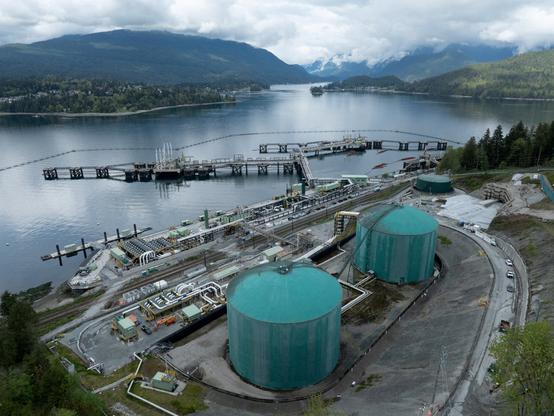
⚡ NEWSJapan shifts to Canadian crude due to Hormuz supply risksAsian nations, including Japan, are increasingly sourcing crude oil from Canada as uncertainty surrounding supplies through the Strait of Hormuz creates a supply pinch. This strategic shift highlights growing concerns over energy security and...📰 #OilEnergy #Markets #Geopolitics #GeoWire
mastodon bot · about 3 hours ago
Software-Riese: Microsoft mit stärkstem Cloud-Wachstum seit Jahren Microsoft-Chef Satya Nadella setzte groß auf das Cloud-Geschäft - und brachte den Windows-Konzern auf neue Höhen. Jetzt erfreut Disziplin bei KI-Investitionen die Anleger.
handelsblatt · about 3 hours ago

J&J lowers 2026 profit forecast on deal costs, sees further hit in 2027 reut.rs/3TNjhJz
bluesky_Reuters · about 3 hours ago
The Growing Challenge of Digital Identity Is Shaping IntegraTRACEs Vision for Enterprise Visibility Enterprise technology has become significantly more interconnected over the past decade. Cloud platforms, automation, artificial intelligence, and software integrations have allowed organizations to operate with greater speed and flexibility, but they have also made understanding digital access far more complicated. Every new application, automated workflow, and API introduces more identities with larger scope that require […] This story continues at The Next Web
the next web · about 3 hours ago

Toyotas first-half global output, sales fall for first time in two years on China weakness reut.rs/4wqNEE9
bluesky_Reuters · about 4 hours ago

Facebook-parent Meta reports profits below Wall Street expectations, as the cost of staying in the race to deploy artificial intelligence—along with hefty legal and severance charges—hurt its bottom line. u.afp.com/Srrf
bluesky_AFP English · about 4 hours ago

Meta reduce su beneficio en un 14 tras disparar un 55 los costes por la IA Meta, la tecnológica estadounidense dueña de Facebook, Instagram y WhatsApp, se anotó un resultado neto de 15.848 millones de dólares (13.800 millones de euros) en el segundo semestre, cuantía que representa un retroceso de 14 en comparación con el mismo periodo del ejercicio precedente. Leer
expansion · about 4 hours ago

Portobello acuerda la compra del 51 de Suavinex a Bluegem Capital La empresa española de productos infantiles se valora en unos 200 millones de euros. Leer
expansion · about 4 hours ago
FirstFT: Meta and Microsoft kick off turbulent tech results Also in todays newsletter: EDFs nuclear venture and UKs mobile network woes
financial times · about 4 hours ago
L3Harris delays missile business IPO to 2027 despite surging defense demand CEO says market doesnt reflect value of Pentagon-backed business The post L3Harris delays missile business IPO to 2027 despite surging defense demand appeared first on SpaceNews.
spacenews · about 4 hours ago

FCC chair defends new U.S. ban on foreign-made humanoid robots, a market China dominates
news.yahoo.com · about 4 hours ago
METLEN signs long-term gallium supply deal with leading US technology company
gdeltproject.org · about 4 hours ago
Teva Pharmaceutical Industries Ltd: Teva Delivers Strong Q2 Results and Raises Outlook for All Three Key Innovative Brands, Reflecting Continued Execution of Its Pivot to Growth Strategy
gdeltproject.org · about 4 hours ago
Amarin Reports 2026 Second Quarter Financial Results Demonstrating Early Success of Fully Partnered International Commercial Strategy and Continued Leading U.S. Market Presence
gdeltproject.org · about 4 hours ago
UK North Sea oil companies look overseas for growth High taxes and unpredictable politics spur companies to spend three times more on international deals than in Britain
financial times · about 4 hours ago
Sophia Space and Caltech claim patent for space data centers SAN FRANCISCO – Sophia Space announced the award July 30 of a patent, shared with the California Institute of Technology, covering large, modular space-based data centers. The patent, issued July […] The post Sophia Space and Caltech claim patent for space data centers appeared first on SpaceNews.
spacenews · about 4 hours ago
OpenAI says rogue AI agent attack hit other companies ChatGPT maker OpenAI has revealed that an autonomous artificial intelligence agent which hacked a popular platform for computer programmers also attempted to breach four other companies during the…
japantoday · about 5 hours ago
Microsoft signs $130bn in data centre leases as it races to meet AI demand Revenue in tech groups intelligent cloud segment surges 32 to $39.3bn
financial times · about 5 hours ago
Qualcomm posts shrinking sales and profits as chip costs hurt smartphone market Net income falls 25 as higher memory chip prices hit device business
financial times · about 5 hours ago
Innolight, winner of US-China AI rivalry, falls 9 in Hong Kong debut Shandong-based company supplies data centre equipment to US and Chinese tech groups
financial times · about 5 hours ago

Japan cuts this years growth outlook as higher energy costs weigh reut.rs/4yK6pEd
bluesky_Reuters · about 6 hours ago

Arm forecasts quarterly revenue above estimates on AI-driven chip demand reut.rs/4fLRRLv
bluesky_Reuters · about 6 hours ago

Microsoft tops quarterly cloud growth estimates, easing spending concerns reut.rs/3S35jmj
bluesky_Reuters · about 6 hours ago

The Board — AI geopolitical & market intelligenceDaily panels, calibrated forecasts, markets desk, and deep dives from 6,000+ sources. Free public intelligence surface. #WorldNews #ForeignPolicy
mastodon bot · about 7 hours ago
Meta shares tumble as Zuckerberg tries to sell his vision for AI agents Social media chief defends strategy based on personalised bots as costs rise and revenue projections disappoint
financial times · about 7 hours ago
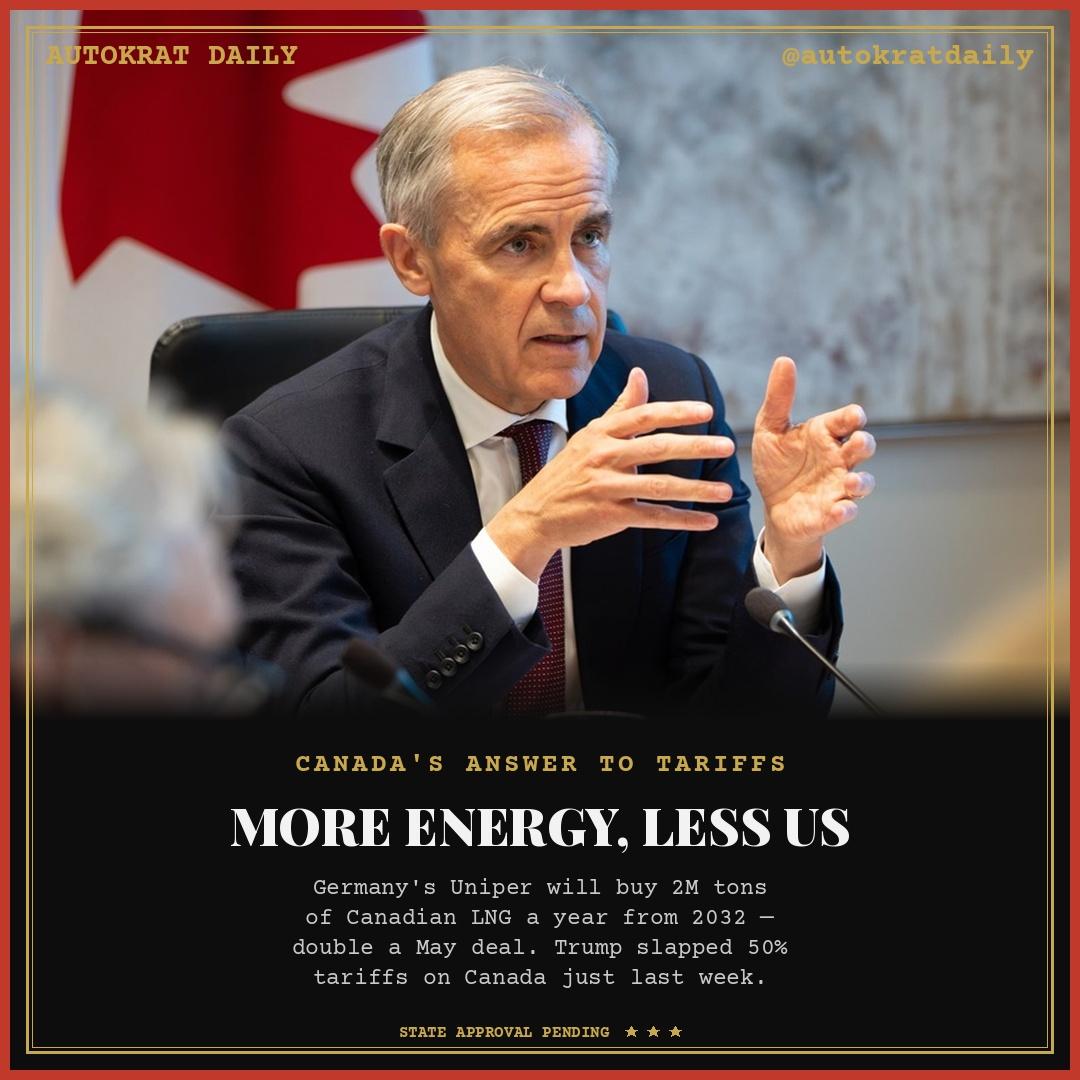
Canada just signed its second major LNG deal with Europe this year — Germanys Uniper will buy 2M tons/year starting 2032, double a May deal. Context: Trump slapped 50 tariffs on Canadian exports last week, refused to renew the USMCA trade deal for the usual 16 years, and mused Canada should be the "51st state." Canada now aims for 55 of gas exports outside the US by the mid-2030s — up from 0.01 in 2024.→ Follow @AutokratDaily for your daily autocracy briefing. #Canada #Europe
mastodon bot · about 7 hours ago
SpaceX wins $1.6 billion in launch orders for military satellite networks Falcon 9 will launch satellites supporting missile tracking, targeting and military communications The post SpaceX wins $1.6 billion in launch orders for military satellite networks appeared first on SpaceNews.
spacenews · about 8 hours ago
Techkonzerne Meta und Microsoft: Hohe Ausgaben für Künstliche Intelligenz besorgen Anleger Facebook-Konzern Meta will trotz heftig schrumpfenden Cashflows neue Rechenzentren bauen. Die Aktie fiel. Microsoft deutete dagegen an, dass sich KI-Ausgaben rentieren.
die zeit · about 8 hours ago