
Top economist warns unified salary law risks deepening Romanias budget crisis
Story Timeline
4 months · 2 summary articles
Thousands of teachers across Europe protest new wage laws amid continent-wide pay disputes
Top economist warns unified salary law risks deepening Romanias budget crisis
Cristian Păun, Romania’s leading economist, has warned that a new unified salary law risks deepening the country’s budgetary woes unless the state itself undergoes sweeping reform. Speaking on Sunday’s Digi 24 show “În fața ta,” Păun argued that Bucharest is trying to square three contradictory objectives—cutting the deficit, meeting PNRR milestones, and keeping civil-service pay high—while financial resources shrink. “To introduce a new unified salary law now, without reforming the Romanian state, is a major problem,” he said. The interview airs at 14:00 on Digi 24 .
Păun’s warning comes as Romania struggles to reconcile EU fiscal rules with domestic political pressures. The draft law aims to standardise public-sector pay scales, but the economist cautioned that without broader institutional reform—including streamlined bureaucracy and stricter spending controls—the measure could widen the budget gap. “The state is trying to reconcile incompatible goals,” he told viewers. “We cannot keep raising salaries while pretending the deficit will disappear.”
The professor also dismissed calls for steeply progressive income taxation, calling it “populist illusion.” In certain scenarios, he said, marginal rates could climb to 65–70 percent, yet without matching deductions and lower social contributions, such hikes would fail to boost revenue. “It is illusory to believe you can apply a high progressive tax without generous deductions and lower other levies,” Păun argued .
On pensions, Păun warned that any attempt to nationalise private pillar-II funds would trigger a “massive scandal” and erode public trust. “These are legally protected private assets,” he said. “Intervening would destroy confidence in the state and destabilise the economy.” Instead, he urged policymakers to nurture capital markets and deploy the funds more efficiently .
The warnings arrive as Romania’s ruling coalition faces mounting pressure to deliver fiscal consolidation ahead of the autumn budget cycle. Analysts note that without credible reform, the unified salary law could become another unfunded mandate, pushing the deficit further from EU targets. Păun’s intervention underscores the tension between short-term political promises and long-term macroeconomic stability.
Follow us for live European news
- 6
- 2
- 1
- 1
- 1
- 1
1 further source not geolocated
Articles

Al via la trasparenza salariale: scatta lobbligo di svelare i livelli retributivi medi per mansione di uomini e donne Via libera alla trasparenza salariale. È entrato in vigore il decreto legislativo che recepisce la direttiva Ue 2023/970 in materia di parità retributiva, che prevede il diritto ad essere informati sul livello retributivo medio percepito dai colleghi e dalle colleghe. Questo perché allo stesso lavoro deve corrispondere la stessa retribuzione, per gli uomini e per […] Larticolo Al via la trasparenza salariale: scatta lobbligo di svelare i livelli retributivi medi per mansione di uomini e donne proviene da Il Fatto Quotidiano.
il fatto quotidiano · 4 months ago
Vorstoß zur Rentenreform: Gewerkschaftsbund fordert verpflichtende Betriebsrente für alle Bis zur Sommerpause will die schwarz-rote Koalition grundlegende Reformen auf den Weg bringen – auch die Rente ist Thema. Die Chefin des Deutschen Gewerkschaftsbunds hat einen Vorschlag.
tagesspiegel · 4 months ago
Reformen: Bundesratspräsident nennt Regierung „Weltmeister im Ankündigen Viele Reformpläne, wenig Umsetzung: Andreas Bovenschulte kritisiert die Arbeit der Bundesregierung deutlich. Er hat klare Forderungen und verweist auf die Macht der Bundesländer.
handelsblatt · 4 months ago
Mittelstand: Familienunternehmer Terberger: „Die mentale Flucht der Unternehmer ist real Der Chef des Modedienstleisters Katag ist in Politik und Mittelstand gut vernetzt und sitzt auch im Aufsichtsrat der Digitalbank N26. Er appelliert, Krisen auch als Chancen zu nutzen.
handelsblatt · 4 months ago
Cristian Păun: „Să vii acum cu o nouă lege a salarizării unitare, fără să reformezi statul român, reprezintă o problemă majoră Noua lege a salarizării unitare riscă să adâncească problemele bugetare ale României, avertizează, într-un interviu pentru emisiunea „În fața ta, profesorul de economie Cristian Păun. Acesta susține că statul încearcă să împace obiective contradictorii: reducerea deficitului, respectarea jaloanelor din PNRR și menținerea veniturilor bugetarilor, în condițiile în care resursele financiare sunt tot mai limitate. „Să vii acum cu o nouă lege a salarizării unitare, fără să reformezi statul român, reprezintă o problemă majoră, spune economistul.
digi24 · 4 months ago
Cristian Păun critică impozitarea progresivă: „E o iluzie populistă; în anumite scenarii, taxarea ar urca spre 65–70 Introducerea impozitării progresive este prezentată adesea ca o soluție pentru creșterea veniturilor la buget, însă profesorul de economie Cristian Păun avertizează, într-un interviu pentru emisiunea „În fața ta, că realitatea este mult mai complexă. Acesta susține că modelele occidentale invocate în dezbaterea publică funcționează împreună cu deduceri fiscale consistente și cu o structură diferită a taxării, iar simpla majorare a impozitului pe venit nu garantează încasări mai mari pentru stat. „Este iluzoriu să crezi că poți aplica un impozit progresiv ridicat, fără deduceri consistente și fără reducerea altor contribuții, spune Păun.
digi24 · 4 months ago
Politiker ska inte sätta priserna Politiska genvägar för att få ned kostnader för veterinärvård är inte rätt väg framåt. Det kan i värsta fall få svensk djursjukvård att backa kvalitetsmässigt, skriver företrädare för branschen.
svenska dagbladet · 4 months ago
Reformvorhaben der Regierung: Bundesratspräsident warnt vor Reformüberlastung Die Bundesregierung will vor der Sommerpause ein Reformpaket beschließen. Andreas Bovenschulte fordert eine Priorisierung und warnt vor zu vielen Ankündigungen.
die zeit · 4 months ago
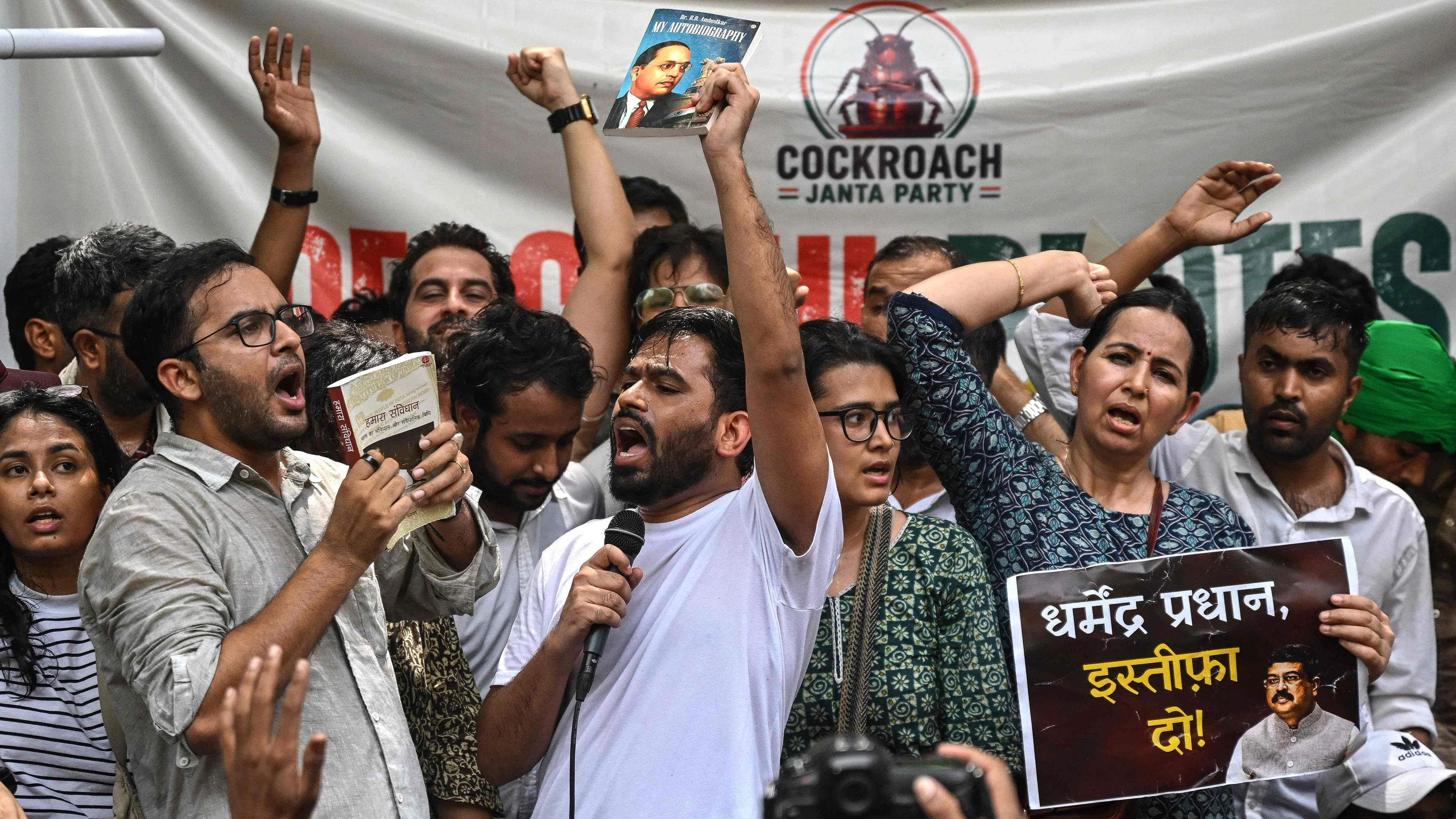
„Kakerlaken-Partei: Die Onlineprotestbewegung wagt den Sprung ins reale Leben Indiens „Küchenschaben gehen auf die Straße. Benannt hat sich die Protestbewegung nach der Äußerung eines Richters. Ihr Thema: die Probleme im Bildungssystem.
faz · 4 months ago
EKRE and Parempoolsed settle on core 2027 election promises of lower taxes As they prepare for the next elections, both EKRE and Parempoolsed are promising tax cuts. The latter would reduce VAT and income tax, while EKRE would also abolish the car tax.
news.err · 4 months ago

BA boss warns costly aviation taxes and rail tickets are stunting UK growth UK lagging behind rivals on tourism growth because of travel costs and lack of joined-up planning, says CEO Sean DoyleThe cost of travel to and around the UK is keeping millions of tourists away and slowing economic growth, the boss of British Airways said, as he urged a rethink of aviation taxes.The airlines chief executive, Sean Doyle, said the UK had some of the highest aviation taxes in the world and was falling behind countries such as Japan, France and Germany in boosting its inbound tourism. Continue reading...
theguardian · 4 months ago
„Arbeitgeber werden davon profitieren, Gehaltsangaben in die Stellenanzeige zu schreiben Offene Gehälter statt Geheimniskrämerei – Eine neue EU-Regel soll Bewerbern mehr Klarheit über das Einstiegsgehalt verschaffen. Berufsberater Markus Karbaum bewertet die geplanten Änderungen und erklärt, welche Chancen und Risiken sie für Bewerber mit sich bringen.
welt.de · 4 months ago
„Es tut allen ein bisschen weh – Aber das Zeichen soll sein, wir tun was Politikwissenschaftler Volker Kronenberg sieht die schlechten Umfragewerte als Zeichen großer Unzufriedenheit, hält die schwarz-rote Koalition aber weiterhin für handlungsfähig. Die geplanten Reformen bewertet er als notwendig und sieht Chancen, verlorenes Vertrauen zurückzugewinnen.
welt.de · 4 months ago
Schützenhilfe der Sozialpartner? : Regierungskoalition hofft auf geeinte Reformvorschläge Für Mittwoch haben die Koalitionsspitzen Arbeitgeber und Gewerkschaften zum Treffen eingeladen. Die Regierung will zwar allein über Reformen entscheiden, doch der Kanzler hofft auf „Inklusion und Input.
tagesspiegel · 4 months ago
Gender Pay Gap: Deutschland bricht bei Entgelttransparenz EU-Recht Alle sollen für gleiche Arbeit das gleiche Gehalt bekommen. Dabei sollen neue EU-Regeln helfen, aber Deutschland setzt sie noch nicht um. mehr...
taz.de · 4 months ago
Cristian Păun despre Pilonul II: „E proprietate privată; orice intervenție ar genera scandal uriaș și ar distruge încrederea în stat Profesorul de economie Cristian Păun a avertizat, într-un interviu pentru emisiunea „În fața ta, că fondurile din Pilonul II de pensii reprezintă capital privat protejat legal și nu pot fi preluate de stat fără consecințe majore asupra încrederii în instituții și asupra stabilității economice. Acesta susține că soluția nu este naționalizarea, ci dezvoltarea pieței de capital și utilizarea mai eficientă a acestor resurse în economie. „România face parte din lumea civilizată; acești bani sunt proprietate privată, a atenționat Păun.
digi24 · 4 months ago
Schumann legt Entwurf zur Lohntransparenz vor Arbeitsministerin Korinna Schumann hat ihren Entwurf zur Umsetzung der EU-Lohntransparenzrichtlinie in die politische Koordinierung geschickt. Eine Einigung mit den Sozialpartnern kam nicht zustande.
die presse · 4 months ago
Schumann-Entwurf erntet Lob und Kritik Nachdem die Sozialpartner sich nicht auf die Umsetzung der EU-Lohntransparenzrichtlinie einigen konnten, hat Arbeitsministerin Korinna Schumann (SPÖ) am Samstag wie angekündigt einen Entwurf in die regierungsinterne Koordination geschickt. Vonseiten der Wirtschaft und aus der ÖVP gab es am Sonntag scharfe Kritik an der Ministerin und dem Entwurf. Lob kam dagegen von Arbeitnehmervertretungen.
orf.at · 4 months ago

Deutschland-Liveblog: Unfälle mit Cannabis am Steuer sollen in Statistik kommen DGB-Chefin Fahimi für verpflichtende Betriebsrente +++ JU-Vorsitzender für geringere Rentenerhöhung zugunsten von Bafög-Verbesserung +++ Pistorius lobt Bürgerinteresse an Tag der Bundeswehr +++ alle Entwicklungen im Liveblog
faz · 4 months ago
„Die Abgeordneten sollen doch bitte dieses Jahr auf ihre Sommerferien verzichten Der Druck auf die Bundesregierung wächst, wichtige Reformen noch vor dem Herbst voranzubringen. WELT-Korrespondentin Deborah Neufing erklärt, warum Unternehmerverbände einen Verzicht auf die parlamentarische Sommerpause fordern.
welt.de · 4 months ago
Bekifft am Steuer: Unfälle unter Cannabis-Einfluss sollen genauer erfasst werden Die Teil-Freigabe von Cannabis gilt seit gut zwei Jahren. Dazu gehört ähnlich wie bei Alkohol ein Grenzwert fürs Autofahren. Aber was ist mit Daten, um Folgen für die Verkehrssicherheit zu erkennen?
tagesspiegel · 4 months ago
Cristian Păun: „Să vii acum cu o nouă lege a salarizării unitare, fără să reformezi statul român, reprezintă o problemă majoră Noua lege a salarizării unitare riscă să adâncească problemele bugetare ale României, avertizează, într-un interviu pentru emisiunea „În fața ta, profesorul de economie Cristian Păun. Acesta susține că statul încearcă să împace obiective contradictorii: reducerea deficitului, respectarea jaloanelor din PNRR și menținerea veniturilor bugetarilor, în condițiile în care resursele financiare sunt tot mai limitate. „Să vii acum cu o nouă lege a salarizării unitare, fără să reformezi statul român, reprezintă o problemă majoră, spune economistul. Emisiunea „În fața ta poate fi urmărită duminică, de la ora 14.00, pe Digi 24.
digi24 · 4 months ago