 Thursday, May 28Thursday, May 28
Stephen Hawking’s father feared his son lacked discipline during his student years, newly uncovered diaries reveal. Frank Hawking, a tropical disease researcher, privately lamented that his son—later the author of *A Brief History of Time* and a global icon of theoretical physics—"hangs round the house with little initiative and does not study much," according to handwritten journals partly written in code. The documents, unearthed for a forthcoming biography, offer a rare glimpse into the personal anxieties surrounding one of the 20th century’s most celebrated minds.
The diaries, described as a mix of coded entries and candid observations, suggest Frank Hawking’s concerns extended beyond academic performance. He reportedly worried about his son’s work ethic and social habits, contrasting sharply with the relentless intellectual drive Hawking would later demonstrate. These revelations challenge the public image of Hawking as a prodigy, instead painting a more complex portrait of a young man whose genius may have been less immediately apparent to those closest to him.
*A Brief History of Time*, published in 1988, became a cultural phenomenon, selling over 13 million copies and cementing Hawking’s reputation as a bridge between cutting-edge science and popular understanding. Yet the newly surfaced diaries suggest his father’s early doubts persisted even as Hawking’s academic trajectory took shape. The journals do not specify whether Frank Hawking’s concerns were ever resolved, but they underscore the gap between private apprehension and public legacy.
The discovery adds depth to the narrative of Hawking’s life, which has often been framed by his groundbreaking work on black holes and his battle with ALS. Historians note that such personal archives rarely survive intact, making the diaries a significant find for scholars examining the intersection of genius, family dynamics, and the pressures of intellectual achievement. A full analysis of the documents is expected in the upcoming biography, which promises to reframe how we understand the formative years of a scientist who reshaped our understanding of the universe.

„Nu studiază prea mult. Stephen Hawking văzut prin ochii tatălui său. Jurnalele care schimbă perspectiva asupra geniului Stephen Hawking, unul dintre cei mai importanți fizicieni ai lumii și pionier al teoriei găurilor negre, autor al bestsellerului A Brief History of Time, a fost privit cu îngrijorare în anii de studenție chiar de tatăl său, potrivit unor jurnale de familie recent descoperite.
adevarul · 5 days ago

The show might go on: what happens to late-night TV without Stephen Colbert? The end of The Late Show, an American institution since 1993, leaves those still surviving within the format wondering what the future looks likeShare your favorite memories from The Late Show With Stephen ColbertIn a way, its a shock every time the biggest talkshow hosts assemble into their Strike Force Five, the podcast-born group consisting of Stephen Colbert, Jimmy Fallon, Jimmy Kimmel, Seth Meyers and John Oliver. No, the shock isnt the lack of Greg Gutfeld, the highly viewed Fox News talkshow host who has nonetheless only ever been funny as a punchline unto himself, and was playfully name-checked on the final episode of Colberts The Late Show, after the deposed king of late-night was informed the highest-rated host was getting the boot. (Theyre canceling Gutfeld?! he cried in fake panic.) The real repeated surprise is the realization that there are (or were) five major late-night hosts still standing.OK, even before Colbert got the axe, it was actually four: Oliver hails from a weekly perch on HBO, which, given similar jobs held by Dennis Miller for nine years and Bill Maher for 24, seems likely to last for at least 200 seasons. But still: four big-name network talkshows? In this economy?! Strike that down to three, now that Colberts tenure is officially over, and his David Letterman-founded late-night franchise with it. Though Colbert is the exact wrong one to cull – the groups best interviewer, strongest comedy bona fides, and highest-rated show to boot! – its hard to argue that network TV is in need of the late-night chatshows that used to be such a major status symbol and, presumably, cash cow. Though the shows are notoriously expensive (such that CBS was able to claim that their king of late-night also lost money), they must have once generated substantial revenue, given the amount of jockeying the 11pm-and-beyond slot inspired throughout the 1980s and especially 90s. Continue reading...
theguardian · 5 days ago
Lada iese definitiv de pe piața germană după 50 de ani: sfârșit de eră pentru brandul rus, în urma falimentului importatorului Lada iese definitiv de pe piața germană după peste 50 de ani de prezență, după ce importatorul său, Lada Deutschland GmbH, a intrat în insolvență și nu a mai reușit să atragă un investitor.
adevarul · 5 days ago

I laughed out loud dozens of times: authors choose books to make you fall back in love with reading From a darkly comic new novel to a gripping 1950s memoir – Katherine Rundell, Malala Yousafzai, Matt Haig and others appearing at Hay festival pick titles to tempt youMalala YousafzaiActivistI have loved going to the theatre ever since I saw my first musical (Matilda in London, when I was 15 years old) – and I love reading about it, too. In Enter Ghost by Isabella Hammad, a British-Palestinian actor travels to the West Bank to see family and finds herself pulled into a local production of Hamlet. I was moved by the rehearsal scenes: arguments over translations, personal relationships, the question of whether a performance is even possible under Israeli occupation. To me, Hammad proved that theatre is capable of carrying weight that other art forms cannot hold. Continue reading...
theguardian · 5 days ago

Boards of Canada: Inferno review – after 13 years away, their prodigal return is a big disappointment (Warp)The Scottish electronic duo remain hugely influential – but their new albums interrogation of religion is dubious, and the drum programming is worse stillThis is the first album in 13 years from Boards of Canada, and from the opening notes – an analogue synth rising and falling like a sound effect in a forgotten 1960s radio play – youre thrust back into one of the most instantly recognisable worlds in electronic music.From 1995 debut EP Twoism onward, across four LPs and four more EPs, the Scottish duo – brothers Mike Sandison and Marcus Eoin – used the heavy gait of classic hip-hop beats to trudge through spectral ambient vistas, like spacemen sent through a time portal while still being tethered to the present. By grabbing samples from old public television and other vintage sources, they looked back at the utopian promise of the mid-20th century, while teasing out the latent kitsch and creepiness of these sounds. Continue reading...
theguardian · 6 days ago

Tim Dowling: the band shuns my new jokes. But telling the old ones proves even riskier When my cat jokes are met with near silence, theres only one thing for it …I remember the first time it happened, in the bands earliest days. We were playing a small festival in Yorkshire, before a seated audience in an arts centre. At the end of the first song there was an unfamiliar sound, like bacon sizzling, but amplified. It took me a moment to realise it was applause.Up until that point we had mostly played in pubs, where everything we did was met with the same level of high-spirited indifference – the persistent, lively hum of people determined not to let a bit of music spoil their night out. Applause was new. Continue reading...
theguardian · 6 days ago

Can hybrid village stores answer rural Germanys cry for help and fend off far right? Retail innovation, where people can shop alone after staff have gone, is helping vital community hubs surviveOnce upon a time, every German village had its own Tante Emma laden (Aunt Emma shop), a family-run hub of community life where local people bought their groceries at affordable prices and shot the breeze with their neighbours.But in recent years the loose network of small businesses throughout Europes biggest economy has come under huge pressure from staffing shortages, competition from supermarket chains and rising inflation, which the Iran war has again sent surging. Continue reading...
theguardian · 6 days ago
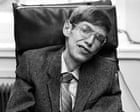
Stephen Hawkings father worried his son does not study much, diaries reveal Exclusive: New biography uncovers Frank Hawkings papers in which he lamented that his son had little initiativeIn exploring the physics and geometry of the universe, Stephen Hawking became a world-renowned pioneer of black hole theory, writing the bestselling book A Brief History of Time, which has sold more than 13m copies, and inspiring people to look up at the stars and not down at your feet.But, during Hawkings student years and as he approached adulthood, his father was deeply concerned about how his son would turn out. Frank Hawking lamented that he hangs round the house with little initiative and does not study much, according to previously unknown diaries that he had written partly in code. Continue reading...
theguardian · 6 days ago

Are they your real teeth? How TVs best – and most gloriously blunt – chatshow ripped up the rulebook As Rylan Clark takes the final hot seat on The Assembly, the makers tell all about this revolutionary show. Where else would a politician be driven to tears? Or Stephen Fry be asked about his sexual proclivities? As TV presenter Rylan Clark trepidatiously arrives for his appearance on The Assembly, hes heard wondering aloud: Shit, what are they gonna ask me? We soon find out. The opening questions fired at him by these unique interviewers are Are they your real teeth? and Did you ever consider having a real suntan? So much for small talk.The ensuing half-hour takes in probing inquiries about his infidelity, divorce and resulting breakdown. The 28-strong neurodivergent panel ask Rylan whether he loved his absent father, when he came out as gay and how he copes when one of his famous friends gets cancelled (his tearful reply appears to allude to Radio 2 colleague Scott Mills). You bastards, Rylan sniffs. You made me cry. Continue reading...
theguardian · 6 days ago

Atrio cumple 40 años: una historia de amor cocinada con perseverancia, intuición y un poco de Prozac Detrás del restaurante que puso Cáceres en el mapa gastronómico y cultural está la perseverancia de Toño Pérez y Jose Polo, pareja personal y profesional que se conoció en el instituto. El robo de película en su bodega en 2021 puso a este tres estrellas Michelin en boca de todos Leer
elmundo · 6 days ago
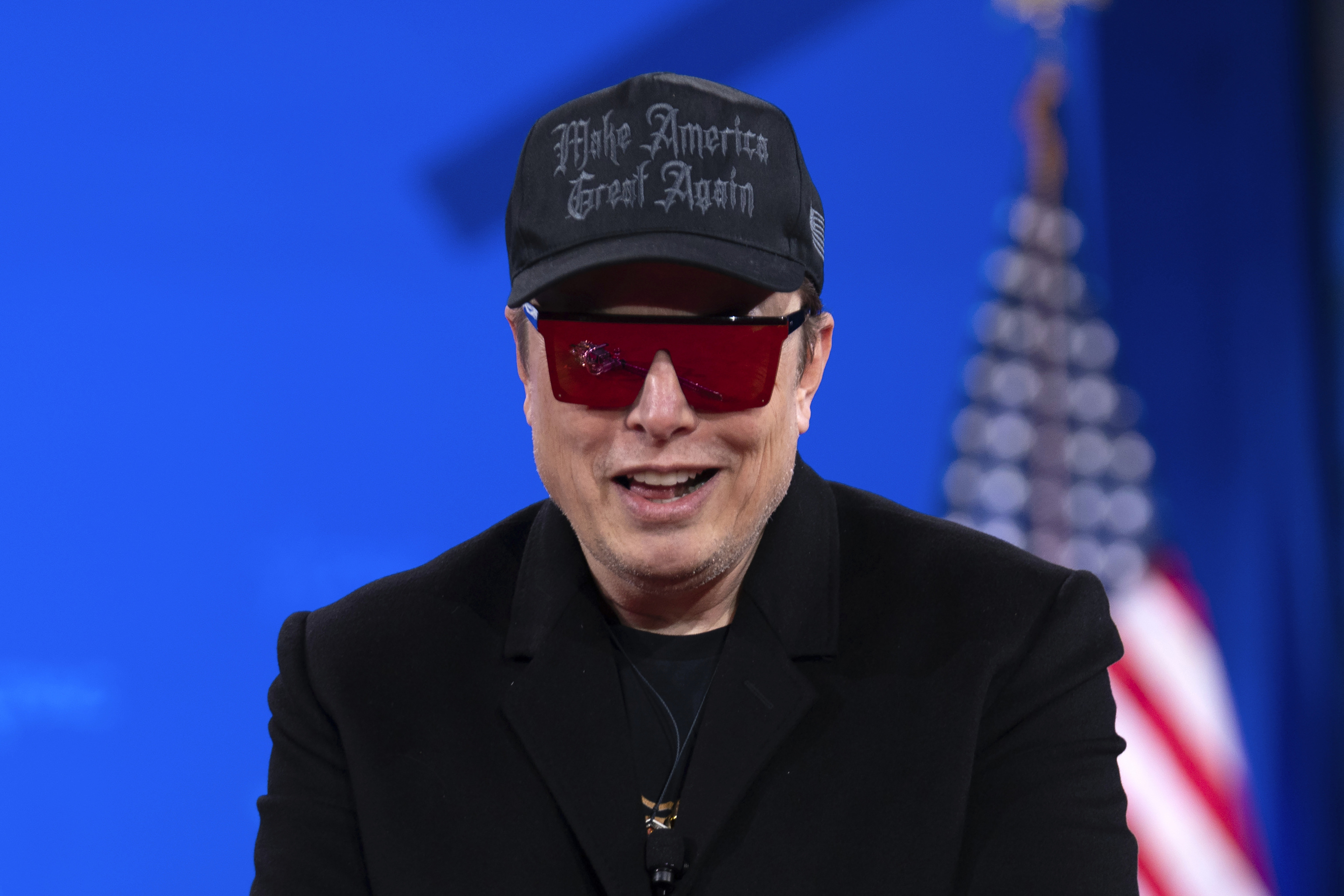
Elon Musk desafía la historia de los mercados con una salida a bolsa que le puede convertir en el primer billonario del mundo Pese a que la empresa factura poco más de 20.000 millones, el magnate ambiciona una valoración de 2 billones de dólares en la primera de las macrosalidas a bolsa que espera Wall Street Leer
elmundo · 6 days ago
Hope can help you find your way through the fog, Angélique Kidjo unveils new album Angélique Kidjo is a global music icon, five-time Grammy winner, and unstoppable force for change. The Beninese superstar has just released her powerful new album HOPE!!, a groove-heavy, galvanizing work dedicated to her late mother, featuring collaborations with Pharrell Williams, Ayra Starr, Davido, and more. Fresh from her Hollywood Walk of Fame star and ongoing world tour, Kidjo continues to blend African rhythms with universal messages of resilience and unity. Jean-Emile Jammine speaks to a living legend and passionate activist.
france24 · 6 days ago