 Sunday, June 7Sunday, June 7
Taiwan’s President Lai Ching-te on Thursday intensified pressure on Beijing to confront the legacy of the 1989 Tiananmen Square crackdown, marking the 37th anniversary of the bloody suppression of pro-democracy protests with a renewed call for accountability. Speaking to international media, Lai condemned China’s persistent silence over the massacre, which left hundreds—possibly thousands—of civilians dead when the People’s Liberation Army opened fire on unarmed demonstrators in Beijing’s central square. “History cannot be rewritten, and truth cannot be erased,” Lai said. “China must acknowledge the Tiananmen tragedy and respect the universal values of freedom and human rights.”
The timing of Lai’s remarks coincides with escalating regional tensions, as China this week banned four New Zealand lawmakers over their recent visit to Taiwan, accusing them of sending “wrong signals” to Taipei’s ruling Democratic Progressive Party . The move underscores Beijing’s growing frustration with international support for Taiwan, a self-governing democracy that China claims as part of its territory. Meanwhile, Taipei is accelerating its military modernization, aiming to deploy more than 1,800 anti-ship missiles by early 2029 to deter potential Chinese blockade or invasion attempts .
The standoff over Tiananmen reflects deeper geopolitical fractures. Lai’s demand for accountability follows years of Beijing’s refusal to revisit the crackdown, which remains a taboo subject in China. US Secretary of State Marco Rubio recently echoed Taipei’s stance, stating that Beijing could not “erase the memory of the 1989 protests” . Analysts warn that the impasse risks further straining already tense US-China relations, particularly as Washington deepens ties with Taipei.
Regional allies are also recalibrating their strategies. Japan and the Philippines, both locked in territorial disputes with China, are expanding military cooperation, with Manila reportedly considering the purchase of Japanese defense equipment—a move that has drawn sharp criticism from Beijing . Meanwhile, China’s use of professional networking platforms like LinkedIn to recruit Western spies has raised alarms among intelligence agencies, highlighting Beijing’s evolving tactics in its global influence campaigns .
As Lai’s government prepares for a potential long-term standoff with Beijing, the Tiananmen anniversary serves as a stark reminder of the unresolved tensions shaping Asia’s security landscape. With no signs of compromise from either side, the risk of miscalculation—and escalation—remains a pressing concern for the international community.
Taiwan demands China acknowledge Tiananmen massacre as tensions rise

Face aux pressions chinoises, le Japon et les Philippines misent sur la coopération En conflit avec Pékin pour le contrôle de plusieurs archipels, les deux pays insulaires multiplient les signes de rapprochement. Manille pourrait acquérir du matériel militaire japonais, suscitant lire de la Chine.
liberation · 3 days ago

China Uses LinkedIn to Lure Spy Recruits in West, U.S. and Allies Warn Beijing is accused of expanding its use of job sites to target military and government personnel.
wsj · 3 days ago
Opinion: The future of the China-US-Russia triangle after Pelosis visit to Taiwan Since February 24, 2022, the international communitys focus was concentrated entirely on the war in Ukraine and the growing Russia – West confrontation. It seemed that nothing could change the situation until the end of hostilities in Ukraine. However, on August 2 and 3, almost everyones attention shifted from Ukraine to Taiwan. As the Speaker of the US House of Representatives, Nancy Pelosi, stated her intention to visit Taiwan, up to half a million people were watching the trajectory of her plane on air flight tracking sites. The negative reaction of China, including the warning of President Xi during his conversation with President Biden that those who played with fire would be perished by it, created hype around this visit. Many were discussing the possibility of Chinese military jets closing the airspace over Taiwan and preventing Pelosis plane from landing in Taiwan, while some enthusiasts were even contemplating the possibility of a US-China direct military clash. As Pelosi landed in Taiwan and met with the Taiwanese President, the global social media was full of amateur assessments about the strategic victory of the US and the confirmation of the US global hegemony. However, as the dust settles down, and information noise and manipulation eventually decreases, a more serious assessment is needed to understand the real consequences of this visit.
commonspace · 3 days ago
HCM Invited to Choose France Summit to Boost Taiwan-France Energy Alliances
gdeltproject.org · 3 days ago
China bans four New Zealand lawmakers over visit to Taiwan China says the MPs visit sends the wrong signals to Taiwans ruling party.
aljazeera · 3 days ago

From reform hopes to brutal crackdown - Chinas Tiananmen protests reut.rs/49EzCp6
bluesky bot · 3 days ago
Escaladare în Strâmtoarea Taiwan: Taipei își întărește arsenalul antinaval. Poziție defensivă în fața Chinei: „Posibil război de uzură Taiwanul își va mări considerabil arsenalul de rachete puternice antinavale la peste 1.800 de unități până la începutul anului 2029, în încercarea de a-și consolida capacitatea de a face față amenințării crescânde de blocadă sau invazie din partea Chinei, arată un calcul realizat de Reuters. Acest arsenal în expansiune de arme care pot fi lansate de pe avioane, nave și lansatoare terestre face parte din orientarea Taiwanului către o așa-numită strategie asimetrică, în cadrul căreia apărătorii insulei încearcă să compenseze avantajul masiv al Chinei în materie de putere de foc cu un număr mare de arme accesibile, dar letale. Acestea includ, de asemenea, rachete cu rază de acțiune mai scurtă și roiuri de drone terestre și aeriene, afirmă ofițeri militari actuali și foști din Taiwan.
digi24 · 3 days ago
Tianamen-Massaker: Rubio mahnt China
orf.at · 3 days ago

China, US clash over Tiananmen anniversary, Taiwan says face up to history
news.yahoo.com · 3 days ago
GUNTER: Premier Smith juggling priorities on separatist referendum debate
gdeltproject.org · 3 days ago
Putin pressures Armenia as it considers joining the EU
gdeltproject.org · 3 days ago
Baku Energy Week highlights Azerbaijans rising role in global energy security
gdeltproject.org · 3 days ago
Erik Gamzejev: The Narva power split as the consequence of indifferent voters As Narvas political power struggle descends into a surreal standoff between rival administrations, the citys dual-power crisis is exposing deeper problems in local democracy, voter engagement and political accountability, writes Erik Gamzejev.
news.err · 3 days ago
Russia ramps up pressure on Armenia ahead of Sundays crucial election Russia has increased its pressure on Armenia ahead of Sundays parliamentary elections, pulling out virtually all the stops linked to trade should its long-term ally persist in its ambitions to join the European Union. Moscow has threatened to raise gas prices, put measures in place to be able to restrict the Russian import of certain Armenian products and warned it may suspend the country from the Eurasian Economic Union.
france24 · 3 days ago
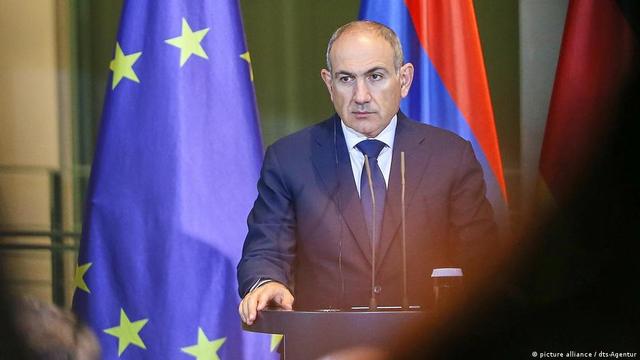
Armenias election offers a choice between Russia and the EU.Armenians are set to vote on the countrys future geopolitical direction on 7 June.The election will be a test of public opinion in the long-standing Russia ally, where the population is increasingly eyeing the EU. #Elections #Politics #Russia #EU
mastodon bot · 3 days ago

The EUs foreign policy service is pushing to sanction four Chinese companies it accuses of supporting Russias war against Ukraine, according to documents seen by POLITICO.
bluesky bot · 3 days ago
Taiwans Präsident kritisiert Chinas Umgang mit dem Tiananmen-Massaker US-Außenminister Marco Rubio betonte derweil, die Volksrepublik könne die „Erinnerung an die Proteste von 1989 nicht auslöschen.
die presse · 3 days ago

Taiwans Lai criticizes Chinas silence on Tiananmen 37 years on
news.yahoo.com · 3 days ago
20 May 2026 - Armenia Election Monitor - The role of electoral observer missions in Armenia ahead of the parliamentary elections
commonspace · 3 days ago
21 May 2026 - Azerbaijan hosts the 13th Session of the UN World Urban Forum
commonspace · 3 days ago
22 May 2026 - Armenia Election Monitor - The upcoming Armenian election will decide the future direction of the country
commonspace · 3 days ago
27 May 2026 - Armenia Election Monitor - Armenia at a crossroads: Elections, peace, and the limits of international guarantees
commonspace · 3 days ago
29 May 2026 - Armenia Election Monitor - Upcoming elections in Armenia: why is it important? - a view from Azerbaijan
commonspace · 3 days ago
3 June 2026 - Armenia Election Monitor - A strategic choice: Armenian voters between diversification and dependency
commonspace · 3 days ago

Kosovo Leaders Again Bid for Power Amid Vote-Influencing Claims As Kosovo heads toward its third election in 16 months – with few signs that it will resolve the political deadlock – acting PM Kurti faces accusations of using public money to swing voters.
balkaninsight · 3 days ago
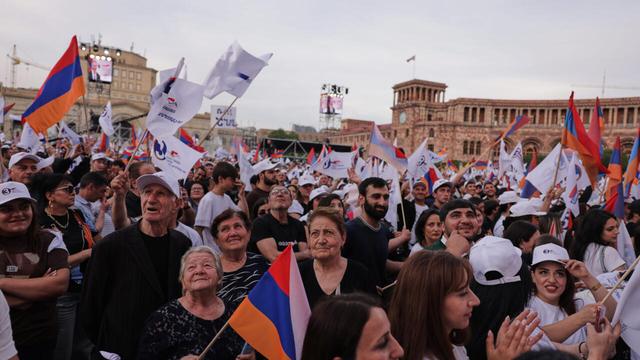
⚡ NEWSRussia pressures Armenia ahead of parliamentary electionsRussia has intensified pressure on Armenia before Sundays parliamentary elections, threatening to raise gas prices, restrict imports of Armenian products, and suspend the country from the Eurasian Economic Union if it continues pursuing EU membership.📰 #EU #Diplomacy #Geopolitics #GeoWire
mastodon bot · 3 days ago

Taiwan presses China to confront Tiananmen past reut.rs/43LVfjN
bluesky bot · 3 days ago

In an effort to counter the threat of an invasion or blockade by China, Taiwan is aiming to increase its arsenal of powerful anti-ship missiles to more than 1,800 by early 2029, Reuters found reut.rs/4e0TMep
bluesky bot · 3 days ago

Japan government expects BOJ to coordinate policy steps with it, spokesperson says reut.rs/4e3CCN4
bluesky bot · 3 days ago
Rubio outlines three‑phase Venezuela transition before free elections US Secretary of State Marco Rubio told a House committee that Venezuela must undergo a three‑phase process — stabilisation, recovery, and elections — following a US military operation. He stressed that independent press, political party infrastructure, and a new electoral commission are prerequisites for democratic polls.
yenisafak · 3 days ago