 Sunday, June 7Sunday, June 7
Germany’s bid for a non-permanent seat on the United Nations Security Council collapsed on Wednesday after it failed to secure the 127 votes required in the UN General Assembly, a humiliating setback that has triggered soul-searching about Berlin’s global influence and diplomatic strategy. Austria and Portugal won the two available seats for the 2027–2028 term, while Trinidad and Tobago, Zimbabwe, and Kyrgyzstan—elected for the first time—rounded out the new cohort. Germany’s failure to cross the threshold marks the first time in decades that Europe’s largest economy has been denied a seat on the Council, raising immediate questions about the competence of its foreign policy under Chancellor Friedrich Merz.
The vote, held in New York on Tuesday, ended with Austria receiving 148 votes and Portugal 145, comfortably above the 127-vote threshold, while Germany managed only 126, one vote short. Kyrgyzstan defeated the Philippines in a three-round runoff to claim the final seat, underscoring the competitive nature of the contest. Analysts and diplomats cited Germany’s delayed candidacy—officially launched in 2020, years after Austria (2011) and Portugal (2013)—as a decisive factor in its defeat. “Germany started too late and never caught up,” wrote Austria’s *Die Presse*, which celebrated the result as a “prelude to world politics” and a symbolic triumph over its larger neighbor.
Critics have also pointed to Germany’s unwavering support for Israel as a potential liability in a vote dominated by African, Asian, and Latin American states. “Did Germany lose its UNSC seat because of support for Israel?” asked *Al Jazeera*, highlighting the sensitivity of the issue in regions where public opinion often diverges sharply from Western positions. The German government has rejected such interpretations, insisting that its candidacy was based on a strong record of multilateral engagement and financial contributions to the UN.
Reaction within Germany has been sharp. Austrian Foreign Minister Beate Meinl-Reisinger was photographed celebrating the result with her team, an image that went viral and was widely interpreted as a diplomatic rebuke. Austrian media framed the victory as a historic moment, while German outlets described the outcome as a “slap in the face” for German diplomacy. *Der Standard* noted that Berlin’s late entry left it “trailing from the start,” while *Die Zeit* quoted the BBC describing Merz’s handling of the campaign as a “public embarrassment.”
The defeat comes at a sensitive moment for German foreign policy, which has sought to position itself as a bridge between the West and the Global South. With the Security Council set to play a central role in addressing conflicts from Ukraine to Gaza, Germany’s absence will be keenly felt. Analysts suggest Berlin may now reassess its diplomatic outreach, particularly in Africa and Asia, where its influence has been tested by shifting geopolitical alliances. For now, however, the message from New York is clear: Germany’s claim to a leading role on the world stage has been quietly, but decisively, rejected.
Germany fails to win UN Security Council seat in humiliating defeat

UN Security Council defeat raises questions about Germanys global standing
gdeltproject.org · 3 days ago
Did Germany lose its UNSC seat because of support for Israel? Germany lost its Security Council bid to Austria and Portugal, which secured the two available seats.
aljazeera · 3 days ago
UN General Assembly elects five new non‑permanent Security Council members Austria, Portugal, Trinidad and Tobago, Zimbabwe, and Kyrgyzstan have been elected as non‑permanent members of the UN Security Council for the 2027‑2028 term. Kyrgyzstan, which defeated the Philippines after three rounds of voting, will serve for the first time.
yenisafak · 3 days ago
Ein Vorspiel in der Weltpolitik: So jubeln Weltmeister [premium] Außenministerin Beate Meinl-Reisinger und ihr Team jubelten über den Sieg über Deutschland bei der Wahl zum UN-Sicherheitsrat, als wäre Österreich bereits Fußball-Weltmeister.
die presse · 3 days ago

Ernüchterung bei Deutschland nach Niederlage im UN-Sicherheitsrat Österreich erklärte schon 2011 seine Kandidatur für das Gremium, Portugal tat dies 2013. Deutschland zog erst 2020 nach – und geriet so von Anfang an ins Hintertreffen
der standard · 3 days ago
Five countries elected to UN Security Council
gdeltproject.org · 3 days ago
Who is Khalilur Rahman, Bangladesh FM who beat Cyprus to UNGA presidency? Rahman, a career diplomat who held several portfolios at the global body, beats Cypruss Ambassador Andreas Kakouris.
aljazeera · 3 days ago

Was bringt der Sitz im UN-Sicherheitsrat? Bei aller Problematik: Österreich kommt etwas aus seiner Rolle als internationaler Non-Player heraus
der standard · 3 days ago
Presseschau zur UN-Wahlniederlage: »Schallende Ohrfeige für die deutsche Diplomatie« Auch international werden Fragen nach der gescheiterten Bewerbung um den UN-Sicherheitsrat laut. Die BBC urteilt, Friedrich Merz habe sich blamiert. Eine Presseschau
die zeit · 3 days ago

Eleven years ago, a little-known Colombian diplomat pushed 193 countries to sign the Sustainable Development Goals. Today the biggest signer is gone, no one has moved to replace it, and an Ebola outbreak in Congo is showing what that costs.
bluesky bot · 3 days ago
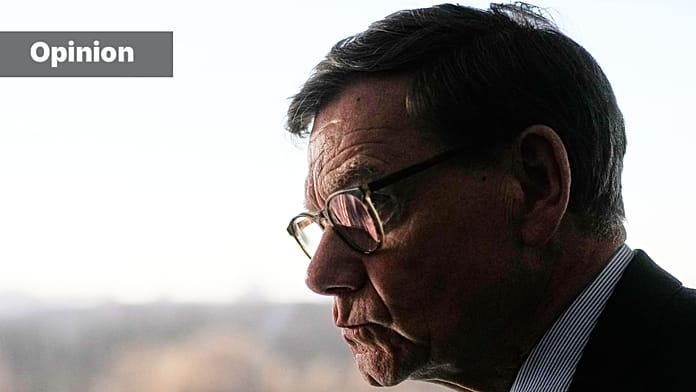
UN Security Council defeat raises questions about Germanys global standing Germany failed to get the 127 votes required for a seat on the UN Security Council. For Euronews, Alexander Wolf explains why.
euronews · 3 days ago