Loading…
 Saturday, August 29Saturday, August 29
2 months · 19 summary articles
Lithuanian President Gitanas Nausėda joined European leaders in welcoming a US-Iran memorandum of understanding on Monday, as Vilnius reaffirmed its commitment to transatlantic security and regional infrastructure projects. The announcement came as Nausėda delivered his seventh annual address to the Seimas, underscoring Lithuania’s dual focus on geopolitical stability and economic integration.
Speaking in Vilnius, Nausėda aligned with counterparts from Britain, France, Germany, and Italy in endorsing the diplomatic accord, which aims to de-escalate tensions in the Middle East . The move reflects Lithuania’s broader strategy of reinforcing alliances amid regional security concerns. Defense Minister Raivis Melnis of Latvia echoed this stance, stating that cooperation with the United States remains the cornerstone of Baltic security .
On the economic front, construction began on a new €9.8 million Rail Baltica link between Ülemiste and Lasnamäe in Tallinn, marking a tangible step toward the EU-funded high-speed rail network . The project, contracted to LEONHARD WEISS OÜ, follows a technical workshop in Vilnius last week with Port Polska, highlighting the corridor’s expanding role in connecting Central and Northern Europe . Rail Baltica’s transport minister, Rihards Kozlovskis, emphasized that EU funding remains indispensable for the initiative’s completion .
Latvia is also prioritizing defense acceleration at the European Council, with Foreign Minister Margus Tsahkna set to discuss Ukraine-related issues in Luxembourg . Meanwhile, the Baltic states are diversifying their economic ties, from Bentley Systems’ new Vilnius office to Signet Bank’s financing of a Latvian firm’s Lithuanian mushroom farming expansion .
Nausėda’s address also touched on domestic challenges, with political analyst Tomas Janeliūnas warning that democratic apathy, not external threats, poses the gravest risk to Lithuania’s institutions . As the Baltic states navigate security and infrastructure milestones, their alignment with EU and NATO priorities signals a year of strategic consolidation.
Follow us for live European news
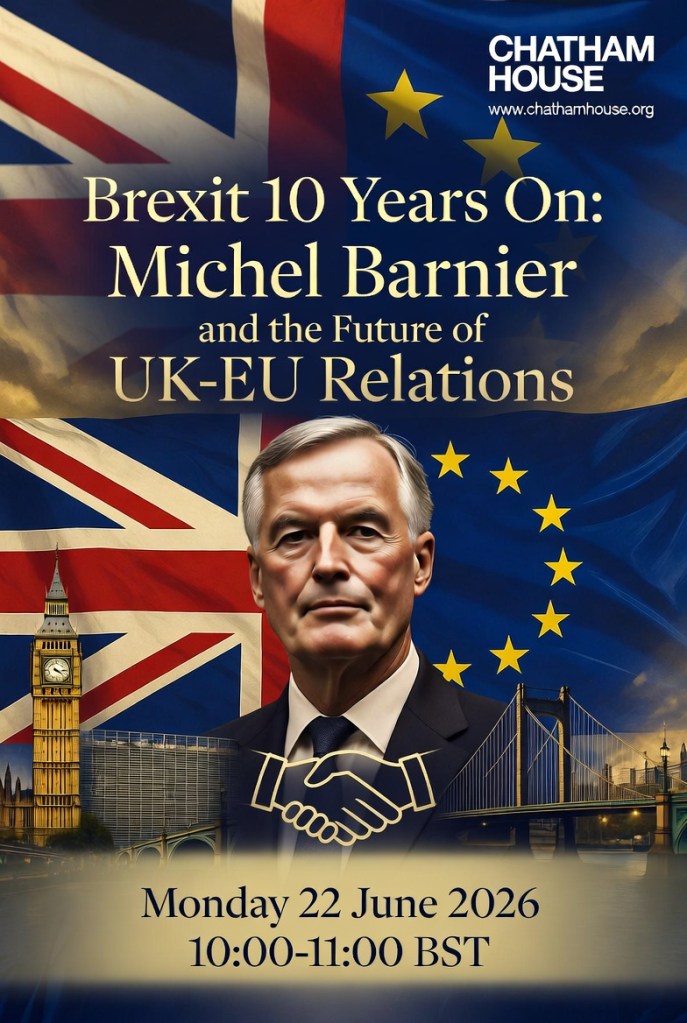
Chatham House: Brexit 10 years on: Michel Barnier and the future of UK-EU relations The Chatham House meeting, chaired by Grégoire Roos, featured former French Prime Minister Michel Barnier discussing UK-EU relations post-Brexit. A decade later, tensions over trade and politics persist, affecting cooperation. Barnier emphasized the significance of the upcoming French presidential election and highlighted the challenges and potential solutions for rebuilding relationships between London and Brussels.
mastodon bot · 2 months ago

Latvia will emphasize at European Council need to accelerate implementation of defense projects aimed at strengthening Eastern Flank - The Baltic Times RIGA - At the upcoming European Council meeting, Latvia will emphasize the need to accelerate the implementation of European Union (EU) defense ......
baltic times · 2 months ago
Latvian, Lithuanian and Polish NGOs urge review of migrant pushbacks at Belarusian border - The Baltic Times RIGA - Three nongovernmental organizations (NGOs) from Latvia, Lithuania, and Poland are calling for a review of "migrant pushbacks" a......
baltic times · 2 months ago
Moldova continues on a difficult but determined path of reform - Kalnina-Lukasevica - The Baltic Times RIGA - Moldova continues on a difficult but determined path of reform, emphasized Zanda Kalnina-Lukasevica (New Unity), Deputy Speaker of the Sa......
baltic times · 2 months ago
Pace of EU fund implementation in Latvia is accelerating, and up to 95 of funds could be absorbed by end of year - Finance Ministry - The Baltic Times RIGA - The pace of implementation of European Union (EU) funds in Latvia is accelerating, and up to 95 percent of the funds could be absorbed by......
baltic times · 2 months ago
Bank of Latvia has raised its inflation forecast for this year to 3.6 - The Baltic Times RIGA - The Bank of Latvia has raised its average annual inflation forecast for this year from the previously projected 3.2 percent to 3.6 percen......
baltic times · 2 months ago
Rail Baltica can only be implemented with EU funding - transport minister - The Baltic Times RIGA - The Rail Baltica railway project can only be implemented with European Union (EU) funding, Transport Minister Rihards Kozlovskis (New Uni......
baltic times · 2 months ago
Lithuania PM candidate Sinkevicius questions impact of sanctions on Belarus - BNS EXCLUSIVE - The Baltic Times VILNIUS - Social Democratic leader and prime minister candidate Mindaugas Sinkevicius said on Tuesday he was uncertain whether sanctions and iso......
baltic times · 2 months ago
Lithuanian foreign minister calls for lasting peace in Middle East - The Baltic Times VILNIUS - Foreign Minister Kestutis Budrys said on Tuesday a lasting peace must be achieved in the Middle East.The mi......
baltic times · 2 months ago
Lithuanian Airports sees capacity of up to 8 mln passengers after terminal upgrade - The Baltic Times VILNIUS - Lithuanian Airports CEO Simonas Bartkus said on Tuesday the renovated old departure terminal will now be capable of handling up to 8 m......
baltic times · 2 months ago
Key quotes from Nausedas annual address - BNS REVIEW - The Baltic Times VILNIUS - President Gitanas Nauseda, currently serving his second term, delivered his seventh annual address to the Seimas on Tuesday.&......
baltic times · 2 months ago
Lithuanian president joins European leaders in welcoming US-Iran deal - The Baltic Times VILNIUS - Lithuanian President Gitanas Nauseda joined leaders from Britain, France, Germany and Italy in welcoming a memorandum of understanding......
baltic times · 2 months ago
Scientists and decision-makers to discuss Estonias readiness for climate change - The Baltic Times TALLINN - A climate seminar is being held on Tuesday in Tallinn, both at the Tamme hall of the joint ministry building and online, bringing toge......
baltic times · 2 months ago
Tsahkna to Discuss Ukraine-Related Issues with EU Colleagues - The Baltic Times TALLINN – Foreign Minister Margus Tsahkna is set to participate in the European Unions Foreign Affairs Council meeting in Luxembourg ......
baltic times · 2 months ago
Rietumu Banka Provides Nearly EUR 6 Million in Financing to Astor Group for Residential Development in Torņakalns - The Baltic Times Rietumu Banka has granted a EUR 5.95 million loan for a real estate development project located at 9 Biešu Street in Riga. The financing ......
baltic times · 2 months ago
Signet Bank finances the growth of Latvian private equity firm Global Champs through the acquisition of a mushroom farming company in Lithuania - The Baltic Times Global Champs, a Latvian-owned company, has acquired Baltic Champs, a Lithuanian mushroom cultivation company, from the Lithuanian agric......
baltic times · 2 months ago
Bentley Systems Announces New Office and Major Expansion in Vilnius - The Baltic Times Bentley Systems, Incorporated (NASDAQ: BSY), the infrastructure engineering software......
baltic times · 2 months ago
Rail Baltica and RTU welcome BIM for Rail Bootcamp 2026 to Riga - The Baltic Times The BIM for Rail Bootcamp 2026 opened today in Riga, bringing together more than 100 railway infrastructure professionals, digitalisatio......
baltic times · 2 months ago
Rail Baltica hosts Port Polska delegation for technical workshop on high-speed rail infrastructure - The Baltic Times Last week, technical experts from Rail Baltica and a delegation from Port Polska held a joint workshop at the RB Rail AS office in Vilnius, focu......
baltic times · 2 months ago
BGS Begins Cooperation with Arkia Israeli Airlines in Vilnius - The Baltic Times Baltic Ground Services (BGS), an international provider of ground handling and aircraft fueling services, has begun cooperation with Arkia Israe......
baltic times · 2 months ago
From Internet Cafes to Esports Arenas: The Growth of Competitive Gaming in the Baltics - The Baltic Times The Baltic states have built a reputation for embracing innovation. Estonia is often recognized as one of Europes most digitally advanced n......
baltic times · 2 months ago
Not tanks, but apathy: the real threat to Lithuanias democracy – Tomas Janeliunas - The Baltic Times Tomas Janeliunas, a prominent Lithuanian political analyst and Professor at the Institute of International Relations and Political Science at Vi......
baltic times · 2 months ago
The next battlefield may be closer than expected – Ukraine already has the lessons - The Baltic Times The European security architecture is entering a phase in which the line between active warfare and a potential theatre of ......
baltic times · 2 months ago
A new neighborhood is being built in Riga – Pro Kapital begins €23 million Blue Marine Residence project in Klīversala - The Baltic Times One of the largest premium-segment developers in the Baltics, "Pro Kapital," embedded a time capsule on June 17 at the upcoming premiu......
baltic times · 2 months ago
Can Lithuanias new right-wing forces reshape the political landscape? - The Baltic Times Lithuanias right-wing parties, including the emerging political movement led by former presidential candidate and current MP Ignas Vegele, ......
baltic times · 2 months ago
Olpha to Expand Export of Drug Development and Research Services - The Baltic Times JSC Olpha, the leading pharmaceutical manufacturer in the Baltics, continues to strengthen its research and innovation capabilities by e......
baltic times · 2 months ago
Latvia First (LPV): rising political influence and a potential leading force in Latvias new parliament - The Baltic Times As Latvia approaches its next parliamentary elections, the political party Latvia First (Latvija Pirmajā Vietā, LPV) is attracting......
baltic times · 2 months ago
Türkiye exports warship to NATO, EU member for first time President Recep Tayyip Erdoğan said Türkiye has exported a warship to a NATO and European Union member country for the first time in history through a deal with Romania, marking a milestone for the countrys defense industry as Ankara builds over 50 naval platforms simultaneously.
yenisafak · 2 months ago
Sprints Foundation donates €1m to Lithuanian investigative journalism fund A European growth investment firm has donated one million euros to a Lithuanian fund supporting independent investigative journalism, in one of the largest single contributions to press freedom infrastructure in the region.
lrt · 2 months ago

Ten years after Brexit, Britons want closer ties to the EU According to a survey by the European Council on Foreign Relations (ECFR) think tank published on Sunday, British voters, disappointed by the negative impact of leaving the EU, stand ready to accept the restoration of freedom of movement between the UK and Europe.
le monde · 2 months ago