
Rail Baltica turns design into steel: First turnouts roll off production line
Story Timeline
3 months · 19 summary articles
Riga, 21 June 2026 — Rail Baltica’s digital transformation took centre stage on Sunday as the BIM for Rail Bootcamp 2026 opened in Riga, convening more than 100 railway infrastructure professionals from across Europe to advance Building Information Modelling standards for the €5.8 billion project. The two-day bootcamp, jointly hosted by Rail Baltica and Riga Technical University, marks the latest step in the Baltic states’ push to integrate cutting-edge digital tools into the continent’s most ambitious rail corridor since the fall of the Iron Curtain.
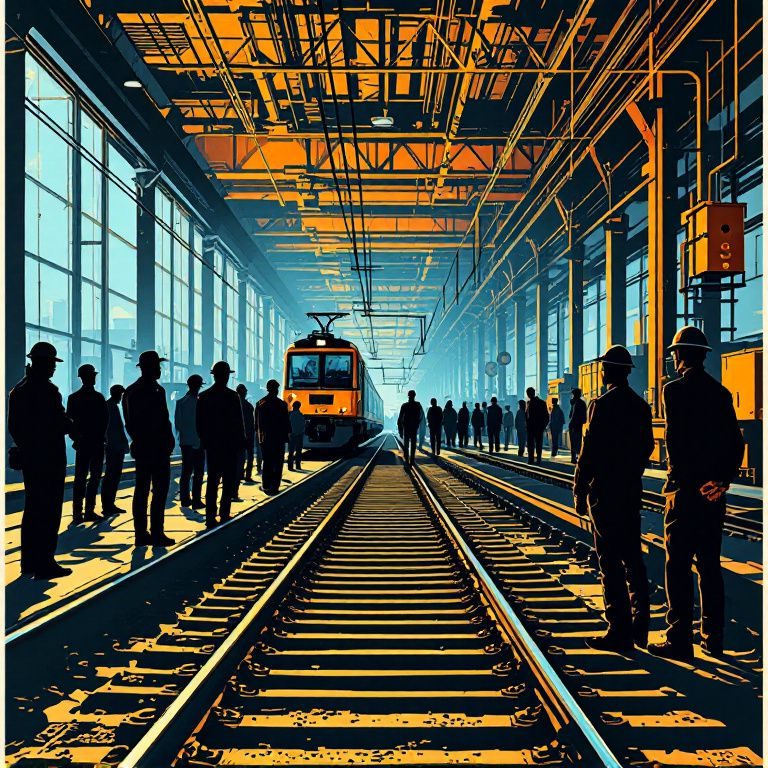
On the same day, Rail Baltica and voestalpine Railway Systems celebrated the symbolic start of turnout production at the Austrian manufacturer’s facility in Valčiūnai, Lithuania. The first switches for the 870-kilometre high-speed line are now rolling off the production line, fulfilling a critical milestone ahead of the 2028 operational launch of the mainline between Tallinn, Riga and Kaunas. “Today we turn design into steel,” said a Rail Baltica spokesperson. “These turnouts are the joints that will connect the entire network.”
Meanwhile, 300 kilometres north, construction crews in Tallinn broke ground on a €9.8 million Rail Baltica spur linking Ülemiste and Lasnamäe, the first physical segment to be built in Estonia. The contract, signed on Saturday between Rail Baltic Estonia, the City of Tallinn and LEONHARD WEISS OÜ, signals the transition from planning to on-the-ground delivery in the smallest of the three Baltic capitals.
The flurry of activity comes as Riga’s skyline prepares to welcome a new premium waterfront district. On Wednesday, developer Pro Kapital embedded a time capsule at the €23 million Blue Marine Residence site in the Klīversala district, marking the official start of construction for 120 luxury apartments and marina facilities. The project, one of the largest private investments in Latvia this year, underscores the broader urban renewal Rippling across the Baltic capitals as Rail Baltica reshapes real-estate dynamics.
Technical collaboration is extending beyond the Baltics. Last week, Rail Baltica hosted a delegation from Port Polska for a workshop in Vilnius focused on high-speed rail infrastructure standards, signalling potential future interoperability with Poland’s expanding network. The exchanges follow earlier talks with German and Scandinavian rail authorities, as Rail Baltica positions itself as a key node in Europe’s emerging north-south freight and passenger corridor.
With turnout production underway, Estonia’s first track segment breaking ground and Riga’s luxury waterfront rising, the Baltic rail revolution is no longer theoretical. By 2028, the first high-speed trains will roll from the Gulf of Finland to the heart of Central Europe, binding the Baltics closer to the EU’s core—and to each other.
Follow us for live European news
Articles

Rietumu Banka Becomes a Premium Partner of the American Chamber of Commerce - The Baltic Times Rietumu Banka has become a Premium Partner of the American Chamber of Commerce in Latvia (AmCham), further strengthening its long-standi......
baltic times · 3 months ago
Construction begins on new Rail Baltica link between Ülemiste and Lasnamäe in Tallinn - The Baltic Times Rail Baltic Estonia, the City of Tallinn, and construction company LEONHARD WEISS OÜ have signed a €9.8 million contract for t......
baltic times · 3 months ago
Rail Baltica and voestalpine Railway Systems mark start of turnout production - The Baltic Times Rail Baltica today marked the symbolic start of turnout production for the project at the voestalpine Railway Systems facility in Valčiū......
baltic times · 3 months ago
From the Baltics to Dubai: The Appeal of Palm Jumeirah - The Baltic Times Palm Jumeirah is more than just a luxury residential community. It is one of Dubais most iconic landmarks and a symbol of the citys am......
baltic times · 3 months ago
Russian representatives should not be given opportunity to enjoy tourist vacations in EU countries - Foreign Ministry - The Baltic Times RIGA - Russian representatives should not be given the opportunity in any format - whether in the arts or sports - to spread their propaganda or......
baltic times · 3 months ago
Cooperation with US is foundation of security for Latvia and entire Baltic region - Melnis - The Baltic Times RIGA - Cooperation with the United States is the foundation of security for Latvia and the entire Baltic region, Defense Minister Raivis Melnis ......
baltic times · 3 months ago
Pace of EU fund implementation in Latvia is accelerating, and up to 95 of funds could be absorbed by end of year - Finance Ministry - The Baltic Times RIGA - The pace of implementation of European Union (EU) funds in Latvia is accelerating, and up to 95 percent of the funds could be absorbed by......
baltic times · 3 months ago
Bank of Latvia has raised its inflation forecast for this year to 3.6 - The Baltic Times RIGA - The Bank of Latvia has raised its average annual inflation forecast for this year from the previously projected 3.2 percent to 3.6 percen......
baltic times · 3 months ago
Rail Baltica can only be implemented with EU funding - transport minister - The Baltic Times RIGA - The Rail Baltica railway project can only be implemented with European Union (EU) funding, Transport Minister Rihards Kozlovskis (New Uni......
baltic times · 3 months ago
Lithuania PM candidate Sinkevicius questions impact of sanctions on Belarus - BNS EXCLUSIVE - The Baltic Times VILNIUS - Social Democratic leader and prime minister candidate Mindaugas Sinkevicius said on Tuesday he was uncertain whether sanctions and iso......
baltic times · 3 months ago
Lithuanian foreign minister calls for lasting peace in Middle East - The Baltic Times VILNIUS - Foreign Minister Kestutis Budrys said on Tuesday a lasting peace must be achieved in the Middle East.The mi......
baltic times · 3 months ago
Lithuanian Airports sees capacity of up to 8 mln passengers after terminal upgrade - The Baltic Times VILNIUS - Lithuanian Airports CEO Simonas Bartkus said on Tuesday the renovated old departure terminal will now be capable of handling up to 8 m......
baltic times · 3 months ago
Study: Transition to Estonian-language education requires support for children and parents - The Baltic Times TALLINN - A recently concluded study by Birute Klaas-Lang, a professor of Estonian as a foreign language at the University of Tartu, shows that ......
baltic times · 3 months ago
Scientists and decision-makers to discuss Estonias readiness for climate change - The Baltic Times TALLINN - A climate seminar is being held on Tuesday in Tallinn, both at the Tamme hall of the joint ministry building and online, bringing toge......
baltic times · 3 months ago
Rietumu Banka Provides Nearly EUR 6 Million in Financing to Astor Group for Residential Development in Torņakalns - The Baltic Times Rietumu Banka has granted a EUR 5.95 million loan for a real estate development project located at 9 Biešu Street in Riga. The financing ......
baltic times · 3 months ago
Signet Bank finances the growth of Latvian private equity firm Global Champs through the acquisition of a mushroom farming company in Lithuania - The Baltic Times Global Champs, a Latvian-owned company, has acquired Baltic Champs, a Lithuanian mushroom cultivation company, from the Lithuanian agric......
baltic times · 3 months ago
Bentley Systems Announces New Office and Major Expansion in Vilnius - The Baltic Times Bentley Systems, Incorporated (NASDAQ: BSY), the infrastructure engineering software......
baltic times · 3 months ago
Prizes were awarded to the winners of the Competition of Student Scientific Research Papers organised by Latvijas Banka - The Baltic Times Today at the award ceremony held at Latvijas Banka, prizes were awarded to the winners of the 24th Competition of Student Scientific Resear......
baltic times · 3 months ago
Rail Baltica and RTU welcome BIM for Rail Bootcamp 2026 to Riga - The Baltic Times The BIM for Rail Bootcamp 2026 opened today in Riga, bringing together more than 100 railway infrastructure professionals, digitalisatio......
baltic times · 3 months ago
Twitter Account Management Tools: A Framework for Choosing What One Actually Needs - The Baltic Times Twitter account management tools, now usually built for X, can save time, reduce account risk, and make posting less messy. The hard part is not......
baltic times · 3 months ago
Rail Baltica hosts Port Polska delegation for technical workshop on high-speed rail infrastructure - The Baltic Times Last week, technical experts from Rail Baltica and a delegation from Port Polska held a joint workshop at the RB Rail AS office in Vilnius, focu......
baltic times · 3 months ago
BGS Begins Cooperation with Arkia Israeli Airlines in Vilnius - The Baltic Times Baltic Ground Services (BGS), an international provider of ground handling and aircraft fueling services, has begun cooperation with Arkia Israe......
baltic times · 3 months ago
From Internet Cafes to Esports Arenas: The Growth of Competitive Gaming in the Baltics - The Baltic Times The Baltic states have built a reputation for embracing innovation. Estonia is often recognized as one of Europes most digitally advanced n......
baltic times · 3 months ago
Not tanks, but apathy: the real threat to Lithuanias democracy – Tomas Janeliunas - The Baltic Times Tomas Janeliunas, a prominent Lithuanian political analyst and Professor at the Institute of International Relations and Political Science at Vi......
baltic times · 3 months ago
10 Years of Tallinn Fringe: First Shows Announced for 2026 Festival - The Baltic Times Tallinn Fringe celebrates its 10th edition with the launch of the first wave of the 2026 programme at 12:00 on Thursday 18 June....
baltic times · 3 months ago
A new neighborhood is being built in Riga – Pro Kapital begins €23 million Blue Marine Residence project in Klīversala - The Baltic Times One of the largest premium-segment developers in the Baltics, "Pro Kapital," embedded a time capsule on June 17 at the upcoming premiu......
baltic times · 3 months ago
Can Lithuanias new right-wing forces reshape the political landscape? - The Baltic Times Lithuanias right-wing parties, including the emerging political movement led by former presidential candidate and current MP Ignas Vegele, ......
baltic times · 3 months ago
Olpha to Expand Export of Drug Development and Research Services - The Baltic Times JSC Olpha, the leading pharmaceutical manufacturer in the Baltics, continues to strengthen its research and innovation capabilities by e......
baltic times · 3 months ago
How Digital Payments Are Changing Leisure Spending in the Baltics - The Baltic Times In Riga, Tallinn or Vilnius, a free afternoon can turn into six small phone payments before anyone notices. Transport, coffee, tickets, a stream......
baltic times · 3 months ago
Sports, Apps and Weekend Spending Habits in Baltic Cities - The Baltic Times In Riga, Tallinn or Vilnius, a sports night usually runs through the phone first. One screen holds the ticket, route, chat, stream link and a fe......
baltic times · 3 months ago