Loading…
 Saturday, September 26Saturday, September 26
3 months · 2 summary articles
Keir Starmer expected to resign as UK prime minister on Monday
Starmer faces crisis as two defence ministers quit over funding fears
Prime Minister Keir Starmer faced fresh pressure on Sunday after two senior defence ministers resigned within days, accusing his government of failing to commit the necessary funds to counter the Russian threat. Defence Secretary John Healey and Armed Forces Minister Al Cairns both stepped down this week, warning in scathing resignation letters that Starmer’s financial restraints were leaving Britain dangerously exposed. Their departures, the fourth and fifth cabinet resignations since Starmer took office, have intensified scrutiny over his handling of national security and delayed defence plans that remain unpublished.
Healey, who served as defence secretary since Starmer’s election, wrote to the prime minister on Wednesday that the government’s refusal to increase military spending risked making the country “less safe.” Cairns echoed the criticism in his own resignation letter, citing the same concerns over insufficient funding for Britain’s armed forces. Both ministers had reviewed a long-delayed Defence Investment Plan that has yet to be made public, raising further questions about the government’s strategy.
The resignations have drawn sharp criticism from across the political spectrum. Tobias Ellwood, a former Conservative MP and chair of the Defence Select Committee, told France 24 that Prime Minister Putin would be closely monitoring Britain’s defence posture. “This is a critical moment,” Ellwood said. “If we do not step up our commitments, we send a dangerous signal to Moscow.” His warning underscores the growing unease among defence experts that Britain’s deterrence capabilities are being eroded by budget constraints.
Starmer has refused to resign, insisting in a statement on Saturday that his government remains committed to national security. However, the crisis has deepened divisions within his own party, with backbenchers privately expressing alarm over the defence funding gap. The unresolved Defence Investment Plan, repeatedly delayed since Starmer took office, has become a symbol of the government’s broader struggles to balance fiscal restraint with strategic imperatives.
The resignations also coincide with mounting criticism of Starmer’s recent EU deal, which has been dismissed by opponents as “astonishingly bad for Britain.” While the defence crisis dominates the political agenda, the dual controversies risk further destabilising a government already under strain. With no clear resolution in sight, the coming days will test Starmer’s ability to restore confidence in his leadership on both domestic and international fronts.
Follow us for live European news
2 further sources not geolocated

Keir Starmers new EU deal savaged as astonishingly bad for Britain
gdeltproject.org · 3 months ago

Resident doctors in England call off strike action after new government offer Last-minute offer to be put to members is understood to include an average 6.6 pay upliftResident doctors in England have called off strike action after the government made a new offer which will be put to members.They were set to stage a four-day walkout from 7am on Monday – the 16th round of strike action since 2023. Continue reading...
theguardian · 3 months ago
UK Defence spending under scrutiny as former minister warns "Putin will be watching this carefully" When he came into office, British Prime Minister Keir Starmer declared that the first duty of a leader is to keep the country safe. His defence secretary, John Healey, resigned this week, telling his boss that he was making the country less safe. It was a stinging letter, claiming Sir Keir was unable to make the financial commitments needed to defend the country against the spectre of a Russian attack. A second defence minister, Al Cairns, also resigned for the same reasons.They had both seen a long-delayed British Defence Plan, which has still not been made public. France 24s Gavin Lee speaks to Tobias Ellwood, a former Conservative MP and former chair of the Defence Select Committee.
france24 · 3 months ago
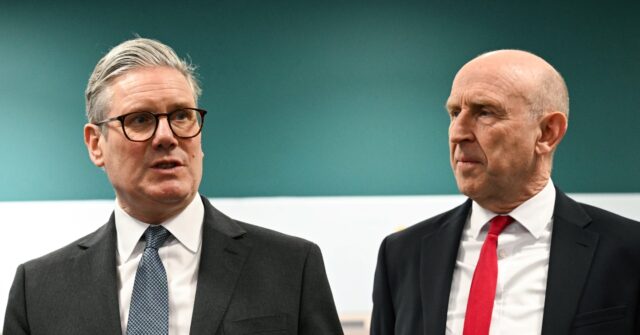
Starmer Refuses to Resign From Office After Defense Minister Jumps Ship
gdelt bot · 3 months ago