Loading…
 Saturday, September 26Saturday, September 26
4 months · 6 summary articles
Ukrainian intelligence has obtained classified reports intended for Vladimir Putin that forecast rising public discontent in Russia and eroding support for the Kremlin ahead of elections, President Volodymyr Zelenskyy disclosed on Sunday. The documents, shared by Zelenskyy on social media, were compiled for Putin’s review but intercepted by Ukrainian security services, according to multiple outlets citing the Ukrainian presidency.
Zelenskyy’s office confirmed the acquisition in a statement posted to X, stating that the reports—now in Ukraine’s possession—indicate “growing protest sentiment in Russia and declining support for Putin and the ruling party” . The materials, which include intelligence assessments and internal polling data, were originally prepared for Putin’s briefing but were intercepted by Ukrainian operatives, the president’s team said. A parallel report from Ukraine’s *Pravda* echoed these findings, describing the documents as “photos of intelligence reports” that highlight “declining support for Putin and the ruling party” .
The revelations come as Russian opposition figures gathered in Berlin warned of authoritarian consolidation under Putin, with some drawing parallels to a potential “Mini-Putin” scenario if hardline factions further tighten control . Meanwhile, Ukrainian officials framed the intercepted documents as evidence of systemic instability within Russia, suggesting that even Kremlin-aligned institutions are preparing for potential unrest.
The timing of the disclosure—just days before Russia’s scheduled parliamentary elections—raises questions about the authenticity and intent behind the reports. Zelenskyy’s team did not provide direct access to the documents, and independent verification remains pending. However, the claims align with long-standing assessments from Western intelligence agencies that Putin’s regime faces mounting domestic pressure, particularly over economic stagnation and prolonged military commitments in Ukraine.
The development also intersects with broader disinformation concerns. On Sunday, social media accounts accused former U.S. Representative Tulsi Gabbard of repurposing Russian intelligence graphics—including materials previously presented to the UN Security Council—as part of a declassified slideshow falsely labeled as American intelligence . The episode underscores the persistent challenge of distinguishing between authentic intelligence and Kremlin-sourced propaganda, a distinction Zelenskyy’s latest disclosure further complicates.
For now, the intercepted reports serve as a strategic data point for Kyiv, offering potential leverage in negotiations or public diplomacy. But their broader significance hinges on whether the forecasted unrest materializes—or whether Putin’s apparatus succeeds in suppressing dissent before the vote.
Follow us for live European news
2 further sources not geolocated

Ukraina luure sai enda valdusesse Putini lauale jõudvad raportid Ukraina president Volodõmõr Zelenskõi jagas ühismeedias riigi luure omandatud raporteid, mis on koostatud Venemaa diktaatorile Vladimir Putinile esitlemiseks.
postimees · 3 months ago
Zelenskyy reveals reports delivered to Putin – photos Intelligence reports shown by Zelenskyy indicate growing protest sentiment in Russia and declining support for Putin and the ruling party.
ukrpravda · 3 months ago
Ukrajinská rozviedka získala tajné dokumenty. Prezident Zelenskyj očakáva rast nespokojnosti v Rusku Prezident Zelenskyj tvrdí, že Ukrajina získala dokumenty určené pre Putina, ktoré predpovedajú rastúcu nespokojnosť Rusov a tlak na Kremeľ pred voľbami.
aktuality.sk · 3 months ago

Russian opposition party-congress in Berlin: Fear that Yashin might become a "Mini-Putin"
news.yahoo.com · 3 months ago
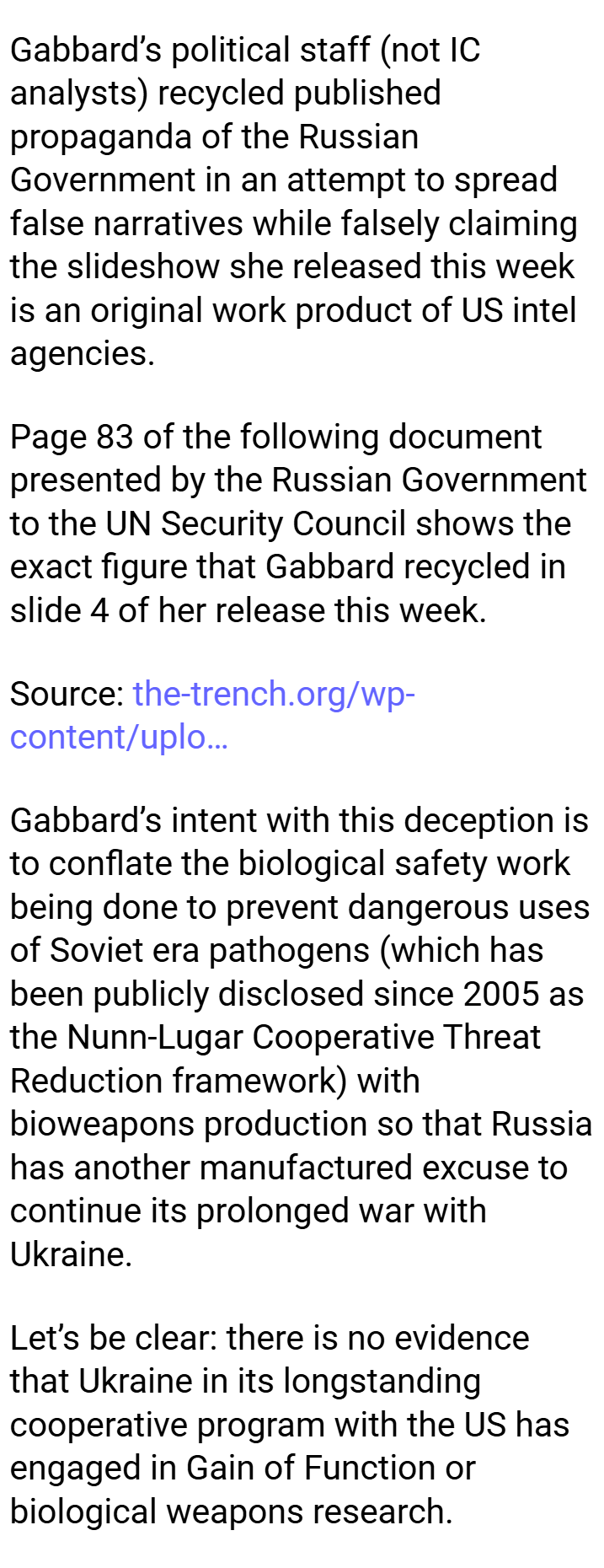
Tulsi Gabbard and her staff promulgated Russian intelligence products as American work, in violation of the Espionage Act.Tulsi Gabbard released a fake declassified slideshow w/ lies about #Ukraine. Putins girlfriend actually reused graphics from russian intelligence documents, added a U.S. ODNI logo, and presented them as American intelligence products.Slide elements match russian government documents published in 2022, including materials russia presented to the UN Security Council.Tulsis KGB slideshow includes:Slide 2 An AI‑generated map with errorsSlide 4 A graphic identical to one in a russian report re: Material from a US contractor (Black & Veatch) that Russia previously publicizedGabbard used recycled russian propaganda rather than authentic U.S. intelligence.Gabbards weaponized russian propaganda undermines U.S.–Ukraine biological safety programs.Gabbards deception harms the biological safety work being done to prevent dangerous uses of Soviet era pathogens.#usa #news #eu
mastodon bot · 3 months ago