
Israel and Lebanon sign U.S.-brokered framework agreement in Washington
Story Timeline
3 months · 9 summary articles
Israel and Lebanon signed a U.S.-brokered framework agreement in Washington on Friday, marking the first direct diplomatic breakthrough between the two countries in decades and raising cautious hopes for an end to the cross-border conflict with Hezbollah. U.S. Secretary of State Marco Rubio announced the trilateral accord at the State Department, calling it “a good day” but warning that “there is a lot of work ahead.” The deal was signed by Israeli Ambassador to the U.S. Yechiel Leiter and Lebanese Ambassador to the U.S. Nada Hamadeh, with Rubio and State Department counselor Dan Holler present .
The framework establishes a structured process to restore Lebanese sovereignty, disarm Hezbollah, and dismantle its militant infrastructure, while enabling Israel to return to its borders once the threat to its citizens is removed. Rubio pledged $100 million in U.S. humanitarian aid and military training for Lebanese forces . According to senior Israeli officials, the agreement includes immediate steps such as Israeli military withdrawals from two “pilot zones” in southern Lebanon, to be followed by Lebanese army deployments verified by U.S. military officers . One zone lies north of the Litani River, the other to its south, according to Israeli briefings.
Israeli Prime Minister Benjamin Netanyahu framed the accord as a strategic setback for Iran, stating that Israel would maintain a security zone in southern Lebanon “as long as Hezbollah and other terrorist organizations remain armed” . A senior Hezbollah-affiliated lawmaker, Hassan Fadlallah, rejected the agreement outright, warning that Lebanese authorities would risk civil war if they attempted to enforce it .
The fragile ceasefire between Israel and Hezbollah has largely held since last Saturday, though Israel has continued limited strikes on alleged immediate threats . The framework agreement follows four days of U.S.-mediated talks in Washington initiated by Lebanese officials in April, and represents the first direct negotiations between Israel and Lebanon since the 2006 war .
While diplomats hailed the accord as a historic first step, analysts caution that its success hinges on Hezbollah’s compliance and Lebanon’s ability to assert control over its territory. The framework outlines a phased path to a comprehensive peace, but leaves the thorniest issues—including full Israeli withdrawal and Hezbollah’s disarmament—deferred to future negotiations.
Follow us for live European news
- 5
- 1
- 1
- 1
- 1
- 1
- 1
- 1
- 1
- 1
2 further sources not geolocated
Articles

Israel, der Libanon und die USA unterzeichnen Rahmenabkommen – Lob von Netanjahu Israel, der Libanon und die USA haben ein Rahmenabkommen vereinbart. Es soll den Weg zu einem dauerhaften Frieden ebnen. Der israelische Ministerpräsident Benjamin Netanjahu sieht darin eine Niederlage für den Iran.
welt.de · 2 months ago

+++ Iran-Krieg +++: Israel und Libanon einigen sich auf Rahmenabkommen – Hisbollah lehnt Vereinbarung ab Trump: Angriff in Straße von Hormus ist ein Bruch der Waffenruhe +++ Israel fordert offenbar Libanesen örtlich zur Flucht auf +++ Der Newsblog.
handelsblatt · 2 months ago

Avtal klart mellan Libanon och Israel Israel, Libanon och USA har kommit överens om ett ramavtal för fred. Enligt amerikanska uppgifter ska Israel dra sig tillbaka från Libanon. – Israel blir kvar i säkerhetszonen i södra Libanon så länge Hizbollah inte avväpnats, säger dock Israels premiärminister Netanyahu.
dagens nyheter · 2 months ago
USA: Israel, Libanon und die USA unterzeichnen Rahmenabkommen Ein Rahmenvertrag soll ein Friedensabkommen zwischen Israel und dem Libanon ermöglichen. Unterstützt von den USA gaben die beiden Länder eine Einigung bekannt.
die zeit · 2 months ago
Acord încheiat între Israel, Liban şi SUA. Marco Rubio: „Un cadru pentru o pace și o securitate durabile" Israelul, Libanul şi Statele Unite au semnat vineri la Washington un acord-cadru, fără a dezvălui detaliile acestuia, dar cu obiectivul declarat de a deschide calea către o pace şi o securitate durabile, a anunţat secretarul de stat american Marco Rubio.
adevarul · 2 months ago
Rubio: Abkommen zwischen Israel und Libanon
orf.at · 2 months ago
Krieg in Nahost: Israel und Libanon verständigen sich auf Abkommen – Hisbollah lehnt es ab Im Bemühen, den Konflikt zwischen Israel und der proiranischen Hisbollah zu beenden, haben Vertreter Israels und Libanons in den USA verhandelt. Nun verkünden sie einen „ersten Schritt. Die Hisbollah fühlt sich an das Abkommen nicht gebunden.
sueddeutsche · 2 months ago
US announces framework agreement between Israel and Lebanon US Secretary of State Marco Rubio has announced the deal after talks in Washington, DC, calling it a first step.
aljazeera · 2 months ago
Israel and Lebanon expected to sign framework agreement in Washington, Israeli officials say Israel and Lebanon are expected to sign a framework agreement in Washington on Friday, senior Israeli officials said. The Israeli officials did not immediately provide further details.
cyprus mail · 2 months ago
Israel, Lebanon deadlock over south withdrawal in Washington talks The fifth round of Lebanon-Israel talks in Washington was extended as disputes over Israeli withdrawal from southern Lebanon persist. Israel refuses to leave the Yellow Line and Beaufort Castle, while Lebanon demands a full pullout from all occupied villages and towns.
yenisafak · 2 months ago
Middle East War: Lebanon, Israel and US sign framework agreement in Washington
france24 · 2 months ago
Israel, Lebanon sign initial agreement after U.S.-mediated talks Israel and Lebanon signed a framework agreement in Washington on Friday following several days of talks to secure an end to fighting between Israel and Iran-backed Hezbollah militants,…
japantoday · 2 months ago
Israel, Lebanon sign framework deal after US-mediated talks US Secretary of State Marco Rubio announced a US-mediated framework agreement between Israel and Lebanon.
aljazeera · 2 months ago
#Israel #Lebanon #USA Israel and Lebanon are expected to sign a framework agreement in Washington today, June 26, 2026. This agreement is seen as a significant step towards restoring sovereignty and improving relations between the two nations. Subscribe to @OSINTdefender Chat room
telegram bot · 2 months ago
Lebanon, Israel, US sign trilateral framework agreement in Washington Lebanon, Israel and the United States on Friday signed a trilateral framework agreement aimed at paving the way for a peace deal between the two long-time Middle East adversaries. 👉 Read more:
telegram bot · 2 months ago
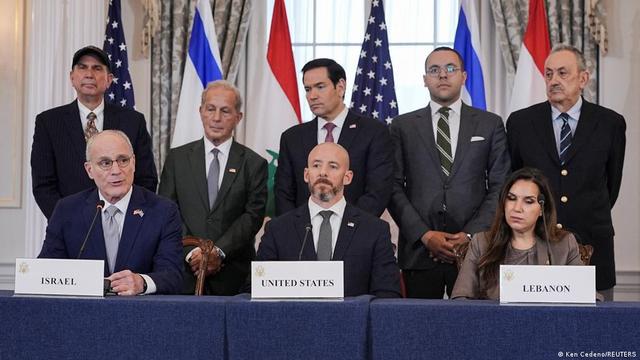
🔴 BREAKINGIsrael and Lebanon sign framework agreementUS Secretary of State Marco Rubio announced a trilateral framework agreement between Israel and Lebanon. This diplomatic breakthrough follows direct talks initiated by Lebanese officials with Israel in Washington in April, marking a...📰 #Diplomacy #Israel #Geopolitics #GeoWire
mastodon bot · 2 months ago
Nahost: Israel und Libanon verständigen sich auf Rahmenabkommen Seit mehreren Tagen verhandeln Vertreter Israels und des Libanons in den USA, um den Konflikt zwischen Israel und der proiranischen Hisbollah zu beenden. Nun verkünden sie einen „ersten Schritt.
handelsblatt · 2 months ago
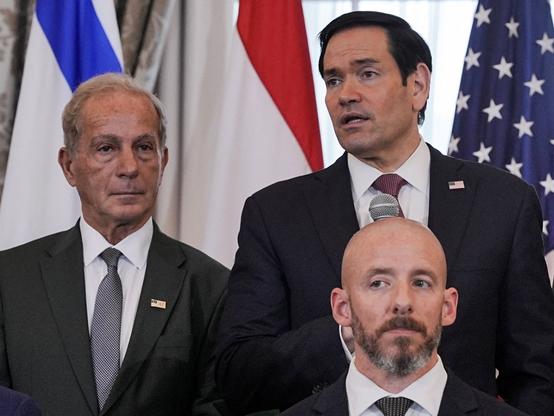
🔴 BREAKINGUS announces framework agreement between Israel and LebanonUS Secretary of State Marco Rubio announced a framework agreement between Israel and Lebanon following diplomatic talks in Washington, DC. The deal aims to resolve ongoing tensions and establish a path for peace between the two nations.📰 #Israel #Diplomacy #Geopolitics #GeoWire
mastodon bot · 2 months ago
⚡️#BREAKING Israeli officials confirm: Israel and Lebanon will sign a framework agreement tonight 💧 Rainbet.com the #1 Non-KYC Crypto Casino & Sportsbook @rainbetcom +18
telegram bot · 2 months ago
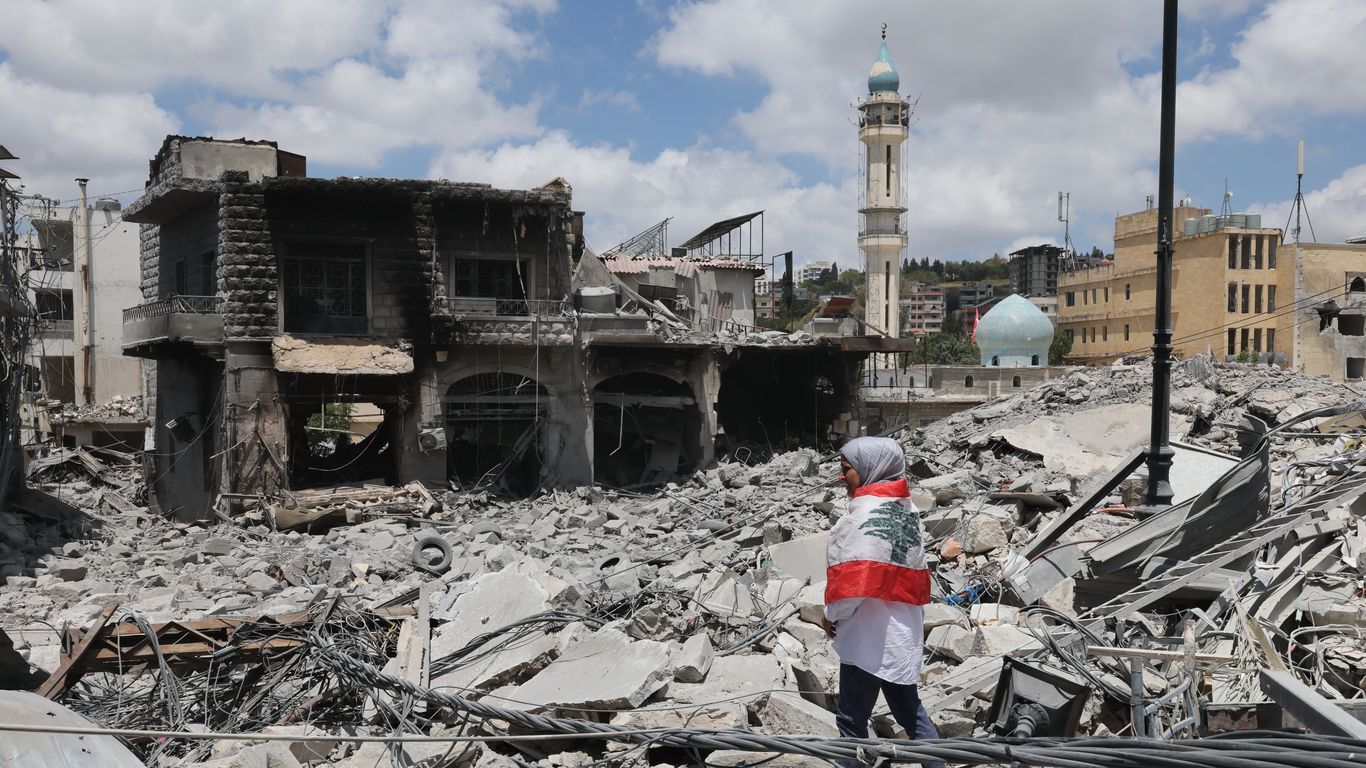
Israel and Lebanon sign framework agreement Israel and Lebanon signed a framework agreement on Friday after four days of negotiations in Washington, mediated by the Trump administration.Why it matters: The signing is a significant diplomatic breakthrough, but its unclear how much of it can be implemented as long as Hezbollah is still armed and influential in the country.The framework is designed to eventually end Israels occupation of southern Lebanon and restore the countrys territorial integrity, but that appears a long way off.A senior Israeli official said after the signing of the agreement that "Israel will maintain its security zone within the borders of the Yellow Line in Lebanon until the day when Hezbollah and the other terrorist organizations in Lebanon are disarmed and there is no longer a threat from Lebanon to the territory of the State of Israel."A senior Hezbollah-affiliated lawmaker, Hassan Fadlallah, condemned the agreement and said Lebanese authorities would need to fight a "civil war" if they wanted to enforce it.Breaking it down: The framework agreement describes a path for a future peace agreement and includes immediate steps on the ground the parties will take.One such step is the launching of two "pilot projects" where the Israeli military is to withdraw from small areas it currently occupies and the Lebanese army is to deploy there.Israeli and U.S. officials said that U.S. military officers will be involved in working with the Lebanese army on the "pilot projects," mainly to verify these areas have no Hezbollah presence.One of the two areas is north of the Litani River and the other is to the south of it, two Israeli officials said.State of play: A fragile ceasefire between Israel and Hezbollah has largely held since last Saturday, though Israel has conducted several strikes on what it claimed were immediate threats from Hezbollah.While the Israeli withdrawal is expected to be limited, it will be the first such move since Israel expanded its occupation of southern Lebanon during the war with Iran.The senior Israeli official said the Israeli militarys "freedom of military action will be maintained throughout the security zone to eliminate threats of any kind."Driving the news: The agreement was signed by the Israeli and Lebanese ambassadors to Washington and State Department counselor Dan Holler.Secretary of State Marco Rubio said at the signing ceremony at the State Department that "it is a good day" but stressed "there is a lot of work ahead."In a written statement afterwards, Rubio said the agreement "establishes a clear and structured process to restore Lebanons sovereignty, disarm Hizballah and dismantle its terrorist infrastructure, and enable Israel to return to its borders once that threat to its citizens is removed." He said the U.S. would provide $100 million in humanitarian assistance and to train Lebanese troops.The Israeli ambassador said at the signing ceremony that the final goal is to get "real peace" between Israel and Lebanon. He called the agreement "performance-based" and said "Iran is out, Hezbollah is out and the road to peace between Israel and Lebanon is in."Behind the scenes: Rubio held calls on Thursday with Israeli Prime Minister Benjamin Netanyahu and with Lebanese President Joseph Aoun to try to solve final disagreements, a U.S. official said. Rubio joined the talks between the negotiating teams on Friday morning.
axios · 2 months ago
Hisbollah gegen Israel: „Erster Schritt: Israel und Libanon schließen Vereinbarung Vertreter Israels und des Libanons schließen eine Vereinbarung, um den Konflikt zwischen Israel und der proiranischen Hisbollah zu beenden. Doch ein Frieden scheint noch in weiter Ferne.
tagesspiegel · 2 months ago