
Iran and Israel declare fragile ceasefire as Trump warns Netanyahu: 'You'll be on your own'
Story Timeline
4 months · 6 summary articles
Israel and Iran declared a fragile ceasefire on Tuesday, 9 June 2026, suspending hostilities after weeks of reciprocal missile strikes and airstrikes that brought the region to the brink of a wider war. The pause, announced by both governments, comes as indirect talks mediated by Washington inch toward a broader peace framework. Yet the truce remains volatile, with both sides warning that any violation will trigger “even harsher retaliation.”
The breakthrough follows a blunt warning from US President Donald Trump to Israeli Prime Minister Benjamin Netanyahu. Speaking on Monday evening, Trump told Netanyahu that Israel would “be on your own” if it resumed attacks on Iran, according to multiple reports citing Axios and Al Jazeera. The message underscores Washington’s growing impatience with continued Israeli operations in Lebanon and Iran, which have frustrated Trump’s push to end the broader Middle East conflict.
The fragile calm was further tested when a US military helicopter crashed near the Strait of Hormuz, a key chokepoint for global oil shipments. While initial reports suggested mechanical failure, the incident occurred as tensions between Iran and Israel remained at their highest level in decades. Iranian Al-Quds Brigades, the external wing of the Islamic Revolutionary Guard Corps, have since announced plans to establish a new security belt stretching from Hormuz to the Red Sea, a move that analysts interpret as both a deterrent and a signal of Tehran’s long-term strategic ambitions.
Israeli strikes in Lebanon on Monday killed 14 people, according to Euronews, despite Iran’s public threats to resume full-scale attacks if Israel continued operations across its northern border. Israeli officials insisted they would not be deterred, deepening the divide with Washington over the conduct and objectives of the war.
Analysts describe the current situation as a “mix of all-out war and fragile ceasefire,” with violence oscillating hour by hour. Jan Hallenberg, a Middle East expert at the Swedish Defence University, told Swedish media that the unpredictability “shows Trump does not have full control over the situation.”
Meanwhile, Israeli officials privately acknowledge that any military action against Iran must be coordinated with Washington, despite Netanyahu’s public claims of reducing dependence on US support. A new defence pact under negotiation in the US capital is expected to reinforce that dependency, according to Belgian daily *La Libre Belgique*.
As indirect talks resume in Geneva, the risk of miscalculation remains acute. Both sides have framed the pause as a temporary de-escalation, not a peace agreement. With a US helicopter down, Lebanese casualties rising, and Iranian forces expanding their regional footprint, the Middle East stands on a knife-edge—one misstep away from renewed bloodshed.
Follow us for live European news
Articles

Israël ne peut rien faire en Iran sans consulter son grand frère américain" Malgré les affirmations de Benjamin Netanyahou qui prétend réduire à zéro laide militaire américaine ces prochaines années, un nouvel accord est en préparation à Washington. En Israël, une indépendance financière vis-à-vis des États-Unis paraît illusoire. ...
la libre · 4 months ago

Lage im Überblick: Israel und Iran stellen Angriffe ein - und drohen weiter Nach ihren gegenseitigen Attacken verkünden Israel und der Iran eine Feuerpause. Die Lage bleibt aber volatil. Beide Seiten drohen bei neuen Verstößen mit noch härteren Schlägen.
tagesspiegel · 4 months ago
+++ Iran-Krieg +++: US-Kampfhubschrauber nahe der Straße von Hormus abgestürzt Trump warnt Netanjahu vor Krieg gegen Iran im Alleingang +++ Iranische Al-Kuds-Brigaden: Neuer Sicherheitsgürtel von Hormus bis zum Roten Meer +++ Der Newsblog.
handelsblatt · 4 months ago
Türkiyes intelligence chief joins Gaza ceasefire talks in Cairo Türkiyes National Intelligence Organization chief Ibrahim Kalin attended ceasefire talks in Cairo on Monday, meeting with Egyptian and Qatari officials alongside Palestinian representatives to advance the second phase of the Gaza agreement and review a draft roadmap for reconstruction and governance.
yenisafak · 4 months ago
Italian prosecutors probe Ben-Gvir over Gaza flotilla activists Italian prosecutors have launched an investigation into Israeli National Security Minister Itamar Ben-Gvir regarding the treatment of activists from a Gaza-bound humanitarian flotilla, focusing on allegations of torture and kidnapping during their detention at the Port of Ashdod.
yenisafak · 4 months ago
Palestine calls for pressure to halt Israeli settler terrorism Palestinian Prime Minister Mohammad Mustafa told a European delegation in Ramallah that international pressure must increase to halt Israeli settler attacks and the withholding of tax revenues, warning that escalating violence aims to displace residents and seize Palestinian land.
yenisafak · 4 months ago
UN chief warns of Gaza aid crisis as Israel seals crossings UN Secretary-General Antonio Guterres on Monday expressed deep concern over Israels decision to seal Gazas Kerem Shalom and Rafah crossings and suspend aid entry, urging immediate resumption of humanitarian flows as the UN confirmed no cargo is entering the besieged territory.
yenisafak · 4 months ago
Iran to build five coastal nuclear plants, atomic chief says Mohammad Eslami, head of the Atomic Energy Organization of Iran, told lawmakers Monday that construction of five coastal nuclear power plants is underway to boost the share of nuclear electricity in the national energy mix, even as regional tensions persist following recent exchanges of fire with Israel.
yenisafak · 4 months ago
Trump warns Netanyahu he could be on your own in Iran war US President Donald Trump cautioned Israeli Prime Minister Benjamin Netanyahu that renewing war with Iran risks isolating Israel on the battlefield, according to Axios, as the latest exchange between the leaders contrasted sharply with an earlier call in which Trump called the premier "f****** crazy."
yenisafak · 4 months ago
Expert: Blandning mellan storkrig och vapenvila Ena timmen råder vapenvila mellan Israel och Iran. Nästa timme bombar de varandra igen. Situationen i Mellanöstern är minst sagt oberäknelig.– Det visar att Trump inte har kontroll över situationen, säger USA-experten Jan Hallenberg.
svenska dagbladet · 4 months ago
Israeli strikes kill 14 in Lebanon as attacks persist despite Iran threat Iran has warned that it will resume attacks if Israel continues striking Lebanon, but Israeli leaders on Monday insisted they would not be deterred.
euronews · 4 months ago

📰 Zwischen Hormus und FCAS – Schwarz-Rot im EntscheidungsmodusDie globale Agenda diktiert die nationale im Regierungsviertel: Nach dem erneuten Aufflammen der Kämpfe zwischen Israel und dem Iran steht die Waffenruhe auf extrem wackligen Beinen. Für die Koalition bringt die Eskalation vor allem die Sorge vor weiter steigenden Energiepreisen … #UKNews #Europe
mastodon bot · 4 months ago
„Du solltest besser vorsichtig sein – Trump warnt Netanjahu vor Alleingang US-Präsident Donald Trump warnt den israelischen Ministerpräsidenten Benjamin Netanjahu vor einem erneuten Krieg gegen den Iran. Sollte es zu einem neuen Konflikt kommen, könnte Israel auf sich allein gestellt sein, sagte Trump in einem Interview.
welt.de · 4 months ago
Krieg in Nahost: Iran und Israel wollen Angriffe einstellen – Trump warnt Netanjahu vor Alleingang Beide Seiten sind um Deeskalation bemüht. Trump mahnt, Netanjahu solle „besser vorsichtig sein. Nahe der Straße von Hormus stürzt ein US-Kampfhubschrauber ab.
sueddeutsche · 4 months ago
Middle East live: Israeli strikes kill at least 14 in southern Lebanon Israeli strikes on south Lebanon killed at least 14 people on Monday, the Lebanese health ministry said, after Iran threatened to attack Israel again if it continued bombing the country. Iran-backed Hezbollah meanwhile said it had targeted Israeli troops inside Lebanon, but did not claim any attacks on Israeli territory. Follow our liveblog for the latest updates.
france24 · 4 months ago
Trump warns Netanyahu: Youll be on your own if attacks on Iran continue Trumps warning comes as Israel and Iran pause attacks and indirect talks to reach a peace deal continue.
aljazeera · 4 months ago
Israel kills 14 in southern Lebanon after trading fire with Iran Killings come as Iran warned of crushing blows if Israeli attacks continued in Lebanon, including in the south.
aljazeera · 4 months ago
Tumbling tech puts brakes on AI rally, Iran signals end to Israeli attacks
gdeltproject.org · 4 months ago
Israeli Authorities Closing Crossings Into Gaza Puts Essential Supplies For Children Under Threat Once Again
gdeltproject.org · 4 months ago
Trump and Netanyahu clash over diverging goals in Middle East war US presidents frustration with continued Israeli attacks on Lebanon and Iran erupts as he pushes to end the war
financial times · 4 months ago
Lage im Überblick: Israel und Iran stellen Angriffe ein - und drohen weiter Nach ihren gegenseitigen Attacken verkünden Israel und der Iran eine Feuerpause. Die Lage bleibt aber volatil. Beide Seiten drohen bei neuen Verstößen mit noch härteren Schlägen.
handelsblatt · 4 months ago
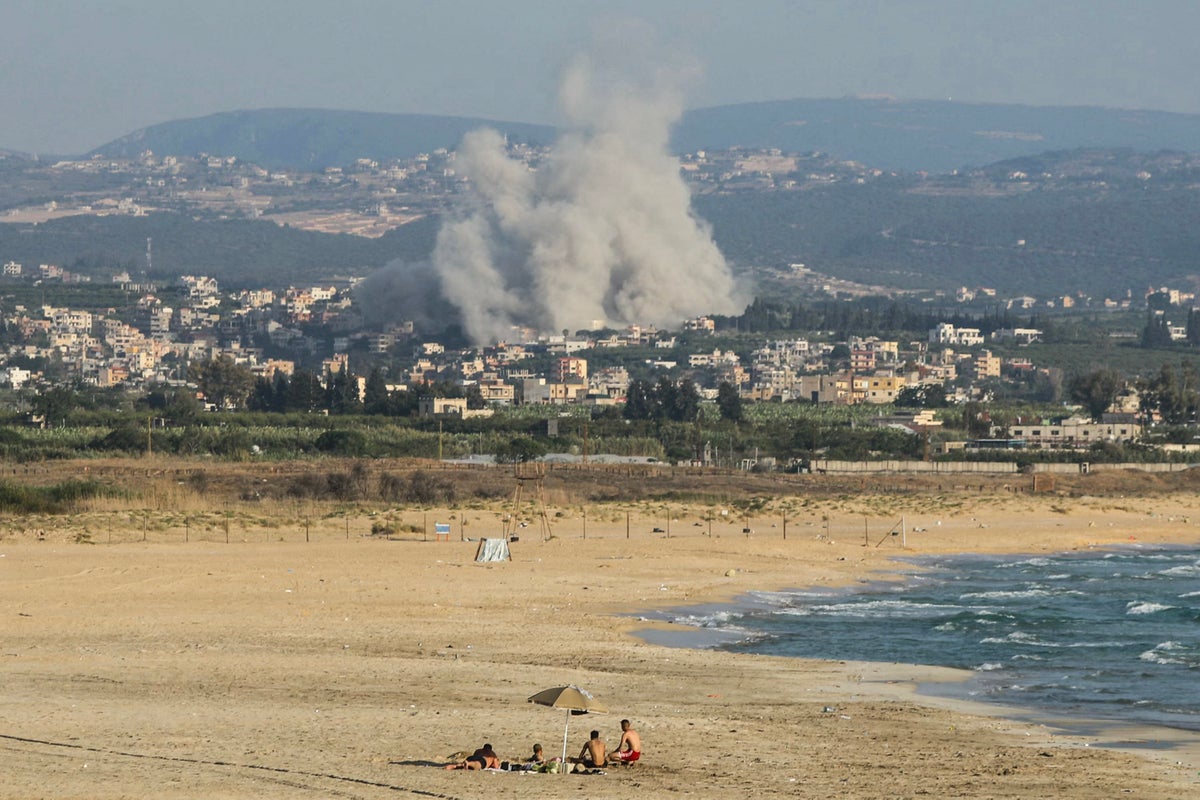
Iran-US war latest: Trump insists Israel will not resume war after on your own warning to Netanyahu US president said of Israeli prime minister Benjamin Netanyahu: If I tell him to do something, he does it
independent · 4 months ago