
Trump administration moves fighter jets from Europe to Middle East as Iran conflict escalates
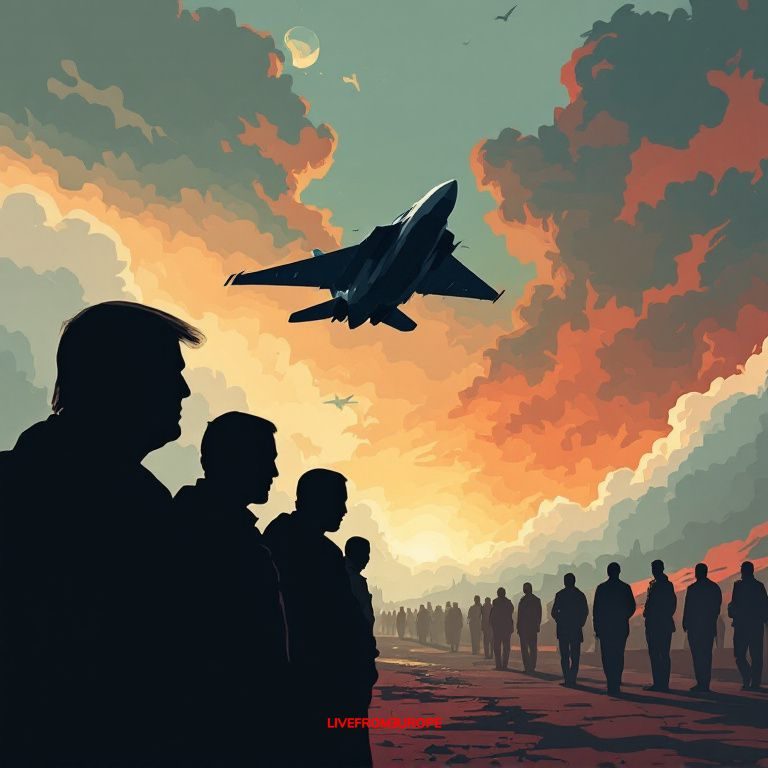
President Donald Trump's administration is facing significant challenges both domestically and internationally. The U.S. has been conducting airstrikes against Iran, with recent strikes killing three American service members. Iran has retaliated by attacking U.S. allies and assets in the Persian Gulf, leading to the closure of the Strait of Hormuz, a crucial global waterway through which roughly 20% of global oil consumption is transported.
Domestically, Trump is facing pushback from Congress on some of his legally questionable initiatives. A poll from June 29, cited by Trump on Monday, shows that 60.4 percent of voters supported the Memorandum of Understanding between the U.S. and Iran, which was supposed to halt military operations in the region and eventually lead to a permanent peace deal. However, the agreement has effectively collapsed, and the conflict has resumed. Trump's overall approval rating received an 8-point bump, putting it at 42.9 percent, but a more recent Washington Post/Ipsos poll from July 8-13 had his approval rating at 37 percent, unchanged from April. Only 29 percent of respondents approved of his conduct in overseeing the Iran war.
The U.S. State Department released a report exposing the full history of Cuban espionage and subversion in the U.S., with Secretary of State Marco Rubio stating that the Cuban regime has been the leading sponsor of radical leftism and Third Worldism in the country. The report accuses Cuba of infiltrating the highest levels of the U.S. government and supporting left-wing terrorism on American soil. The report also highlights the influence of the Democratic Socialists of America (DSA) and other leftist organizations in the U.S., suggesting a connection between these groups and the Cuban regime.
In addition, the U.S. is considering intensifying its war against Iran by moving forces from Europe to the Middle East. The Trump administration is also reportedly building a slow-motion ban on Chinese AI models through sanctions and soft pressure.
Internationally, the U.S. is involved in various diplomatic efforts. Lebanese President Joseph Aoun met with U.S. Secretary of State Marco Rubio in Washington to discuss the implementation of the US-Israel-Lebanon Trilateral Framework. Aoun called for stronger U.S. support for the Lebanese army and economic engagement, with a White House meeting scheduled with President Trump on Tuesday.
The U.S. has also accused Cuban spies of infiltrating the highest levels of government in Washington. The report from the State Department details how Cuba has allegedly recruited and cultivated generations of American activists and backed left-wing terrorism on American soil.
The U.S. is also planning to increase its military presence in the Middle East by moving F-15 and F-35 fighter jets from bases in Europe to the region. This move is part of a broader strategy to intensify the war against Iran.
The conflict with Iran has led to economic challenges, with inflation driven by higher energy prices expected to remain elevated through most of 2027. Trump's policies on tariffs and foreign investment have not led to substantial foreign investment, and the economic situation is further complicated by the ongoing conflict.
Follow us for live European news
- 2
- 2
- 2
- 2
- 1
- 1
- 1
- 1
- 1
- 1
- 1
8 further sources not geolocated
Articles

Trump administration reportedly builds a slow-motion ban on Chinese AI models through sanctions and soft pressure The Trump administration is reportedly weighing measures targeting Chinese AI models, from adding Chinese labs to sanctions lists to holding U.S. companies liable for security failures. Rather than impose an outright ban, Washington could use soft rules to deter adoption while protecting the market positions of OpenAI, Google, and Anthropic. The article Trump administration reportedly builds a slow-motion ban on Chinese AI models through sanctions and soft pressure appeared first on The Decoder.
the decoder · about 13 hours ago
Thailand targets 2030 completion of first phase of high-speed rail link to China Thailand aims to complete by 2030 the construction of a 250-km (155 mile) section of a high-speed rail line that will connect it to China, its government said on Monday, as Prime Minister Anutin Charnvirakul concluded a five-day visit to the country. Thailands new rail projects are intended to be part of Beijings vision for […]
in-cyprus · about 13 hours ago
Ortega says Nicaragua will no longer hold elections Nicaraguas long-serving president Daniel Ortega said the Central American country will no longer hold elections, eliminating the possibility of an electoral challenge when his term ends next year and further entrenching the rule he shares with his wife. Ortega, who has continuously held power since 2007 following an earlier presidential term in the 1980s, said […]
cyprus mail · about 13 hours ago
US President Trumps trials and tribulations – the Democrats have grounds for optimism - The Baltic Times Donald Trump continues to set the political agenda in both the US and the world, but his dominance is being challenge......
baltic times · about 13 hours ago
Incendi in Canada, Trump insiste sul risarcimento agli Usa. E intima al primo ministro Carney: Devi impedire che arrivino e avvelenino la nostra aria Devi impedire che questi incendi arrivino e avvelenino la nostra aria. La nostra aria è stata avvelenata. Sono le parole che il presidente degli Stati Uniti, Donald Trump, ha rivolto al primo ministro canadese Mark Carney, in occasione della finale dei Mondiali di calcio, tornando sulla questione degli incendi in Canada e sulla possibilità di […] Larticolo Incendi in Canada, Trump insiste sul risarcimento agli Usa. E intima al primo ministro Carney: Devi impedire che arrivino e avvelenino la nostra aria proviene da Il Fatto Quotidiano.
il fatto quotidiano · about 13 hours ago
Colombia set to resume relations with Israel under de la Espriella Colombias president-elect, Abelardo de la Espriella, will fully restore his countrys diplomatic and economic relations with Israel from the moment he takes office on August 7, his transition office said.
intellinews · about 13 hours ago

Trump makes yet another addition to the White House with bronze statue in the Rose Garden The bronze artwork was created by the same sculptor who created a towering gold statue of the president
independent · about 13 hours ago
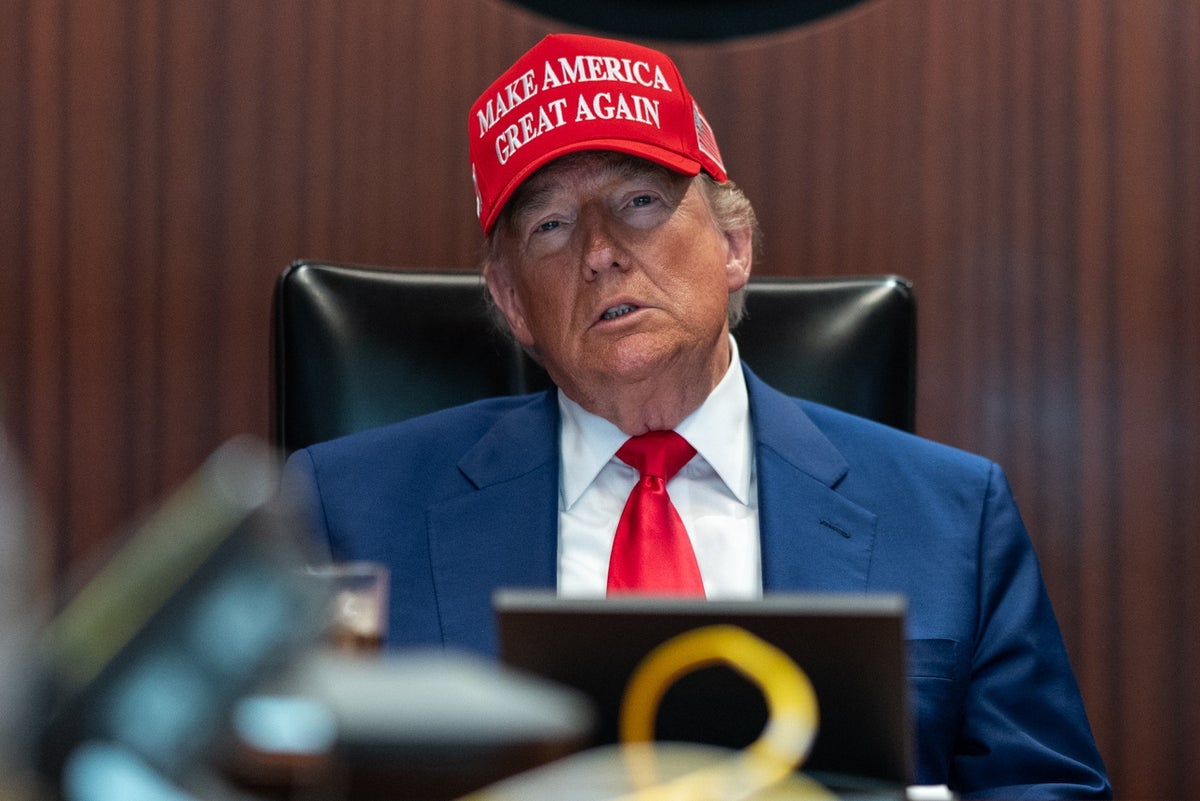
Trump posts self-own by sharing poll that most Americans back ending his Iran war The White House framed the June 29 poll findings as TRUST IN TRUMP
independent · about 13 hours ago

Tate brothers lawyer claims influencers are victims of political witch hunt Joe McBride also raised the possibility of US President Donald Trump intervening in the extradition proceedings
independent · about 13 hours ago
Regulator fired by Trump warns Fed independence still at risk Regulator fired by Donald Trump says Supreme Court decision is not durable
financial times · about 13 hours ago
Trump is slipping into an Iran quagmire America cannot achieve its aims by negotiation. So regime change is back on the agenda
financial times · about 13 hours ago
The decayed impact of Trumps Truth Social bombs Markets are gradually learning to ignore the president
financial times · about 13 hours ago
Israeli ministers and settlers call for return to Gaza settlements Gaza is ours.
aljazeera · about 13 hours ago
China, immigration, drugs: Behind US policy in Latin America Latin America analyst Brian Winter argues that Trump sees Venezuela as a foreign policy success… and Cuba may be next.
aljazeera · about 13 hours ago
Lebanons military starts pilot zone takeover in south Implementation of the trilateral framework agreement between Israel, Lebanon and the US is to start in three villages.
aljazeera · about 13 hours ago
How state actors are exploiting climate crises to spread disinformation The number of extreme weather events is on the rise, and some states are taking advantage of these climate crises to spread disinformation. A report by Frances Institute for International and Strategic Affairs (IRIS) says that climate disinformation has become a tool for destabilisation.
france24 · about 13 hours ago
USA süüdistab Kuubat laiaulatuslikus spionaažikampaanias USA süüdistas esmaspäeval Kuuba spioone Washingtonis valitsuse kõrgeimatele tasanditele imbumises. Samal ajal püüab president Donald Trump saareriigis lõpetada kommunistlikku režiimi ja elustab kodumaal vasakpoolsete vastast retoorikat.
postimees · about 13 hours ago

Trump. Air Force One oferecido pelo Qatar vai à manutenção Trump inaugurou o novo avião presidencial em junho deste ano
observador · about 13 hours ago
Trump ia în calcul să intensifice războiul împotriva Iranului și mută forțe din Europa spre Orientul Mijlociu Statele Unite intenționează să suplimenteze efectivele militare din Orientul Mijlociu cu avioane de vânătoare F-15 și F-35 de la bazele din Europa, precum și cu o aeronavă cisternă pentru realimentare în aer, conform unui oficial american, a scris CNN. Resursele suplimentare i-ar extinde președintelui american Donald Trump opțiunile, într-un moment în care cântărește cum să …
hotnews.ro · about 13 hours ago

Emma Bouvin: Medan Trump fotobombar hotar kriget att eskalera utom kontroll USA:s och Irans brott mot vapenvilan har lett till strider som riskerar att dra in fler länder i kriget i Mellanöstern. Men medan amerikanska soldater stupar och missiler avfyras över Israel går Trump på fotboll och står i vägen för kameror.
dagens nyheter · about 13 hours ago

Donald Trump chercherait activement à rencontrer Kim Jong-un Cherchant à se poser en faiseur de paix, Donald Trump pourrait de nouveau se pencher sur le dossier nord-coréen et organiser un sommet avec Kim Jong-un. Tokyo et Séoul observent la situation avec méfiance, craignant que cela ne débouche sur la reconnaissance de la Corée du Nord comme puissance nucléaire.
courrier international · about 13 hours ago
Oana Țoiu anunță când ar putea avea loc întâlnirea dintre Nicușor Dan și Donald Trump: „Există un stadiu avansat al discuțiilor Ministrul interimar al Afacerilor Externe, Oana Țoiu, a declarat luni, 20 iulie, la „Interviurile Adevărul, că discuțiile privind o întâlnire între Nicușor Dan și președintele SUA, Donald Trump, se află într-un stadiu avansat.
adevarul · about 13 hours ago

Trump calls for review related to scientific manual used by judges
news.yahoo.com · about 13 hours ago

🇺🇸 🇨🇺 The United States has accused Cuban spies of infiltrating the highest levels of government in Washington, as President Donald Trump pushes to end communist rule of the island while reviving anti-leftist rhetoric at home. ➡️
bluesky_AFP English · about 13 hours ago

According to President Trump, America is a hotbed of voting fraud — and foreigners are major culprits. A new Reuters analysis of federal court data undercuts his assertion that a conspiracy of noncitizen voting is afoot reut.rs/4f6j24E
bluesky_Reuters · about 13 hours ago

Trump administration seeks to bar law firm Susman Godfrey from lawyer groups lawsuit reut.rs/4yuKTDh
bluesky_Reuters · about 13 hours ago
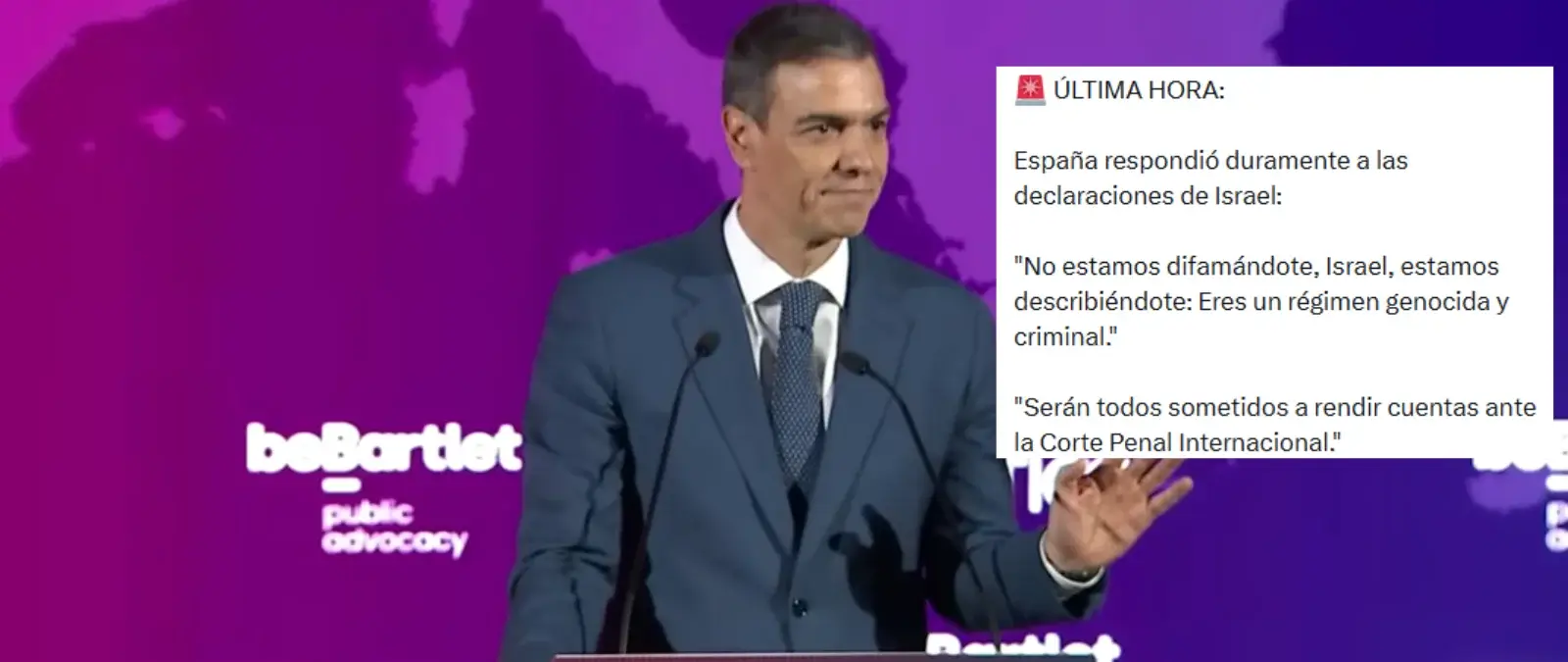
No, Pedro Sánchez no llama en este vídeo "estado genocida y criminal" a Israel En Maldita.es te contamos en abril de 2026 cómo se difundieron contenidos similares a este, cuando supuestamente un ministro del Gobierno de España, al que no mencionaban, o su propio presidente, Pedro Sánchez, habrían respondido a Netanyahu diciendo que Israel no es más que un régimen criminal genocida y que no le acompañarían ni a la vuelta de la esquina. También le llamaban supuestamente bastardo genocida.
maldita · about 13 hours ago
Trump je narcis. Výroky o vměšování Číny jen odvádí pozornost od svých selhání, soudí investor Jonáš Americký prezident Donald Trump obvinil Čínu ze vměšování do prezidentských voleb v roce 2020 a vlastním tajným službám vyčetl záměrné zamlčování informací. Může to být kouřová clona před blížícími se podzimními volbami do Kongresu, ve kterých realisticky hrozí republikánům porážka? „Trump si připravuje půdu pro možnou prohru. Měl by se ale zabývat Hormuzským průlivem, upozorňuje pro Český rozhlas Plus česko-americký investor Ondřej Jonáš.
irozhlas.cz · about 13 hours ago
Trump se está sumiendo en un atolladero en Irán Estados Unidos no puede conseguir sus objetivos mediante la negociación. Así, el cambio de régimen vuelve a abrirse paso en la agenda. Leer
expansion · about 13 hours ago

El intercambio de monedas entre el Rey y Donald Trump El presidente de Estados Unidos entrega a la familia real cuatro piezas conmemorativas de sus dos mandatos en la Casa Blanca y Felipe VI le corresponde con una de su reinado
la vanguardia · about 13 hours ago