
Israel formally recognises Armenian genocide amid deepening rift with Turkey

Story Timeline
13 hours · 2 summary articles
Israel formally recognises Armenian genocide amid deepening rift with Turkey
Israel formally recognises Armenian genocide amid worsening ties with Turkey
Continuation
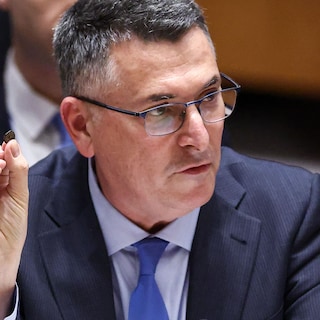
Israel’s government on Sunday unanimously recognised the 1915–1917 killings of Armenians under the Ottoman Empire as genocide, a historic shift that deepens diplomatic fissures with Turkey and escalates regional tensions. The cabinet vote, announced by Foreign Minister Gideon Saar, frames the decision as a moral reckoning with historical truth, but Ankara immediately condemned it as a politically motivated attempt to deflect scrutiny from Israel’s military actions in Gaza.
The Israeli recognition, taken in a Sunday cabinet meeting and confirmed by multiple outlets , follows decades of international debate over the term “genocide” for the Ottoman-era massacres that killed an estimated 1.5 million Armenians. Israel had previously avoided formal recognition, citing strategic ties with Turkey and the need to preserve regional stability. The move arrives as relations between Jerusalem and Ankara have deteriorated sharply over Israel’s war in Gaza, which has drawn global condemnation and triggered International Court of Justice arrest warrants against Prime Minister Benjamin Netanyahu .
Turkey’s government responded with rare unanimity, accusing Israel of exploiting the 1915 events to obscure its conduct in Gaza. “This decision is a political move aimed at covering up the crimes committed by the Israeli army against the Palestinian people in Gaza,” the Turkish Foreign Ministry stated on Sunday . Ankara’s condemnation underscores the widening rift, which has seen trade restrictions, diplomatic expulsions, and mutual accusations of destabilising behaviour since Israel’s military campaign in Gaza began.
The recognition also resonates beyond the immediate spat with Turkey. In Belgium, Jewish voices have publicly called for sanctions against Israel, framing the Gaza conflict as evidence of impunity that demands international action . Meanwhile, Slovenia’s government has signalled a policy shift, with Prime Minister Janez Janša announcing plans to relocate the Slovenian embassy from Tel Aviv to Jerusalem and freeze recognition of a Palestinian state—a move that has drawn regional backlash .
Against this backdrop, Israeli President Isaac Herzog arrived in Bucharest on Monday for an official visit, underscoring the country’s efforts to maintain diplomatic engagement despite mounting isolation . The Armenian genocide recognition, however, risks further straining Israel’s already fragile regional alliances and complicating its efforts to present itself as a defender of historical justice amid ongoing conflict.
Follow us for live European news
- 3
- 2
- 2
- 1
- 1
- 1
7 further sources not geolocated
Articles

Președintele Israelului se întâlnește la Cotroceni cu Nicușor Dan. Isaac Herzog susține și un discurs în Parlament Isaac Herzog, președintele Statului Israel, aflat într-o vizită oficială în România, la invitația președintelui României, se întâlnește luni, 29 iunie, la Cotroceni, cu Nicușor Dan, iar ulterior va susține un discurs în fața plenului reunit al Parlamentului.
adevarul · about 2 hours ago
Preşedintele Israelului, vizită în România. Discuții cu Nicușor Dan la Cotroceni Preşedintele Israelului, Isaac Herzog, se află luni în vizită oficială în România, la invitaţia preşedintelui Nicuşor Dan, care îl va primi la Palatul Cotroceni. Spre seară, Herzog va adresa un mesaj plenului Parlamentului. Primirea preşedintelui Israelului la Cotroceni este programată la ora 10:00. Cei doi oficiali vor avea convorbiri tete-a-tete, convorbiri oficiale şi un dejun …
hotnews.ro · about 2 hours ago

Spurning Israeli rape victim shames the UN
bluesky_The Times · about 2 hours ago
Israel Recognizes Armenian Genocide Amid Strained Ties with Turkey In a unanimous vote on Sunday, the Israeli cabinet officially recognized the Armenian genocide. The decision is expected to further strain relations with Turkey
greek reporter · about 2 hours ago
EU antisemitism czar warns against circumcision ban
gdeltproject.org · about 3 hours ago
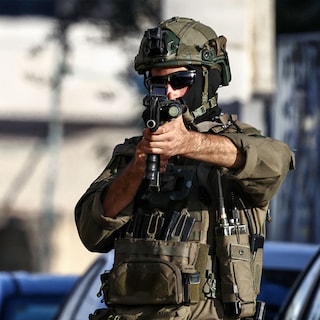
Live - Joodse stemmen uit België roepen op tot sancties tegen Israël: Maak een einde aan de straffeloosheid waarvan Israël geniet
de morgen · about 3 hours ago
Syria condemns Israeli incursions, shelling in southern provinces Syria has condemned Israeli incursions and artillery shelling in Quneitra and Daraa, calling them violations of its sovereignty and the 1974 Disengagement Agreement. Damascus urged the UN to act against repeated Israeli violations and warned of further escalation.
yenisafak · about 3 hours ago
The Zionists lost New York! When Zohran Mamdani, the Democratic Party candidate, won last years New York City mayoral election, it sent shockwaves through the US. Mamdani, who describes himself as a "Democratic Socialist," had not received support from the established, pro-Israel mainstream wing of the Democratic Party due to his pro-Palestinian rhetoric. The Israel Lobby had also made a great effort to prevent Mamdani from winning in New York, where Jews are heavily concentrated. Mamdani, who had defeated pro-Israel candidates
yenisafak · about 3 hours ago
Why was Zionism considered an antisemitic ideology for Jews? Englands support for Israel continues unabated. Like the Germans, they maintain this support as a matter of state policy. During the Labour Partys time in government, this support continued to increase. They even did not hesitate to ban pro-Palestinian protests after October 7, 2023. Likewise, during this period, the definition of antisemitism was expanded, and criticism of Israel began to fall within the scope of antisemitism. Criticism of Zionism was also included in the antisemitism category.
yenisafak · about 3 hours ago
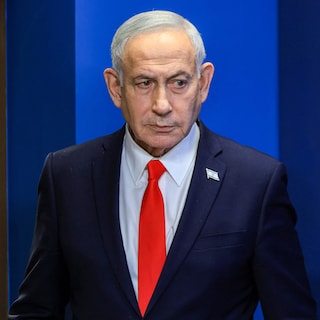
Joodse stemmen uit België roepen op tot sancties tegen Israël
de morgen · about 3 hours ago
Türkiye accuses Israel of using 1915 events to mask Gaza crimes Türkiyes Foreign Ministry on Sunday accused Israel of attempting to deflect attention from its actions in Gaza by recognizing the 1915 events as genocide, noting that the move reflects mounting pressure on Prime Minister Benjamin Netanyahu, who faces arrest warrants from the International Court of Justice.
yenisafak · about 3 hours ago
En Autriche, un ancien général syrien devant la justice A Vienne, deux anciens responsables des services syriens sont jugés pour des actes de torture commis à Raqqa entre 2011 et 2013. Un procès «historique» pour les ONG constituées parties civiles, qui repose sur des témoignages de victimes dispersées en Europe.
liberation · about 3 hours ago
Hubert Thuma, la comemorare a victimelor Pogromului de la Iași, „Avem datoria să combatem antisemitismul, ura și extremismul, oriunde se manifestă Președintele Consiliului Județean Ilfov, Hubert Thuma, a transmis un mesaj cu ocazia comemorării, duminică, 28 iunie, a 85 de ani de la Pogromul de la Iași, subliniind importanța memoriei colective și a combaterii antisemitismului.
adevarul · about 4 hours ago

Religious identity remains Israels strongest political divide, new IDI study finds
news.yahoo.com · about 4 hours ago
Palestinian President urges Jerusalem churches to reject Israeli Arnona tax Palestinian President Mahmoud Abbas urged churches in occupied East Jerusalem to reject Israeli municipal property tax demands, warning in letters to global leaders that the measure threatens the citys Christian presence and violates its historic status, according to the Palestinian news agency WAFA.
yenisafak · about 6 hours ago
Cruel Britannia : Azure - Ideas for the Jewish Nation
gdeltproject.org · about 6 hours ago
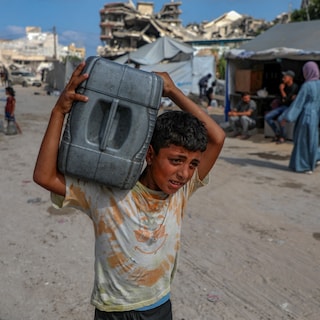
Net als Joodse stemmen in de rest van de wereld roepen wij onze leiders op om een einde te maken aan de Israëlische straffeloosheid
de morgen · about 6 hours ago
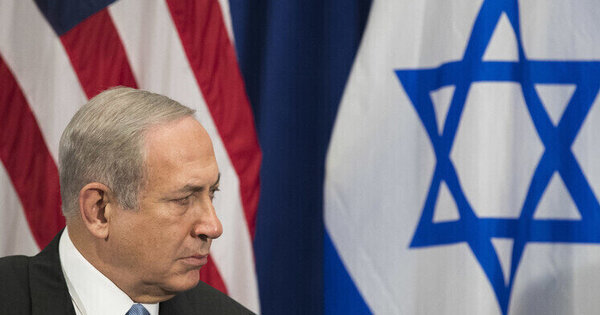
Thirty years of Netanyahu : The man who shaped modern Israel
gdelt bot · about 7 hours ago
Reacție dură a Turciei după ce Israelul a aprobat recunoașterea genocidului armean Turcia a condamnat, duminică, recunoaşterea de către Israel a genocidului armean din 1915, calificând-o drept o „decizie politică menită să acopere „crimele comise de armata israeliană împotriva populaţiei palestiniene din Gaza, notează AFP, potrivit Agerpres.
digi24 · about 7 hours ago
📰 Generation Palestine #FreePalestine #LeftBerlin #Socialist
mastodon bot · about 7 hours ago
The Haredim: A Defense : Azure - Ideas for the Jewish Nation
gdeltproject.org · about 8 hours ago

La Jordanie peut-elle encore jouer les équilibristes entre Israël et les Palestiniens ? Le royaume hachémite, dont plus de la moitié de la population est dorigine palestinienne, sérige en défenseur de la cause palestinienne mais refuse de remettre en question le traité de paix qui le lie à Israël, malgré les projets israéliens en Cisjordanie et à Jérusalem, qui menacent sa stabilité. Une position qui pourrait bientôt devenir intenable, estime Arab Digest.
courrier international · about 9 hours ago
Israelul recunoaște genocidul armean, în timp ce tensiunile cu Turcia se amplifică Guvernul israelian a aprobat duminică, în unanimitate, recunoașterea genocidului armean, o decizie considerată istorică și care marchează o schimbare majoră de poziție a statului israelian. Anunțul vine într-un context de relații tot mai tensionate între Israel și Turcia, țară care respinge în continuare termenul de genocid pentru masacrele comise împotriva armenilor în perioada Imperiului Otoman.
digi24 · about 9 hours ago
Israël erkent genocide op Armeniërs, Turkije reageert verontwaardigd: Een politieke beslissing om hun eigen misdaden te verdoezelen
de morgen · about 9 hours ago
De-recognition of Palestine appears to be in the works It appears Slovenia will freeze its recognition of a Palestinian state as Prime Minister Janez Janša has announced the move in an interview with an Israeli newspaper. He also plans to relocate the Slovenian embassy in Israel from Tel Aviv to Jerusalem. Both announcements have sparked backlash ...
the slovenia times · about 9 hours ago
Izrael uradno priznal genocid nad Armenci, ki ga je zagrešila Turčija Izraelska vlada je soglasno prepoznala poboj Armencev med prvo svetovno vojno kot genocid. To potezo številni razumejo kot kritiko Turčije in znak vse globlje razdvojenosti med državama, ki se je začela zaostrovati po izraelskem napadu na Gazo.
rtv slovenia · about 10 hours ago

Reconnaissance du génocide arménien par Israël: la Turquie dénonce une "décision politique" pour couvrir "les crimes de Gaza" La Turquie a dénoncé dimanche la reconnaissance par Israël du génocide arménien de 1915 comme une "décision politique" visant à couvrir "les crimes" commis par larmée israélienne à lencontre de la population palestinienne à Gaza. ...
la libre · about 10 hours ago
NEW - Israels government votes to recognize the Armenian genocide, where an estimated 1.5 million Armenians died under the Ottoman Empire during WWI. Read here: @disclosetv
telegram_Disclose.tv · about 10 hours ago