
German finance minister accuses coalition partner of acting as opposition over 10 billion tax reform

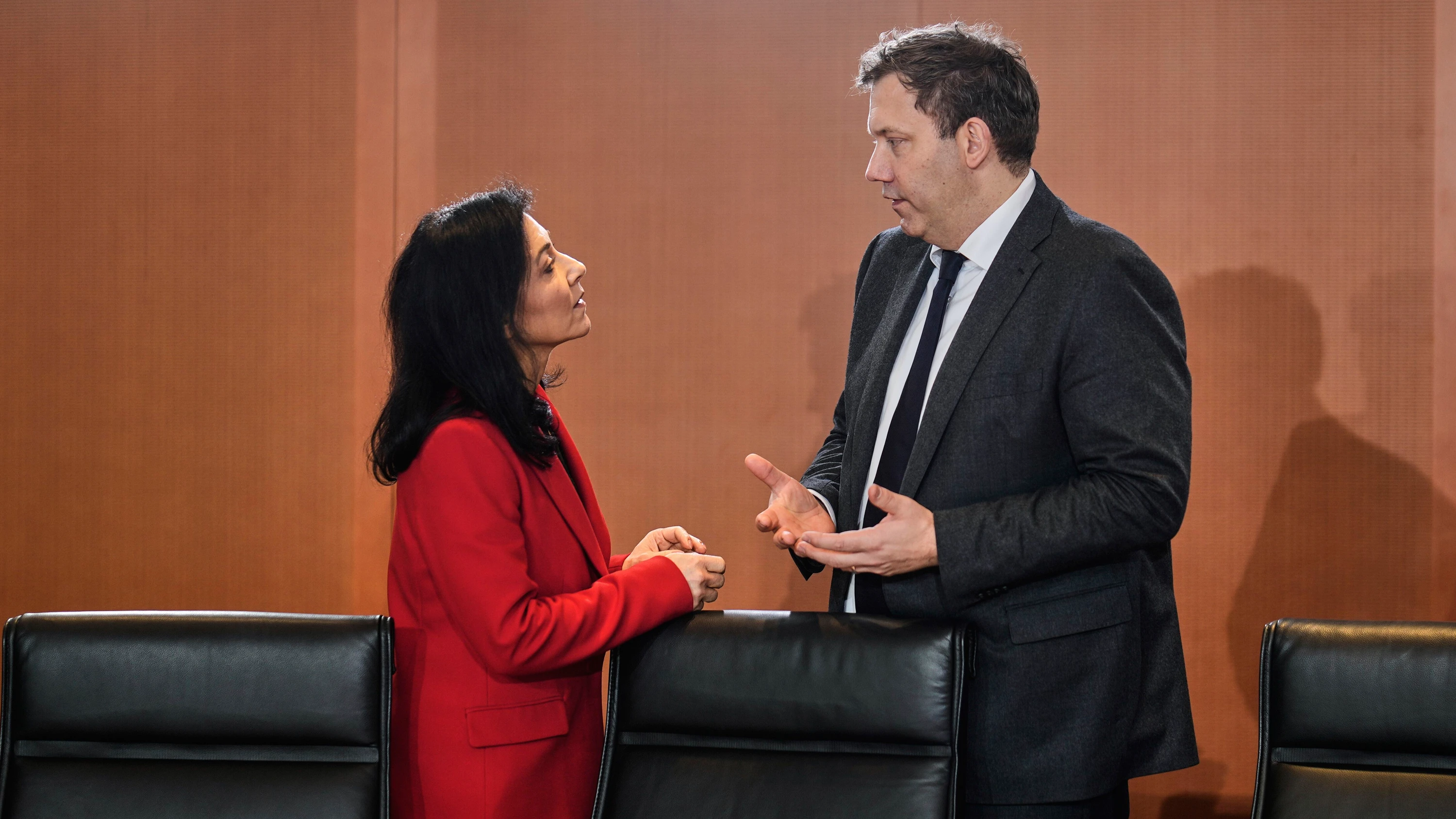
German Finance Minister Lars Klingbeil (SPD) sharply criticized Economic Affairs Minister Katherina Reiche (CDU) on Tuesday, accusing her of acting as “an opposition within the government” over disagreements on a planned income tax reform. The clash erupted ahead of a Cabinet meeting scheduled for Wednesday to approve the reform, which aims to provide annual tax relief of €10 billion starting in 2028, primarily targeting low- and middle-income earners and families.
Klingbeil, speaking on the sidelines of a G20 finance ministers’ meeting in Asheville, U.S., defended the proposal, stating that coalition leaders and Cabinet members had unanimously agreed to the plan. “Ten billion is a sum that can be taken seriously,” he said, adding that the focus on small and medium incomes was a priority . However, a leaked letter from Reiche’s ministry, authored by State Secretary Thomas Steffen, argued that the reform failed to address the “cold progression” effect, where inflation-driven wage increases push taxpayers into higher brackets without real purchasing power gains. The letter called for additional measures to offset this, warning that the current government would be the first since 2015 not to fully compensate for cold progression .
Reiche’s ministry also criticized the reform as a “disappointment” in tax policy, with the Federation of German Industries (BDI) echoing concerns. Holger Lösch, BDI’s deputy director-general, said the draft barely deserved to be called a reform . Klingbeil acknowledged that further adjustments could be made in Parliament but emphasized that any additional relief would require new funding. “I am not opposed to improvements, but the money must first be found,” he said .
The reform, based on a July 1 coalition agreement between the CDU/CSU and SPD, includes details on increasing tax-free allowances for Sunday and holiday bonuses. Klingbeil had previously proposed financing further relief through higher inheritance and top income tax rates, but the coalition partner rejected these ideas .
Separately, SPD Interior Minister Georg Maier warned that an AfD interior minister in Saxony-Anhalt would pose “an blatant security risk” for Germany, citing potential access to classified intelligence, including counterespionage and right-wing extremism data. Maier suggested restricting the sharing of sensitive information with Saxony-Anhalt’s state office for constitutional protection if the AfD assumes the interior ministry .
Follow us for live European news
- 4
Articles

Steuerreform: Klingbeil warnt vor „Opposition in Regierung bei Steuern Nach langen Beratungen kommt die Einkommensteuerreform von Union und SPD ins Kabinett. Mit der Einigkeit über den Kurs bei Entlastungen ist es aber so eine Sache.
handelsblatt · about 2 hours ago
„Opposition in der Regierung: Klingbeil geht Reiche wegen Streit um Steuerreform hart an Die Pläne des Finanzministers von der SPD werden weiterhin scharf kritisiert – auch von der Wirtschaftsministerin aus der CDU. Der Vizekanzler hält das nicht zuletzt mit Blick auf die AfD nicht für klug.
tagesspiegel · about 2 hours ago
+++ Bundespolitik +++: Steuergesetz soll wohl am Mittwoch im Kabinett beschlossen werden SPD-Innenminister Maier: AfD-Innenminister wäre „eklatantes Sicherheitsrisiko +++ Kretschmer: Minderheitsregierung in Magdeburg wahrscheinlich +++ Der Newsblog.
handelsblatt · about 2 hours ago
Einkommensteuer-Korrektur: Klingbeil weist Reiche zurecht Der Bundesfinanzminister weist die Kritik aus dem Wirtschaftsministerium an seinen Steuerplänen scharf zurück: „Opposition in der Regierung wird am Ende allen schaden. Reiches Haus rudert schnell zurück.
faz · about 2 hours ago

Klingbeil warnt Reiche vor „Opposition in der Regierung Im Streit um die Einkommensteuerreform geht Finanzminister Lars Klingbeil Wirtschaftsministerin Katherina Reiche scharf an. Er warnt vor einer „Opposition in der Regierung. Reiche hatte zuvor von einer „heimlichen Steuererhöhung gesprochen.
welt.de · about 2 hours ago