
Dutch D66 pushes law to let children report abuse without parental consent
Children who report feeling unsafe at home must be heard directly by child protection services without parental consent, Dutch political party D66 has proposed, following high-profile abuse cases in Stadskanaal and Vlaardingen. The party is pushing for a “child-first law” to ensure authorities can act immediately when a child’s safety is at risk, bypassing the need for parental approval. “The interest and safety of a child must be the priorities when there are suspicions of child abuse,” a D66 spokesperson said .
The proposal comes amid growing concerns over child welfare in the Netherlands, where recent cases have exposed systemic failures in protecting vulnerable children. Under current Dutch law, social workers must often obtain parental consent before interviewing children, a process that can delay critical interventions. D66 argues this requirement puts children at further risk, particularly in cases where parents may be complicit in abuse or neglect. “Children who say they are not safe at home should be able to speak directly to someone who can help them,” the party stated in a policy brief .
The move aligns with broader European trends in child protection, where countries are increasingly prioritising children’s voices in legal and social interventions. In the United States, a new report by the Annie E. Casey Foundation reveals that child wellbeing has declined in 29 states since 2019, with mental health crises and economic instability driving the downward trend. The report highlights a 24% drop in the teen birth rate over the past five years, yet warns that rising costs and reduced safety-net programmes are straining families further .
Meanwhile, in Belgium, a survey of 1,000 people found that young adults and women are particularly affected by societal malaise, with mental health concerns worsening across the country. The findings echo concerns in Norway, where children are among the most frequent visitors to dangerous websites, raising alarms about online safety and digital literacy .
D66’s proposal is expected to face opposition from conservative groups, who argue that parental rights should not be overridden without due process. However, child welfare advocates insist that immediate action is necessary to prevent further tragedies. “Every day counts when a child’s life is at stake,” said a spokesperson for the Dutch Child Protection Board, which has not yet taken an official stance on the proposed law . The debate is likely to intensify in the coming months as lawmakers weigh the balance between family autonomy and child safety.
Articles

Deux publics belges sont particulièrement touchés par le mal-être ambiant Une tendance encore plus marquée chez les jeunes adultes et les femmes, daprès une enquête menée auprès dun millier de Belges. ...
la libre · about 2 hours ago

Namen, schulden en medische gegevens zichtbaar door lek bij bewindvoerders Cybercriminelen kunnen heel eenvoudig klantgegevens van bewindvoerders buitmaken. Daardoor kunnen persoonsgegevens van mensen met financiële problemen, een groep die extra kwetsbaar is voor fraude en uitbuiting, in verkeerde handen vallen. Het gevaar schuilt in slecht beveiligde oude e-mailadressen.
rtl nieuws · about 2 hours ago
D66: praat direct met kinderen die zeggen thuis niet veilig te zijn Kinderen die aangeven thuis niet veilig te zijn, moeten voortaan direct en zonder toestemming van hun ouders kunnen worden gehoord door hulpverleners. D66 wil de wet daarom veranderen. Aanleiding zijn onder meer de mishandelingszaken in Stadskanaal en Vlaardingen.
rtl nieuws · about 2 hours ago
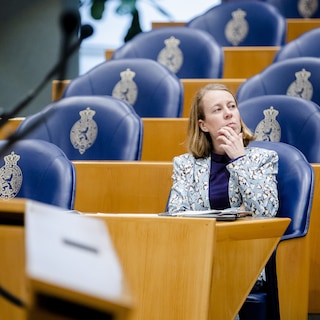
D66 wil een kind-eerst-wet, zodat kinderen altijd gehoord worden als zij melden niet veilig te zijn thuis
trouw · about 2 hours ago
Syntyvyys | Arvostetut ruotsalaistutkijat tyrmäävät Suomessa ehdotetun vauvabonuksen Ruotsalaistutkijat tyrmäävät rahan syntyvyyden elvytysvälineenä. Ratkaisuja etsitään heidän mukaansa vääriin ongelmiin.
helsingin sanomat · about 2 hours ago
Lei av mobilbruk på trening? – Regelen er enkel, svarer Sats-kjeden – Er det greit å prate i telefonen på treningssentre? Burde de ikke ha skikk og bruk-plakater? Og selv gripe inn?
aftenposten · about 2 hours ago

Childrens wellbeing slips across the U.S. Childrens wellbeing declined nationally from 2019 to 2024, with kids in 29 states faring worse than before the COVID pandemic, according to a new report.Why it matters: Childrens wellbeing affects future workforce participation and economic growth, and researchers warn rising costs and safety-net reductions could further strain families."Research shows that kids who are healthy, safe, fed, educated and surrounded by strong family relationships have a much better chance to thrive and contribute as independent adults," says Leslie Boissiere, Annie E. Casey Foundation vice president of external affairs."We know that todays children are tomorrows workforce so the strength of the economy in the future is tied to the wellbeing of kids today," adds Boissiere, who oversees the foundations Kids Count book.How it works: The Annie E. Casey Foundations annual report measures childrens wellbeing in four categories: economic, education, health, and family and community.The 2026 Kids Count Data Book examines data from 2019 through 2024 to assess the effects of safety-net investments, Boissiere says.What they found: The overall U.S. score fell from 553 to 547 and childrens wellbeing declined in 29 states and improved in 15 others, the report said.Five of the seven top-ranked states were in the Northeast.Child and teen deaths rose 8 from 2019 to 2024. Boissiere says the increase underscores a mental health crisis among children and young people, though she notes "some positive trends in terms of states that are investing in providing mental health professionals in school systems."The share of children in cost-burdened households rose from 30 to 31, affecting 22.4 million kids. It was the first increase since 2010.By the numbers: Health scores fell from 624 to 607, while education dropped from 518 to 417, driven by reading and math proficiency declines in 47 states. Family and community scores rose from 518 to 608, while economic wellbeing scores increased from 551 to 557.Yes, but: Boissiere pointed to May data from Georgetown Universitys Center for Children and Families showing fewer children are enrolled in Medicaid and more are uninsured."Early data does raise some concerns about whats going to happen in terms of child wellbeing and outcomes for children," Boissiere says. "Particularly around the economic security in a time when we know costs are rising for food and housing and basic necessities."Eleven of the 15 lowest-ranked states were in the South. However, eight Southern states improved their scores, including South Carolina, which rose 38 points — the largest increase of any state.Zoom in: The report highlights the direct effect of government policies and funding on the lives of young people even in states that continue to rank near the bottom nationally.New Mexico ranked 49th, but its child wellbeing score rose 22 points, driven largely by gains in economic wellbeing.Mississippi ranked 50th overall, but scored 448 in education after passing a 2013 law focused on third grade reading proficiency and consistent investment in public schools, teacher training and early childhood education.Thats "positive proof that when we make direct investments in families and children, that children do well," Boissiere says.Case in point: The teen birth rate fell 24 over the study period, and its down nearly 80 since 1990 — holding at 13 births per 1,000 teens ages 15 to 19 in 2023 and 2024."Its the direct result of decades of investment in trying to ensure the teen pregnancy rate declines," Boissiere says.The bottom line: Theres a "direct correlation" between "how states invest in children and how kids are doing," Boissiere says.
axios · about 2 hours ago
Authorities should not need parents consent for child abuse investigation: Ruling party The interest and safety of a child must be the priorities when there are suspicions of child abuse, according to D66.
nltimes.nl · about 2 hours ago
NGOs and apartment associations at high risk of falling victim to fraud in Estonia Nonprofits and apartment associations are at particular risk from cases of phone and internet fraud, as oversight of financial transactions is sometimes inadequate, the police say.
news.err · about 2 hours ago

O Uber da droga dos famosos Um traficante criou um serviço de entregas ao domicílio para clientes VIP. O editor de sociedade do Observador Pedro Rainho explica como funcionava a rede e quem fazia parte dela.
observador · about 3 hours ago

Acompañar bien exige un proceso cuidadoso, personalizado y humano La especialista impulsa un modelo basado en la evaluación rigurosa, el acompañamiento a familias y la coordinación con colegios para abordar cada caso de forma personalizada
la vanguardia · about 3 hours ago

Si tus padres te pagan una reforma y no lo devuelves: Hacienda puede entender que es una donación Los expertos explican cuándo una ayuda familiar a un hijo adulto puede considerarse una donación encubierta y cómo debe documentarse para evitar problemas fiscales
la vanguardia · about 3 hours ago

Deja el teléfono si estás con tus hijos: Suecia pide a los padres que dejen el móvil delante de los niños La Agencia de Salud Pública sueca ha emitido directrices para que padres y madres hagan un uso saludable con zonas libres de pantallas en casa
la vanguardia · about 3 hours ago
Gevoelige gegevens mensen met schulden op straat door datalek bewindvoerders Cybercriminelen kunnen heel eenvoudig klantgegevens van bewindvoerders buitmaken. Daardoor kunnen persoonsgegevens van mensen met financiële problemen, een groep die extra kwetsbaar is voor fraude en uitbuiting, in verkeerde handen vallen. Het gevaar schuilt in slecht beveiligde oude e-mailadressen.
rtl nieuws · about 3 hours ago
De la investiţie la obsesie: Cum ajung criptomonedele să provoace dependenţă la fel ca jocurile de noroc Pentru un număr tot mai mare de persoane, criptomonedele nu mai reprezintă doar o investiţie, ci devin un comportament compulsiv comparabil cu dependenţa de jocurile de noroc, avertizează specialiştii. Disponibile non-stop, slab reglementate şi promovate intens, acestea pot alimenta pierderea controlului, probleme financiare şi tulburări de sănătate mintală, în special în rândul tinerilor.
digi24 · about 3 hours ago

Forsthoffer Ágnes a vagyonnyilatkozati rendszerről: Teljesen nyilvánvaló, hogy egy korrupcióban érdekelt hatalom érdekét szolgálta A házelnök benyújtotta az első vagyonyilatkozatát és úgy látja, hogy az adatkérés elavult, hiányos és nem biztosítja a transzparenciát.
hvg.hu · about 3 hours ago

Parents warned not to buy or use baby sleep pillows due to risk of death Consumer watchdog issued takedown notices which have so far prompted the removal of 1,115 listings of such products
irish times · about 3 hours ago
Nigerian security forces rescue 360 kidnap victims Several hundred people abducted by the militant group Boko Haram earlier this year have been freed in Nigeria. The victims were taken from the town of Ngoshe in Borno state. While a local youth alliance initially reported securing the release of 416 women and children, the military subsequently adjusted the number of freed individuals to […]
cphpost · about 3 hours ago

Killer of trust: social media groups fuel misinformation in UK, report finds Investigation reveals more than 4.4 million people live in news deserts that lack dedicated local reportingLocal social media groups are fuelling misinformation in areas with no reliable sources of news, according to an investigation that reveals the scale of fake news flowing to vulnerable communities across Britain.Misinformation was nearly three times more common in areas with little or no recognised local journalism, according to a study of tens of thousands of posts seen by the Guardian. Immigration and Islamophobia were the most common topics of misinformation across Facebook and X. Continue reading...
theguardian · about 3 hours ago
Päästeamet testib ohuteavituse saatmist mobiiliäppidesse Päästeamet saadab koos riigi infosüsteemi ameti (RIA) ja Naiskodukaitsega esmaspäeval kell 13–17 Eesti äpi ja "Ole valmis!" mobiilirakenduse kaudu testteavitusi.
postimees · about 3 hours ago
Lofferta di lavoro, il trading, il finto parente: quali sono le truffe WhatsApp più pericolose Secondo Kaspersky in media il danno è stato di 770 euro a utente in Italia. Un censimento dei tentativi più comuni mettendo assieme gli avvisi della Polizia Postale, dello Csirt (il team governativo per gli incidenti di cybersecurity) e il suo omologo Cert-Agid (dellAgenzia Italia Digitale)
corriere · about 3 hours ago