
Millions fill Tehran streets as Iran mourns Khamenei in state funeral procession
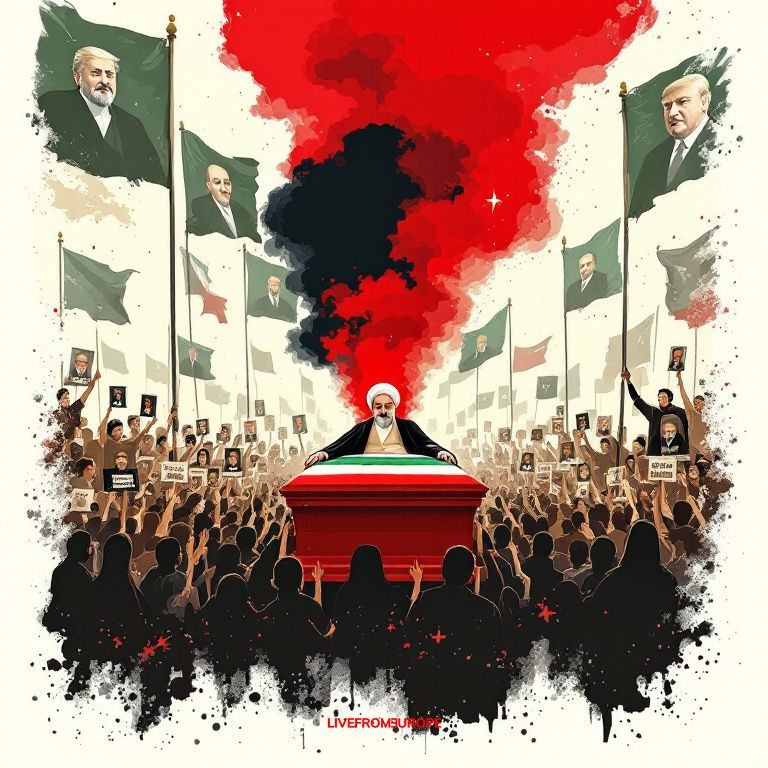
Story Timeline
2 months · 2 summary articles
Millions fill Tehran streets as Iran mourns Khamenei in state funeral procession
Iran mourns Khamenei as Britain and Oman demine Strait of Hormuz
Follow-up
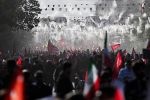
Millions of mourners filled Tehran’s streets on Monday as Iran began the main funeral procession for Supreme Leader Ayatollah Ali Khamenei, killed in a US-Israeli airstrike on 28 February, in a display of state power and national unity that officials claimed drew between 10 and 20 million people.
The six-day state funeral, already under way since Khamenei’s body lay in state on 3 July, reached its emotional and political climax as the flag-draped coffin was carried through the capital on a 12-hour journey from the Grand Mosalla religious complex to Imam Hussein Square. Mourners carried placards bearing images of US President Donald Trump, Vice President JD Vance, US Defense Secretary Pete Hegseth and Israeli Prime Minister Benjamin Netanyahu, with slogans such as “There will be blood” and “The US killed our father. We will not forgive.” An effigy of Trump was hanged in the square, state media reported.
Iran’s leadership framed the turnout as proof of resilience after five weeks of war with the US and Israel, which began with Khamenei’s killing. Parliament speaker Mohammad Bagher Ghalibaf hailed on social media the “proud and invincible nation of Islamic Iran” for “unanimously” paying tribute to its “martyr.” The ceremonies will continue in Qom on Tuesday and in Iraq’s Shiite holy cities of Najaf and Karbala on Wednesday, before burial in Khamenei’s hometown of Mashhad on Thursday.
The absence of Khamenei’s designated successor, his second son Mojtaba, cast a shadow over the proceedings. Mojtaba, named supreme leader shortly after the airstrike, has not appeared in public since and is reported to have been wounded in the same attack. No audio, video or photographs of him have been released in the intervening months, raising questions about his health and capacity to lead. Three of Khamenei’s other sons attended the funeral on Sunday, while Ahmad Vahidi, commander-in-chief of the Islamic Revolutionary Guards Corps, re-emerged publicly for the first time in months to pay his respects.
Security was tight across Tehran, with airspace closed and concrete barriers erected around the coffin to prevent a repeat of the deadly crush that marred the 1989 funeral of Ayatollah Ruhollah Khomeini. State media claimed several million people were taking part, though no exact figure was given. Temperatures reached 37°C as fire crews sprayed water over the crowds. Iranian flags, Hezbollah banners and red flags symbolising vengeance were prominent among the mourners.
President Masoud Pezeshkian, in a post on X, said the late ayatollah had taught Iranians that “the greatest wealth of the country is its people and their unity,” and pledged that the nation would continue on the path of “honour, progress and glory.” The funeral procession, broadcast live by state television, underscored the regime’s determination to present a united front despite months of anti-government protests that ended in a brutal crackdown.
International observers noted the dual message of grief and defiance. “It is a political event and a display of power,” said Lenka Hrabalová, an Iranist and Arabist quoted by Czech public broadcaster iROZHLAS. “But a large part of the people want to pay their respects.” Some European outlets questioned the authenticity of the turnout, citing past manipulation of crowd sizes, while others highlighted the regime’s use of the funeral to rally support ahead of resumed US-Iran peace talks after the ceasefire.
Follow us for live European news
- 3
- 2
- 1
- 1
- 1
- 1
- 1
- 1
- 1
- 1
- 1
- 1
4 further sources not geolocated
Articles

Rights group says jailed British couple in Iran continue hunger strike reut.rs/4gnKnR0
bluesky_Reuters · about 2 months ago

🔊 Irans new Supreme Leader hasnt been seen in public. Not only have we not seen Mojtaba, we havent even seen a photograph of him, a video of him, or heard any voice recording from him. More on the Reuters World News podcast reut.rs/4v7IwmN
bluesky_Reuters · about 2 months ago

Khamenei funeral live: Irans Supreme Leader Mojtaba absent as crowds gather to mourn slain ayatollah reut.rs/4vNEzoJ
bluesky_Reuters · about 2 months ago

Trumps World Cup call, Irans funeral procession and Venezuelas death toll reut.rs/4eYwkPr
bluesky_Reuters · about 2 months ago

As Khamenei mourners fill Irans streets, discontent still simmers reut.rs/4f00DVY
bluesky_Reuters · about 2 months ago

🇮🇷⚡️ — Millions flood Tehran for the main funeral procession of martyred Supreme Leader Ayatollah Ali Khamenei — officials estimate 10 to 20 million mourners across the multi-day ceremonies, in one of the largest funerals in Irans history. @IntelSlava
telegram_Intel Slava · about 2 months ago
🇮🇷⚡️ — The number of people attending funerals and supporting the Islamic Republic is always and absolutely greater than the so-called big protests inside Iran, which are only fueled by Mossad riots, and only a few people compared to these millions of supporters of the regime. - IRGC resistance to Israeli and US aggression has made Iranians think twice, even many opposition members have now shifted their views to "Iran first" and supporting the regime, instead of hoping for Epsteins friends to devastate Iran. @IntelSlava @LeonovZ
telegram_Intel Slava · about 2 months ago
⚡️ Commander of the Quds Force of the Islamic Revolutionary Guard Corps attended the funeral of Khomeini. 💧 Rainbet.com the #1 Non-KYC Crypto Casino & Sportsbook @rainbetcom +18
telegram_War Monitors · about 2 months ago
ÜLEVAADE ⟩ Albaania peaminister saatis kümned tuhanded meeleavaldajad pimedasse kohta Albaania pealinna Tirana tänavatele laupäeval kogunenud kümned tuhanded meeleavaldajad nõudsid peaminister Edi Rama tagasiastumist. 2013. aastast võimul oleva valitsusjuhi sõnul on ta küll avatud dialoogile teist kuud mitmel pool riigis tegutsevate protestijatega, ent tagasiastumise välistas ta täielikult.
postimees · about 2 months ago
Íránistka: Chámeneího pohřeb je demonstrací moci. Předpokládám ale, že velká část lidí chce vzdát hold Teheránem prochází smuteční průvod, který je součástí šestidenního pohřbu íránského duchovního vůdce Alího Chámeneího. Rakev s jeho pozůstatky, zahalená do vlajky, projíždí ulicemi metropole na mezinárodní letiště, odkud bude převezena k dalším obřadům do šíitského poutního města Qom. Duchovní vůdce přišel o život v únoru při izraelsko-amerických úderech. „Jde o politickou událost a demonstraci moci, říká íránistka a arabistka Lenka Hrabalová.
irozhlas.cz · about 2 months ago
Iran | Ihmismassat täyttävät Teheranin kadut, mutta uusi ylin johtaja on poissa isänsä hautajaisista Iranin uusi ajatolla Mojtaba Khamenei ei ole toistaiseksi näyttäytynyt isänsä hautajaisissa. Hänellä on monta syytä pysytellä piilossa.
helsingin sanomat · about 2 months ago
Sørgemarsjen fortsetter. Flere ber om blodhevn. TEHERAN, IRAN: Sørgemarsjen fortsetter. Flere av dem Aftenposten møter i den iranske hovedstaden, ber om blodhevn.
aftenposten · about 2 months ago
Huge crowd joins funeral procession for Irans Supreme Leader Khamenei Enormous crowds gather in Tehran for third day to mourn amid calls for revenge against the US and Israel.
aljazeera · about 2 months ago
Khamenei Funeral Procession Underway Amid Heavy Security, Airspace Curbs Iranian authorities imposed extensive security measures across Tehran on July 6, including the closure of the capitals airspace, as public funeral ceremonies for the late Supreme Leader Ayatollah Ali Khamenei got underway.
radio free europe · about 2 months ago
Miljoenen Iraniërs lopen mee met begrafenisstoet omgekomen leider Khamenei Miljoenen Iraniërs liepen maandag mee met de begrafenisstoet voor de omgekomen opperste leider Ali Khamenei in Teheran. Ze droegen vlaggen en spandoeken en riepen leuzen over wraak. Het is de grootste opkomst tot nu toe in deze week vol afscheidsceremonies.
nu.nl · about 2 months ago
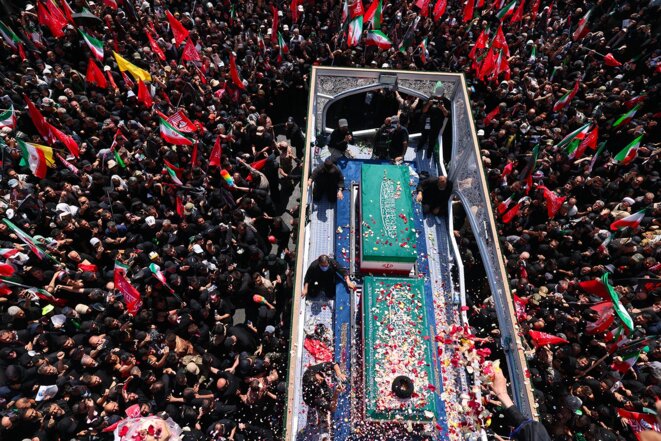
Les funérailles en rouge et noir dAli Khamenei Sur les drapeaux, la couleur du deuil et celle de la vengeance: Téhéran semploie à transformer les obsèques de lancien Guide suprême en acte politique. Mais lundi, au troisième des six jours de funérailles, son fils et successeur, Mojtaba Khamenei, ne sy est toujours pas montré.
mediapart · about 2 months ago
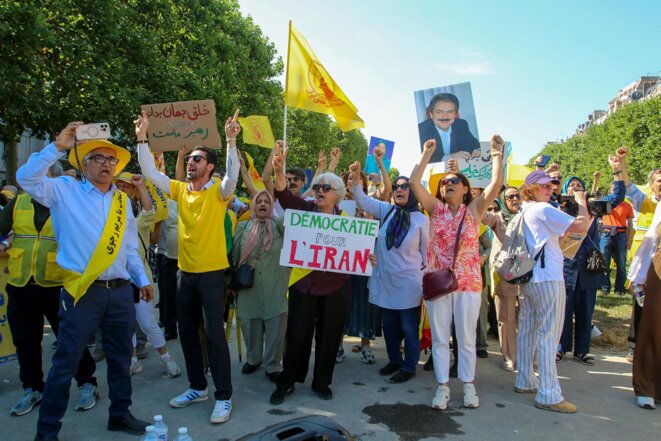
Paris: une manifestation dopposants iraniens interdite à la dernière minute Le 20 juin, le Conseil national de la résistance iranienne, émanation de la très contestée Organisation des moudjahidines du peuple iranien, espérait réunir des milliers de manifestants à Paris. Le rassemblement a été interdit à la dernière minute et lorganisateur est poursuivi.
mediapart · about 2 months ago
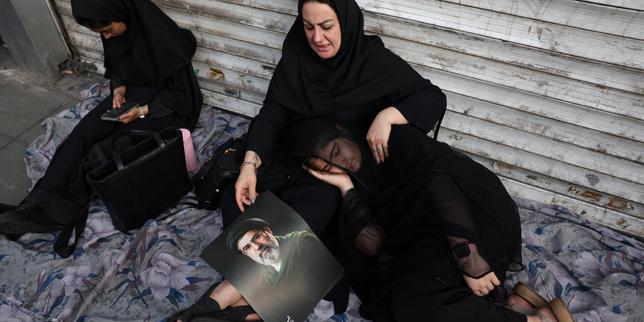
Iran : aux funérailles de lancien Guide suprême Ali Khamenei, labsence remarquée de Mojtaba, son fils et successeur Après les prières publiques, dimanche, le cortège funéraire doit traverser Téhéran, lundi, avant de rejoindre Qom pour un hommage du clergé chiite, mardi. La dépouille passera ensuite par les villes saintes irakiennes de Nadjaf et Kerbala, avant dêtre inhumée, jeudi, à Machhad, ville dorigine du défunt.
le monde · about 2 months ago

Millionen Menschen bei Trauerzug für Ajatollah Ali Chamenei in Teheran Die Führung in Teheran inszeniert eine gewaltige Trauerprozession für den getöteten Ajatollah Chamenei. Laut iranischen Angaben sollen Millionen von Menschen erscheinen. Dabei dürfte ein großer Teil der Bevölkerung der Staatstrauer gleichgültig bis ablehnend gegenüberstehen.
welt.de · about 2 months ago
Iranian president slams world silence on Israeli actions Masoud Pezeshkian says international institutions have failed to prevent Israeli aggression while providing political support to Tel Aviv, speaking at a Tehran conference commemorating former Supreme Leader Ali Khamenei who was killed in US-Israeli strikes earlier this year.
yenisafak · about 2 months ago
Tehran airspace to close Monday for Khamenei funeral procession Iran will fully shut Tehrans airspace on Monday during the main public funeral procession for slain Supreme Leader Ayatollah Ali Khamenei, state media reported. Flights will continue normally on Sunday, but Mehrabad and Imam Khomeini airports will be suspended during the ceremonies.
yenisafak · about 2 months ago
Yemens Al-Alimi orders readiness after deadly Houthi clashes Rashad Al-Alimi ordered government forces to maintain maximum readiness against Houthi fighters on Sunday following fierce battles in Al Hudaydah province that killed 65 combatants, with the council chief stressing the need to preserve unified frontlines and thwart hostile infiltration attempts.
yenisafak · about 2 months ago
Khameneis body carried through Tehran in funeral procession The body of Irans late Supreme Leader Ayatollah Ali Khamenei was carried through Tehran on Monday as part of multi-day funeral rites, with mourners gathering to pay tribute. The procession marks the start of a week of ceremonies that will culminate in burial at the Imam Reza Shrine in Mashhad.
yenisafak · about 2 months ago
Israeli minister vows to thwart future Iran leaders amid Khamenei mourning Israeli Defense Minister Israel Katz warned Monday that Tel Aviv will thwart any future Iranian leader who threatens the country, issuing the statement as thousands gathered in Tehran to mourn Supreme Leader Ayatollah Ali Khamenei who was killed in a US-Israeli strike on February 28.
yenisafak · about 2 months ago
Libyan worshipper dies during prayer 🇱🇾🤲🏻Watch the moment a Libyan worshipper died while prostrating in prayer at a mosque in Tripoli, the capital of Libya.
yenisafak · about 2 months ago

Marée humaine à Téhéran en hommage à Ali Khamenei : Le monde stupéfié par lamour pour le guide Des centaines de milliers de personnes criant vengeance se sont rassemblées dans les rues de la capitale iranienne pour saluer le cortège funèbre du guide suprême, qui a commencé sa procession à travers les villes saintes chiites dIran et dIrak.
courrier international · about 2 months ago
Beim Khamenei-Begräbnis bestätigt sich Irans Regime selbst Die tagelangen Feierlichkeiten werden von Millionen Menschen verfolgt werden, mit völlig unterschiedlichen Gefühlen. Die Botschaft geht auch ans Ausland
der standard · about 2 months ago

Khameneis Burial Was Delayed, Breaking With Islamic Custom Ayatollah Ali Khameneis remains were preserved for months, according to Irans government. Some Islamic scholars say it was a political and security calculation.
new york times · about 2 months ago

🇮🇷 Vast crowds gathered for the funeral procession of Irans slain supreme leader Ali Khamenei in Tehran on Monday, with authorities estimating millions were on the streets in numbers that could rival those of his predecessors farewell nearly four decades ago ➡️ u.afp.com/SKW6
bluesky_AFP English · about 2 months ago

Israel garante: "Mojtaba Khamenei está marcado para morrer" No dia do funeral do antigo líder supremo iraniano, Ali Khamenei, o ministro da defesa israelita avisa que qualquer líder iraniano que tente ações semelhantes às do antecessor, será "eliminado".
observador · about 2 months ago