Loading…
 Saturday, September 26Saturday, September 26
4 months · 4 summary articles
The EU and Western Balkans on Friday launched a new era of gradual integration, as Germany and France proposed speeding up accession talks by granting early benefits to Moldova and six Balkan states. Speaking in Tivat, Montenegro, French President Emmanuel Macron and German Chancellor Friedrich Merz unveiled a plan to offer pre-membership privileges—such as access to EU funding, mobility schemes, and sectoral integration—before full treaty accession. “We are no longer only talking about enlargement. We are doing it,” the European Parliament’s president wrote on social media .
The proposal, discussed with Western Balkan leaders at the ninth EU-Western Balkans summit, aims to break a 13-year membership freeze that has left the bloc with no new members since Croatia joined in 2013. Merz and Macron framed the move as a response to “oversights on the European side,” warning that the EU must demonstrate its willingness to expand or risk losing influence to rival powers . Austrian Chancellor Karl Stocker welcomed the Franco-German initiative, calling it “the right momentum” for a process long criticized as sluggish .
Reactions in the region were mixed. Serbian President Aleksandar Vučić attended despite intelligence warnings of assassination threats, underscoring Belgrade’s eagerness to re-engage with Brussels . Meanwhile, Montenegro’s leadership emphasized the need for deeper policy alignment, from economics to geopolitics, to ensure the integration’s success .
The summit also highlighted broader EU priorities, including digital sovereignty and tech independence. On June 3, the European Commission unveiled a legislative package to reduce reliance on foreign technology providers, a response to the bloc’s strategic vulnerabilities exposed by rapid AI development . Parallel efforts, such as the European Social Stack declaration launched in Amsterdam, aim to give Europeans greater control over digital platforms .
Looking ahead, Macron announced a “Coalition of the Willing” meeting in Paris on July 13–14, where EU leaders and partners—including Ukrainian President Volodymyr Zelenskyy—will discuss further steps . The EU’s new Scaleup Europe Fund, unveiled the same day, underscores its commitment to fostering deep-tech innovation as part of the bloc’s expansion strategy .
Yet skepticism lingers. Critics question whether piecemeal integration will accelerate membership or create new barriers for citizens. As the EU navigates geopolitical tensions and domestic constraints—from Swiss budget cuts to protectionist warnings from China—the bloc’s ability to deliver on its promises will define the next chapter of European unity .
Follow us for live European news
4 further sources not geolocated

Rahvusvaheline tippkohtumine toob Tallinnas kaasa ulatuslikud liikluspiirangud Tallinnas kehtivad järgmise nädala alguses Põhjala ja Balti koostöökohtumise ajal ulatuslikud liikluspiirangud, mis kehtivad kohati ka jalakäijatele, samuti kehtestatakse linna kohale lennukeeld.
postimees · 4 months ago
„EU muss zeigen, dass sie erweiterungswillig ist: Merz sieht bei Westbalkan-Gipfel „Versäumnisse auf europäischer Seite An der sonnigen Adriaküste treffen sich die Staats- und Regierungschefs der EU mit Amtskollegen des Westbalkans. Kanzler Merz hinterfragt den schleppenden Erweiterungsprozess.
tagesspiegel · 4 months ago
EU-Westbalkan-Gipfel: Merz und Macron wollen bei EU-Erweiterung Tempo machen Seit 13 Jahren hat die EU keine neuen Mitglieder mehr aufgenommen. Das soll sich bald ändern, wenn es nach Merz und Macron geht. In den Balkan-Ländern gibt es Zustimmung, aber auch Skepsis.
handelsblatt · 4 months ago
Serbian leader attends EU summit despite assassination warnings President Aleksandar Vucic said he attended the EU-Western Balkans summit in Montenegro despite warnings from Serbian intelligence about potential threats from organized crime networks, stressing the importance of Belgrades participation in regional discussions on European integration and stability.
yenisafak · 4 months ago

Bulgarie : la procédure européenne pour déficit excessif embrase Sofia Une procédure pour déficit excessif a été lancée par la Commission européenne contre Sofia, provoquant une première passe darmes sérieuse entre le nouveau gouvernement de Roumen Radev et ses prédécesseurs. Selon Bruxelles, cette procédure na aucun lien avec ladoption de leuro en début dannée.
courrier international · 4 months ago
„Die Erweiterung der EU ist seit vielen Jahren überfällig [premium] 13 Jahre nach Kroatien ist der Moment reif für ein oder zwei neue Mitglieder in sehr naher Zukunft. Die Idee schrittweiser Beitritte sorgt allerdings für Irritationen. Bringt das neue Hürden oder beschleunigten Nutzen für die Bürger?
die presse · 4 months ago
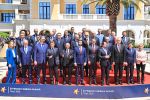
"Richtiges Momentum": EU-Westbalkan-Gipfel macht Tempo bei Erweiterung Der deutsch-französische Vorschlag für eine schrittweise Integration der Westbalkanstaaten wurde allseits begrüßt. Bundeskanzler Stocker freue sich über den Vorschlag
der standard · 4 months ago
Lemnos: Restoring the Posidonia Sanctuary, Mediterraneans Marine Amazon The environmental organization iSea, in collaboration with the Hellenic Ornithological Society and the Municipality of Lemnos, has launched an ambitious project to restore the Eastern Mediterraneans largest marine meadow—a 140-square-kilometer Posidonia sanctuary off the coast of Lemnos, widely known as the regions Amazon. This massive underwater ecosystem serves as a vital carbon sink, holding over […]
greek reporter · 4 months ago
Meloni salta il vertice Ue-Balcani: Rammaricata per il ritardo. Era alla presentazione di un francobollo La premier annulla allultimo la sua partecipazione al summit Ue-Balcani, in cui si discute anche di Ucraina: Si è protratta la cerimonia dei carabinieri a Reggio Calabria
corriere · 4 months ago
Bosnie-Herzégovine: les États-Unis et les Européens ne saccordent pas sur le successeur du Haut représentant Christian Schmidt Les États-Unis envisagent de revoir leur présence en Bosnie-Herzégovine. En cause : un désaccord profond avec les Européens sur la nomination du prochain Haut représentant international, chargé de veiller à la mise en œuvre des accords de paix de Dayton, signés en 1995. Le sortant, lAllemand Christian Schmidt, a quitté ses fonctions il y a près dun mois. Deux visions sopposent désormais pour lui succéder.
rfi.fr · 4 months ago
Azerbaijans Deputy Energy Minister warns EU: We need more flexible regulations A note of recognition for Italy, which Deputy Energy Minister Orkhan Zeynalov describes as the gateway to Western European markets
eunews.it · 4 months ago
Switzerland will not join EU Copernicus scheme in coming years The Swiss government has opted not to take part in the European Unions Copernicus Earth observation programme in the coming years, citing budget constraints. This decision runs counter to parliaments earlier approval of joining the initiative. + Get the most important news from Switzerland in your inbox Owing to the federal governments financial situation, Switzerland will not participate in Copernicus from 2028 to 2034, the Federal Council said on Friday. It did not provide any further details but said Switzerland would probably reconsider participation in 2032. Copernicus was launched in 1998 by the EU and the European Space Agency (ESA). It offers a wide range of geoinformation in areas such as environmental monitoring. In particular, it monitors climate change. More than four years ago, the Swiss parliament sent a clear signal in favour of joining Copernicus and adopted a corresponding motion without discussion. Since then, however, the Federal Council has refused to ...
swissinfo · 4 months ago
Geneva authorities and activists agree on No G7 demo route Geneva authorities and protest organisers have agreed on the route for a demonstration against the upcoming G7 summit. The march in Geneva on June 14 will be rerouted away from the Mont Blanc Bridge in the city centre. + Get the most important news from Switzerland in your inbox The demonstration collective and Geneva minister Carole-Anne Kast agreed on Thursday evening to adapt the route with a diversion away from the lake to the Rue des Alpes, Françoise Nyffeler from the No-G7 coalition told the Keystone-SDA news agency on Friday. The minister had responded to the organisers demands and had accepted changes to the route on the right bank of the Rhone presented by the Geneva government last week. As crossing the Mont Blanc bridge is prohibited, the demonstrators feared that a route in the immediate vicinity of the bridge could lead to clashes with security forces. The 52nd G7 Summit is a scheduled annual summit to be held on 15–17 June 2026 in Evian, France. Translated from ...
swissinfo · 4 months ago
Germany and France propose gradual EU integration for Western Balkan countries Germany and France want to speed up the European Union accession process for Moldova and countries in the Western Balkans by offering them some EU benefits before full membership. The proposal was discussed with Western Balkan leaders at an EU-Western Balkans meeting in Montenegro on Friday. French President Emmanuel Macron said France and Germany had […]
cphpost · 4 months ago

EU deploys firefighting helicopter to Slovakia for wildfire season Drought and weakening forests have increased concerns about wildfires in Central Europe, prompting Brussels to expand its emergency response capacity.
spectator.sme.sk · 4 months ago
China warns against protectionism as EU tech sovereignty drive squeezes foreign suppliers – EUobserver
gdeltproject.org · 4 months ago
EU backs deep tech growth with new Scaleup Europe Fund
gdeltproject.org · 4 months ago
UK-EU reset summit may still happen next month despite delay speculation EUs Maroš Šefčovič says summit will probably be in July but sources say it could be put back as talks deadlockedUK politics live – latest updatesThe EU has said Keir Starmers upcoming summit resetting the UK-Europe relationship may still happen in July, amid growing fears it could be postponed to the autumn as talks over youth mobility remain deadlocked.The summit is supposed to be mid-July but at the moment it could be put back to after the summer, said one EU diplomat. Continue reading...
theguardian · 4 months ago
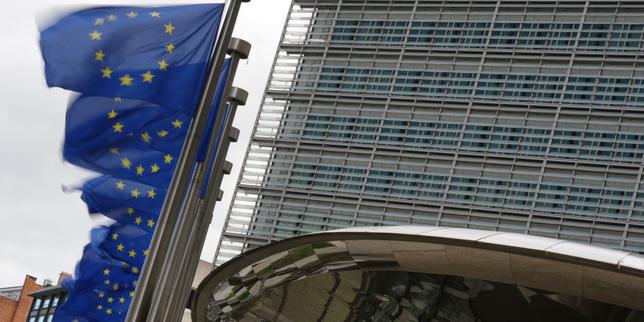
Europes painful awakening on digital sovereignty The European Commission unveiled a legislative package to address its strategic technological dependence on June 3. The challenges are immense, but the European Unions 27 member states can no longer delay as artificial intelligence becomes increasingly important, and at a stunning pace.
le monde · 4 months ago
Just launched at Public Spaces in Amsterdam, The European Social Stack Open Declaration! A set of common principles agreed by complementary technology leaders 🫶 Read the declaration, add your signature, and share: european.social #EUSocialStack #Europe
mastodon bot · 4 months ago
![European Social Sovereignty
Were proud to have been involved in organizing and supporting the european.social effort to promote European social sovereignty. Digital independence is an important topic for policymakers worldwide; local control of social network platforms needs as much if not more attention. Working with our fellow signatories, we think the European Social Stack declaration provides a framework for giving Europeans control over their social networks while staying fully connected to the rest of the world. […]](https://files.mastodon.social/cache/preview_cards/images/195/517/948/original/714d3ec362f06e1c.jpeg)
European Social Sovereignty Were proud to have been involved in organizing and supporting the european.social effort to promote European social sovereignty. Digital independence is an important topic for policymakers worldwide; local control of social network platforms needs as much if not more attention. Working with our fellow signatories, we think the European Social Stack declaration provides a framework for giving Europeans control over their social networks while staying fully connected to the rest of the world. […]
mastodon bot · 4 months ago
Todays EU-Western Balkans Summit in Tivat, Montenegro, is different. We are no longer only talking about enlargement. We are doing it.
bluesky bot · 4 months ago
Macron announces Coalition of the Willing meeting during Bastille Day celebrations and talks with Zelenskyy French President Emmanuel Macron announced before the start of the EU-Western Balkans summit in Montenegro that the next meeting of the Coalition of the Willing will take place in Paris on 13-14 July, and that he will meet Ukrainian President Volodymyr Zelenskyy before then, in early June.
ukrpravda · 4 months ago

Montenegro espera que integração dos Balcãs tenha sucesso "Desse ponto de vista, é importante que esta cimeira possa acentuar o nível de conexão — de conectividade, como se diz agora — entre as políticas internas dos Estados candidatos e o alinhamento europeu, seja no plano económico, no plano social e também no plano político e geopolítico"
observador · 4 months ago
České pivo, Pardubický perník a nově Vamberecká krajka. Označení získalo evropskou ochranu Vamberecká krajka získala evropskou zeměpisnou ochranu jako první řemeslný výrobek v Česku. Označení má podpořit prestiž tradičního krajkářství v Orlických horách a Podorlicku a zároveň zákazníkům zaručit původ, kvalitu a výjimečný charakter výrobku. V pátek o tom informoval mluvčí hejtmanství Dan Lechmann. Historie krajkářství na Vamberecku sahá do 17. století.
irozhlas.cz · 4 months ago