Loading…
 Saturday, September 26Saturday, September 26
4 months · 3 summary articles
US-brokered Israel-Hezbollah ceasefire collapses hours after announcement
Israel and Lebanon agree ceasefire as Hezbollah faces 24-hour withdrawal deadline
Israel and Hezbollah halt attacks after Trump-Netanyahu clash, but truce remains fragile
Israel and Lebanon agreed on Thursday to renew a fragile ceasefire, brokered by the United States, that hinges on the complete cessation of hostilities by the Iran-backed Hezbollah militia and the withdrawal of its fighters from southern Lebanon. The deal, announced by the US State Department after talks in Washington, calls for the creation of “pilot zones” south of the Litani River where the Lebanese Armed Forces will assume exclusive control, effectively excluding all non-state actors. The framework is seen as a critical step toward a broader US-Iran agreement to end the 97-day-old regional war.
Under the terms, Hezbollah must halt all rocket and drone attacks against Israel and withdraw its forces from the designated areas within 24 hours of the agreement taking effect, Lebanese President Joseph Aoun told Reuters. The Lebanese president said the ceasefire could come into force “within 24 hours” once all parties approve it, though Hezbollah has yet to publicly endorse the deal. Hours after the announcement, air raid sirens sounded in northern Israel following reports of a “suspicious aerial target,” underscoring the fragility of the truce.
Israel’s Defence Minister Yoav Katz reiterated that the Israel Defence Forces (IDF) retain “operational freedom” to respond to threats, including in Beirut, despite the ceasefire. Katz stated that Israel would continue to strike Hezbollah positions if necessary, a position echoed by US backing for Israeli military action. The defence minister’s remarks came shortly after Israel conducted multiple drone strikes in southern Lebanon on Thursday morning, killing at least nine people, according to local reports. Hours later, Hezbollah launched rockets toward northern Israel, testing the limits of the newly agreed truce.
The ceasefire framework was negotiated without Hezbollah’s participation, raising questions about its enforceability. Lebanon’s Culture Minister Ghassan Salamé told Euronews that the US-brokered deal offers “hope of ending Israel-Hezbollah hostilities,” despite previous truce violations. Meanwhile, Iran’s Supreme Leader Ayatollah Ali Khamenei framed the conflict as a “setback” for Washington and Tel Aviv, in a statement released on Thursday.
The agreement also establishes a timeline for further negotiations, with parties set to reconvene in late June to advance toward a comprehensive security deal. The ceasefire’s success remains contingent on Hezbollah’s compliance, as well as Israel’s willingness to refrain from retaliatory strikes. A UN peacekeeper was killed and two others injured in southern Lebanon on Thursday, despite the ceasefire announcement, highlighting the volatile security environment. The fragile truce now faces its first critical test: whether it can hold long enough to allow diplomacy to take hold.
Follow us for live European news
1 further source not geolocated

⚡️ 16 killed, 86 injured in Russian attacks across Ukraine over past day, massive drone assault hits Kherson. The Air Force said Russia launched 293 drones, 264 of which were intercepted. At least 24 drones struck 11 locations, while falling debris was recorded at 12 sites.
bluesky bot · 4 months ago

One killed, three injured in Ukrainian drone strike on Crimea train, governor says reut.rs/4fZPzdo
bluesky bot · 4 months ago

Ukrainian border guards neutralize nearly 600 invaders over past week Ukrainian border guards killed nearly 300 Russian troops and wounded approximately the same number over the past week.
ukrinform · 4 months ago
Ukraine war update: 279 clashes on front lines in past day A total of 279 combat engagements between Ukrainian forces and Russian invaders were recorded on the front line on June 3.
ukrinform · 4 months ago
Russian attacks in Kherson region leave six killed, 26 injured over past day In the Kherson region, six people were killed and another 26 were injured, including a child, as a result of Russian attacks over the past 24 hours.
ukrinform · 4 months ago
Russian attacks kill five civilians, leave 11 injured in Donetsk region over past day Russian invaders killed five residents of Donetsk region over the past day, June 3, and another 11 people were wounded.
ukrinform · 4 months ago
Sumy region partially without power due to Russian attacks on energy infrastructure In the Sumy region, power outages have occurred in part of the region due to enemy attacks on energy facilities.
ukrinform · 4 months ago
Critical infrastructure facility damaged in Russian drone attack on Odesa region A critical infrastructure facility in the Odesa region was damaged overnight on June 4 as a result of a Russian attack involving strike drones.
ukrinform · 4 months ago
Ukraines air defense neutralizes 264 Russian drones in overnight attack on Ukraine Ukraines air defense forces neutralized 264 drones launched by Russian forces during an overnight attack that began on the evening of June 3.
ukrinform · 4 months ago
Syrskyi: Work underway to form fourth air defense echelon that can protect two more regions of Ukraine Ukraines Armed Forces are continuing work on the formation of a fourth air defense echelon that will provide protection for two additional regions of the country.
ukrinform · 4 months ago
Russian drone strikes apartment building in Kharkiv On the morning of June 4, the Russian army launched strikes on two districts of Kharkiv. One of the drones hit a multi-story residential building, causing a fire.
ukrinform · 4 months ago
Ukrainian Attacks on Annexed Crimea Kill 4 The overnight strikes forced a major gas station chain to suspend the distribution of gasoline vouchers amid a fuel shortage in the region.
themoscowtimes · 4 months ago
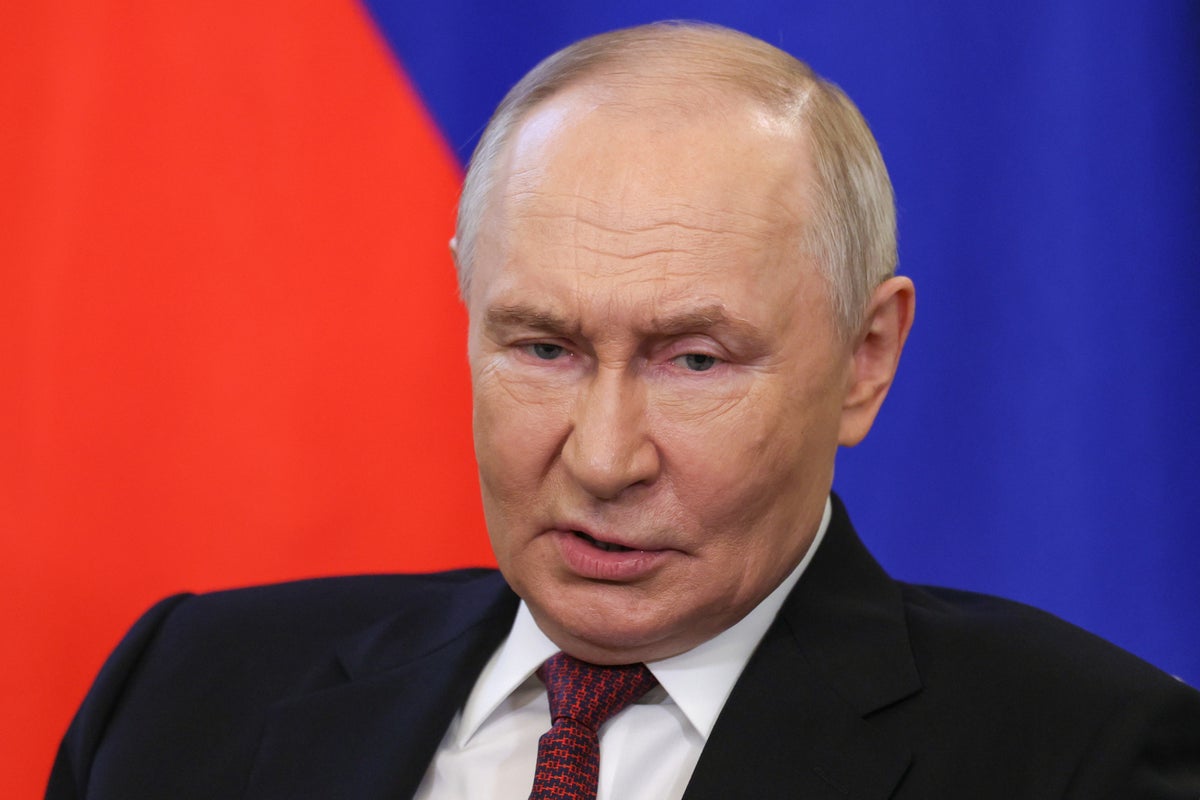
Ukraine-Russia war latest: Putins UK envoy admits war has cost a lot as drone strike overshadows Russian Davos Russian diplomat says we cannot lose this war as he admits Ukrainian forces have caused major damage to Russian oil infrastructure
independent · 4 months ago
One killed, four injured as Russia launches over 900 attacks on Zaporizhzhia region over past day Russian forces carried out 924 strikes on 52 settlements across the Zaporizhzhia region over the past 24 hours. One person was killed and four others were injured in enemy attacks on Zaporizhzhia city and the Zaporizhzhia district.
ukrinform · 4 months ago
Russian attack injures fuel truck driver in Kyiv region A fuel truck driver was injured and hospitalized as a result of a Russian aerial attack in the Kyiv region.
ukrinform · 4 months ago
Russia loses 1,300 troops, four MLRS systems in war against Ukraine over past day Russias total combat losses since the start of its full-scale invasion of Ukraine on February 24, 2022, up to June 4, 2026, are estimated at about 1,369,340 personnel, including 1,300 soldiers killed or wounded in action over the past 24 hours.
ukrinform · 4 months ago
Russians shell 17 settlements in Kharkiv region, leaving three killed, 21 injured over past day On June 3, Kharkiv and 17 other settlements in the Kharkiv region came under Russian attack, resulting in the deaths of three people.
ukrinform · 4 months ago