
Pakistan's army chief mediates as Iran-US peace talks teeter on collapse
Tehran and Washington edge closer to a fragile peace deal as Pakistan’s army chief shuttles between capitals, but Iran accuses the U.S. of "excessive demands" that threaten to derail negotiations.
Pakistan’s army chief, Field Marshal Asim Munir, arrived in Tehran on Friday for high-stakes talks aimed at finalizing a letter of intent to end the 85-day war between Iran and the U.S.-led coalition, according to Pakistani and Iranian officials. Munir, who has led mediation efforts since the conflict’s outbreak, met with Iranian Interior Minister Eskandar Momeni and Foreign Minister Abbas Araghchi late into Friday night, as reported by *Radio Farda* and *Axios* . The proposed agreement would halt hostilities and launch a 30-day negotiating window for a broader deal addressing Iran’s nuclear program and its blockade of the Strait of Hormuz.
Iranian state media reported on Saturday that Tehran views U.S. conditions as "excessive," particularly demands to dismantle its nuclear enrichment infrastructure and abandon plans to impose tolls on shipping in the Hormuz Strait . U.S. Secretary of State Marco Rubio acknowledged "slight progress" but warned that any deal must permanently bar Iran from acquiring nuclear weapons and end its "toll system" in the strait, which Tehran reaffirmed on Thursday . The U.S. has not ruled out further military strikes if talks collapse, according to *France24* .
Munir’s visit follows a flurry of regional diplomacy, with Qatar, Saudi Arabia, Egypt, and Turkey also involved in mediation efforts. The Financial Times reported that delegations from these countries are in Tehran to prevent a resumption of full-scale war, which has killed thousands since a U.S.-Israeli airstrike on February 28 triggered Iran’s retaliatory blockade of Hormuz . A temporary ceasefire, brokered on April 7, has held despite sporadic clashes.
The talks come as U.S. President Donald Trump faces growing opposition in Congress over the war’s cost, with lawmakers threatening to block further funding. Trump has described the negotiations as "teetering on the borderline between a deal and renewed attacks," underscoring the precariousness of the situation .
If successful, the deal would mark the first step toward a broader regional security framework, though analysts warn that Iran’s hardline factions may resist concessions on its nuclear program or Hormuz policy. The next 48 hours are critical, with mediators aiming to secure a signed agreement before the current ceasefire’s expiration.
> Background: **Iran, U.S. near deal on Hormuz and nuclear talks amid key disputes** — *18 hours ago*
More LFE coverage on this topic
Pakistan's army chief mediates as Iran-US peace talks teeter on collapse
Articles

From Tehran To Beijing, Pakistan Continues Diplomatic Push With Latest Iran War Talks Pakistan has emerged as a central intermediary as regional and global powers intensify efforts to turn a fragile cease-fire into broader U.S.-Iran negotiations amid ongoing talks in Iran and China.
radio free europe · 5 days ago
Taiwan Defense Deal Sparks New China-US Tensions in Washington 2026 Washington, D.C., United States – May 23 – Brussels Morning Newspaper — Taiwan defense deal discussions are intensifying geopolitical debate as the United States continues expanding military support for Taiwan amid rising regional tensions involving China and broader Indo-Pacific security concerns. The latest defense cooperation efforts are drawing strong reactions from Beijing while increasing international focus on […]
brussels morning · 5 days ago
Middle East war live: Iran considers latest peace proposal, accuses US of excessive demands Tehran accused the United States of excessive demands, Iranian media reported on Saturday, as US media reports suggested that Washington was mulling new strikes while Iran was considering the latest peace proposal. Read our liveblog for all the latest developments.
france24 · 5 days ago
Pakistan Army Chief Arrives In Tehran For Latest Peace Push As the US-Israeli war with Iran continues to impact and shape the region, journalists from RFE/RLs Central Newsroom and Iranian service, Radio Farda, deliver ongoing updates and analysis.
radio free europe · 5 days ago
Iran war day 85: Tehran says major gaps remain in US talks Pakistan army chief Asim Munir arrives in Tehran as mediation efforts to secure a US-Iran peace deal intensify.
aljazeera · 6 days ago
Pakistans army chief arrives in Tehran as Rubio signals slight progress in peace talks US President Donald Trump has described the stop-start negotiations this week as teetering on the borderline between a deal and renewed attacks.
euronews · 6 days ago
Media: Pakistan and Iran spoke late into Friday night On Friday, Pakistans army chief, Asim Munir, spoke with Iranian Foreign Minister Abbas Araghchi in Tehran about diplomatic initiatives to end the war. Pakistan is mediating the conflict between Iran, and the US and Israel. Following a US and Israeli attack on Iran on February 28, a ceasefire was established on April 7. Delegations from […]
cphpost · 6 days ago
Live: Iran considers latest peace proposal, accuses US of excessive demands Tehran accused the United States of excessive demands, Iranian media reported on Saturday, while US media reports suggested that Washington was mulling new strikes and leaders of the Islamic republic considered the latest peace proposal. Read our liveblog for all the latest developments.
france24 · 6 days ago
Pakistans army chief in Iran as USs Rubio says slight progress in talks Pakistans Asim Munir is in Tehran as part of mediation efforts, as EU moves to sanction Iran over the Hormuz blockade.
aljazeera · 6 days ago
Pakistan army chief travels to Tehran in push for US-Iran deal Asim Munir joins Pakistani and Qatari delegations as regional mediators step up efforts to prevent resumption of full-scale war
financial times · 6 days ago
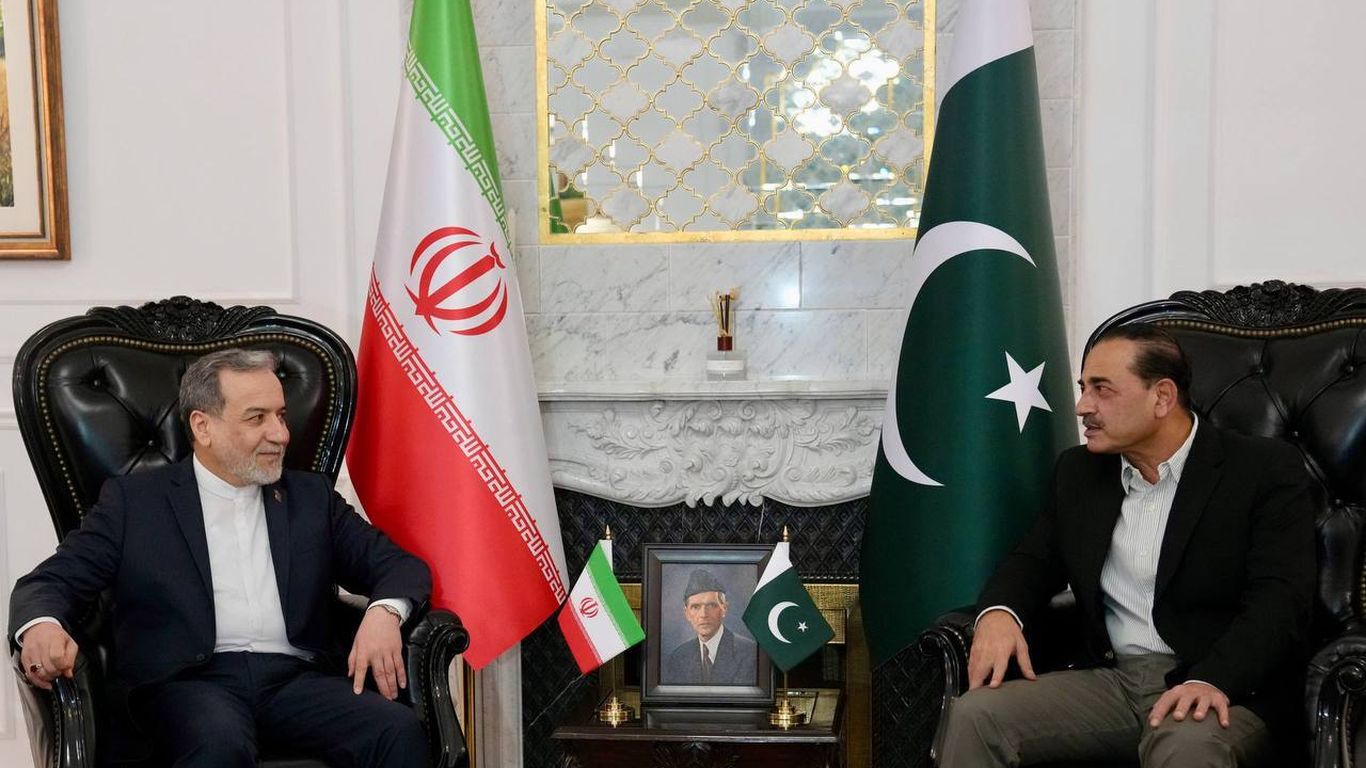
Pakistani field marshal in Tehran to try to seal U.S.-Iran deal Pakistans top military commander, Field Marshal Asim Munir, landed in Tehran on Friday as part of an effort to reach a deal under which the U.S. and Iran would agree to end the war and launch negotiations for a broader agreement, a Pakistani security source told Axios.Why it matters: Munir has been the lead mediator between the U.S. and Iran since the war began. The fact that hes in Tehran after several days of lower-level talks could signal a final push by Pakistan to try to get a deal.The latest: Munir arrived in Tehran on Friday and was received by Iranian Interior Minister Eskandar Momeni, the Pakistani military said in a statementDriving the news: The mediators are trying to finalize a letter of intent that includes an agreement to end the war and principles for another 30 days of negotiations on a broader deal that would also address Irans nuclear program. Pakistan, Qatar, Saudi Arabia, Egypt and Turkey have all been involved in the mediation.It has remained unclear whether Iran would be willing to sign such a document at a time when some in Tehran appear to believe the leverage is on their side.What theyre saying: Theres been some slight progress. I dont want to exaggerate it, but theres been a little bit of movement, and thats good, Secretary of State Marco Rubio said on Friday. He added that the fundamental demand is that Iran can never have a nuclear weapon. It just cannot.Rubio said a deal would have to address Irans stockpile of highly enriched uranium and enrichment policy going forward.He also said Iran must not be allowed to set up tolls in the Strait of Hormuz, after Iran reiterated its intention to establish such a system on Thursday.Go deeper: Trump bleeds votes in Congress to keep Iran war goingThis story was updated to note Munirs arrival in Tehran.
axios · 6 days ago
Regional mediators travel to Tehran in push for US-Iran deal Pakistans powerful army chief Asim Munir expected to join talks designed to prevent resumption of full-scale war
financial times · 6 days ago