
Hungary construction costs rise fastest in EU as housing affordability worsens

Story Timeline
3 months · 5 summary articles
Hungary is the only EU country where construction costs have risen faster over the past decade, according to fresh Eurostat data published on Thursday 2026-06-25. The agency’s 2026 Key Figures on European Business show that between 2015 and 2025 residential building prices in Hungary climbed by 112 %, the steepest increase recorded in any member state. The next-highest rise, 89 %, was recorded in Cyprus, where costs also hit a record high in 2025 2026-06-25.
Industry analysts point to a combination of domestic and external pressures. The government’s decision to double tariffs on imported steel in 2024 has pushed up material bills despite attempts to phase in the increases gradually, the UK’s Financial Times reported on Thursday 2026-06-25. “The levies are already imposing punitive costs,” said a spokesperson for the Home Builders Federation. Eurostat’s figures also reflect sustained wage growth in Hungary’s construction sector, where average hourly earnings rose by 68 % over the same period, the sharpest jump in central and eastern Europe.
The surge in building costs comes as Hungary vies for the unenviable title of the EU’s poorest member. On Thursday, the weekly HVG published a fact-check showing that, depending on the indicator used, Hungary can simultaneously appear as both the bloc’s poorest country and a nation where poverty has “improved dramatically” 2026-06-25. The discrepancy stems from shifting definitions: headline GDP per capita places Hungary 24 % below the EU average, while a consumption-based poverty line ranks it closer to the median. “Politicians cite whichever series supports their narrative,” said Zsuzsanna Mucka, an economist at the Institute of Economic Research in Bratislava.
Across the continent, the pattern is uneven. In Germany, house prices rose by just 1.4 % year-on-year in the first quarter of 2026, the slowest increase since 2013, according to Süddeutsche Zeitung 2026-06-25. Meanwhile, in Slovakia, real wages remain 22 % below the Czech level, a gap analysts liken to the price difference for an IKEA flat-pack chair, according to SME Spectator 2026-06-25.
Eurostat’s latest comparative data, released on Thursday, underscores that price levels alone do not tell the full story. A standard shopping basket in Iceland costs nearly four times as much as in North Macedonia, yet both countries rank outside the EU’s core 2026-06-25. For Hungary, the immediate challenge is clear: with construction inflation still running at double the EU average, the dream of affordable housing is receding faster than the statistics can be reconciled.
Follow us for live European news
Articles

Why Slovaks earn less than Czechs? Think of an Ikea chair The Czech Republic could reach the EU average within a decade. Slovakia may not get there for another 50 years.
spectator.sme.sk · 3 months ago

UK housebuilders warn of shockwaves as tariffs on steel imports double Construction industry says levies will impose punitive costs despite governments effort to soften blow
financial times · 3 months ago
Tarbijahinnad Euroopas: kus on elamine kõige kallim ja kus kõige odavam? Sama ostukorv võib maksta peaaegu neli korda rohkem, olenevalt sellest, kus Euroopas asutakse. See tekitab küsimuse, millised riigid on tegelikult kõige kallimad ja millised kõige odavamad ning kuidas neid omavahel õiglaselt võrrelda.
postimees · 3 months ago

Egy ország van csak az EU-ban, ahol jobban drágult a lakásépítés, mint nálunk Kiszámolta az Eurostat, mennyit drágult az építkezés az elmúlt tíz évben, és nem örülhetünk az eredménynek.
hvg.hu · 3 months ago
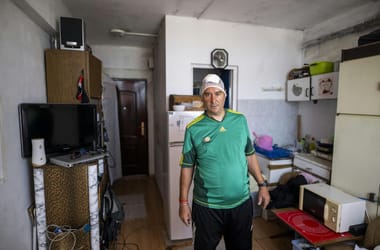
Most akkor az EU legszegényebb országa vagyunk, vagy nagyot csökkent a szegénység? Ahány párt, annyi statisztika: nagy magabiztossággal állítják a politikusok, hogy az EU legszegényebb helye Magyarország, ahogy azt is, hogy óriásit javultak a szegénységi mutatóink. Segítünk eligazodni, melyik adatsor pontosan mit jelent, és hogy hol van az igazság.
hvg.hu · 3 months ago
Englands Godfrey signs new three-year deal with London City England international Freya Godfrey has signed a new three-year contract with London City Lionesses.
bbc sport · 3 months ago
Cyprus residential construction costs hit record high in 2025 Construction prices for new residential buildings in Cyprus climbed to their highest level on record in 2025, according to new Eurostat data, reflecting a broader increase in building costs across the European Union over the past decade. The numbers were published in the 2026 edition of Eurostats Key Figures on European Business, which brings together […]
cyprus mail · 3 months ago

Vídeo mostra criança a atirar bandeira LGBTQIA+ para o lixo? Um vídeo que começou a circular nas redes sociais em meados de junho mostra uma criança a deitar num contentor do lixo uma bandeira representativa da comunidade LGBTQIA+. Mas será real?
observador · 3 months ago
Bulgaria scumpește taxele de drum începând cu 1 august. Cât vor plăti șoferii pentru vinietă Şoferii vor plăti taxe mai mari pentru utilizarea drumurilor în Bulgaria începând cu 1 august 2026, potrivit unui proiect de hotărâre pus în consultare publică de Ministerul Dezvoltării Regionale şi Lucrărilor Publice de la Sofia. Propunerea prevede o majorare cu 30 a tarifelor vinietelor pentru vehiculele cu masa de până la 3,5 tone, dar şi majorarea preţului vinietele pe termen scurt: pentru o săptămână, un weekend sau o zi, conform Novinite.
digi24 · 3 months ago
Anunț important pentru românii care merg în Grecia sau pe litoralul bulgăresc. Bulgaria pregătește majorarea cu 30 a tarifelor pentru viniete Șoferii din Bulgaria ar putea plăti taxe mai mari pentru utilizarea drumurilor începând cu 1 august, potrivit unui proiect de hotărâre aflat în consultare publică. Propunerea prevede o majorare cu 30 a tarifelor pentru vinietele destinate vehiculelor de până la 3,5 tone.
adevarul · 3 months ago
Wohnungsmarkt: Immobilienpreise in Deutschland steigen langsamer Häuser und Wohnungen verteuerten sich von Januar bis März um durchschnittlich 1,4 Prozent zum Vorjahreszeitraum.
sueddeutsche · 3 months ago
Both a must: ACs and trees | De Standaard - Belgium
eurotopics.net · 3 months ago
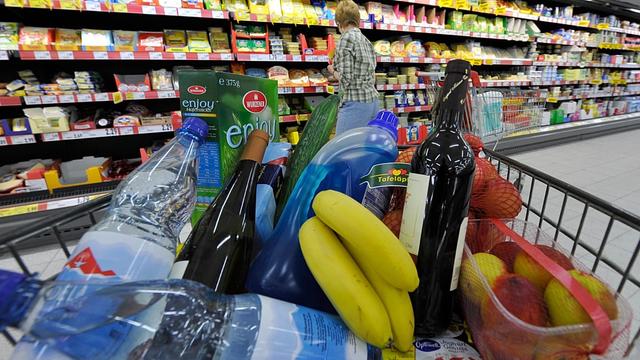
Which European countries are the cheapest and most expensive?From Iceland to North Macedonia, consumer prices vary dramatically across Europe.New Eurostat data shows where everyday goods and services cost the most — and why prices alone do not tell the full story. #ConsumerGoods #Prices #Europe #EU
mastodon bot · 3 months ago
Nová zelená úsporám je zpět. Nízkopříjmové domácnosti dostanou dotaci, ostatní bezúročný úvěr Nová zelená úsporám je oficiálně zpátky. Od čtvrtečních 10.00 Státní fond životního prostředí znovu přijímá žádosti o podporu. Majitelé rodinných domů mohou žádat až o dva miliony korun formou bezúročného úvěru na komplexní rekonstrukci včetně zateplení, výměny kotle nebo instalace fotovoltaiky. Nízkopříjmové domácnosti mohou navíc získat dotaci.
irozhlas.cz · 3 months ago