
NASA releases images of new lunar crater after SpaceX rocket stage crashes into moon
NASA released images on Wednesday of a new lunar crater formed after a SpaceX Falcon 9 rocket stage crashed into the moon’s surface on Aug. 5 at approximately 8,700 kilometers per hour. The impact created a crater roughly 18 to 20 meters wide and less than 3 meters deep, according to observations from NASA’s Lunar Reconnaissance Orbiter and other space agencies.
The rocket stage, part of a Falcon 9 launched by SpaceX on Jan. 15, 2025, had been drifting in space after completing its mission to deliver two lunar landers. The upper stage was intentionally discarded but later found to be on a collision course with the moon. The crash occurred near the western edge of the moon’s disk, close to the 50-kilometer-wide Einstein Crater.
NASA’s Lunar Reconnaissance Orbiter captured the crater in detail, showing a distinct 18-meter ring intersecting with an older, similarly sized meteorite crater. The images also revealed bright, ray-like streaks of ejected lunar material. The European Southern Observatory’s Very Large Telescope in Chile and South Korea’s Danuri lunar orbiter had previously detected the impact site, with the telescope identifying lithium in the ejected debris, likely from the rocket itself.
Kelsey Young, a NASA lunar scientist, stated in a post on X that the impact posed no danger to the moon or Earth. “This is a technically accepted and safe way to dispose of hardware in low lunar orbit,” Young said. She added that the moon is frequently struck by natural objects such as meteors, asteroids and comets.
The 4.9-ton rocket stage struck the lunar surface with a force comparable to the explosion of three tons of TNT, according to calculations cited by German media. While amateur astronomers had tracked the rocket’s trajectory, the impact produced no visible flash or debris plume detectable by non-professional equipment. The crash was the latest in a long history of human-made objects colliding with the moon, though most previous impacts were intentional.
Follow us for live European news
- 1
- 1
- 1
- 1
- 1
Articles

На Луне появился новый кратер после того, как в поверхность врезалась часть ракеты SpaceX. Вот как это выглядит NASA опубликовало серию снимков нового кратера на Луне. Этот кратер образовался 5 августа — когда разгонный блок ракеты SpaceX, который больше года дрейфовал в космосе, врезался в Луну на скорости около 8,7 тысячи километров в час. Снимки кратера сделал космический аппарат NASA Lunar Reconnaissance Orbiter (LRO), который огибает Луну (а она, в свою очередь, медленно вращается). Инженерам понадобилось наклонить аппарат, чтобы его камеры были направлены на кратер. На то, чтобы нужная локация попала в зону обзора аппарата, ушло шесть дней.
meduza · about 1 hour ago

Görgette a Marsról készült fotókat, valami furcsát talált az egyik képen A Curiosity nevű marsjáró 2023. augusztus 20-án készítette azt a felvételt, amelyen a Gale-kráter látható, és amin egy különleges alak is felbukkant.
hvg.hu · about 1 hour ago

Månkraschen: Se Nasas nya bilder på kratern När en raket från det privata rymdbolaget Space X kraschade in i månens yta den 5 augusti skapades en ny krater. Det visar bilder som Nasa nu offentliggör.
dagens nyheter · about 1 hour ago

La Nasa dévoile les images du cratère créé sur la Lune par un fragment de la fusée SpaceX Lagence spatiale américaine a publié ce mercredi 19 août des images montrant un nouveau cratère provoqué sur notre satellite par limpact, le 5 août, de létage supérieur de la fusée Falcon 9 de SpaceX.
courrier international · about 2 hours ago
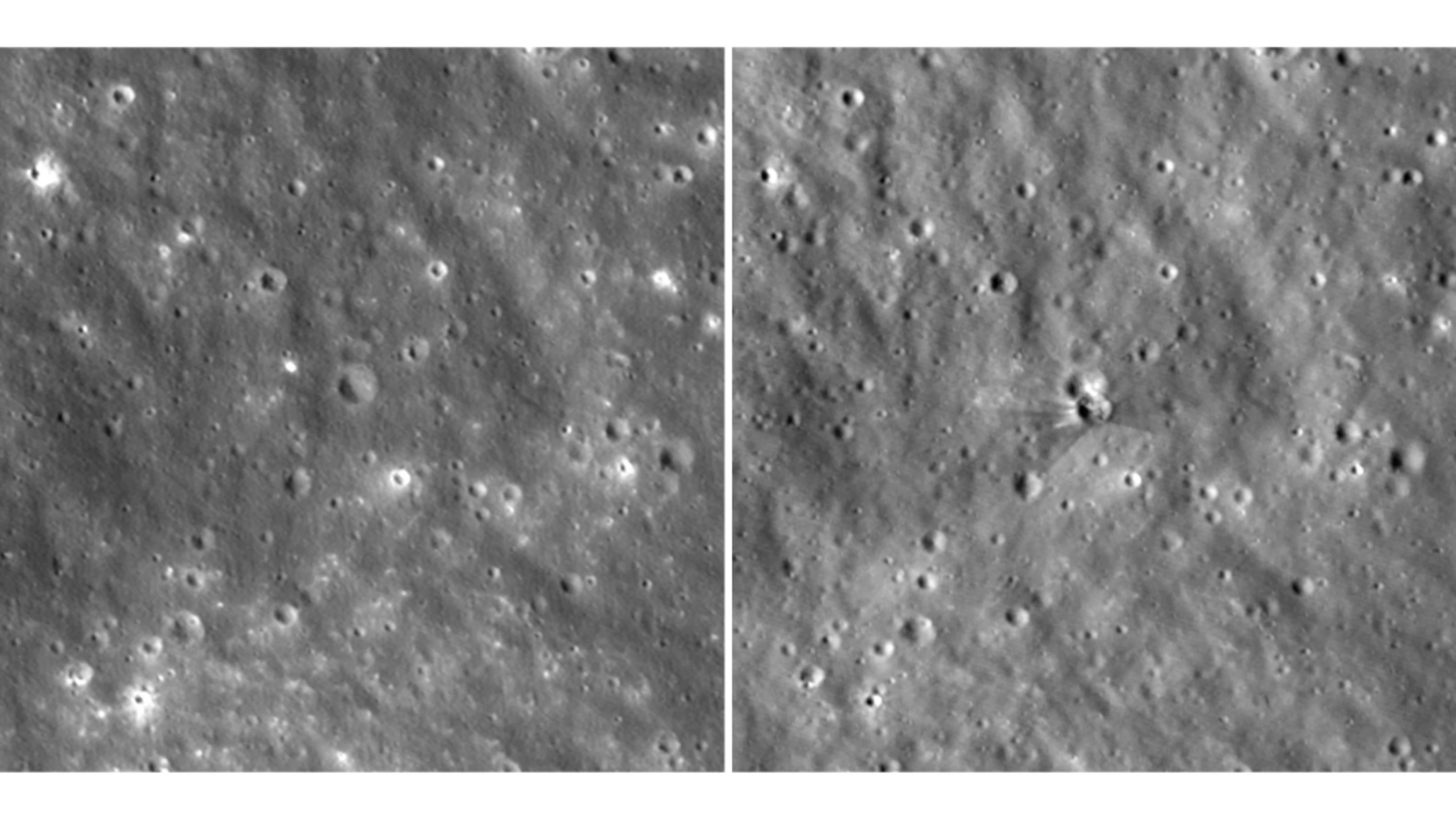
Neuer EinschlagSKrater: Musks Mondkrater Zwei Wochen nach dem Einschlag einer SpaceX-Raketenstufe auf dem Mond hat die NASA nun die bislang besten Bilder des Kraters veröffentlicht.
faz · about 2 hours ago