
U.S. Supreme Court rejects Trump birthright citizenship order, upholds transgender sports bans

The U.S. Supreme Court on Tuesday delivered a dual rebuke to President Donald Trump, striking down his executive order to end birthright citizenship and upholding state bans on transgender girls competing in girls’ school sports. In a 6-3 ruling, the justices affirmed that the Fourteenth Amendment guarantees citizenship to anyone born on U.S. soil, dealing a major blow to Trump’s immigration agenda. The decision, announced on the final day of the Court’s term, is constitutionally entrenched and cannot be reversed by statute or executive action.
Writing for the majority, Chief Justice John Roberts declared that children born in the United States to parents unlawfully or temporarily present remain subject to U.S. jurisdiction and are citizens at birth. “Citizenship, then and now, was the right to have rights—to freely participate in our political community,” Roberts wrote. The ruling directly contradicts Trump’s attempt to limit birthright citizenship to those with at least one legally present parent, a policy based on a fringe interpretation of the Fourteenth Amendment.
Justice Clarence Thomas dissented, arguing that the Citizenship Clause’s original public meaning did not preclude Trump’s order. “Because many potential applications of the President’s Order are consistent with the original public meaning of the Citizenship Clause, I respectfully dissent,” Thomas wrote. The decision follows oral arguments in which a majority of justices, including Roberts, appeared skeptical of the administration’s legal arguments. Polling shows two-thirds of Americans support preserving birthright citizenship, including a majority of independents and many Republicans.
In a separate 6-3 ruling, the Court upheld state laws in West Virginia and Idaho banning transgender girls from competing in girls’ school sports, a policy Trump hailed as a “BIG WIN” on Truth Social. The justices ruled that such bans do not violate Title IX or the Equal Protection Clause, rejecting arguments that they discriminate against transgender students. Justice Sonia Sotomayor, writing in dissent, warned the Court was moving “the goalposts” by resolving the case without full factual development.
The twin rulings mark a rare setback for Trump at the Supreme Court, which has otherwise largely sided with his expansive claims of presidential power this term. The Court also blocked Trump’s attempt to remove Federal Reserve Governor Lisa Cook, though it upheld his authority to fire directors of independent federal agencies at will. Legal experts note the birthright citizenship decision is particularly significant, as it can only be overturned by a constitutional amendment or a future Court decision.
Follow us for live European news
- 5
- 1
- 1
- 1
- 1
- 1
- 1
8 further sources not geolocated
Articles

BREAKING: Supreme Court rejects Trump bid to restrict birthright citizenship reut.rs/44o9RGJ
bluesky_Reuters · about 3 hours ago
JUST IN - U.S. Supreme Court strikes down Trumps birthright-citizenship order, declaring children born to parents who are in the U.S. illegally or temporarily are not citizens, 6–3. The ruling is constitutional, not statutory, meaning it cant be reversed by statute or executive order, only by a constitutional amendment or a future Court overruling the decision. Read here: @disclosetv
telegram_Disclose.tv · about 3 hours ago
BREAKING: Trump hails Supreme Court transgender sports ruling as big win READ:
telegram_Insider Paper · about 3 hours ago

La Cour suprême américaine rejette un décret phare de Donald Trump Les sportives transgenres seront exclues des compétitions féminines aux Etats-Unis, a tranché mardi la Cour suprême américaine. La Cour a aussi rejetté la remise en cause du droit du sol par Donald Trump. ...
la libre · about 3 hours ago
US-Geburtsrecht: Supreme Court: US-Staatsbürgerschaft bei Geburt in den USA Wer in den USA geboren wird, bekommt automatisch die Staatsbürgerschaft. Trump versuchte, diese Praxis zu Fall zu bringen - doch scheitert nun vor dem Supreme Court.
handelsblatt · about 3 hours ago
Geburtsrechtprinzip : Supreme Court stoppt Trumps Einschränkungen bei Staatsangehörigkeit Wer in den USA geboren wird, bekommt die Staatsbürgerschaft. Per Dekret wollte Donald Trump dieses Recht einschränken. Das höchste US-Gericht gab eine klare Antwort.
die zeit · about 3 hours ago
USA: Supreme Court bestätigt Verbot für trans Athletinnen an Schulen Das Oberste Gericht erlaubt Bundesstaaten wie West Virginia und Idaho, trans Mädchen und Frauen aus dem Frauensport auszuschließen. Für Donald Trump ist das ein Sieg.
die zeit · about 3 hours ago
![SCOTUS rejects Trumps birthright citizenship policy The Supreme Court struck down President Trumps executive order restricting birthright citizenship on Tuesday, reaffirming the long-held belief that any person born on American soil is a citizen.Why it matters: The decision is a blow to Trump, who sought to limit by executive fiat who is eligible for American citizenship as part of his widespread immigration crackdown.What theyre saying: "Citizenship, then and now, was the right to have rights— to freely participate in our political community," Chief Justice John Roberts wrote for the five-justice majority."Children born in the United States to parents unlawfully or temporarily present are subject to the jurisdiction of the United States and are citizens at birth under the Fourteenth Amendments Citizenship Clause."Yes, but: In a dissenting opinion, Justice Clarence Thomas said "[b]oth the Civil Rights Act and the Citizenship Clause guaranteed citizenship to persons born and domiciled in the United States regardless of their race.""Because many potential applications of the Presidents Order are consistent with the original public meaning of the Citizenship Clause, I respectfully dissent."Threat level: If the administration had succeeded in its arguments, millions of babies would no longer be eligible for citizenship, losing their rights to work authorization, safety net provisions, voting and more.Some of those children could have become stateless with no guaranteed rights at all if their parents home countries refused to grant them citizenship. Prior to the decision, Trump had lambasted Justices Neil Gorsuch and Amy Coney Barrett — both of whom he had appointed — on Truth Social, anticipating that they would vote against him on birthright citizenship."I dont want loyalty, but I do want and expect it for our Country," he said.Catch up quick: Trumps order sought to limit birthright citizenship to people who have at least one legally present parent in the U.S.The order was based on a once-fringe position that the 14th Amendment doesnt expand to those present in America illegally because they arent "subject to the jurisdiction" of America, as required in the amendment.The majority of the justices appeared skeptical of the Trump administrations arguments during the cases initial oral arguments, including Roberts.By the numbers: Two-thirds of Americans support preserving the 14th Amendments right to birthright citizenship.That includes the majority of Independents and many Republicans.Roughly 53 of Trumps most religious voting block — white evangelical Protestants — say they support the constitutionally guaranteed right.Go deeper: Whats at risk if SCOTUS sides with Trump in birthright citizenship caseEditors note: This is a breaking news story and will be updated with more information.](https://images.axios.com/-RlnfG-kAMASQta2lXj9bG7GQkY=/0x0:2674x1504/1366x768/2026/04/17/1776434199655.jpg)
SCOTUS rejects Trumps birthright citizenship policy The Supreme Court struck down President Trumps executive order restricting birthright citizenship on Tuesday, reaffirming the long-held belief that any person born on American soil is a citizen.Why it matters: The decision is a blow to Trump, who sought to limit by executive fiat who is eligible for American citizenship as part of his widespread immigration crackdown.What theyre saying: "Citizenship, then and now, was the right to have rights— to freely participate in our political community," Chief Justice John Roberts wrote for the five-justice majority."Children born in the United States to parents unlawfully or temporarily present are subject to the jurisdiction of the United States and are citizens at birth under the Fourteenth Amendments Citizenship Clause."Yes, but: In a dissenting opinion, Justice Clarence Thomas said "[b]oth the Civil Rights Act and the Citizenship Clause guaranteed citizenship to persons born and domiciled in the United States regardless of their race.""Because many potential applications of the Presidents Order are consistent with the original public meaning of the Citizenship Clause, I respectfully dissent."Threat level: If the administration had succeeded in its arguments, millions of babies would no longer be eligible for citizenship, losing their rights to work authorization, safety net provisions, voting and more.Some of those children could have become stateless with no guaranteed rights at all if their parents home countries refused to grant them citizenship. Prior to the decision, Trump had lambasted Justices Neil Gorsuch and Amy Coney Barrett — both of whom he had appointed — on Truth Social, anticipating that they would vote against him on birthright citizenship."I dont want loyalty, but I do want and expect it for our Country," he said.Catch up quick: Trumps order sought to limit birthright citizenship to people who have at least one legally present parent in the U.S.The order was based on a once-fringe position that the 14th Amendment doesnt expand to those present in America illegally because they arent "subject to the jurisdiction" of America, as required in the amendment.The majority of the justices appeared skeptical of the Trump administrations arguments during the cases initial oral arguments, including Roberts.By the numbers: Two-thirds of Americans support preserving the 14th Amendments right to birthright citizenship.That includes the majority of Independents and many Republicans.Roughly 53 of Trumps most religious voting block — white evangelical Protestants — say they support the constitutionally guaranteed right.Go deeper: Whats at risk if SCOTUS sides with Trump in birthright citizenship caseEditors note: This is a breaking news story and will be updated with more information.
axios · about 3 hours ago
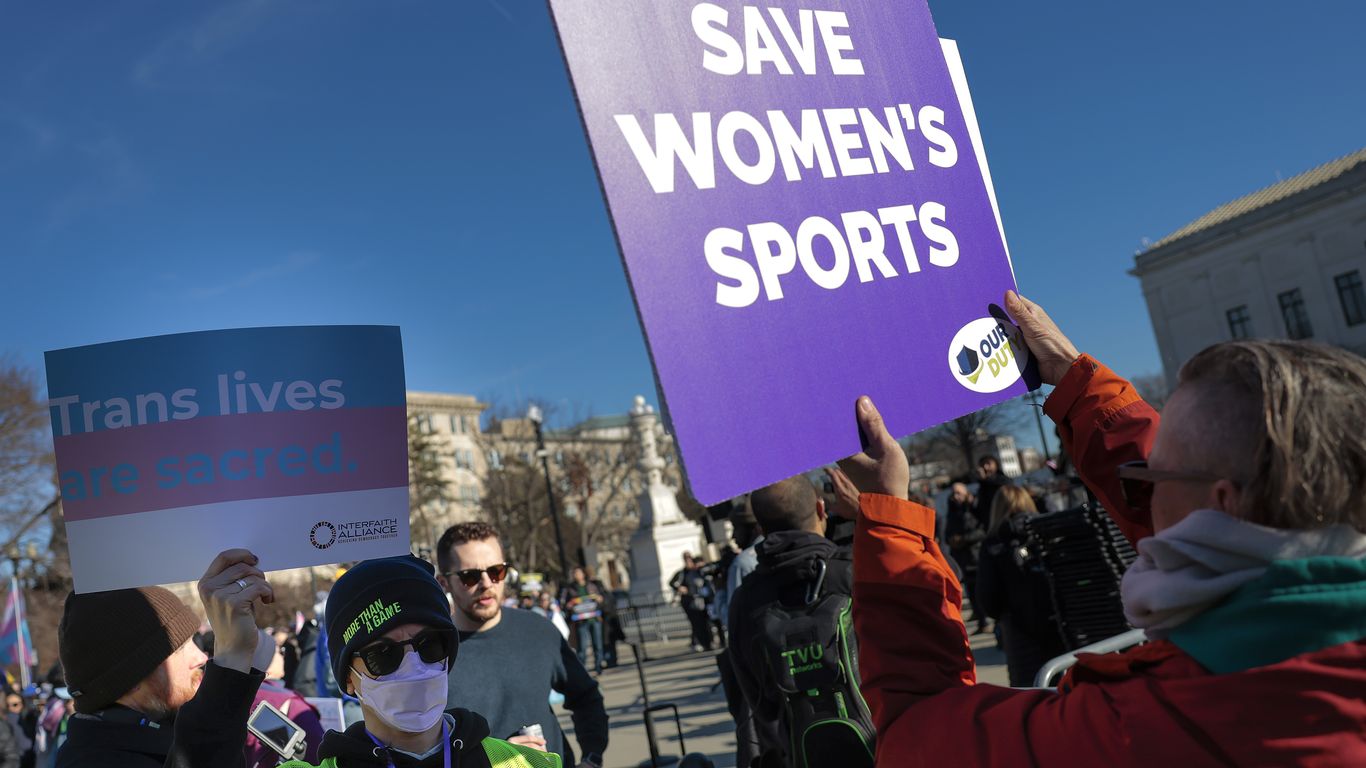
Supreme Court lets states ban trans girls from girls sports The Supreme Court ruled Tuesday that states can ban transgender girls from girls school sports teams, handing conservative states a historic victory in their fight to restrict trans rights.Why it matters: The decision caps a yearslong, Republican-led push through statehouses and school boards to define girls sports by sex assigned at birth.The case also hands that movement its sharpest weapon yet for coming fights over bathrooms, IDs and gender-affirming care.Driving the news: In West Virginia v. B.P.J., the justices held that the states ban on trans girls in girls sports does not violate either Title IX or the Equal Protection Clause.The court also upheld a similar Idaho law in Little v. Hecox.Justice Brett Kavanaugh wrote for the 6–3 majority that "The Constitution and Title IX do not require an overhaul of womens and girls sports throughout America."All nine justices agreed the ban was allowed under Title IX, but they disagreed about whether it was constitutional.The other side: Justice Sonia Sotomayor wrote the main dissent, joined by Justices Elena Kagan and Ketanji Brown Jackson, arguing the court moved "the goalposts" by resolving the case without knowing all the facts."One can only hope that the same misguided approach does not and will not extend to other contexts tomorrow, when any of these considerations are missing," Sotomayor continued.Between the lines: Advocates for transgender students argued that categorical bans discriminate based on sex and transgender status.States defending the laws said sex-separated sports are lawful and necessary to protect fairness and opportunity for people assigned female at birth.Zoom in: B.P.J. is Becky Pepper-Jackson, the 16-year-old who challenged West Virginias ban the summer before she began the sixth grade.She competed while the case ran through the courts, and won West Virginias Class AAA state championship in shot put a month ago.Sotomayor noted Pepper-Jackson was the only trans girl publicly known to have sought to play girls sports in the state.What theyre saying: President Trump celebrated the ruling on Truth Social, writing that it was a "BIG WIN."He wrote, "The United States Supreme Court just RULED AGAINST MEN PLAYING IN WOMENS SPORTS. Wow! That takes that ridiculous situation off the table!!!"Whats next: Both cases head back to the lower courts, while states with similar laws are likely to cite it immediately in pending cases.Editors note: This is a breaking news story and will be updated.
axios · about 3 hours ago
🔴 US Supreme Court upholds transgender sports bans
france24 · about 3 hours ago
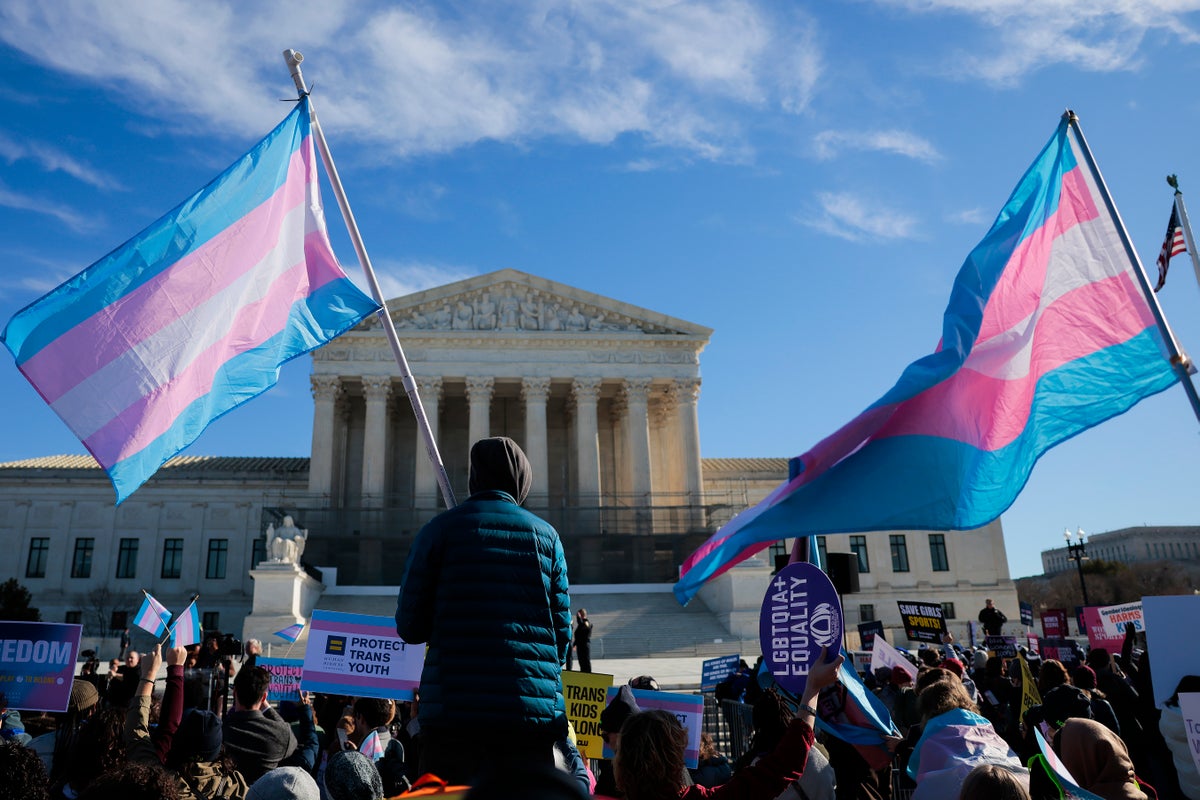
Trump celebrates Supreme Court ruling on transgender athletes as Big Win The 6-3 decision could have a broad impact, as 25 states have laws on the books restricting transgender athletes
independent · about 3 hours ago
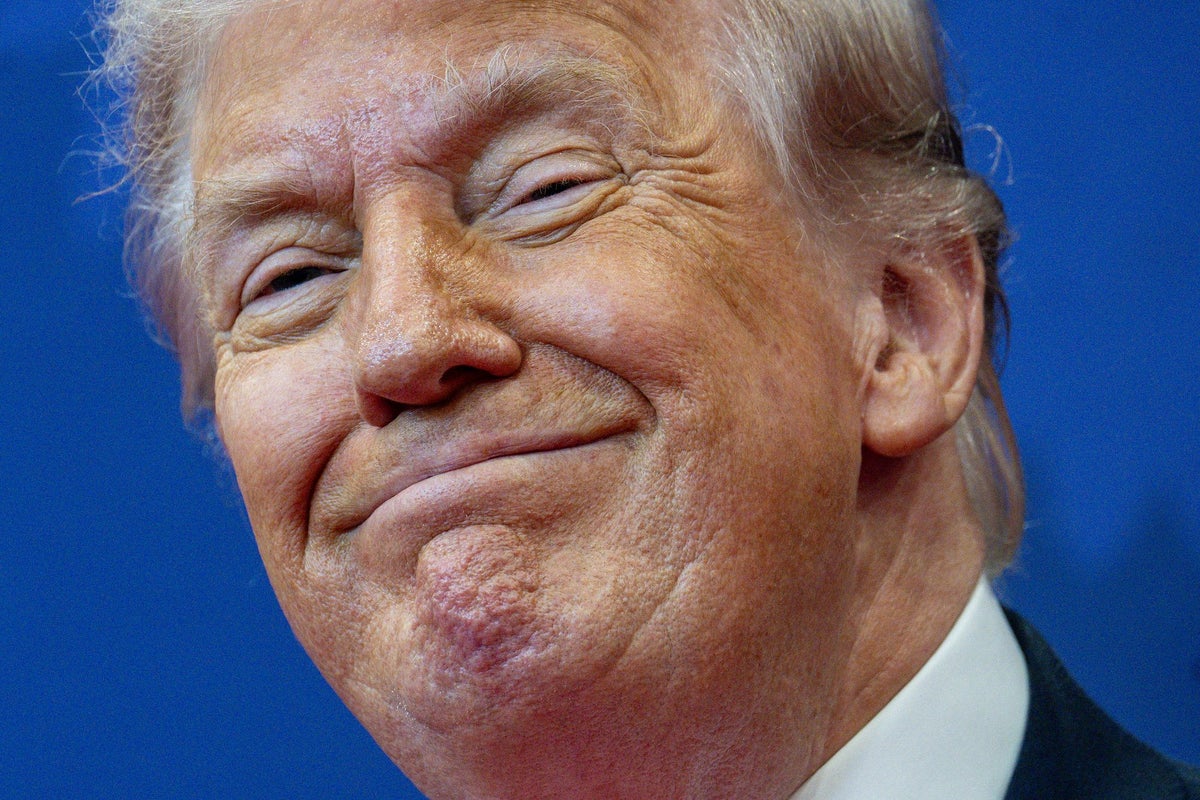
Trump celebrates Supreme Courts political campaign spending decision: A big win for Republicans In a 6-3 decision, the courts conservative majority sided with Vice President JD Vance and other Republican challengers
independent · about 3 hours ago
SCOTUS rules against Trumps order limiting birthright citizenship The US Supreme Court has blocked President Donald Trumps executive order to end birthright citizenship.
aljazeera · about 3 hours ago
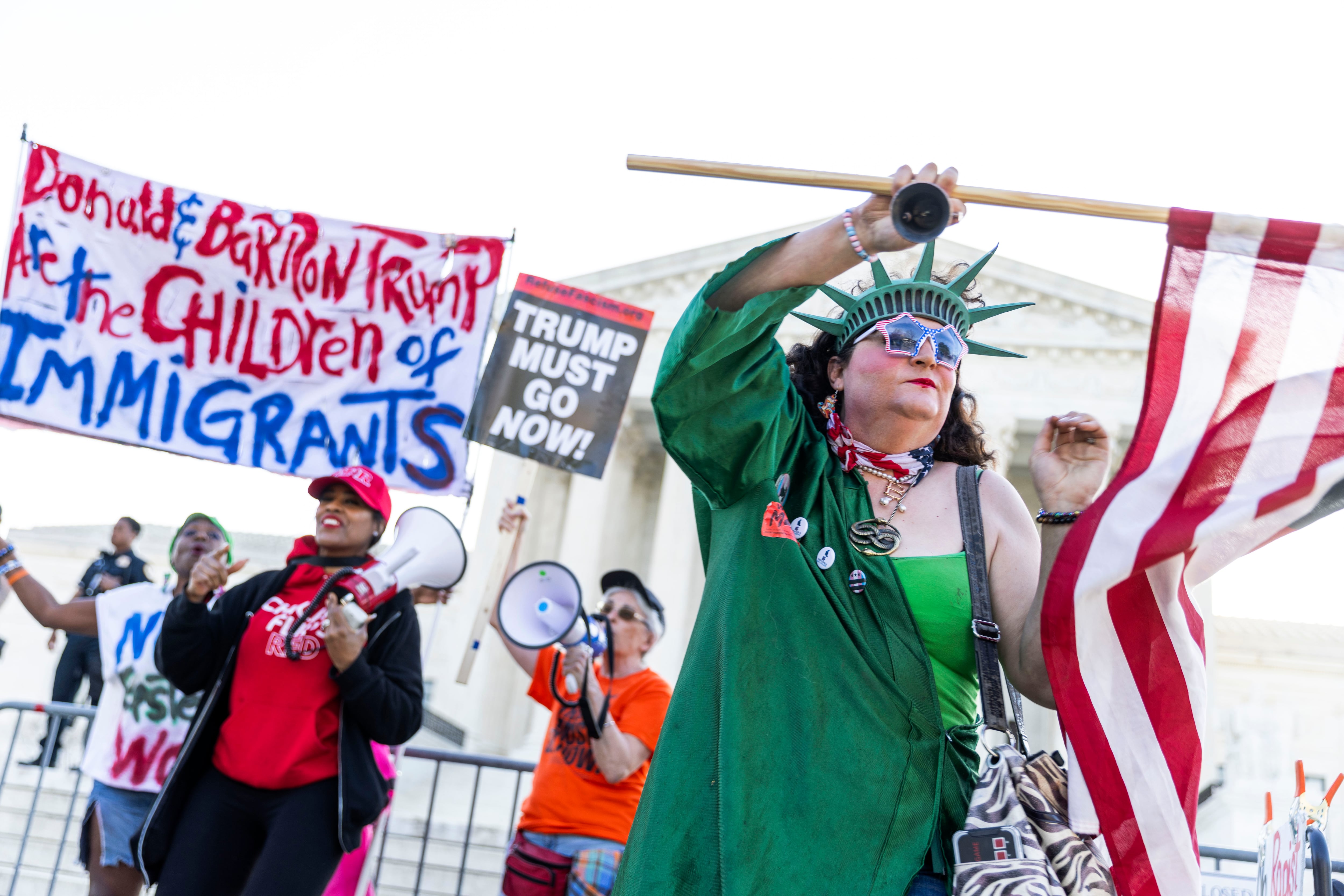
US Supreme Court rejects Trumps bid to end birthright citizenship The justices deal a heavy blow to the White Houses immigration policy. Resounding though it might be, the rebuke does not come as a surprise
elpais · about 3 hours ago

Supreme Court rules Trump cannot scrap birthright citizenship
bluesky_The Times · about 3 hours ago

Live: US Supreme Court to decide on birthright citizenship on final day of landmark rulings reut.rs/4wds9pO
bluesky_Reuters · about 3 hours ago
JUST IN - Supreme Court upholds state laws keeping transgender athletes out of girls and womens sports in 6-3 decision. Read here: @disclosetv
telegram_Disclose.tv · about 3 hours ago
Supreme Court rejects Trump bid to restrict birthright citizenship Handing President Donald Trump a stinging defeat, the U.S. Supreme Court on Tuesday rejected his audacious attempt to restrict birthright citizenship in the United States – a right long woven into the fabric of American society – scuttling one of his top priorities in his crackdown on immigration. The 6-3 ruling marked the second time […]
cyprus mail · about 3 hours ago

Trump-Plan gekippt – Supreme Court bestätigt Staatsbürgerschaft durch Geburt Donald Trump wollte verhindern, dass weiterhin Kinder automatisch die US-amerikanische Staatsbürgerschaft erhalten, weil sie in den USA geboren wurden. Das Oberste Gericht kippte diesen Plan nun. In einem anderen Punkt hingegen wurde die Linie des US-Präsidenten gestärkt.
welt.de · about 3 hours ago
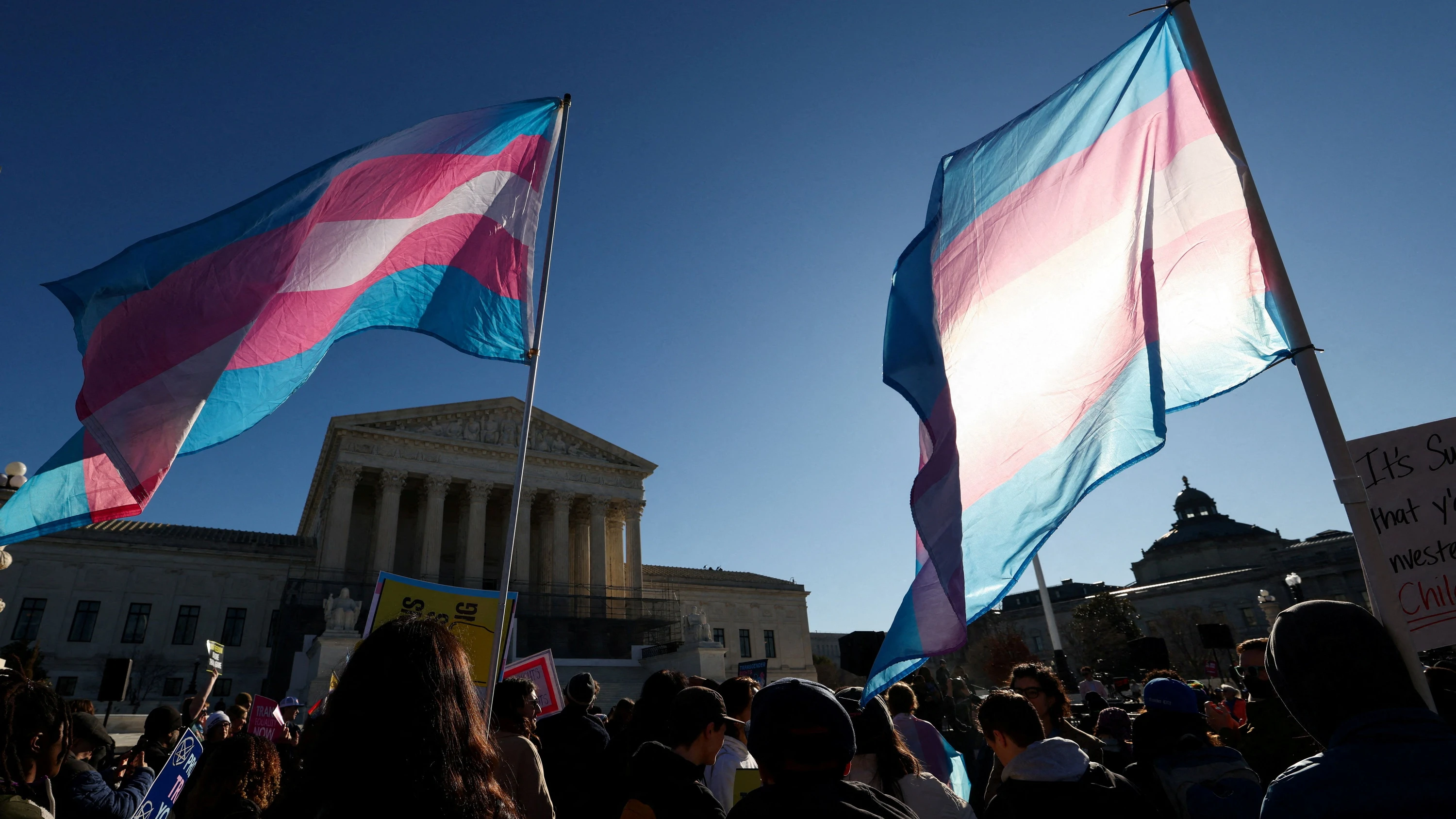
USA unter Trump: Supreme Court billigt Verbote für Transgender-Athleten im Frauensport Liveticker zur US-Politik unter Donald Trump / Trump soll republikanischen Senator angeschrien haben / Jetzt lesen im Liveticker der FAZ
faz · about 3 hours ago
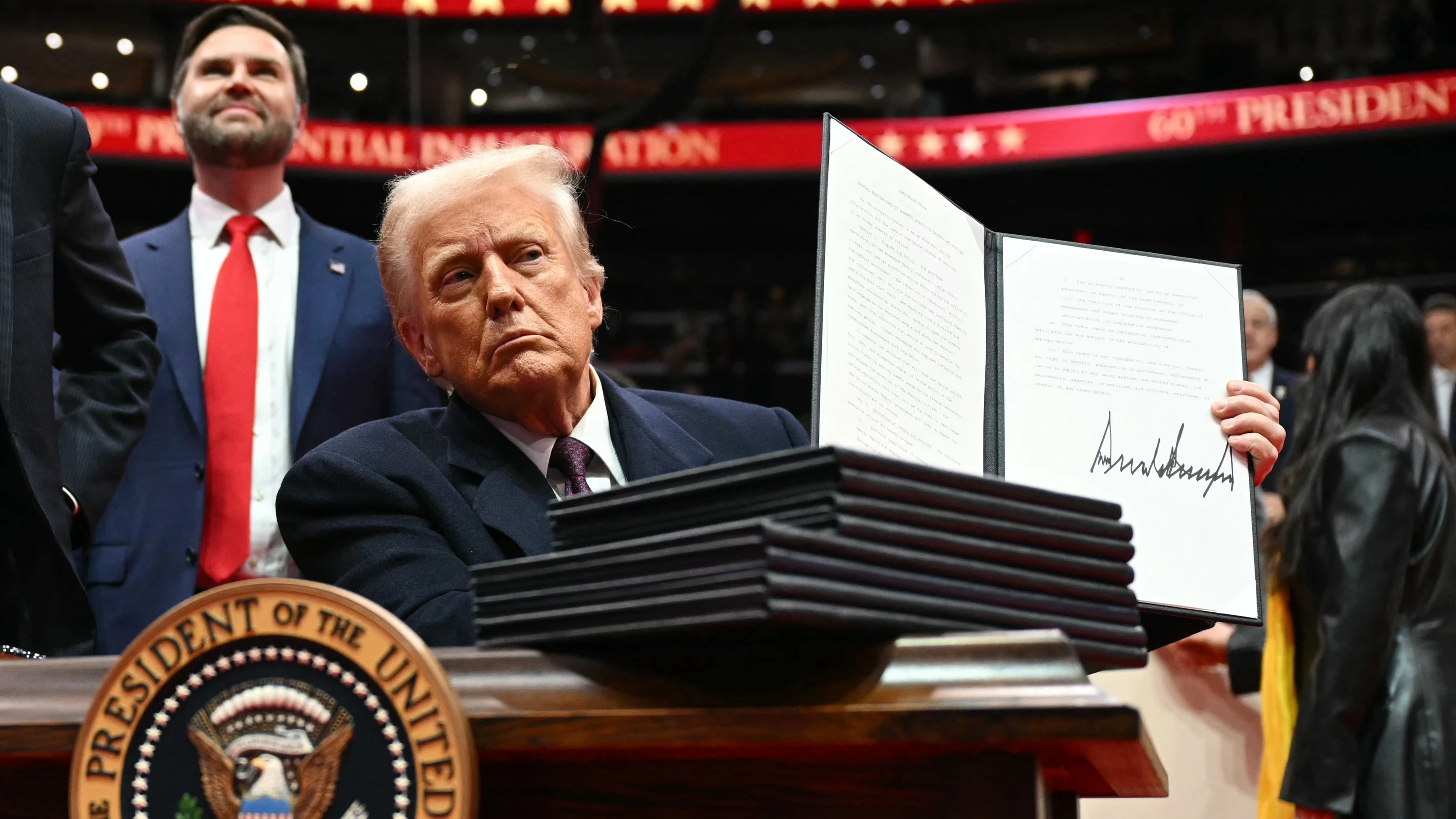
Staatsbürgerschaftsrecht: Trump verliert vor Supreme Court Donald Trump wollte die amerikanische Staatsbürgerschaft nicht mehr automatisch per Geburt verleihen. Das verstößt aber gegen die Verfassung, entscheiden die Obersten Richter.
faz · about 3 hours ago
USA: Niederlage für Trump: Supreme Court verteidigt Recht auf US-Staatsangehörigkeit per Geburt Wer in den USA geboren wurde, ist Amerikaner. So steht es in der Verfassung. Der US-Präsident wollte das verbriefte Recht dennoch per Dekret abschaffen – und scheiterte nun.
sueddeutsche · about 3 hours ago
US Supreme Court upholds bans on transgender athletes in womens school sports The US Supreme Court on Tuesday upheld state laws barring transgender athletes from competing in girls and womens school sports, delivering a major victory to conservatives in one of the countrys most fiercely contested culture wars.
france24 · about 3 hours ago
US Supreme Court rejects Trumps attempt to restrict birthright citizenship
france24 · about 3 hours ago
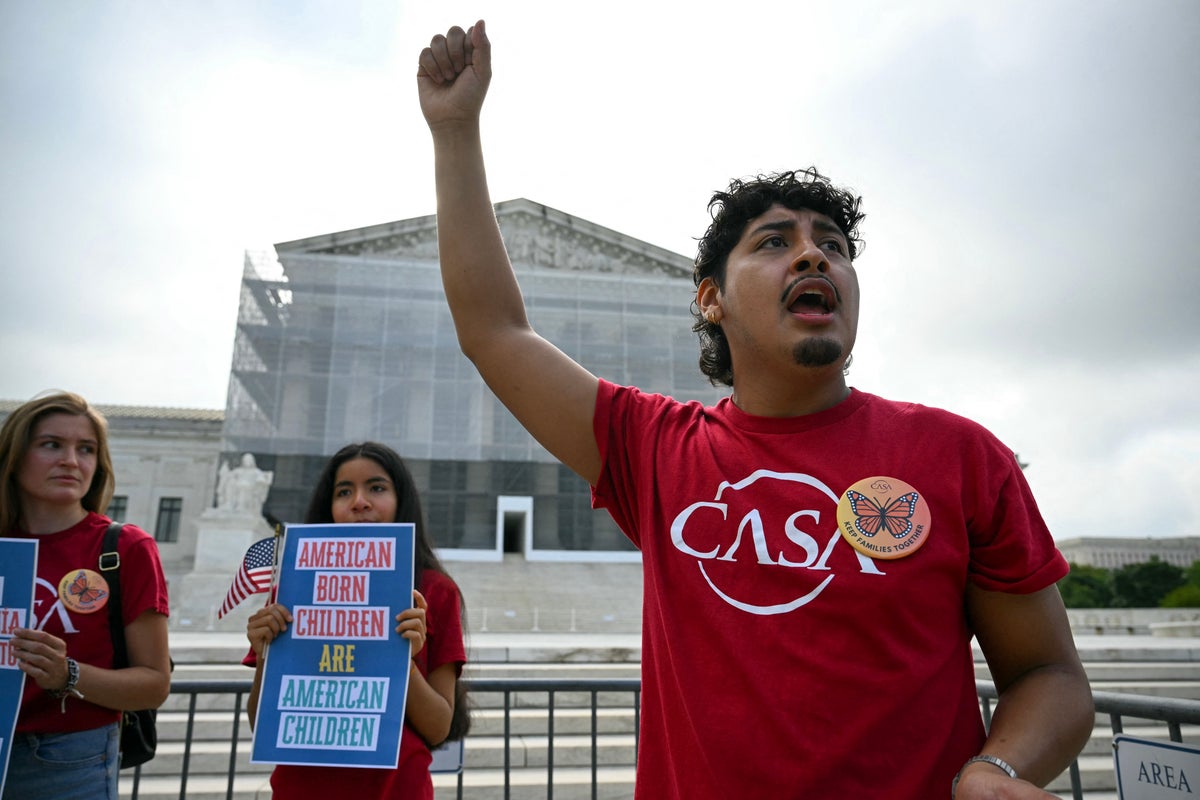
Supreme Court rulings live: SCOTUS upholds birthright citizenship saying Trump admins argument against it has scant evidence On the final day of the Supreme Courts term, justices affirmed that anyone born in the US is a citizen
independent · about 3 hours ago
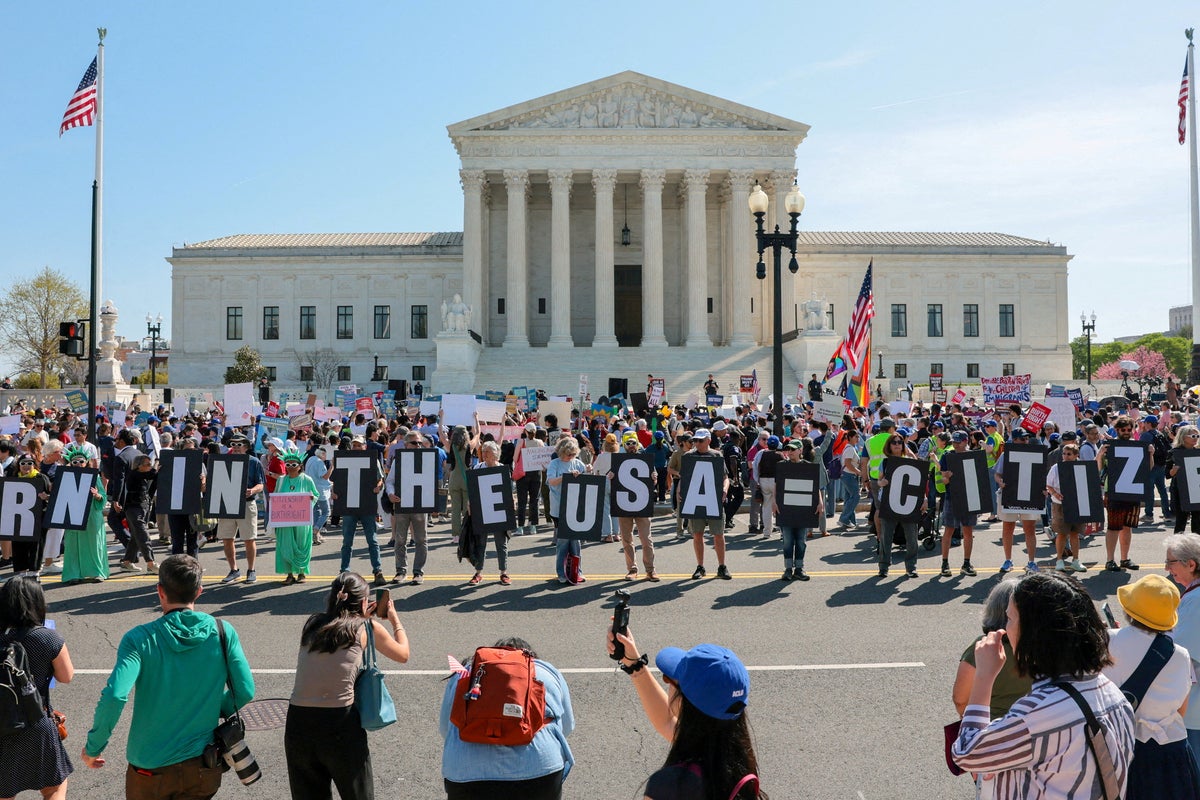
Trump loses on birthright citizenship after Supreme Court strikes down sweeping attempt to rewrite Constitution Two Trump appointees join 6-3 decision to reject dramatically revisionist attempt to define who gets to be a citizen
independent · about 3 hours ago
US Supreme Court rules against Trump order to end birthright citizenship Top courts 6-3 ruling major blow to Trump, affirms nearly all infants born on US soil automatically become citizens.
aljazeera · about 3 hours ago

⚡ NEWSUS Supreme Court strikes down limits on political party spendingThe US Supreme Court ruled that limits on coordinated expenditures by political parties in support of federal candidates violate the Constitution. This decision removes a key barrier for wealthy donors, allowing parties to spend unlimited funds directly supporting their candidates.📰 #Geopolitics #GeoWire
mastodon bot · about 3 hours ago

#BREAKING US Supreme Court rejects Trump bid to restrict birthright citizenship
bluesky_AFP English · about 3 hours ago

Supreme court rules against Trumps efforts to end birthright citizenship – live
bluesky_The Guardian · about 3 hours ago