Loading…
 Saturday, September 26Saturday, September 26
4 months · 4 summary articles
Armenia’s 2.5 million voters cast ballots on Sunday in parliamentary elections that will determine whether the South Caucasus nation deepens its pivot toward the European Union or reaffirms its decades-long alignment with Russia. Polls closed at 20:00 local time, with the first official results expected within hours. Prime Minister Nikol Pashinyan’s ruling Civil Contract party leads with 57% support, according to polling released on 4 June, but the Kremlin has responded with escalating pressure—higher gas prices, tighter trade controls, and warnings of regional instability—to sway the outcome in favor of pro-Russian forces.
The vote is widely seen as a referendum on Pashinyan’s cautious pro-Western course, which has drawn strong backing from the EU and the US but provoked fierce resistance from Moscow. Analysts describe the election as the most consequential since Armenia’s independence in 1991, with the country’s geopolitical orientation hanging in the balance. “This is not just an election—it’s a choice between two futures,” said Pål Wilter Skedsmo of the Fridtjof Nansens Institute. “Armenia stands at a crossroads, and the result will shape its security, economy, and place in the region for years to come.”
The Kremlin’s tactics have intensified in recent weeks, with reports of disinformation campaigns, cyberattacks, and economic coercion aimed at undermining Pashinyan’s EU ambitions. France 24 and other outlets have drawn parallels to Moscow’s pre-invasion playbook in Ukraine, accusing Russia of attempting to sway the vote by stoking instability. Meanwhile, the EU has pledged continued support for Armenia’s reform agenda, with European Commission President Ursula von der Leyen praising Pashinyan’s “courageous steps toward democracy and sovereignty.”
The election also comes amid a fragile peace process with Azerbaijan following last year’s Nagorno-Karabakh conflict, with both sides accusing the other of stoking tensions ahead of the vote. RFE/RL reports that the peace effort has become a central campaign issue, with opposition parties criticizing Pashinyan’s handling of the negotiations while his supporters argue that closer ties with the West are essential for long-term stability.
International observers, including the OSCE, have warned of potential irregularities, citing concerns over media freedom and voter intimidation. DW noted that the election is being watched closely by neighboring countries, including Georgia and Azerbaijan, as a bellwether for regional alignments. With the first results expected late Sunday, the outcome will reveal whether Armenia’s voters have embraced Pashinyan’s vision of a diversified, EU-oriented future—or whether they prefer the familiar embrace of Moscow.
Follow us for live European news
2 further sources not geolocated

Armenia polls open in test of prime ministers pivot away from Russia Polls open in Armenia on Sunday in a vote that is set to test the former Soviet republics ties with Russia. As Prime Minister Nikol Pashinyan has sought to loosen dependence on Moscow, the Kremlin has been accused of seeking to sway the vote and Armenias EU ambitions to the same path it claims triggered its 2022 invasion of Ukraine. 👉 Read more:
telegram bot · 4 months ago
Armenians vote in general election with final poll showing ruling party ahead Final Gallup poll puts PM Nikol Pashinyans Civil Contract on 32.4, with opposition Strong Armenia on 16.4.
intellinews · 4 months ago
Armenia, once Russias reliable ally, considers an EU future Armenians are set to vote on the countrys future geopolitical direction on June 7. The election will be a test of public opinion in the long-standing Russia ally, where the population is increasingly eyeing the EU.
deutsche welle europe · 4 months ago
22 May 2026 - Armenia Election Monitor - The upcoming Armenian election will decide the future direction of the country
commonspace · 4 months ago
27 May 2026 - Armenia Election Monitor - Armenia at a crossroads: Elections, peace, and the limits of international guarantees
commonspace · 4 months ago
29 May 2026 - Armenia Election Monitor - Upcoming elections in Armenia: why is it important? - a view from Azerbaijan
commonspace · 4 months ago
3 June 2026 - Armenia Election Monitor - A strategic choice: Armenian voters between diversification and dependency
commonspace · 4 months ago
5 June 2026 - Armenia Election Monitor - Armenia goes to the polls, searching for a way forward
commonspace · 4 months ago
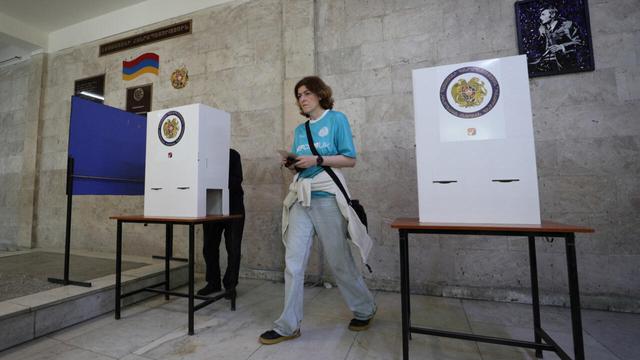
⚡ NEWSArmenia holds election testing pivot away from RussiaArmenian polls open to test Prime Minister Nikol Pashinyans strategy of loosening ties with Russia. The Kremlin is accused of attempting to sway the vote and hinder Armenias EU ambitions, drawing parallels to its actions preceding the Ukraine invasion.📰 #EU #Diplomacy #Geopolitics #GeoWire
mastodon bot · 4 months ago
Armenia heads to election as it weighs future with Moscow and the West
gdeltproject.org · 4 months ago
Day before vote, Russia, West, and internal pressure shape Armenias election atmosphere
gdeltproject.org · 4 months ago
Armenia goes to polls in pivotal vote to decide South Caucasus future Armenians will decide their future on Sunday against the backdrop of a Russia-West clash, as both the EU and the US support PM Pashinyans cautious pro-Western drive, while Russia embarked on an onslaught of economic and political pressures on Yerevan to keep the former Soviet state in its orbit.
euronews · 4 months ago
Armenians Vote With Nations Future Focus -- East Or West -- On The Line Armenians are voting on June 7 in a test of the prime ministers support following a controversial peace effort with neighboring Azerbaijan and his efforts to pull the small South Caucasus nation closer to the West after decades of reliance on Russia.
radio free europe · 4 months ago
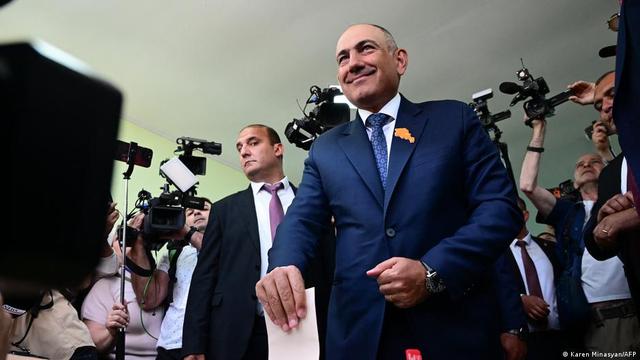
🟠 UPDATEArmenia holds election testing pivot away from RussiaSpecifies the election date as June 7.📰 #EU #Diplomacy #Geopolitics #GeoWire
mastodon bot · 4 months ago
Armenia polls open in test of prime ministers pivot away from Russia Polls open in Armenia on Sunday in a vote that is set to test the former Soviet republics ties with Russia. As Prime Minister Nikol Pashinyan has sought to loosen dependence on Moscow, the Kremlin has been accused of seeking to sway the vote and Armenias EU ambitions to the same path it claims triggered its 2022 invasion of Ukraine.
france24 · 4 months ago
Armenia votes as Russia piles pressure on pro-West government Incumbent Prime Minister Nikol Pashinyan is seeking a third term despite falling domestic support.
bbc · 4 months ago