 Sunday, June 21Sunday, June 21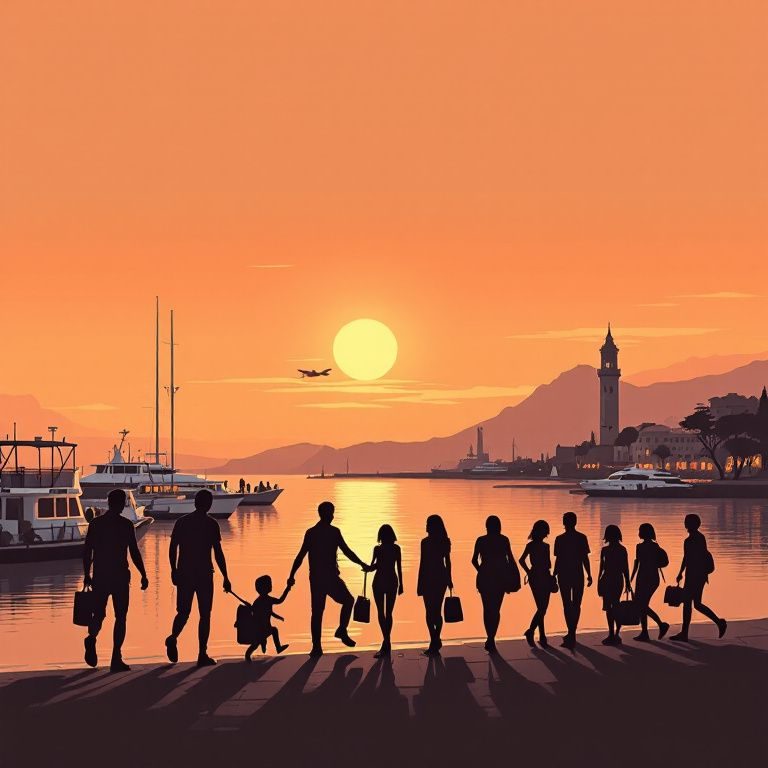
More than 100,000 passengers are expected to pass through Split Airport and the city’s ferry terminal on Sunday, marking the start of Croatia’s peak summer travel season with record volumes of arrivals. The surge, reported by Morski and confirmed by local authorities, has prompted Split to deploy additional ferries to handle the influx, underscoring the Adriatic’s growing role as a key gateway for European holidaymakers.
Croatia’s tourism minister, Tonči Glavina, warned on Saturday that prices across the sector must be adjusted downward to reflect the reduced spending power of visitors compared with previous years. “Tourists simply do not have the same financial capacity as before,” Glavina told Total Croatia News, signalling that hotels, restaurants and tour operators should temper their rates to avoid pricing themselves out of the market. The call comes as Croatia competes with other Mediterranean destinations for budget-conscious travellers amid broader economic uncertainty.
Meanwhile, the tranquil island of Unije in the northern Adriatic is drawing attention for an unusual feature: it has an airport despite banning cars entirely. The car-free status has made Unije a haven for cyclists and walkers, while its small airstrip offers a rare air link to the outside world. The contrast highlights the diversity of Croatia’s tourism product, from bustling coastal hubs to remote islands where sustainability is a guiding principle.
The travel surge coincides with broader shifts in European tourism patterns. Holiday bookings to eastern Mediterranean destinations have rebounded sharply as travellers reassess the risks posed by regional conflicts, according to the Financial Times. The trend has benefited Croatia, which has positioned itself as a safe and accessible alternative to more volatile destinations. At the same time, extreme heatwaves across southern Europe are forcing travellers to adapt itineraries, with some opting for cooler northern routes or indoor attractions during peak afternoon hours.
Croatia’s tourism industry is also grappling with structural challenges. A shortage of 2,600 workers in key coastal regions threatens to dampen service quality during the high season, despite competitive wages of up to €3,000 per month being offered in some hotels and restaurants. The labour gap reflects a wider trend across southern Europe, where tourism-dependent economies are struggling to attract and retain staff as post-pandemic demand outstrips supply.
As Croatia prepares for a summer of record arrivals, the government’s dual focus on affordability and sustainability will be critical. With prices under pressure and visitor expectations evolving, the coming weeks will test whether the country can balance growth with the preservation of its famed hospitality and natural beauty.

‚Hrozí, že zabloudí v divočině. Češi pomůžou Vietnamcům, aby mohli bezpečně poznávat krajinu Po červené, modré, žluté nebo zelené se vydávají turisté nejen v Česku, ale třeba i v Polsku nebo Brazílii. Letos na podzim přibyde další lokace – Vietnam. Ten zatím žádný systém navigace v přírodě nemá. „Největší obavy má lesní stráž z volného pohybu v národních parcích a zabloudění či zranění. V tomhle vnímají největší přidanou hodnotu značení, říká pro iROZHLAS.cz Roman Hrůza z Klubu českých turistů, který byl systém ve Vietnamu představit.
irozhlas.cz · about 2 hours ago
O preço do sucesso turístico de Lisboa O sucesso turístico revitalizou a capital lusa, mas agravou uma crise habitacional sem precedentes. Sem políticas públicas urgentes, Lisboa corre o risco de se transformar num cenário para visitantes. Opinião de Tatiana Nascimento
publico · about 2 hours ago

Wie extreme Hitze den Urlaub beeinflussen kann Hitzewellen können Reisepläne auf unangenehme Weise durcheinanderbringen
der standard · about 2 hours ago
Ab in den Urlaub: So schonen Sie Ihre Reisekasse Die Sommerferien stehen vor der Tür: Kein preiswertes Vergnügen, das sich aber trotzdem viele Deutsche noch leisten. Die F.A.Z. gibt Tipps, wie Sie Ihre Reisekasse vor unnötigen Kosten schützen.
faz · about 2 hours ago
Lestate pazza dei prezzi: ad agosto fino a 300mila euro per una settimana a Firenze e 238mila euro per una tenda in Salento Lindagine del Codacons per scovare da nord a sud Italia i prezzi pazzi dellestate 2026
il sole 24 ore · about 2 hours ago
Ich reise doch nicht mehr ohne meinen Espressokocher! [premium] Während ich von Jahr zu Jahr mehr Zeug brauche, packt mein Mann von Urlaub zu Urlaub weniger ein. Was daran liegt, dass er mein Shampoo verwendet und darauf vertraut, dass ich einen Knirps mithabe.
die presse · about 2 hours ago
Holiday bookings surge in markets hit by Iran crisis Rebound across eastern Mediterranean as travellers reassess conflicts threat and proximity
financial times · about 2 hours ago
Hantavirus : les confinés rentrent chez eux, «lépisode est probablement terminé» Ce dimanche 21 juin, les quatre ex-passagers du bateau de croisière «MV Hondius» encore confinés quittent lhôpital. La fin de la quarantaine signe lépilogue dune crise gérée avec fermeté par la France.
liberation · about 2 hours ago
O destinație turistică din Europa, cu plaje superbe și prețuri mici, caută 2.600 de muncitori: salarii de până la 3.000 de euro O destinație turistică de top din Europa se confruntă cu un deficit major de personal înainte de sezonul estival, iar mii de locuri de muncă rămân neocupate în hoteluri și restaurante.
adevarul · about 3 hours ago
Technische Probleme – Flughafen Zürich nimmt Betrieb nach Problemen langsam wieder auf Am Sonntagmorgen konnten am Flughafen Zürich keine Flugzeuge starten. Doch so langsam normalisiert sich die Lage wieder.
srf.ch · about 3 hours ago
Stau auf Nord-Süd-Verbindung: Fernpass-Demo legt Urlaubsroute lahm: Was erwartet Reisende? Erst Brenner, nun Fernpass: Wegen einer Demo ist die Ferien-Route am 27. Juni gesperrt - aber nur zwei Stunden. Wer Richtung Süden will, muss dennoch flexibel sein. Was Urlauber jetzt wissen müssen.
tagesspiegel · about 3 hours ago
Agenda koningspaar staat vlak voor zomervakantie bomvol: Komt voor de beeldvorming goed uit De mussen vallen al van het dak, maar de koning (59) en koningin (55) moeten nog even doorwerken tot ook zij op vakantie kunnen. Hun agenda is allesbehalve leeg. Vooral koningin Máxima heeft heel wat op de planning staan. Waar de koning voornamelijk dicht bij huis blijft, is het zijn vrouw die van hot naar her vliegt over de wereld.
rtl nieuws · about 3 hours ago
Turismo entra no Verão com três regiões em queda Centro, Oeste e Setúbal recuaram nas receitas até Abril. Apesar de alguma incerteza, e com reservas de última hora, sector deverá crescer a nível global, mas com um abrandamento.
publico · about 3 hours ago
Aeroporto de Lisboa enfrenta maior subida de voos não Schengen Novo sistema de controlo de fronteiras terá o primeiro teste com a época alta. Número de passageiros da área não Schengen tem crescido acima dos ligados à zona Schengen.
publico · about 3 hours ago
Gastritis, resfriados, mareos... ¿A qué riesgos nos exponemos en un barco como el MV Hondius? La estadística juega a favor y en contra cuando abordamos un crucero: por un lado, es poco probable que se produzca un brote o incluso una emergencia puntual; pero, por otro, si eso sucede todo adquirirá una dimensión muy diferente a la que tendría en tierra firme Leer
elmundo · about 4 hours ago
„Ha Tallinnt evakuálni kell, őket is be tudjuk fogadni - bunkertúra Helsinkiben, ahol többen férnek be az óvóhelyekre, mint a város teljes lakossága Úgy tűnik, a több mint 1300 kilométer hosszú orosz-finn határnak és a fájdalmas finn történelmi tapasztalatoknak megvan az eredménye: Finnország 5.6 milliós lakosságából 4.8 millióan egyszerre tudnának óvóhelyre menni. Képes riport Helsinki belvárosából, a föld alól.
444.hu · about 4 hours ago

España rozará la plena ocupación este verano pese a la subida de precios Las hoteleras son cautas respecto del efecto refugio de la guerra de Irán
la vanguardia · about 6 hours ago

Renta 2025: qué vigilar en los últimos días para no pagarlo caro La campaña encara su final entre avisos y factores que juegan en contra del contribuyente
la vanguardia · about 6 hours ago

Lo que no quieres saber Nadie quiere saber que, donde va a ir de vacaciones, llegaron 19 millones de turistas el año pasado
la vanguardia · about 6 hours ago
Hoteluri unice în lume: locuri în care călătoria începe chiar din cameră Există hoteluri care nu funcționează ca simple puncte de cazare, ci ca porți de acces către lumi paralele, atent construite sau păstrate în forme aproape ireale. În astfel de locuri, călătoria nu mai are un „înainte și un „după, pentru că experiența începe chiar din momentul în care ajungi.
adevarul · about 8 hours ago
Dubai in cerca di rilancio: Dimenticate i missili il business deve ripartire Lemirato lancia una campagna mediatica affidata allo sceicco: Ci siamo rimessi al lavoro, vedrete i risultati in tempi record
corriere · about 9 hours ago
De ce renunță mulți români la bicicletă. Problemele care îi așteaptă pe șosea și pe trotuar Pentru mulți români, bicicleta rămâne una dintre cele mai rapide și ieftine modalități de deplasare prin oraș. În practică, însă, numeroși bicicliști spun că se simt prinși între două pericole: pe șosea se confruntă cu șoferi agresivi și infrastructură insuficientă, iar pe trotuar riscă amenzi.
adevarul · about 10 hours ago
Albánie už není lacinou destinací. Turismus vzkvétá a Evropská unie s ekology hlídají jeho limity Albánie, desetiletí izolovaná od zbytku Evropy a dnes horký uchazeč o členství v Evropské unii, se stává oblíbenou destinací českých turistů. Loni ji navštívilo 117 tisíc Čechů. Turismus je jedním z pilířů albánské ekonomiky. Proto jeho rozvoj podporuje i Evropská unie. Dává ale také pozor na to, jestli je jeho rozmach v souladu s ochranou přírodního bohatství země. Pomáhají v tom i místní nevládní ekologické organizace.
irozhlas.cz · about 10 hours ago
Unije: The Croatian Island With No Cars, But it Does Have an Airport June the 21st, 2026 – Unije is a rather unique Croatian island in the northern Adriatic with no cars, yet in a rather odd twist, it is home to an airport. During the summer months, many of the countrys most famous destinations become crowded with visitors searching for beaches, restaurants, and entertainment. However, there are ... Read more The post Unije: The Croatian Island With No Cars, But it Does Have an Airport appeared first on Total Croatia.
total croatia news · about 10 hours ago
Croatian Tourism Prices Must Be Adjusted, Visitors Have Less Money June the 21st, 2026 – Croatian tourism prices must be adjusted, according to the tourism minister, who added that visitors have less money to throw around than they did before. Croatian Minister of Tourism and Sport Tonči Glavina has warned that prices in the tourism sector need to be adjusted downward. He stated that tourists ... Read more The post Croatian Tourism Prices Must Be Adjusted, Visitors Have Less Money appeared first on Total Croatia.
total croatia news · about 10 hours ago
100,000+ Passengers Expected to be Recorded at Split Airport, ferry port This Weekend June the 21st, 2026 – Over 100,000 passengers are expected to be recorded at both Split Airport and ferry port this weekend, as additional ferries have been put into service. The season is well and truly here! Split is preparing for another major summer travel surge, with Morski reporting that more than 100,000 passengers are ... Read more The post 100,000+ Passengers Expected to be Recorded at Split Airport, ferry port This Weekend appeared first on Total Croatia.
total croatia news · about 11 hours ago