
Tens of thousands mourn Irans late Supreme Leader at Tehran funeral as foreign leaders gather
Story Timeline
2 months · 7 summary articles
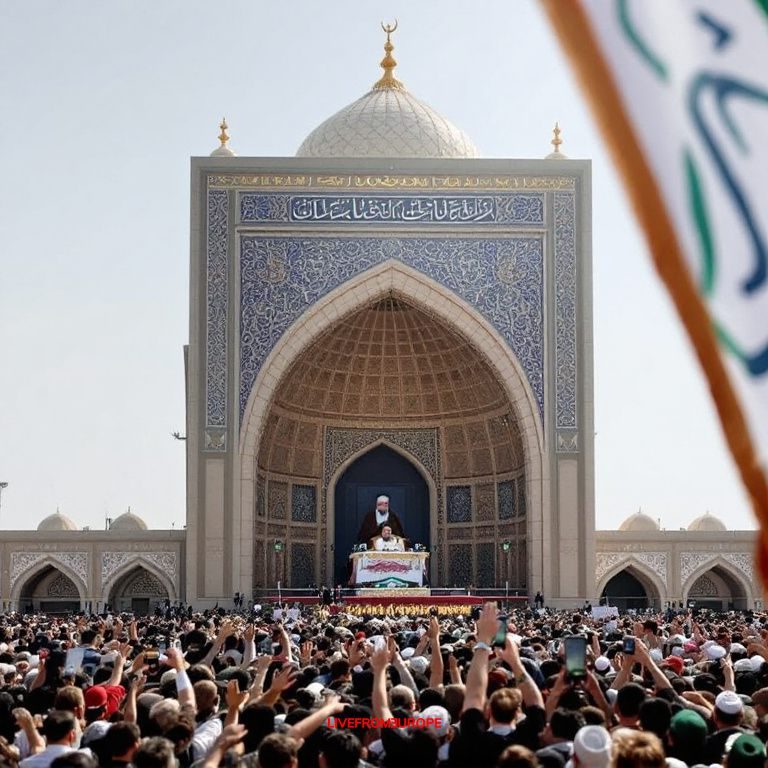
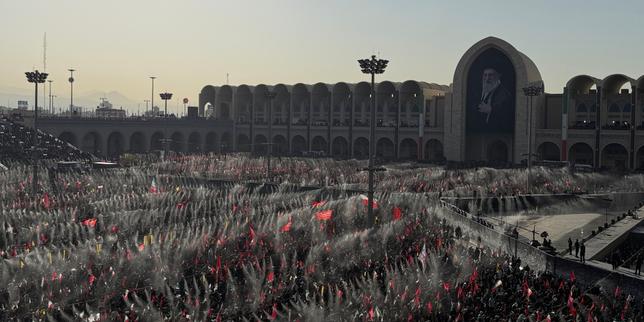
Tens of thousands of mourners thronged Tehran’s Imam Khomeini Mosalla Grand Mosque on Sunday as the second day of state funeral rites for Iran’s late Supreme Leader Ayatollah Ali Khamenei unfolded under scorching summer heat, with foreign dignitaries, senior clerics and regional allies gathering to pay tribute to a leader whose death has sharpened the Islamic Republic’s defiance against the United States and Israel.
Grand Ayatollah Jafar Sobhani, 97, led the funeral prayers in the capital, where Khamenei’s coffin and those of four family members—including his 14-month-old granddaughter—lay draped in the red, white and green flags of the Islamic Republic . The ceremonies began with the national anthem, Quran recitations and religious eulogies, broadcast live by state television IRIB, as mourners beat their chests, wailed and chanted “Death to America” and “Death to Israel” in unison . Women in black chadors shielded themselves from temperatures above 30°C with umbrellas and visors, while loudspeakers urged the crowds to “Let us wail!” and invoke the martyrdom of Imam Hussein .
The absence of Khamenei’s designated successor, Mojtaba Khamenei, cast a shadow over the proceedings. The 56-year-old cleric, widely described by Iranian media as an ayatollah and named supreme leader weeks after his father’s killing in a US-Israeli strike on 28 February, did not appear at the mosque, nor was he seen leading the traditional funeral prayers for his predecessor . His three brothers—Mostafa, Masud and Meysam—stood beside the coffins, but Mojtaba’s continued absence, now stretching beyond four months since the attack, has fuelled speculation about his health and ability to govern .
Foreign delegations underscored the geopolitical significance of the event. Turkish Vice President Cevdet Yılmaz, Pakistani Prime Minister Shehbaz Sharif, Russian Security Council Deputy Chairman Dmitry Medvedev and Iraqi President Nizar Amidi were among the senior officials present, alongside representatives from Hamas, Hezbollah and Yemen’s Houthis—the so-called “axis of resistance” that Iran has long backed in its confrontation with Israel . The presence of these figures, many of whom have faced direct conflict with Israel, highlighted the funeral’s role as both a mourning ritual and a display of regional solidarity against Western influence.
Iranian authorities have framed the week-long rites as a testament to national unity and religious devotion, with state media reporting that more than seven million metro journeys in Tehran were recorded on Saturday alone in connection with the ceremonies . Yet analysts note that beneath the choreographed displays of grief, public support for the clerical establishment remains fragile after five weeks of US-Israeli bombing that killed Khamenei and plunged the country into war .
The funeral procession will move to Qom on Monday, where Ayatollah Makarem Shirazi, 99, is expected to lead prayers, before crossing into Iraq for ceremonies in Baghdad, Najaf and Karbala on 8 July. Khamenei’s burial is scheduled for 9 July at the Imam Ali Reza Shrine in Mashhad, one of Shia Islam’s holiest sites . Meanwhile, US President Donald Trump has pledged calm during the proceedings, though his recent remarks that “one shot” could eliminate Iran’s leadership have done little to ease tensions .
Follow us for live European news
- 3
- 2
- 1
- 1
- 1
- 1
- 1
- 1
- 1
- 1
6 further sources not geolocated
Articles

Iran Succession: The Future Under Mojtaba?Will Mojtaba Khamenei be the next Supreme Leader of Iran? Explore the potential succession and the IRGCs growing influence on Iranian politics. #WorldNews #ForeignPolicy
mastodon bot · about 2 months ago

Türkiyes VP Yilmaz meets Irans Pezeshkian in Tehran Türkiyes Vice President Cevdet Yilmaz met Iranian President Masoud Pezeshkian in Tehran on Friday to attend funeral ceremonies for late Supreme Leader Ali Khamenei, saying Ankara "deeply shares the pain" of the Iranian people and pledging to support regional stability efforts.
yenisafak · about 2 months ago
Foreign leaders arrive in Tehran as Khamenei funeral begins Official delegations from several countries, including Pakistan, Iraq, Armenia, and Tajikistan, have arrived in Tehran for the funeral ceremonies of former Supreme Leader Ali Khamenei, who was killed in a US-Israeli strike in February. The week-long funeral will span multiple cities in Iran and Iraq, culminating in burial in Mashhad.
yenisafak · about 2 months ago
Khamenei Funeral Prayers Held Without Mojtaba; Other Sons Attend As the US-Israeli war with Iran continues to impact and shape the region, journalists from RFE/RLs Central Newsroom and Iranian service, Radio Farda, deliver ongoing updates and analysis.
radio free europe · about 2 months ago
Turkish VP attends state funeral for Irans late Supreme Leader Khamenei Vice President Cevdet Yılmaz attended the state ceremony in Tehran for Irans late Supreme Leader Ali Khamenei, who was killed in a US-Israeli attack in February. Yılmaz was joined by Turkish lawmakers and diplomats at the Imam Khomeini Mosalla Mosque.
yenisafak · about 2 months ago
Thousands gather in Tehran as week-long Khamenei funeral rites begin Thousands of mourners gathered at Tehrans Imam Khomeini Mosalla Grand Mosque on Saturday as week-long funeral rites for Irans late Supreme Leader Ayatollah Ali Khamenei began. Foreign dignitaries including Turkish Vice President Cevdet Yılmaz and Pakistani Prime Minister Shehbaz Sharif attended the state ceremony.
yenisafak · about 2 months ago
Totengebet für Khamenei in Teheran Das iranische Regime bietet zur Ehrung seines getöteten Führers die ältesten Geistlichen auf. Khameneis Sohn und Nachfolger Mojtaba fehlte
der standard · about 2 months ago
Zeci de mii de iranieni au mers la slujba de înmormântare pentru Ali Khamenei, în a doua zi a funeraliilor publice Iranul a organizat duminică slujba de înmormântare pentru fostul său lider suprem asasinat, Ali Khamenei, la care au participat zeci de mii de persoane, inclusiv înalţi oficiali ai ţării. A fost a doua zi a funeraliilor publice, la care au răsunat apeluri la răzbunare împotriva Statelor Unite şi a Israelului.
digi24 · about 2 months ago
+++ Iran-Krieg +++: Zweiter Tag der Trauerfeiern im Iran – Totengebet für Chamenei abgehalten Umfassende Trauerzeremonie wird fortgesetzt +++ Anhänger wollen Geschlossenheit demonstrieren +++ Spekulationen um Auftritt von Chameneis Sohn +++ Der Newsblog.
handelsblatt · about 2 months ago
Iranians flock to Khameneis funeral after wartime death Tens of thousands of Iranians thronged a vast outdoor prayer complex in Tehran on Saturday to view the coffin of Ayatollah Ali Khamenei, who ruled the Islamic Republic…
japantoday · about 2 months ago

Funeral prayers said for late supreme leader Khamenei in Tehran
news.yahoo.com · about 2 months ago
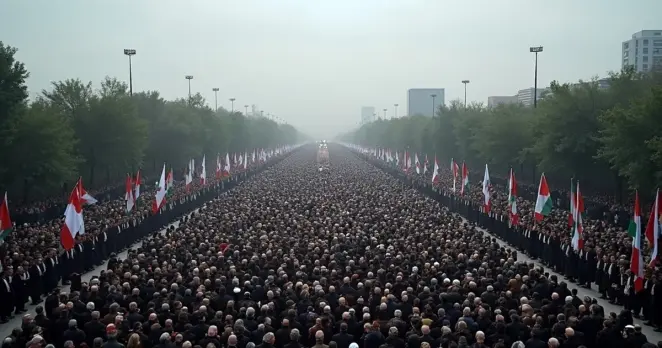
Iran After Khamenei 2026: State Funeral, New Supreme Leader, US DealIran stages Khameneis July 4-9 2026 state funeral months after his assassination — as new Supreme Leader Mojtaba stays out of sight and a fragile US deal tests the Hormuz-for-sanctions bargain. #WorldNews #ForeignPolicy
mastodon bot · about 2 months ago
Poet i Khameneis begravelse tok til orde for Trumps død En poet som sto på scenen på dag to av Ali Khameneis begravelsesseremoni i Iran, ble møtt med jubel da han spurte…
aftenposten · about 2 months ago
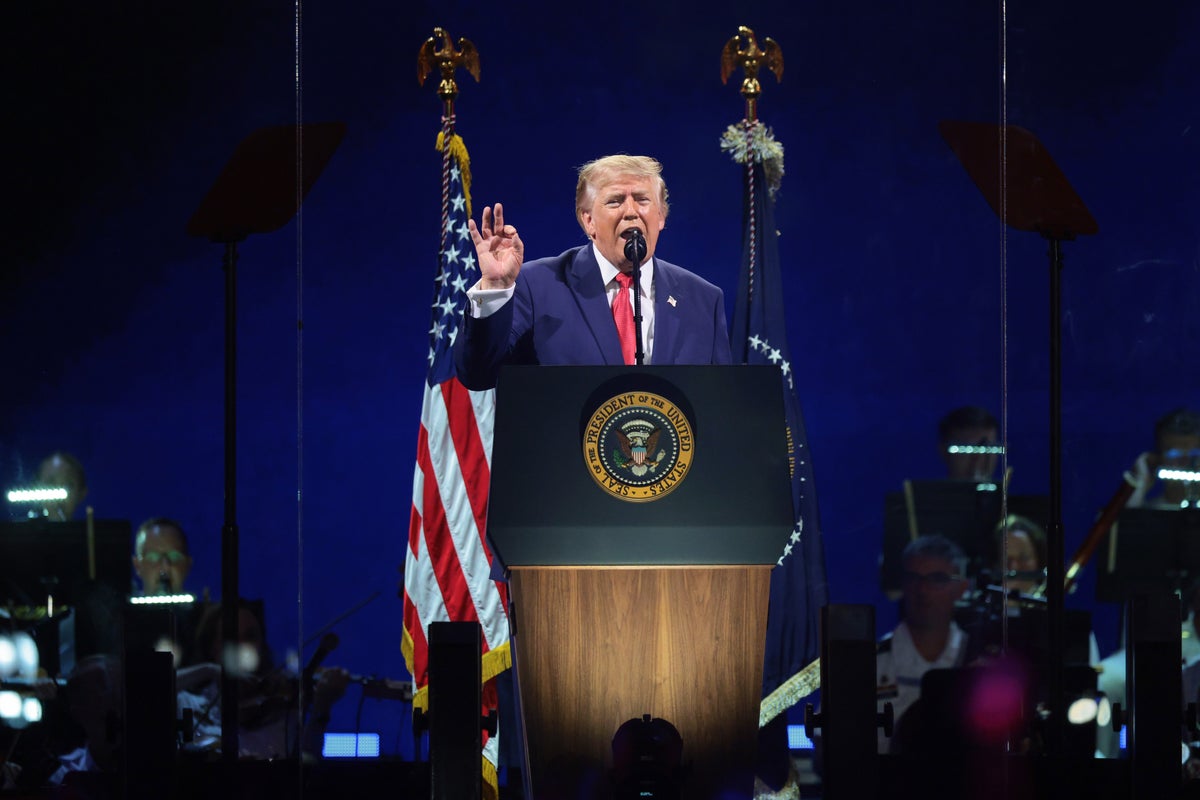
Iran-US war latest: Trump says just one shot can take out all Iranian leaders as thousands gather to mourn slain Khamenei Thousands gathered to mourn slain Khamenei, with several waving regimes flag and chanting Death to America
independent · about 2 months ago
Three sons of Irans slain leader Khamenei appear at funeral, not his successor Three sons of slain Iranian leader Ayatollah Ali Khamenei prayed beside his coffin and those of four other family members on Sunday, but Mojtaba, the son who has succeeded him as Irans supreme leader, did not make an appearance. State TV showed Mostafa, Meysam and Masoud Khamenei praying behind the coffins laid out in the […]
cyprus mail · about 2 months ago
Turkovic: Khamenei Did Everything to Help BiH during War, and Today We Failed to Send Our Countrys Representative to a Funeral The former Minister of Foreign Affairs of Bosnia and Herzegovina, Bisera Turković, criticized the current government, mostly the Chair of the Presidency of Bosnia and Herzegovina, Denis Bećirović, considering that Bosnia and Herzegovina failed to send a single representative to the memorial service and Janaza (funeral) for the former Iranian Supreme Leader Ali Khamenei. Turković […] The post Turkovic: Khamenei Did Everything to Help BiH during War, and Today We Failed to Send Our Countrys Representative to a Funeral appeared first on Sarajevo Times.
sarajevo times · about 2 months ago

Direct- Guerre au Moyen-Orient : Grande prière pour les funérailles de Khamenei mais sans son fils, le guide suprême Suivez en direct les informations de ce vendredi 4 juillet 2026 concernant le conflit au Moyen-Orient. ...
la libre · about 2 months ago

„Warum lebt der größte Bastard der Welt noch? – Iranischer Dichter fordert Tod von Donald Trump Bis zu 20 Millionen Besucher werden allein in Teheran zur sechs Tage langen Trauerfeier für den getöteten Religionsführer Chamenei erwartet. Dort sprach ein Künstler zu den Massen – und ließ seinem Hass auf die USA freien Lauf.
welt.de · about 2 months ago
Krieg in Nahost: Zweiter Tag der Trauerfeiern in Iran: Totengebet für Chamenei abgehalten Unterdessen wird im Land darüber spekuliert, ob Chameneis Sohn und Nachfolger Modschtaba bei den Trauerzeremonien erstmals nach seiner Ernennung öffentlich auftritt.
sueddeutsche · about 2 months ago
Iran : à Téhéran, lheure est à la prière au deuxième jour des funérailles nationales dAli Khamenei Le président iranien, Massoud Pezeshkian, en compagnie de membres du gouvernement - dont linfluent Mohammad Bagher Ghalibaf, président du Parlement et chef de léquipe de négociation iranienne - étaient présents, dimanche matin.
le monde · about 2 months ago
De ce nu participă Mojtaba Khamenei la funeraliile tatălui său. Trump: „Sunt toți acolo. O singură lovitură și i-am putea elimina pe toți Funeraliile fostului lider suprem al Iranului, Ali Khamenei, au început la Teheran. La ceremonii nu participă și succesorul său, Mojtaba Khamenei, din teama de a nu fi la rândul său ucis. Președintele SUA, Donald Trump, promite să nu atace Iranul pe perioada evenimentelor.
adevarul · about 2 months ago

⚡ NEWSAnalysis of Irans new post-Khamenei leadershipFollowing the funeral of Supreme Leader Khamenei, analysis highlights significant shifts in Irans political landscape. The article examines the goals and characteristics of the new leadership, distinguishing them from the previous regime.📰 #Diplomacy #Geopolitics #GeoWire
mastodon bot · about 2 months ago
Pakistan stands with Iran, Sharif says at Khamenei funeral Prime Minister Shehbaz Sharif, accompanied by Deputy Prime Minister Ishaq Dar and Army Chief Asim Munir, attended the funeral of Irans late Supreme Leader Ayatollah Ali Khamenei in Tehran. Sharif said Pakistan stands with Iran in grief and praised Khameneis wisdom and leadership.
yenisafak · about 2 months ago
Trump: US paused Iran talks to let Khamenei funeral proceed President Donald Trump said the US paused negotiations with Iran to allow for the late Supreme Leader Ali Khameneis funeral, claiming Tehran is dying to settle. Speaking at Mount Rushmore for the US independence anniversary, he also warned against communism and touted Americas military strength.
yenisafak · about 2 months ago
⚡️AP: Performer at funeral for Irans late Supreme Leader Ayatollah Ali Khamenei calls for death of US President Donald Trump 💧 Rainbet.com the #1 Non-KYC Crypto Casino & Sportsbook @rainbetcom +18
telegram_War Monitors · about 2 months ago
1,000 days of war: Gazas children killed, orphaned, starved More than 21,000 children have been killed and 44,500 injured in Gaza since October 2023. Over 58,000 have lost one or both parents, and 157 have died from hunger since the ceasefire. UNICEF reports that 265 children have been killed since October 2025 alone.
yenisafak · about 2 months ago
Body of late Iranian Supreme Leader Khamenei brought to Tehran farewell Thousands of mourners gathered in Tehran late Thursday as the body of Supreme Leader Ali Khamenei was brought to a farewell ceremony, kicking off a week-long series of funeral rites that will move through Qom and Iraq before concluding with his burial in Mashhad on July 9.
yenisafak · about 2 months ago

🟠 UPDATEFuneral ceremonies for Irans Ayatollah Khamenei attended by Axis of Resistance leadersAuthorities expect up to 20 million people to attend ceremonies across Iran and Iraq over the coming days.📰 #Diplomacy #Geopolitics #GeoWire
mastodon bot · about 2 months ago
Israel tightens solitary confinement of jailed Fatah leader Barghouti Marwan Barghoutis office said Thursday that Israeli prison authorities have tightened solitary confinement conditions for the jailed Fatah leader at Ganot Prison, describing the measures as "systematic arbitrary practices" targeting the prominent Palestinian detainee since the start of Israels war on Gaza.
yenisafak · about 2 months ago

What does ayatollahs funeral tell us about the state of Iran?
bluesky_The Times · about 2 months ago