 Saturday, June 13Saturday, June 13
Story Timeline
6 hours · 2 summary articles
US and Venezuela kill Tren de Aragua leader Hctor Guerrero Flores in joint strike
US kills Tren de Aragua leader Hctor Guerrero Flores in coordinated strike
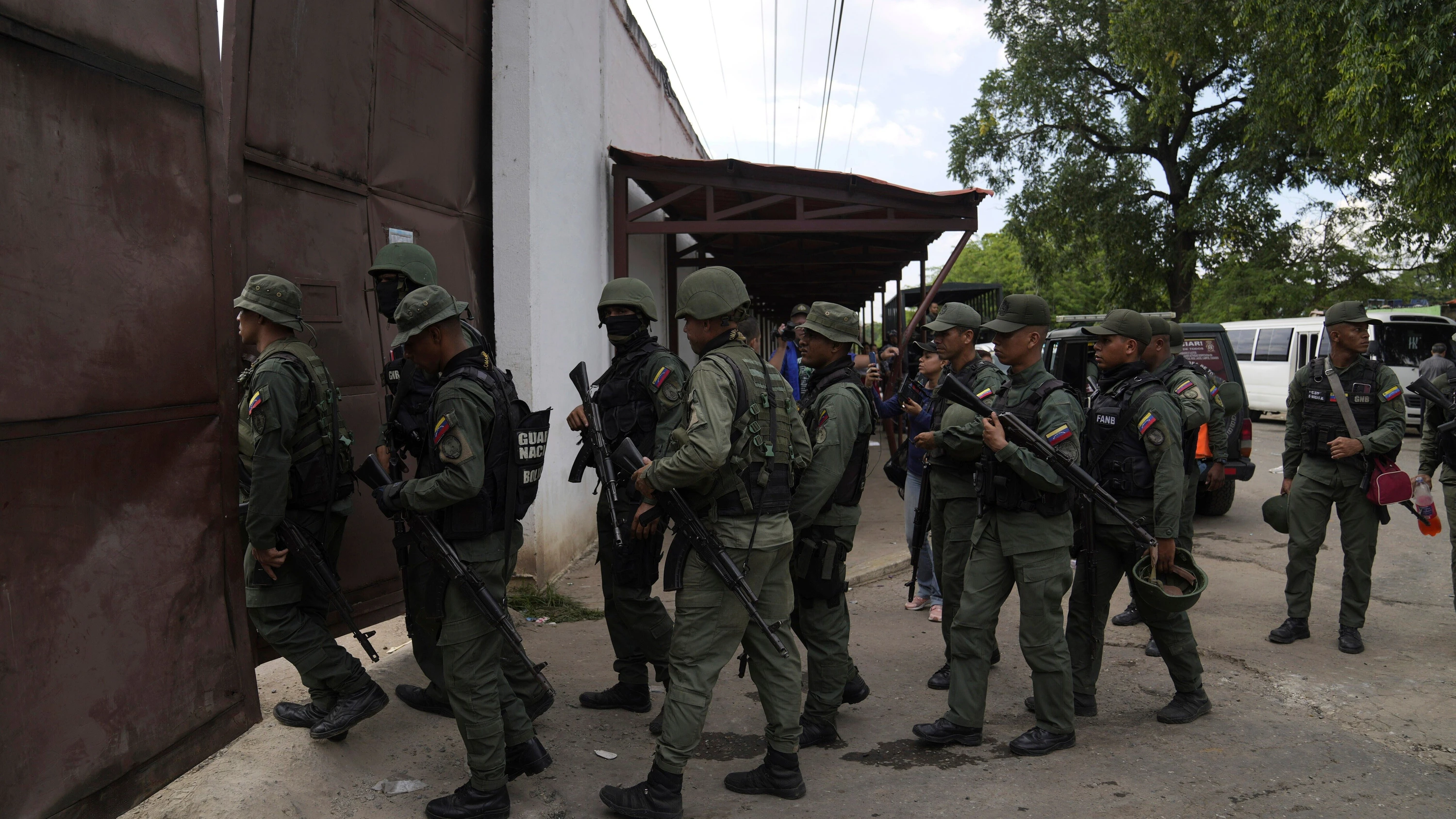
US and Venezuela conduct joint strike that kills Héctor Guerrero Flores, leader of the notorious Tren de Aragua gang, US President Donald Trump announced on Friday. The operation, described as a “quick and lethal kinetic strike,” was carried out in southern Venezuela and coordinated with Venezuelan authorities, according to simultaneous statements from Washington and Caracas. Guerrero Flores, known as El Niño Guerrero, had been designated by the US State Department in February 2025 as the leader of a group Washington classifies as a foreign terrorist organization.
The strike occurred earlier this week, US Southern Command confirmed, and represents the most significant blow yet to the Tren de Aragua, a transnational criminal network accused of drug trafficking, human smuggling, extortion and money laundering across North, South America and Europe. Venezuelan Interior Minister Diosdado Cabello told state television that the operation had been planned jointly and executed with “precision and responsibility.” Cabello added that Venezuelan intelligence had provided targeting information that enabled the US military to locate and eliminate Guerrero Flores without civilian casualties.
Trump framed the action as retribution for the gang’s victims. “We have delivered justice to the families of those murdered by the Tren de Aragua,” he said in a White House statement released late Friday. “This ruthless organization will no longer terrorize communities in Venezuela or beyond.” The US had previously offered a $5 million reward for information leading to Guerrero Flores’ capture, a bounty announced in March 2024 under the Narcotics Rewards Program.
Regional analysts note that the operation marks an unprecedented level of counter-narcotics cooperation between Washington and Caracas, despite years of strained diplomatic relations. “This is not just about one man,” said Ivan Briscoe, programme director for Latin America at the International Crisis Group. “It signals a possible shift toward pragmatic security collaboration that could extend to other transnational threats.” The gang, which originated in Venezuela’s Aragua state prisons, has expanded its operations to Chile, Peru, Colombia and Spain, where authorities have linked it to a series of violent turf wars and migrant exploitation networks.
Venezuelan human rights groups have cautiously welcomed the news but urged transparency. “We need to see independent verification of the operation and assurances that no civilians were harmed,” said Tamara Taraciuk Broner, acting Americas director at Human Rights Watch. “The Tren de Aragua’s crimes demand accountability, but due process and evidence remain essential.” The Venezuelan attorney general’s office has announced it will open an investigation into the circumstances of Guerrero Flores’ death and the chain of command behind the joint operation.
With the gang’s founder now dead and its command structure reportedly in disarray, regional security officials are watching closely to see whether the power vacuum will trigger further violence or, conversely, accelerate the group’s fragmentation. US Southern Command has indicated it will continue to support Venezuelan authorities in dismantling remaining cells, while Caracas has pledged to pursue the organization’s financial networks and recruiters across the diaspora.

USA utplånar hela huset Video visar attacken mot kartelledaren i Venezuela
expressen · about 3 hours ago
Un șef de organizație criminală din Venezuela, pentru care SUA ofereau recompensă, a fost eliminat într-un atac aerian american Şeful organizaţiei criminale Tren de Aragua, pentru a cărui capturare administraţia americană pusese o recompensă, a fost ucis într-o operaţiune comună cu Statele Unite în sudul Venezuelei, au anunţat vineri cele două ţări, relatează AFP, preluată de Agerpres.
digi24 · about 3 hours ago
Ataque dos EUA com ajuda da Venezuela mata líder do gangue Tren de Aragua Grupo é responsável por actos de violência, extorsão e tráfico de drogas na América do Norte, América do Sul e Europa. Trump diz que operação se realizou com a colaboração da Venezuela.
publico · about 3 hours ago
«Une frappe rapide et létale» : le chef du gang vénézuélien Tren de Aragua tué dans un assaut américain Hector Rusthenford Guerrero Flores, alias El Niño Guerrero, est mort au cours dune opération conjointe menée par les Etats-Unis et le Venezuela, ont annoncé tard vendredi soir les deux pays.
liberation · about 3 hours ago

EUA e Venezuela eliminam líder do grupo Tren de Aragua Trump assegurou estar a trabalhar muito bem com a Venezuela no regime pós-Maduro
observador · about 3 hours ago
Αυτή είναι η συμμορία «Tren de Aragua» που οι Αμερικανοί σκότωσαν τον αρχηγό της: Είχαν μετατρέψει τις φυλακές σε κέντρο επιχειρήσεων Οι ΗΠΑ εξόντωσαν τον Νίνιο Γκερέρο με αεροπορικό πλήγμα και οδηγούν τη μεγαλύτερη συμμορία στην ιστορία της Βενεζουέλας με πάνω από 4.000 μέλη σε διάλυση
protothema · about 3 hours ago
Energie: Kanadisches Investorenkonsortium will Uniper-Anteile kaufen Der Vermögensverwalter Brookfield und der Pensionsfonds CPP Investments wollen bei Deutschlands wichtigstem Gasimporteur einsteigen. Sie hätten das Potenzial, 75 Prozent zu übernehmen.
handelsblatt · about 3 hours ago
+++ USA +++: Trump: US-Militär tötet Chef der kriminellen Organisation Tren de Aragua Trump-Regierung muss Tafeln zu Sklaverei und Klima wieder aufstellen +++ Trump nominiert Jay Clayton als neuen Geheimdienstkoordinator +++ Trump bekommt Geburtstagsgeschenk von Merz +++ Der Newsblog.
handelsblatt · about 3 hours ago
Trump says US military killed leader of Venezuelan gang Tren de Aragua US President Donald Trump said on Thursday that American forces had carried out a lethal strike against Hector Guerrero Flores, the leader of the Venezuelan gang Tren de Aragua, describing the operation as retribution for the groups victims while noting it was coordinated with Venezuelan authorities.
yenisafak · about 3 hours ago
Organisierte Kriminalität: Trump: US-Militär tötet Tren-de-Aragua-Anführer Guerrero Der Einsatz des US-Südkommandos habe Anfang der Woche stattgefunden und sei mit Venezuela abgestimmt gewesen. Der Bande werden Drogenschmuggel, Menschenhandel und Geldwäsche vorgeworfen.
faz · about 3 hours ago
Investment firms join Donald Trumps $100bn race for Venezuelan oil Lionheart Capital and Keo Energy create Nasdaq-listed company to pursue assets in Latin American nation.
financial times · about 3 hours ago
Trump verkündet Tötung von „berüchtigtem Anführer einer Drogenbande Der Anführer der venezolanischen Drogenbande Tren de Aragua ist nach Angaben von US-Präsident Donald Trump bei einem US-Angriff getötet worden.
welt.de · about 4 hours ago
Trump says US forces killed leader of the Tren de Aragua gang The Tren de Aragua gang has been designated as a foreign terrorist organization by the US since February 2025.
euronews · about 4 hours ago

Le chef du gang vénézuélien Tren de Aragua tué dans une frappe américaine Le chef de lorganisation criminelle Tren de Aragua dont la tête avait été mise à prix par ladministration américaine a été tué lors dune opération conjointe avec les Etats-Unis dans le sud du Venezuela, ont annoncé vendredi les deux pays. ...
la libre · about 4 hours ago