Loading…
 Saturday, September 26Saturday, September 26
4 months · 3 summary articles
Israel defies US-Iran deal, vows to stay in Lebanon despite ceasefire calls
Israel strikes Beirut as US-Iran ceasefire deal nears: Escalation threatens fragile talks
Israel halts strikes on Iran but vows Lebanon campaign as Trump pushes ceasefire
Israel launched airstrikes on the southern suburbs of Beirut on Sunday, targeting what it described as Hezbollah command centers, as the United States and Iran appeared close to finalizing a landmark peace deal that could impose a comprehensive ceasefire across Lebanon. The Israeli military said the strikes were retaliation for recent drone attacks on northern Israel, which it blamed on the Iran-backed militant group. At least three people were killed in the strikes, according to Al Jazeera .
The Israeli strikes came hours after former US President Donald Trump announced that a deal between Washington and Tehran was imminent, raising concerns that the military action could derail negotiations. Iran, which has warned that any peace agreement must include Lebanon, has not yet responded militarily but reiterated its demand that the US uphold its commitments to ensure the deal’s viability. Israeli Finance Minister Bezalel Smotrich escalated tensions by demanding that 10 buildings in Beirut’s Dahiyeh district be destroyed for every rocket fired from Lebanon, a statement that further strained regional stability .
Footage verified by monitoring groups showed two Israeli fighter jets dropping four munitions on a residential building in southern Beirut, according to a Telegram post by WarMonitors . The Israeli military claimed the targets were Hezbollah command-and-control facilities, a claim echoed by multiple European outlets, including *La Repubblica* .
The strikes occurred amid a broader escalation in southern Lebanon, where Israel has issued forced displacement orders for residents of 29 towns, according to Al Jazeera . The orders, which require civilians to evacuate within 24 hours, have drawn international criticism and raised fears of a humanitarian crisis. Israeli Army Radio suggested that Jerusalem assessed Iran would not retaliate militarily, a calculation that appears to have been tested by the Beirut strikes .
Analysts warn that the timing of the Israeli operation risks undermining the US-led diplomatic push to stabilize the region. The proposed ceasefire, which would require Hezbollah and Israel to halt all military actions, is seen as a critical step toward de-escalation. However, the Israeli strikes have already prompted condemnation from regional actors, with Iran’s foreign ministry insisting that any US-Iran deal must address Lebanon’s security concerns. The coming hours will determine whether the strikes trigger a wider conflict or remain a contained escalation.
Follow us for live European news
1 further source not geolocated

🇮🇱❌🇱🇧🇱🇧- Additional scenes from the targeted building in Dahieh, Beiruts southern suburbs. The previous time the IAF struck Beirut, Iran fulfilled their promise and attacked Israel. Iran vowed to do the same if Beirut were struck again.
telegram bot · 3 months ago
🇮🇱❌🇱🇧🇱🇧- According to Israeli Channel 12, Israeli forces have targeted a "Hezbollah communications system" in the southern suburbs of Beirut.
telegram bot · 3 months ago
🇮🇱🇱🇧🇮🇷⚡️ — Israel carried out the strike in Beiruts southern suburbs after they assessed that Iran wouldnt respond, according to the Israeli Army Radio.
telegram bot · 3 months ago
🇺🇸🇮🇷🇮🇱🇱🇧🇱🇧- According to Fox News, a diplomat involved in the talks stated that todays strikes in Beirut are creating complications in finalizing the deal, adding, "This is a clear attempt by Israel to sabotage the Presidents deal and drag the United States back into war." ➡️ A senior Israeli official rejected the notion that Israel bears responsibility for the exchange of fire.
telegram bot · 3 months ago
⚡️Footage of todays Israeli strike on a residential building in Beirut, Lebanon. 2 fighter jets were involved, 4 munitions dropped. 💧 Rainbet.com the #1 Non-KYC Crypto Casino & Sportsbook @rainbetcom +18
telegram bot · 3 months ago
⚡️Continued Israeli airstrikes on southern Lebanon 💧 Rainbet.com the #1 Non-KYC Crypto Casino & Sportsbook @rainbetcom +18
telegram bot · 3 months ago
+++ Iran-Krieg +++: Teheran hat noch nicht über Abkommen entschieden – berichtet Insider Israel greift Hisbollah-Ziele in Libanons Hauptstadt Beirut an +++ Katar bemüht sich in Teheran um Abkommen +++ Iran-Vereinbarung soll laut Trump morgen unterzeichnet werden +++ Der Newsblog.
handelsblatt · 3 months ago
Israeli minister demands 10 Beirut buildings razed per rocket Israeli Finance Minister Bezalel Smotrich on Saturday reiterated his demand that 10 buildings in Beiruts Dahiyeh district be destroyed for every rocket fired from Lebanon, warning that Hezbollah must not exploit ongoing US-Iran negotiations to attack Israels north.
yenisafak · 3 months ago
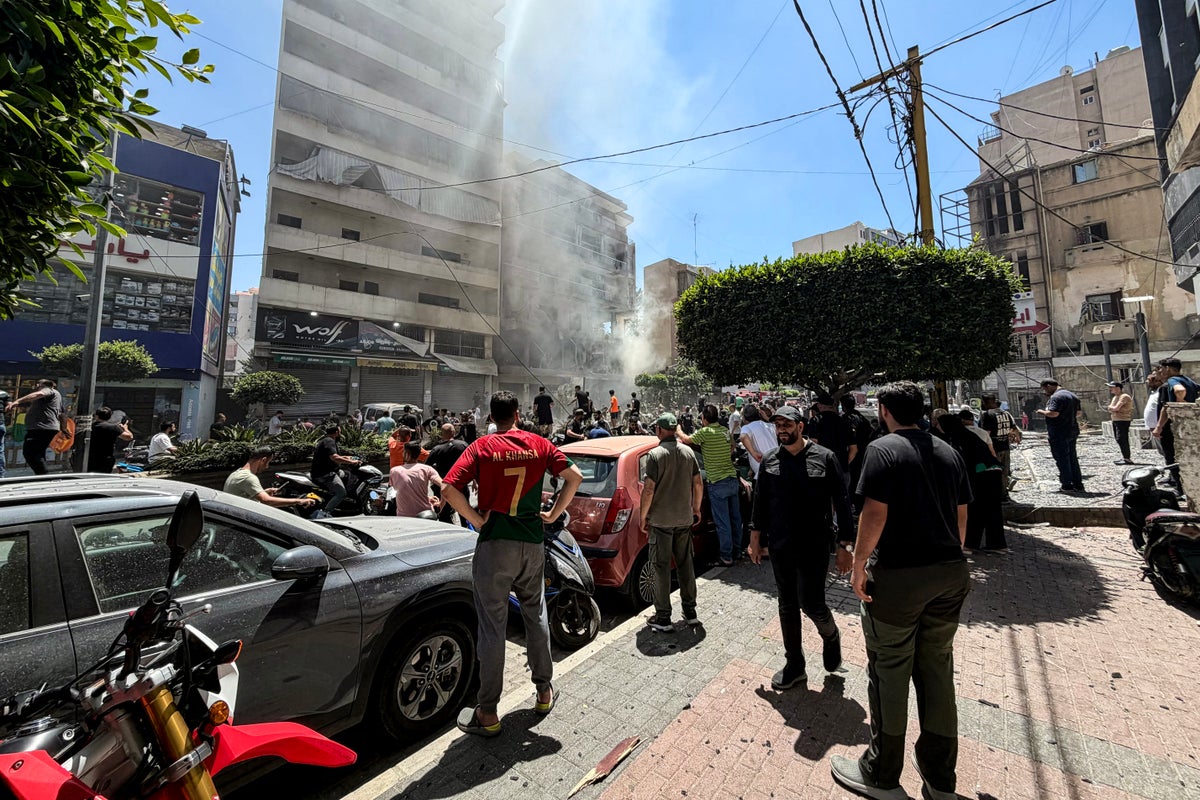
Iran-US war latest: Trumps peace deal falling apart as Tehran attacks him for allowing Israel to bomb Beirut Irans top negotiator said the US either lacks the will to fulfill its commitments or the ability to do so
independent · 3 months ago
Middle East crisis live: Iran says Israeli attack on Beirut show lack of US willing after Trump says peace deal will be signed today Tehrans top negotiator says the strikes showed the US either lacked the will to fulfil its commitments or the ability to do soTrump says Iran peace deal could be signed by Sunday, with strait of Hormuz to open shortly afterIsrael says it has struck Beiruts south suburbs, with explosions heard in the city. The Israeli military claimed the attacks on the Lebanese capital were in response to Hezbollah firing into Israeli territory.The military were reportedly targeting Hezbollah targets in Beiruts southern suburbs, the groups stronghold known as Dahiyeh, according to a joint statement by prime minister Benjamin Netanyahu and defense minister Israel Katz. Continue reading...
theguardian · 3 months ago
⚡️Israeli strike on a civilian building in Dahye, Beirut, an hour ago 💧 Rainbet.com the #1 Non-KYC Crypto Casino & Sportsbook @rainbetcom +18
telegram bot · 3 months ago
„Präzise getroffen – Israel meldet Angriffe auf Hisbollah-Ziele in südlichen Vororten Beiruts Israel hat die südlichen Vororte Beiruts angegriffen – als Reaktion auf Angriffe der Hisbollah. Dabei gilt im Libanon eigentlich seit April eine Waffenruhe – die beide Seiten täglich brechen.
welt.de · 3 months ago
Israel to maintain southern Lebanon presence despite US-Iran deal Israeli security sources said Saturday the army will not withdraw from its self-declared "security zone" in southern Lebanon regardless of any agreement between Washington and Tehran, though commanders are preparing to halt ground offensives and reduce deep strikes inside Lebanese territory to avoid disrupting the diplomatic process.
yenisafak · 3 months ago
+++ Nachrichten im Nahost-Krieg +++: Israel greift Vororte Beiruts an Nach neuen Drohnenangriffen bombardiert Israel mutmaßliche Hisbollah-Einrichtungen in der libanesischen Hauptstadt. Ringen um USA-Iran-Deal geht weiter. mehr...
taz.de · 3 months ago
Israel greift Vororte Beiruts an Die Hisbollah hatte Israel mit Drohnen angegriffen. Israel hat zudem zur Evakuierung von 29 Orten im Libanon aufgerufen.
die presse · 3 months ago
Nahost: Israel greift nach Hisbollah-Attacke Vororte Beiruts an
die zeit · 3 months ago
Israel attacks Beirut on same day Trump says Iran deal to be signed Israel has bombed the southern suburbs of Beirut, saying it targeted Hezbollah infrastructure.
aljazeera · 3 months ago
At least three killed as Israel attacks southern Beirut Israel warns of attacks as Iran insists Lebanon must be included in any peace deal with the United States.
aljazeera · 3 months ago
Iran-US war latest: Trumps peace deal in jeopardy after Israel strikes Beirut in breach of ceasefire Irans foreign ministry says it must be cautious in commenting on deal signing date
independent · 3 months ago