
Europes new school year begins amid teacher shortages, cyberattacks and war safety measures
Story Timeline
1 hour · 2 summary articles
Russian airstrikes kill at least four in Kyiv region as Ukraine school year begins
ContinuationEuropes new school year begins amid teacher shortages, cyberattacks and war safety measures
Millions of students across Europe returned to classrooms on Tuesday as the new school year began, with officials in multiple countries addressing staffing shortages, safety concerns, and logistical challenges.
In Slovenia, 186,687 primary school students started the academic year, including 19,058 first-graders, a slight decrease from last year’s 19,897, according to the Ministry of Education. Approximately 88,000 secondary school students enrolled, about 1,000 more than the previous year. Mojca Mihelič, former president of the Association of School Principals, warned of severe teacher shortages, calling the situation “frightening.” She noted that schools were struggling to fill positions, with some administrators forced to teach subjects outside their expertise. One principal, she said, would teach mathematics despite lacking a background in the subject after multiple failed hiring attempts for the role. Mihelič also criticized the effectiveness of government stipends for teacher training programs, stating that while enrollment in deficit fields like mathematics had increased, retention remained low. “If 20 students enroll, five graduate, and four of those leave the profession, only one stays,” she said .
In Ukraine, Iryna Borzova, a member of the Verkhovna Rada Committee on Youth and Sports, announced that 3 million children would attend schools this year, with about 240,000 starting first grade—a 10% drop from 2025. Only schools with bomb shelters are permitted to hold in-person classes, with 11,375 institutions meeting the requirement. Borzova estimated that 2.2 million students would attend in person, 700,000–800,000 would use a blended format, and 200,000 in frontline areas would study entirely online. An additional 400,000 Ukrainian children abroad will also learn remotely. The government allocated UAH 5 billion for shelter construction and renovation in 2026, with 113 new or upgraded facilities completed and 20 more underway. Over 840 mobile shelters have been installed in 49 frontline communities, and underground schools operate in Kharkiv and Zaporizhzhia .
France’s 11.6 million students faced disruptions from a cyberattack targeting the national education system, affecting academies in Toulouse and Nantes. The country also enforced a ban on mobile phones in high schools .
In Estonia, Tallinn’s municipal schools expected roughly 45,700 students, while parents like Rauno and Merilin Mõttus described the logistical strain of adjusting to new schedules with multiple children .
Russia’s school year began with President Vladimir Putin emphasizing the role of teachers in both education and “patriotic work.” The country faces a teacher shortage, with only 1.05 million of 1.64 million positions filled as of March 2025. The Education Ministry has proposed employing former combat veterans, though only 70 were working as teachers as of March, while thousands participate in “Lessons of Courage” programs .
Latvian President Edgars Rinkēvičs addressed students, teachers, and parents, acknowledging the mixed emotions of the first day and urging children to seek help when needed. “School is a place for learning—for pupils, teachers, and parents alike,” he said .
In Slovakia, Education Minister Tomáš Drucker officially opened the school year in Kráľová pri Senci, while ceremonies took place across the country, including in Košice, Trnava, and Bratislava .
Follow us for live European news
- 2
- 2
- 1
- 1
- 1
- 1
- 1
- 1
- 1
- 1
- 1
2 further sources not geolocated
Articles
Directeurs over het nieuwe schooljaar: Ik houd mijn hart vast voor wat minister Demir nog op ons afstuurt
de morgen · about 2 hours ago

Školáci si dnes opäť sadnú do lavíc, politici budú debatovať o vízii krajiny (prehľad očakávaných udalostí) Najvyšší štátni predstavitelia sa popri otváraní školského roka zúčastnia na prezentácii dlhodobej stratégie rozvoja krajiny či spomienkových podujatiach.
aktuality.sk · about 2 hours ago
About 240,000 children to start first grade in Ukraine, 10 fewer than last year Approximately 240,000 first-graders are expected to start school in the new academic year, while a total of 3 million children will begin classes at Ukrainian schools.
ukrinform · about 2 hours ago
V Říčanech mají novou školní budovu. Dřevostavba se zelenou střechou spotřebuje minimum energie Žáci 1. základní školy Komenského v Říčanech u Prahy mají novou budovu. Je to třípatrová dřevostavba, která na svůj provoz potřebuje minimum energie. Vytápění a chlazení zajišťují tepelná čerpadla. Žáci budou mít k dispozici třeba chemickou laboratoř nebo nahrávací studio.
irozhlas.cz · about 2 hours ago
Latvian President Rinkēvičs address on first day of school President of Latvia Edgars Rinkēvičs, as is customary, has produced a September 1st message to all going or sending someone to school. It is reproduced verbatim below.
lsm latvia · about 2 hours ago
Tallinna munitsipaalkoolides alustab õppeaastat pea 45 700 õpilast Tallinna munitsipaalüldhariduskoolides õpib uuel õppeaastal prognooside kohaselt ligikaudu 45 700 õpilast.
postimees · about 2 hours ago

O choque de setembro: quando voltar ao trabalho dói Depois de semanas de horários livres, voltar ao trabalho ou às aulas pode deixar o corpo de rastos. Dores de cabeça, insónias, cansaço e dores de barriga: porque é que o regresso à rotina nos pode deixar fisicamente doentes?
observador · about 2 hours ago
Potjanpelleboer In de eerste lesweek van het VO mag ik de les van een doorgewinterde collega (v) observeren. Tijdens het leeskwartiertje slofte een nurkse havist naar haar bureau.
nrc · about 2 hours ago
Suurpere jaoks pingestab kooli algust logistika Kooli algus toob igal aastal ikka lastega peredesse elevust ja sagimist, ka ainult ühe lapsega. Kuid kuidas kulgeb kogu uue ajakavaga kohanemine peredes, kus lapsi on palju? No ei ole lihtne, tõdevad nelja lapse ema-isa Rauno ja Merilin Mõttus.
postimees · about 2 hours ago
ANKETA: Experti jsou otevření diskusi o délce povinné školní docházky. Se zrušením deváté třídy ale nesouhlasí Přetížení středních škol, zahlcení žáků a prohloubení společenských nerovností. Takové důsledky by mohlo přinést zrušení deváté třídy na základních školách. Shoduje se na tom desítka odborníků a zkušených učitelů, které oslovila redakce iROZHLAS.cz. Reformu v červenci navrhnul předseda Sněmovny Tomio Okamura (SPD). Oslovení experti ji ale považují za problematickou a neopodstatněnou.
irozhlas.cz · about 3 hours ago

A szorongó és stresszes oktatás megváltoztatása nem lesz gyors menet - indul az első tanév a Tisza-kormány alatt Az alapoktól kezdi az oktatási rendszer újjáépítését a Tisza-kormány, első körben az alsó tagozatra koncentrálva, aztán majd jön a többi is. A vállalás nem csekély. Kevesebb lesz a stressz, és több az örömteli pillanat a tanításban-tanulásban – ígéri Lannert Judit miniszter, aki szakítani kíván az oktatást ideológia alapokra helyező NER-rel abban is, amely a gyermekek természetes kíváncsiságra építő pedagógia helyett a „teher alatt nő a pálma elvén szerette volna a tudást a diákok fejébe verni.
hvg.hu · about 3 hours ago
Meigitooted ja üleliigsed vidinad: mis teeb Eesti õpilaste koolikotid nii raskeks? Uue õppeaasta eel täituvad poeletid kirevate koolikaupadega. Terviseeksperdid aga panevad lapsevanematele südamele, et trendikate ja mahukate seljakottide valimisel ei tohi unustada kõige tähtsamat – lapse tervist ja rühti. Liigselt koormatud koolikott võib noorele organismile karuteene teha.
postimees · about 3 hours ago
Spet v šolo: Kadrovska stiska ostaja izziv. "Ravnatelji so prav čarali, da so odprli šole." "Ključno vprašanje je, kako bo kadrovska stiska dolgoročno vplivala na kakovost pouka in s tem na kakovost slovenske javne šole," ob začetku novega šolskega leta opozarja predstavnica za stike z javnosjo združenja ravnateljev Mojca Mihelič.
rtv slovenia · about 3 hours ago
V prvi razred vstopa okoli 19.000 prvošolcev, v prvi letnik 26.000 dijakov V prvi razred osnovne šole vstopa okoli 19. 000 prvošolcev, v prvi letnik srednje šole pa 26. 000 dijakov. Prvi šolski dan je začetek novega obdobja osebnostne rasti in oblikovanja vrednot, je v poslanici mladim zapisal šolski minister Borut Rončević.
rtv slovenia · about 3 hours ago

Évora. Alunos de escola fechada terão aulas em contentores Esta solução temporária "resulta de um acordo com o agrupamento de escolas e a associação de pais"
observador · about 3 hours ago
O profesoară din Iași care a vizitat Finlanda s-a întors frapată, dar nu de condiții, ci de faptul că nu dotările fac marea diferență cu România „Înapoi la școală. Dar la ce școală?. Înainte de începerea anului școlar, HotNews a discutat cu patru profesori excepționali despre cum văd sistemul de educație. Sunt oameni care nu se lasă ușor copleșiți. Toți se gândesc la „dimineața în care ai 26 de copii în fața ta. Antoaneta Luchian tocmai s-a întors dintr-o vizită din Finlanda, …
hotnews.ro · about 3 hours ago
Prima zi de școală în 2026: Cât ar trebui să cântărească ghiozdanul copilului și ce reguli trebuie să respecte părinții Revenirea la școală după vacanță înseamnă mai mult decât întoarcerea în bănci. Schimbarea bruscă a programului poate provoca, în primele zile, oboseală, iritabilitate, anxietate sau dificultăți de concentrare, iar întreaga familie trebuie să își reorganizeze rutina.
digi24 · about 3 hours ago
Au Porge, meurtri par les incendies, lambition dune rentrée scolaire «la plus normale possible» La commune durement touchée par le mégafeu de Saumos a tout fait pour aider les sinistrés avant le retour en classe de ce mardi 1er septembre. Malgré tout, les enseignants sattendent à devoir faire face au traumatisme des enfants.
liberation · about 3 hours ago
„Lehrstunden der Tapferkeit: Putin ordnet Gehirnwäsche in Russlands Schulen an [premium] In Russland beginnt ein neues Schuljahr. Die Staatsführung erwartet von den Lehrern, dass sie ihren Schülern klarmachen, wie ehrenhaft ein Heldentod fürs Vaterland ist. Und dass sie außerdem selbst zügig Kinder zeugen. Bildung wird zunehmend zur Propaganda.
die presse · about 3 hours ago
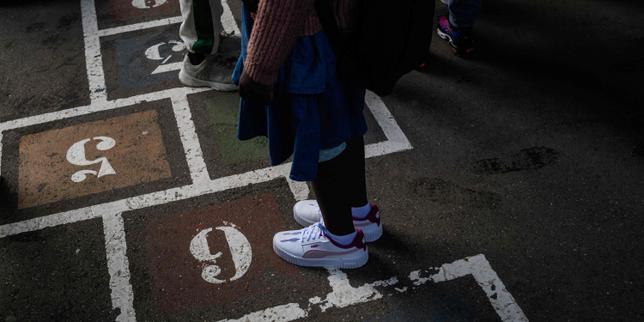
Rentrée scolaire : ce qui attend les 11,6 millions délèves de retour en cours mardi Outre linterdiction du téléphone portable au lycée, cette rentrée est marquée par les conséquences dune cyberattaque ayant visé léducation nationale, qui affecte encore les académies de Toulouse et de Nantes, et les élèves qui en dépendent.
le monde · about 4 hours ago