
Greenland blocks rare earth mine over uranium ban, defying mining firm
Greenland bans rare earth mine over uranium ban, defying mining firm’s plans
Greenland’s government has rejected an application by Australian mining company Greenland Minerals to establish a rare earth elements mine at Kvanefjeld in southern Greenland, citing a 2021 ban on uranium extraction that the project would violate. The decision, announced on 29 June 2026, follows years of debate over the environmental and geopolitical risks of extracting rare earths alongside uranium, a radioactive by-product. Greenland Minerals, which rebranded after the uranium ban, had sought to develop one of the world’s largest rare earth deposits, critical for green technologies and defence supply chains .
The Naalakkersuisut, Greenland’s government, confirmed that the project would contravene the 2021 policy, which prohibits uranium mining to protect public health and the Arctic environment. “The ban remains in force,” a government spokesperson said. The decision underscores Greenland’s sovereign approach to resource development, balancing economic ambitions with environmental and security concerns. It also reflects growing caution across the Nordic region toward extractive industries that intersect with nuclear risks.
The move comes as Greenland strengthens its autonomy from Denmark, with the island territory increasingly asserting control over its natural resources. In a 2026 opinion piece titled *De soevereine kalmte van Groenland verdient navolging* (*The sovereign calm of Greenland deserves to be followed*), Dutch newspaper *Trouw* praised Greenland’s measured stance, contrasting it with the aggressive resource policies of other Arctic states .
Greenland Minerals had argued that modern extraction techniques could separate rare earths from uranium, but regulators maintained that the risks of contamination and proliferation remained unacceptable. The company has not indicated whether it will appeal the decision or seek alternative sites. Analysts say the rejection could deter other foreign investors eyeing Greenland’s mineral wealth, particularly as climate change makes Arctic resources more accessible.
The decision also aligns with broader Nordic trends. Norway’s government intervened last week to halt strikes at oil and gas fields, balancing labour rights with energy security . Meanwhile, Sweden faces domestic debate over nuclear energy, with 40% of Danes expressing concern over a potential new plant at Barsebäck, near Copenhagen .
Greenland’s rare earth ban signals a cautious, sovereignty-first approach to resource governance, even as global demand for critical minerals surges. The decision leaves the island’s economic future uncertain but reinforces its reputation as a region where environmental and strategic considerations take precedence over short-term profit.
Follow us for live European news
- 1
- 1
- 1
- 1
- 1
3 further sources not geolocated
Articles

NRK: EU Receives This Years Peace Prize - The Nordic Page
gdeltproject.org · about 2 hours ago
Burglaries in Norway Increasing - The Nordic Page
gdeltproject.org · about 2 hours ago
Twenty Years After the Wall - The Nordic Page
gdeltproject.org · about 2 hours ago
I am Proud of our people for Their Positive Contributions to Norway
gdeltproject.org · about 2 hours ago
Greenland denies mining firm rare earth exploration The Greenlandic government, Naalakkersuisut, has rejected the Australian mining company Greenland Minerals application to establish a rare earth elements mine at Kvanefjeld in southern Greenland. This decision follows a ban on radioactive uranium extraction introduced by Greenlands government after the 2021 election, as extracting rare earths would also extract uranium. Consequently, the company—which renamed itself […]
cphpost · about 2 hours ago
40 procent worried about new Swedish nuclear at Barsebäck The possibility of a new Swedish nuclear power plant in Barsebäck, about 23 kilometers from Copenhagen, concerns nearly 40 percent of Danes. A Voxmeter survey conducted for Ritzau shows that 39.5 percent agree or strongly agree that they are concerned, while 33.7 percent disagree or strongly disagree. Additionally, 22.4 percent are neither in agreement nor […]
cphpost · about 2 hours ago
Böyle bir NATOya ihtiyacımız yok
gdelt bot · about 3 hours ago
Terror is a Tactic, Not an Ideology - The Nordic Page
gdeltproject.org · about 3 hours ago
Svänger om migrationen – ska lösas utanför Europa Vi fixar det, sade Angela Merkel och öppnade för hundratusentals i flyktingkrisens Europa.Tio år senare blåser helt andra vindar.För många utlänningar i Europa, enligt Danmarks statsminister Mette Frederiksen.
svenska dagbladet · about 3 hours ago
Jagland: Europe is a Peace Continent - The Nordic Page
gdeltproject.org · about 3 hours ago
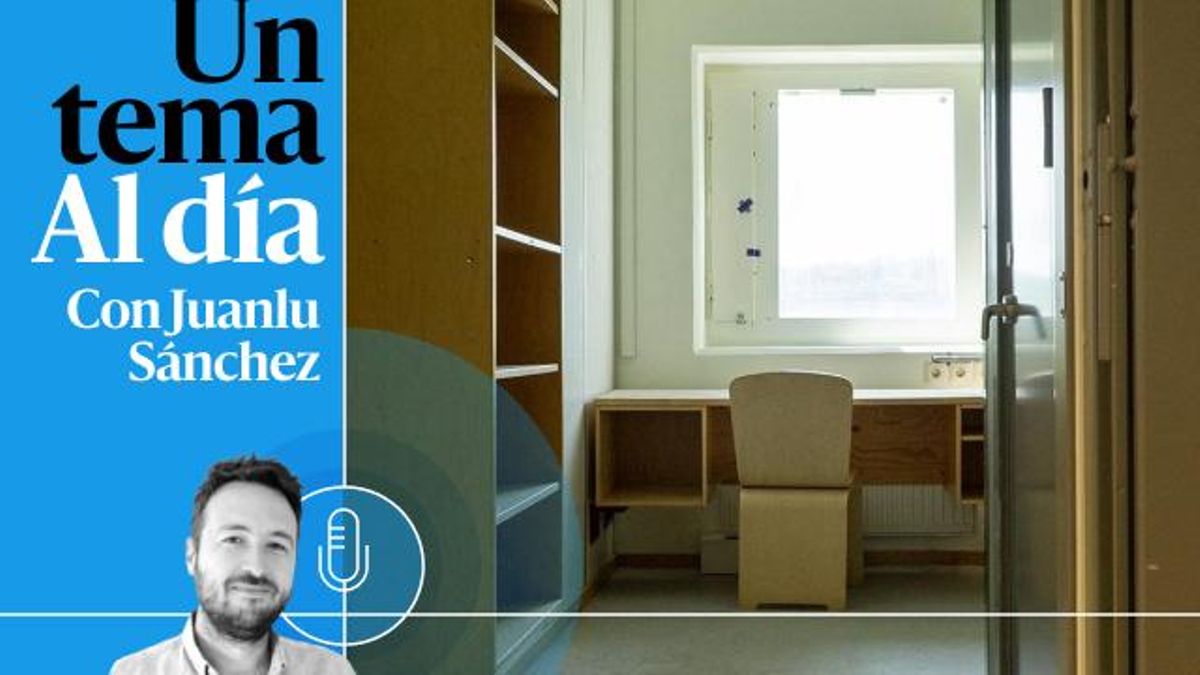
🎙 PODCAST | La cárcel de los niños sicarios de Suecia Un país que siempre nos suena a paraíso del bienestar, a lugar seguro, a sistema que sabe criar y cuidar. Ese país acaba de abrir prisiones para adolescentes. Una historia de bandas, alarmismo y mano dura Dentro de Rosersberg, la cárcel en la que Suecia encerrará a los primeros niños reclusos ¿Cómo es una cárcel sueca? El periodista, colaborador de elDiario.es, Óscar Gelis, ha estado en una de ellas, en la prisión de Rosersberg. El mobiliario no llama especialmente la atención… Lo que hace que se te pongan los pelos de punta es saber que, en poco tiempo, comenzarán a entrar en ellas niños y adolescentes. La medida fue una de las reformas más polémicas impulsadas por el Ejecutivo conservador que gobierna Suecia con el apoyo de la extrema derecha. Se trata de menores de edad a los que las bandas relacionadas con el tráfico de droga contactan a través de redes sociales para cometer todo tipo de delitos. Es un fenómeno que nos sorprende que suceda en un país nórdico, por la imagen que siempre hemos tenido de países como Suecia. Pero, además, es un problema que comienza a extenderse más allá de sus fronteras. Lo analizamos con el experto en inteligencia criminal Andrés Rolandelli. *** Envíanos una nota de voz por Whatsapp contándonos alguna historia que conozcas o algún sonido que tengas cerca y que te llame la atención. Lo importante es que sea algo que tenga que ver contigo. Guárdanos en la agenda como Un tema Al día. El número es el 699 518 743 *** Un tema Al día es el podcast diario de actualidad de elDiario.es que, en episodios de unos 15 minutos, explica cada día un asunto de actualidad. Está presentado y dirigido por Juanlu Sánchez, subdirector de elDiario.es. Premio Ondas al podcast Revelación, Un tema Al día es el daily líder en Spotify, Apple Podcast, iVoox, Amazon Music o Podimo, según los datos públicos de las plataformas, donde acumula más de 190.000 suscriptores. Ha sido reconocido como podcast revelación por Amazon y recomendado como imprescindible por Apple. ¿Cómo escuchar Un tema Al día? ▶ Si eres socio/a, puedes escuchar los nuevos capítulos del podcast cada noche en elDiario.es con unas horas de antelación respecto al resto de lectores. Recibirás el enlace en tu correo electrónico en el boletín del Adelanto de noticias. ▶ Si no eres socio/a, el episodio está disponible a primera hora de la mañana en cualquier aplicación que uses habitualmente. Spotify Apple Podcast Ivoox Podimo Amazon Music Feed RSS ▶ Acuérdate de suscribirte al podcast Un tema al día en tu app para que te lleguen automáticamente los nuevos capítulos. Es gratis. ▶ Tendrás disponibles también todas las entregas de Un tema Al día en elDiario.es/aldia
eldiario.es · about 3 hours ago
20 Years of Close Cooperation with Norway - The Nordic Page
gdeltproject.org · about 4 hours ago

Opinie: De soevereine kalmte van Groenland verdient navolging
trouw · about 6 hours ago
Norway and Germany Partnering in Green Energy Transition
gdeltproject.org · about 6 hours ago

Bild: German Rail Failure Exposes NATO Logistics Gap #Europe #NATO
mastodon bot · about 6 hours ago

Minnesotas Anti-ICE Organizers Turn to Democracy Defense #worldnews
mastodon bot · about 6 hours ago
Norwegian Oil Fund Investments in China Create Controversy
gdeltproject.org · about 6 hours ago
Norwegians are Ranked Highly Skeptic about Immigrants
gdeltproject.org · about 7 hours ago
Combating poverty in Europe - The Nordic Page
gdeltproject.org · about 7 hours ago
World Tourism Network Says Tourism Promotes Peace Amid Swedens Call for Stricter Russian Tourist Visas
gdeltproject.org · about 7 hours ago
Norwegian Children Top in Visiting Dangerous Websites
gdeltproject.org · about 7 hours ago

Ukraine NATO Path Blocks Peace, Norwegian Scholar Says #Europa #Europe #NATO #OTAN
mastodon bot · about 8 hours ago
Norwegian Govt. intervenes to halt oil and gas field strikes
gdeltproject.org · about 8 hours ago

Opinion: The New Line Kyiv Quietly Built Into NATO #Europe #NATO
mastodon bot · about 8 hours ago
Brussels next stop for UN Cyprus envoy Brussels is the next stop for UN envoy Maria Angela Holguin, who is still working on the instructions of United Nations Secretary General Antonio Guterres to hold a new series of contacts with the aim of convening a new expanded conference on the Cyprus problem. On Monday, Holguin was due to meet President of the […]
cyprus mail · about 9 hours ago