
Man convicted of Rushdie attack found guilty of terrorism charges in US federal court

Story Timeline
3 hours · 2 summary articles
Man convicted of Rushdie attack found guilty of terrorism charges in US federal court
Man convicted of terrorism in 2022 Salman Rushdie stabbing linked to Hezbollah
Continuation
Hadi Matar, the man convicted of attempting to murder author Salman Rushdie, was found guilty on Wednesday of additional charges including transnational terrorism and providing material support to a terrorist organization. The verdict was delivered by a federal court in Buffalo, New York, according to a statement from the U.S. Department of Justice.
Matar, 28, who is of Lebanese descent and holds dual U.S. and Lebanese citizenship, now faces the possibility of life in prison. The new charges stem from allegations that Matar acted on the instructions of Hezbollah, a Lebanese militant group backed by Iran. The group has been designated as a terrorist organization by the United States.
The attack on Rushdie occurred on August 12, 2022, at a literary event in Chautauqua, New York. Matar stabbed Rushdie more than a dozen times, causing severe injuries including the loss of sight in one eye. Rushdie, who was 75 at the time of the attack, has since written about the experience in his memoir "Knife: Meditations After an Attempted Murder," published in April 2024.
Matar was previously convicted of attempted murder in May 2025 and sentenced to 25 years in prison. However, the new federal charges carry significantly harsher penalties. According to the U.S. Department of Justice, Matar was found guilty of "engaging in a transnational act of terrorism and providing material support to terrorists."
The prosecution argued that Matar was motivated by a fatwa, or religious edict, issued by the late Iranian Supreme Leader Ayatollah Ruhollah Khomeini in 1989. The fatwa called for Rushdie's death over his novel "The Satanic Verses," which many Muslims consider blasphemous.
Matar's defense attorney, Nathaniel L. Barone II, expressed disappointment with the verdict and indicated plans to appeal. Barone argued that the current political climate and tensions with Iran made it challenging to convince the jury of Matar's innocence, according to The New York Times.
The sentencing for the new charges is scheduled for November 3, 2026. Matar showed no visible reaction as the verdict was read in court, keeping his head down and swaying slightly in his seat, as reported by Digi24.
The case has drawn international attention due to the high-profile nature of the victim and the geopolitical implications of the attack. Rushdie, a British-Indian novelist, has been a target of Islamic extremists since the publication of "The Satanic Verses" in 1988.
Hezbollah, the group Matar is accused of supporting, is a Shiite Islamist political party and militant group based in Lebanon. It has been designated as a terrorist organization by the United States and several other countries.
The attack on Rushdie was captured on video and witnessed by hundreds of people attending the event. Prosecutors alleged that Matar had planned the attack for months, inspired by previous attempts on Rushdie's life.
In the aftermath of the attack, Rushdie has spoken publicly about his recovery and the impact of the assault on his life. His memoir "Knife" provides a detailed account of the attack and its aftermath.
The federal trial lasted one week and focused on Matar's motivations and connections to Hezbollah. Prosecutors presented evidence linking Matar to the group and argued that his actions were part of a broader effort to carry out the fatwa against Rushdie.
Matar's family has stated that he became increasingly interested in Islam after a trip to the Middle East in 2018. However, they have not publicly commented on the recent verdict.
Follow us for live European news
Articles

Islamist militants kill 10 police officers in northwest Pakistan, say police reut.rs/4xelgoT
bluesky_Reuters · about 2 hours ago

Ποινές έως και 1.048 χρόνια φυλάκισης σε 28 μέλη συμμορίας στο Ελ Σαλβαδόρ
protothema · about 2 hours ago
Rushdie-Attentäter wegen Terrorismus verurteilt
orf.at · about 2 hours ago

The man who stabbed Sir Salman Rushdie on a stage in upstate New York has been convicted of terrorism charges after a court heard that he acted on the edict of Irans late Ayatollah
bluesky_The Times · about 2 hours ago
Kuidas Norra poiss Iraani käsul Inglismaale tapma läks Londoni kohus mõistis süüdi Norra teismelise, kes oli sõitnud Inglismaale, et seal Iraaniga seotud rahvusvahelise jõugu tellimusel mõrv toime panna.
postimees · about 2 hours ago

Lassaillant de Salman Rushdie reconnu coupable de terrorisme aux États-Unis Lassaillant de lécrivain Salman Rushdie a été reconnu coupable davoir commis "un acte de terrorisme" en soutenant le Hezbollah, a rapporté le ministère américain de la Justice dans un communiqué mercredi. ...
la libre · about 2 hours ago
Atacatorul lui Salman Rushdie a fost găsit vinovat de sprijinirea unui grup terorist străin și riscă închisoarea pe viață Hadi Matar l-a înjunghiat în repetate rânduri pe scriitorul Salman Rushdie în cadrul unei conferințe literare din 2022 și ar putea să-și petreacă restul vieții în închisoare. Bărbatul a fost găsit vinovat miercuri de sprijinirea unui grup terorist străin și de executarea ordinelor guvernului iranian, care ceruse moartea lui Rushdie cu mai bine de trei decenii în urmă, scrie The New York Times.
digi24 · about 2 hours ago

End this nightmare: Wife of ailing Briton jailed in Saudi Arabia appeals for release
news.yahoo.com · about 2 hours ago
Vinen z terorismu. Muži, který pobodal Rushdieho, hrozí podle amerického soudu až doživotní trest Americký soud ve středu shledal muže, který v roce 2022 ve státu New Yorku pobodal spisovatele Salmana Rushdieho, vinným ze zapojení do terorismu a z podpory libanonského šíitského militantního hnutí Hizballáh. Informovala o tom agentura AFP. Jiný soud už loni Hadiho Matara, který má americké a libanonské občanství, poslal za útok na Rushdieho na 25 let do vězení.
irozhlas.cz · about 2 hours ago
Напавшего на Салмана Рушди признали виновным в терроризме. Теперь ему грозит пожизненный срок Присяжные в федеральном суде в Буффало (штат Нью-Йорк) признали Хади Матара, отбывающего 25-летний срок за покушение на убийство писателя Салмана Рушди, виновным в пособничестве террористической группировке и совершении акта международного терроризма. Об этом сообщает The New York Times.
meduza · about 2 hours ago
Jurnalista rusă Daria Șipaceva, condamnată la 12 ani de închisoare pentru trădare. Procesul a fost secret Jurnalista rusă Daria Șipaceva a fost condamnată de un tribunal din Moscova la 12 ani într-o colonie penitenciară, după ce a fost găsită vinovată de trădare. Procesul s-a desfășurat cu ușile închise, iar autoritățile nu au prezentat public detalii despre dosar, relatează News.ro.
digi24 · about 2 hours ago
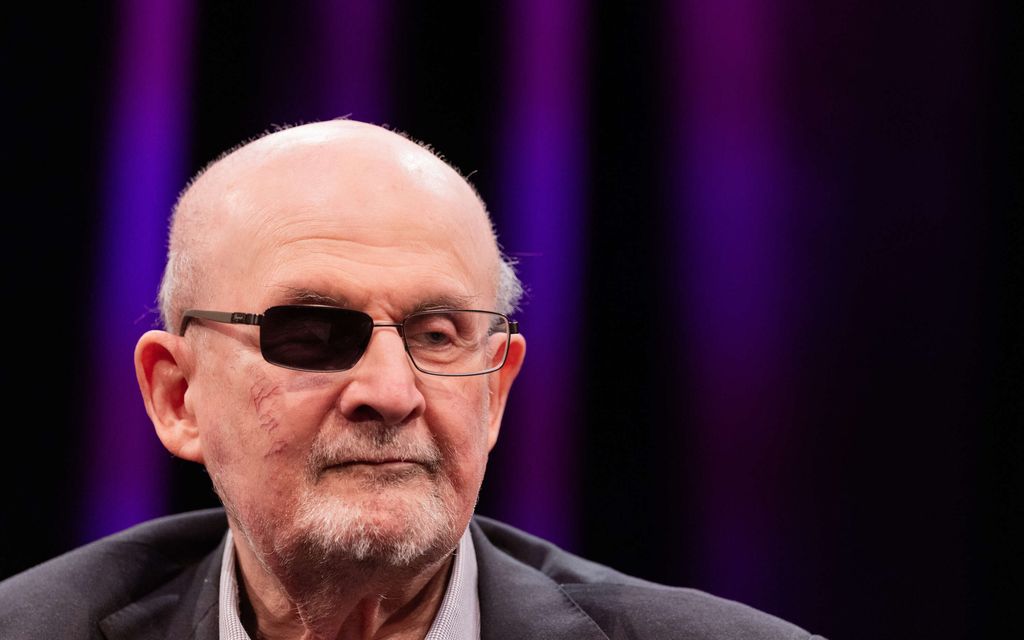
Salman Rushdien puukottajalle uusi tuomio terrorismista
iltalehti · about 3 hours ago

Gericht verurteilt Rushdie-Attentäter wegen Terrorismus Knapp drei Jahre nach dem Messerangriff auf Salman Rushdie hat ein US-Bundesgericht den Täter auch wegen Terrorismus verurteilt. Die Justiz wirft Hadi Matar vor, im Auftrag der Hisbollah gehandelt zu haben.
welt.de · about 3 hours ago
„Plante monatelang Rushdies Hinrichtung: Rushdie-Attentäter in neuem Verfahren wegen Terrorismus verurteilt Wegen versuchten Mordes ist er bereits zu 25 Jahren Haft verurteilt worden. Nun droht dem Attentäter, der mehr als ein Dutzend Mal auf Salman Rushdie einstach, eine noch höhere Strafe.
tagesspiegel · about 3 hours ago
After a deadly raid, a displaced Nigerian mother finds a lifeline in sewing After losing her husband and two children, Safiya now fears losing the fragile future she rebuilt.
aljazeera · about 3 hours ago