
Argentina's Milei signs decree to expel foreigners for hate speech against nation
Argentine President Javier Milei signed a decree on Thursday that allows the expulsion or denial of entry to foreigners who spread hate speech against Argentina or its national symbols. The decree, announced by the Casa Rosada, is in response to recent manifestations of hostility against the country and its citizens.
The decree modifies Argentina's immigration law to include the expulsion or denial of entry to any foreigner who "disseminates or incites messages of hatred, discrimination, and/or violence against the Argentine people or their national symbols." The measure was published in the official gazette and requires parliamentary approval.
The move comes amid a diplomatic crisis between Argentina and Brazil, sparked by insults Milei directed at Brazilian President Luiz Inácio Lula da Silva during a political event in São Paulo. Milei called Lula a "convict" and a "thief" while supporting Flávio Bolsonaro, the son of former Brazilian President Jair Bolsonaro, in his presidential campaign.
The diplomatic tension has led to the recall of the Brazilian ambassador to Argentina, Julio Bitelli, for consultations. Argentine Foreign Minister Pablo Quirno downplayed the incident, stating, "We are not taking it to the institutional level."
The decree is also seen as a response to a wave of criticism against Argentina during the recent World Cup, where the Argentine football team lost the final to Spain. The government stated that the measure is necessary to protect the nation, its citizens, and its symbols.
According to a statement from the presidency, the decision was made "in response to recent manifestations of hostility against the Argentine Republic and Argentines." The statement added, "The national government reaffirms that the defense of the Nation, its citizens, and its symbols is non-negotiable. Whoever attacks the Argentine Republic is not welcome in our country."
Milei has accused the governments of Brazil and Mexico, along with the U.S. Democratic Party, of funding a campaign against Argentina during the World Cup. The accusations come following criticism of the Argentine football team's behavior during the tournament, including an incident where players displayed a banner reading "Las Malvinas son Argentinas" (The Falkland Islands are Argentine) after a match against England.
The decree specifies that it does not target expressions of ideological disagreement or political, academic, or civic criticism, which are considered legitimate exercises of constitutional rights.
Follow us for live European news
- 2
- 1
- 1
- 1
- 1
- 1
- 1
1 further source not geolocated
Articles

Milei zahteval izgon vseh, ki žalijo Argentino Argentinski predsednik Javier Milei je zahteval izgon in prepoved vstopa v državo za vse tujce, ki "izražajo sovraštvo" do Argentine. Ukrep naj bi bil povezan z nedavnimi kritikami na račun argentinske nogometne reprezentance.
rtv slovenia · about 2 hours ago

Qui est Flavio Bolsonaro, le fils de lancien président brésilien et lui même candidat à lélection doctobre ? Investi samedi dernier candidat à lélection doctobre au Brésil contre le président Lula après des crises en rafale, Flavio Bolsonaro sest posé en héritier de son père, lex-chef de lÉtat dextrême droite Jair Bolsonaro, détenu pour tentative de coup dÉtat. ...
la libre · about 2 hours ago

Milei aprueba un decreto para expulsar a los extranjeros que insulten a Argentina y sus símbolos Coincide con la crisis diplomática abierta con Brasil por los insultos del presidente argentino a Lula
la vanguardia · about 2 hours ago
Argentina înăsprește regulile pentru străini. Decretul lui Javier Milei permite expulzarea celor care „incită la mesaje de ură Guvernul argentinian condus de președintele Javier Milei a publicat în noaptea de miercuri spre joi un decret, care urmează să fie supus aprobării Parlamentului. Documentul interzice intrarea în țară și permite expulzarea „oricărui străin care ar difuza sau ar incita la mesaje de ură la adresa poporului argentinian sau a țării.
digi24 · about 2 hours ago
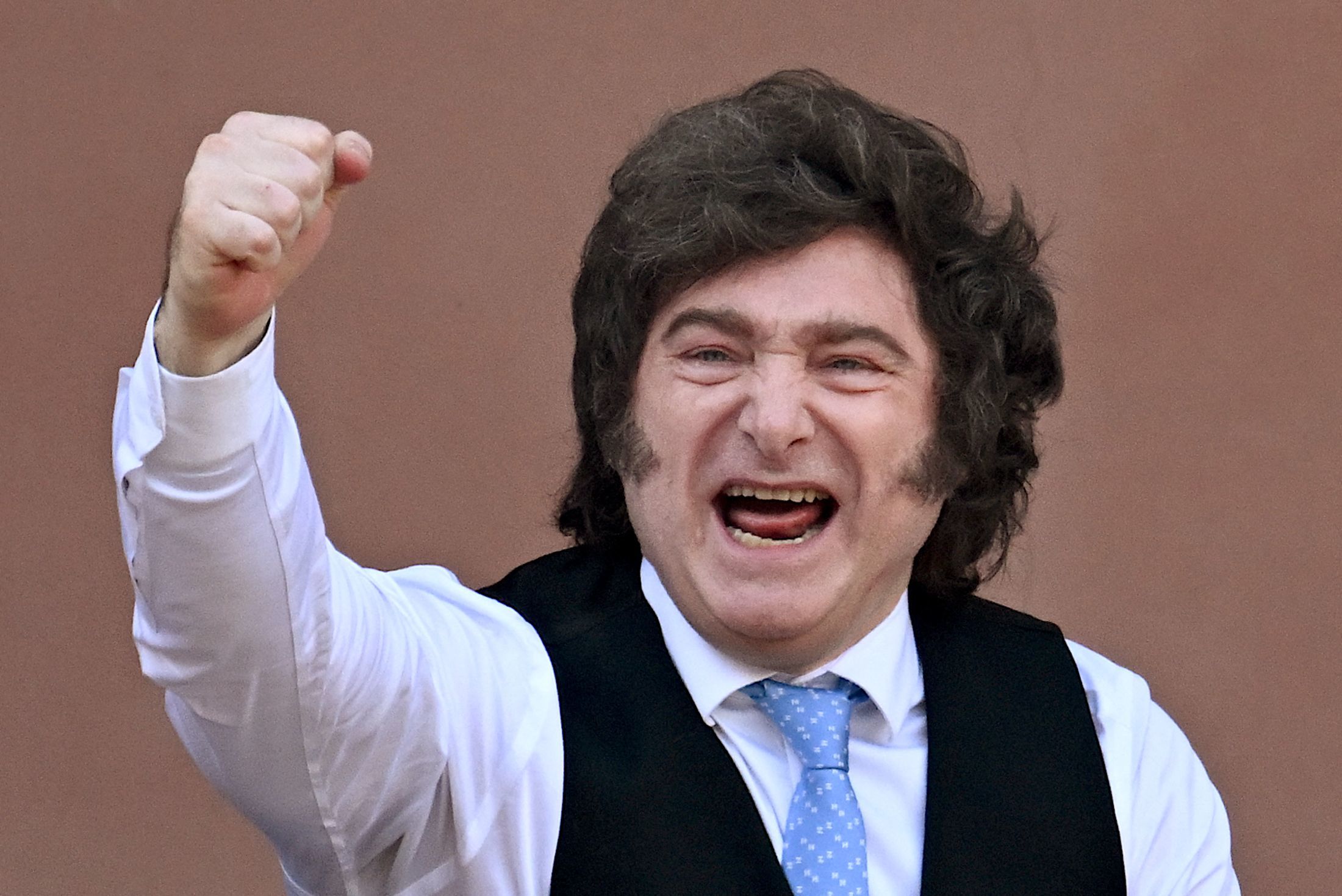
Milei cierra las fronteras a aquellos que "odien" a Argentina Sancionará los ataques a los símbolos patrios y amenaza con retirar permisos de residencia a quienes apoyen campañas "antiargentinas" Leer
elmundo · about 2 hours ago
Lula stopol ľudí z Trumpovho tímu. Brazília zamietla víza Američanom pre podozrenie zo zásahu do volieb Lula priznáva zamietnutie víz dvom ľuďom z tímu Donalda Trumpa a hovorí o snahách zasahovať do volieb. Brazília tak vysiela ostrý signál do Washingtonu.
aktuality.sk · about 2 hours ago
Milei pritvrdzuje voči cudzincom. Nový dekrét má vyhostiť tých, čo šíria nenávisť k Argentíne Milei predstavuje dekrét, ktorý umožní vyhosťovať cudzincov za nenávistné prejavy voči štátu a urážanie národných symbolov. O kroku rozhodne parlament.
aktuality.sk · about 2 hours ago
Milei aprova decreto que expulsa estrangeiros por discurso de ódio contra argentinos Presidente argentino alterou por decreto a lei das migrações e tornou possível expulsar ou impedir a entrada a estrangeiros que promovam discurso de ódio contra o país, povo e símbolos nacionais.
publico · about 2 hours ago

Après un déversement de haine lors du Mondial, lArgentine interdira lentrée à tout auteur de "messages de haine" contre les citoyens ou le pays Le gouvernement argentin de Javier Milei a publié dans la nuit de mercredi à jeudi un décret, qui devra être soumis au Parlement, interdisant lentrée dans le pays, ou rendant passible dexpulsion, "tout étranger qui diffuserait ou inciterait à des messages de haine", contre le peuple argentin ou le pays. ...
la libre · about 2 hours ago

Bolivia ordena la detención de Evo Morales por la reciente crisis de los bloqueos La fiscalía general acusa al expresidente, que vive prófugo en la región cocalera de Cochabamba, de alzamiento armado, terrorismo y actuar contra la soberanía del Estado
la vanguardia · about 2 hours ago
Coupe du monde 2026 : lArgentine veut interdire lentrée aux étrangers auteurs de «messages de haine» contre son peuple ou son pays Le décret, qui entre en vigueur dans lattente de son examen parlementaire, a été publié dans un contexte de tensions diplomatiques entre lArgentin, le Brésil et le Mexique. Javier Milei accuse ces pays davoir financé une «campagne anti-argentine» en marge du Mondial de football.
liberation · about 2 hours ago
Milei authorises expulsion of foreigners over anti-Argentina hate speech The government said the changes were a response to what it described as "recent displays of hostility towards the Argentine Republic and Argentinians," although it did not cite specific examples.
euronews · about 2 hours ago