
CDU Berlin replaces Wegner with Evers as blackout fallout deepens campaign crisis

Story Timeline
3 days · 3 summary articles
CDU Berlin replaces Wegner with Evers as blackout fallout deepens campaign crisis
Berlins CDU chief Wegner withdraws top candidate bid amid blackout fallout
ContinuationBerlins mayor Wegner apologises after court confirms he misled public on power outage
Berlin’s governing CDU faces a bruising fight to salvage its campaign after Regierender Bürgermeister Kai Wegner abruptly withdrew his candidacy for re-election on Friday, citing the fallout from the city’s catastrophic 22 June blackout. The party’s Berlin leadership now turns to Finance Senator Stefan Evers as its new face for the 20 September Abgeordnetenhauswahl, but internal polling shows the CDU has already slumped to just 17 percent—behind the Left, Greens and AfD—leaving little time to reverse the slide.
Wegner’s decision followed revelations that he had misled the public about his actions during the blackout, including claims of phone calls to emergency services that never took place. “I have made communicative errors,” he admitted in a televised statement, conceding that the episode had eroded trust beyond repair. The CDU’s Kreisvorsitzenden voted unanimously on Friday evening to nominate Evers, a move the Landesvorstand is expected to ratify within days. Evers, who already occupies the second slot on the CDU’s Treptow-Köpenick Bezirksliste, will lead the campaign despite the party’s refusal to field a statewide list.
The transition offers no immediate reprieve. Analysts note that Wegner’s three-year tenure as mayor produced no tangible improvements in public services, housing affordability or transport, while his government’s austerity measures—orchestrated by Evers as finance chief—sparked protests from cultural and social organisations. “The CDU is hollowed out,” wrote the *taz*. “All it has left is a warning against the Left.” The party’s decision to skip a formal party congress, scheduled for 14 July, underscores the urgency: organisers cite the 2 August start of Berlin’s official election poster campaign as the hard deadline for any new narrative.
Beyond the campaign trail, Wegner’s tenure coincided with a broader shift in Berlin’s political economy. On 2 December 2025, the CDU-SPD Senate approved a “defence technology ecosystem”—a DefTech cluster linking arms manufacturers, drone start-ups and military research institutes under the banner of “innovation.” The plan, unveiled in April as the TechHub Security, Defence and Innovation East, was discussed at a 18 March cabinet meeting at the federal Defence Ministry, the first such gathering of a German state government. Critics argue the push for militarisation sidesteps democratic scrutiny, with public development banks and venture capital financing the transition.
Evers inherits a party that has haemorrhaged credibility. A *Tagesspiegel* poll published on 11 July places the CDU fourth, behind the Left’s 22 percent, the Greens at 19 and the AfD at 18. The Social Democrats, junior partners in the coalition, have yet to signal whether they will distance themselves from the CDU’s new leadership. With posters permitted from 2 August, the next six weeks will determine whether Evers can recast the party’s image—or whether Berlin’s voters will consign the CDU to opposition for the first time in a generation.
Follow us for live European news
- 5
- 1
- 1
- 1
- 1
- 1
- 1
- 1
- 1
1 further source not geolocated
Articles

Quand Barcelone défiait Hitler : les Olympiades antifascistes de juillet 1936 1936 - Espagne. En réaction aux Jeux olympiques de Berlin, lEspagne républicaine organise des Olympiades populaires dans la capitale catalane. Le coup dÉtat franquiste met brutalement fin à cette initiative.
courrier international · about 3 hours ago

Germanys richest man takes on Big Tech #Europe
mastodon bot · about 4 hours ago

What if Berlin needs its bunkers back? After the cold war, public air-raid shelters were turned into nightclubs and galleries. Now anxiety over conflict is growing again
financial times · about 4 hours ago
CDU nach Wegner-Rückzug: Evers statt Wegner: Der weitere Fahrplan für die CDU Berlin Nach dem Rückzug von Kai Wegner als Spitzenkandidat will die CDU eine neue Nummer 1 für den Wahlkampf festlegen. Formal betrachtet muss das gar nicht sein, es hat aber hohen symbolischen Wert.
tagesspiegel · about 4 hours ago
Neuer Chefvolkswirt der Nationalbank: „Der Staat soll nicht dauerhaft in den Markt eingreifen [premium] Wolf Heinrich Reuter war deutscher Staatssekretär unter Christian Lindner, seit Februar leitet er die Hauptabteilung Volkswirtschaft in der Oesterreichischen Nationalbank (OeNB). In seinem Antrittsinterview plädiert er für eine Reduktion der Staatsausgaben, mehr Deregulierung – und appelliert an die Regierung: „Das Ziel muss sein, dass die Schuldenquote stabilisiert wird.
die presse · about 4 hours ago

Die vielen Probleme des GIZ-Chefs Schäfer-Gümbel Thorsten Schäfer-Gümbel kämpft bei der Deutschen Gesellschaft für Internationale Zusammenarbeitmit Problemen. Auch innerhalb der Bundesregierung mehren sich die kritischen Nachfragen. WELT AM SONNTAG blickt hinter die Kulissen.
welt.de · about 5 hours ago
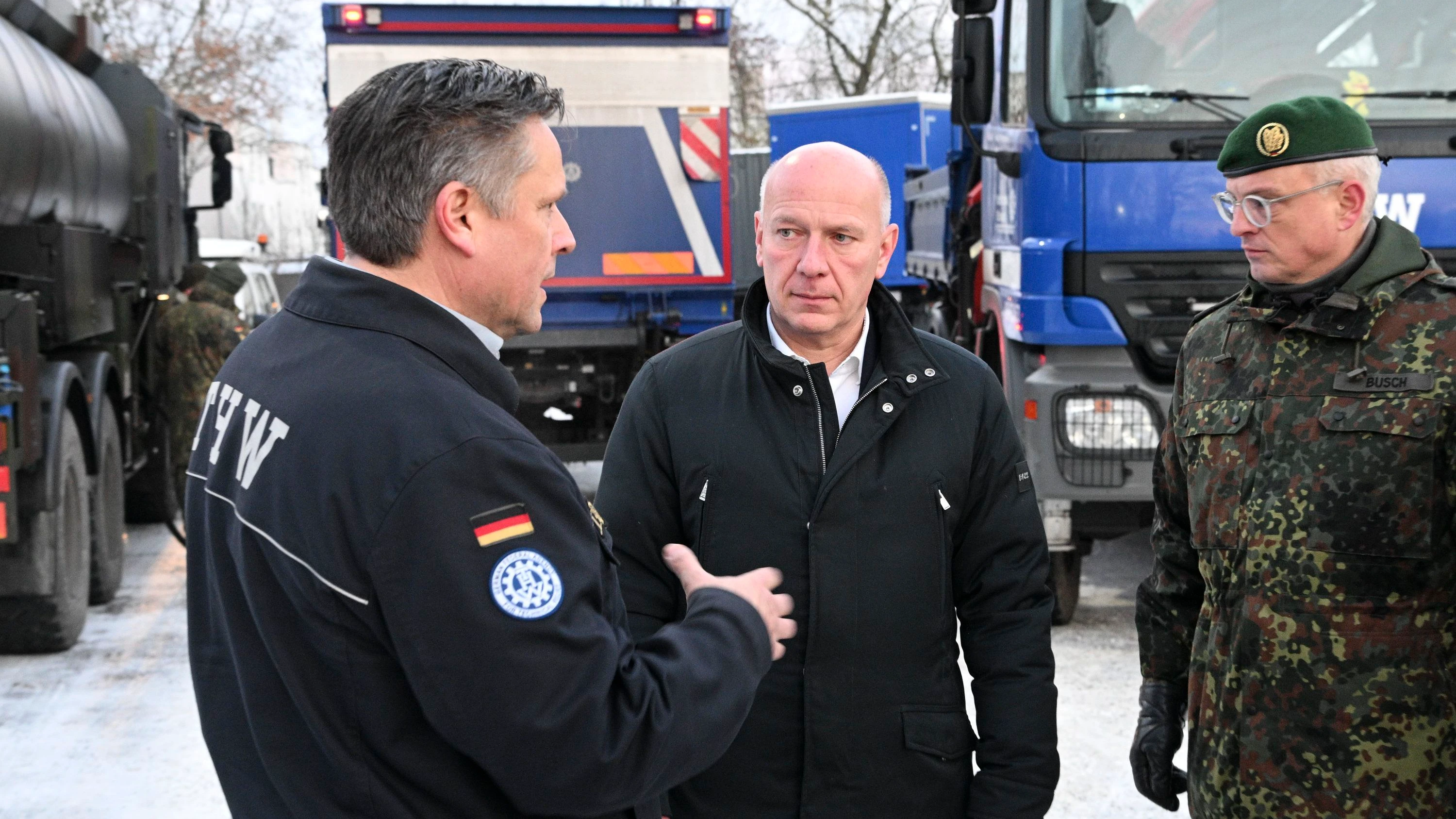
Berlins Bürgermeister: Ganz kleines Tennis Berlins Regierender Bürgermeister hat sein Ansehen buchstäblich verspielt. Kai Wegners später Rückzug macht es der CDU nicht gerade leicht.
faz · about 6 hours ago
Vor der Abgeordnetenhauswahl: Berlins neuer CDU-Spitzenkandidat vor großen Hürden Berlins neuer CDU-Spitzenkandidat startet mit Gegenwind. Er soll die Partei wieder nach vorn bringen – am besten so weit, dass es im September für den Wahlsieg reicht. Einfach wird das nicht.
tagesspiegel · about 6 hours ago

Berlin CDU - SPD government turns German capital into a centre of war production
gdelt bot · about 6 hours ago
Dash Berlin maakt na vijf jaar terugkeer op podium Dash Berlin maakt na ruim vijf jaar een comeback. De danceact, waar de Nederlander Jeffrey Sutorius achter schuilt, treedt zaterdag voor het eerst weer op tijdens het Ultra Europe-festival in het Kroatische Split. Volgende week verschijnt ook een nieuwe single.
rtl nieuws · about 6 hours ago

„Habe kommunikative Fehler gemacht – Wegner zieht seine Spitzenkandidatur zurück Berlins Regierender Bürgermeister Kai Wegner zieht nach Kritik an seinem Umgang mit dem Berliner Stromausfall seine Spitzenkandidatur zurück. Finanzsenator Evers übernimmt für die CDU.
welt.de · about 6 hours ago

Berlim: autarca desiste da reeleição após polémica O autarca anunciou que não se vai recandidatar numa conferência de imprensa esta sexta-feira
observador · about 8 hours ago
Vyšetřovaný Farage rezignoval a chce obhájit své jméno. Hlavní strany ale hlasování bojkotují Politický risk britského pravicového populisty Nigela Farage se podle stanice CNN obrátil proti němu. Šéf strany Reform UK se kvůli vyšetřování svých financí vzdal poslaneckého mandátu a vyvolal doplňovací volby ve svém obvodu Clacton-on-Sea. Chtěl, aby o jeho politické budoucnosti rozhodli voliči, hlavní britské strany ale označily hlasování za politický trik a odmítly postavit vlastní kandidáty.
irozhlas.cz · about 8 hours ago
Rekonstruktion eines Absturzes: Kai Wegners dramatische 72 Stunden vor dem Rückzug Kai Wegner wollte die Krise hinter sich lassen, doch Lügen holten ihn ein. Rekonstruktion eines drei Tage dauernden Dramas, an dessen Ende sein Rückzug als CDU-Spitzenkandidat steht.
tagesspiegel · about 9 hours ago
Personalwechsel: Evers sieht schwierige Aufgabe als neuer CDU-Spitzenkandidat Nach dem Rückzug von Kai Wegner als Spitzenkandidat hofft die Berliner CDU auf einen Neuanfang im Wahlkampf. Das sagt der designierte neue Spitzenmann Stefan Evers dazu.
tagesspiegel · about 9 hours ago
Filmkünstler É. Baudelaire im CCA Berlin: Wie fühlt sich die Gesellschaft an? Éric Baudelaire ist als Filmkünstler bekannt. Im Berliner Kunstraum CCA zeigt er auch Skulpturen – ein sinnlicher Trip von der Börse bis zur Schönheit. mehr...
taz.de · about 10 hours ago
Berlin: Wegners Irrweg ins politische Aus Berlins Regierender Bürgermeister hat wiederholt darüber gelogen, was er am Tag des großen Stromausfalls unternommen hat. Nun zieht er sich als CDU-Spitzenkandidat zurück, ihm soll Finanzsenator Stefan Evers folgen.
sueddeutsche · about 11 hours ago
CDU Berlin: Wegner geht, Evers kommt, die Probleme bleiben Der Rückzug von Kai Wegner ist für die CDU kein Befreiungsschlag, denn die Probleme der Partei sind größer. Teil davon ist auch Nachfolger Stevan Evers. mehr...
taz.de · about 11 hours ago
CM 2026: Şefii Federaţiei Germane de Fotbal au plecat la New York să negocieze cu Jurgen Klopp preluarea naţionalei Preşedintele Federaţiei Germane de Fotbal (DFB), Bernd Neuendorf, şi adjunctul său, Hans-Joachim Watzke au pornit spre New York, vineri, pentru a purta primele discuţii cu Jurgen Klopp privind numirea acestuia ca selecţioner al echipei naţionale, relatează DPA.
digi24 · about 11 hours ago
Unwahrheiten per Rechtsweg aufgedeckt: Der Fall Wegner zeigt, wie wichtig Kontrollmechanismen der Medien sind Dass Kai Wegner auf die Spitzenkandidatur verzichtet, ist politisch richtig. Seine Falschaussagen schadeten dem Amt und damit dem Ansehen Berlins.
tagesspiegel · about 11 hours ago