Loading…
 Saturday, August 29Saturday, August 29
3 months · 10 summary articles
Lebanon and Israel extended their fifth round of US-mediated talks in Washington on Friday after Hezbollah leader Sayed Naim Qassem reiterated an unconditional demand for Israel to withdraw from all Lebanese territory, while Beirut insisted any agreement must include a full Israeli pullout under a defined timetable.
The negotiations, which began earlier this week, were extended into an unscheduled sixth day as Lebanese officials refused to compromise on their core demand. “Israel has no choice but to withdraw unconditionally from all occupied Lebanese land,” Qassem told reporters in Beirut on Friday, rejecting any prospect of normalization between the two countries. His remarks echoed a statement from a senior Lebanese official who told Anadolu Agency that any declaration of principles emerging from Washington must guarantee a complete Israeli withdrawal from all Lebanese territory within a specified timeframe. This insistence, the official said, was the reason the fifth round had been extended.
Israel, however, has resisted full withdrawal, with Israeli warplanes striking the southern Lebanese town of Beit Yahoun on Thursday—violating the existing ceasefire as negotiators met in Washington. The airstrike came as Lebanese and Israeli delegations concluded the fifth round of talks aimed at securing a lasting truce. Meanwhile, far-right Israeli minister Itamar Ben-Gvir called for an end to the Lebanon ceasefire after four Israeli soldiers were wounded in a grenade attack, while Prime Minister Benjamin Netanyahu asserted that the US understood Israel’s right to defend itself.
The deadlock centers on contested areas along the Blue Line, particularly the so-called Yellow Line and Beaufort Castle, which Israel has refused to vacate. Lebanon demands a full withdrawal from all occupied villages and towns, a position that has stalled progress despite US mediation efforts. The ongoing violence—including Thursday’s airstrike—underscores the fragility of the ceasefire as negotiations drag on.
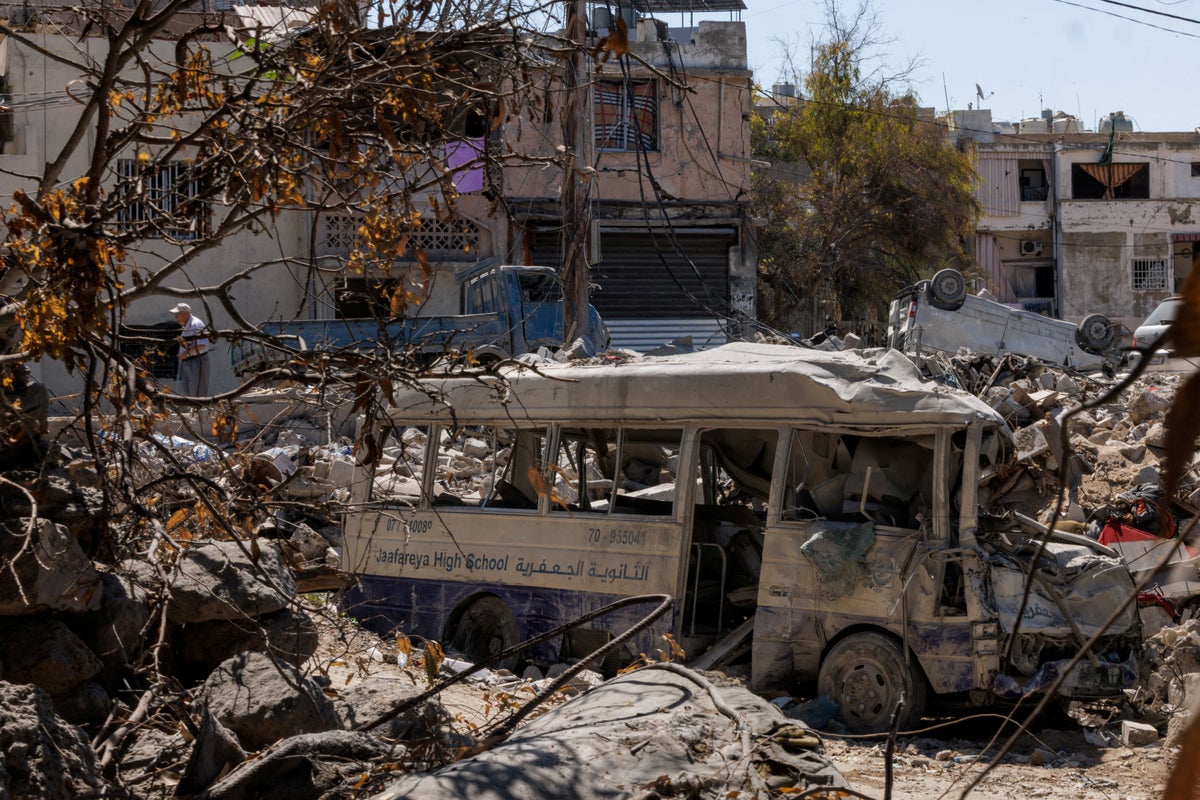
Amid the diplomatic impasse, thousands of Shiite Muslims in Nabatieh marked Ashoura on Friday, processing through neighborhoods devastated by recent Israeli strikes. The display of resilience came as international observers warned of the humanitarian toll of the conflict, with Lebanese civil society groups accusing the international community of indifference to the crisis in southern Lebanon.
Domestically, Israel’s political landscape remains volatile. Opposition leader Avigdor Liberman accused Netanyahu of “dragging Israel toward civil war” to cling to power, following protests by ultra-Orthodox Jews against the detention of Haredi draft evaders. Meanwhile, former military chief Gadi Eisenkot has surged in opinion polls, positioning himself as a potential challenger to Netanyahu in elections scheduled for no later than October.
With no breakthrough in sight, the extended talks risk becoming a forum for posturing rather than progress, as both sides dig in on maximalist positions.
Follow us for live European news
2 further sources not geolocated

The Haredim: A Defense : Azure - Ideas for the Jewish Nation
gdeltproject.org · 2 months ago
Hezbollah demands Israel leave Lebanon unconditionally as US talks extend As Lebanon-Israel strive for agreement, Hezbollah chief Naim Qassem accepts no normalisation and no gains for Israel
aljazeera · 2 months ago
New Yorks primaries signal a new force in US politics Progressive, Muslim and Arab American candidates are challenging old limits on debate over Israel and Palestine.
aljazeera · 2 months ago
Iraqs new PM launches anticorruption campaign, but is it enough? Al-Zaidi campaign to combat corruption seizes $86m, properties, vehicles and gold. But analysts say he needs to do more.
aljazeera · 2 months ago
Lebanon: thousands mark Ashoura in Nabatieh amid rubble left by Israeli strikes Thousands of Shiite Muslims marked Ashoura in Nabatieh on 26 June, holding processions through neighbourhoods devastated by recent Israeli airstrikes in a powerful display of resilience.
euronews · 2 months ago
Vodja Hezbolaha zahteva brezpogojen umik Izraela z libanonskega ozemlja Izrael nima druge izbire, kot da se brezpogojno umakne z libanonskega ozemlja, ki ga zaseda, je sporočil vodja šiitskega gibanja Hezbolah Naim Kasem, ki je zavrnil morebitno normalizacijo odnosov med Libanonom in Izraelom.
rtv slovenia · 2 months ago
Liberman: Netanyahu dragging Israel towards civil war to stay in power Opposition leader Avigdor Liberman has accused Prime Minister Benjamin Netanyahu of dragging Israel toward civil war to cling to power, after thousands of ultra‑Orthodox Jews protested the detention of Haredi draft evaders. Liberman called the protests a national disgrace.
yenisafak · 2 months ago
Israeli airstrike hits Lebanon during final day of Washington talks Israeli warplanes struck the southern Lebanese town of Beit Yahoun on Thursday, violating the ceasefire as Lebanese and Israeli officials concluded the fifth round of US-mediated negotiations in Washington aimed at securing a lasting truce.
yenisafak · 2 months ago
Lebanese president welcomes French-Italian post-UNIFIL coalition plan President Joseph Aoun welcomed a joint French-Italian initiative to establish an international coalition after UNIFILs mandate ends. He praised the plan as recognition of the Lebanese Armys role in securing the south and called it a strong expression of international support for Lebanons sovereignty and stability.
yenisafak · 2 months ago
Lebanon demands full Israeli withdrawal in any Washington deal A senior Lebanese official has told Anadolu that any declaration of principles from Washington talks must include a complete Israeli withdrawal from all Lebanese territory under a defined timetable. Lebanons insistence on this demand led to the extension of the fifth round of negotiations.
yenisafak · 2 months ago
Israel, Lebanon deadlock over south withdrawal in Washington talks The fifth round of Lebanon-Israel talks in Washington was extended as disputes over Israeli withdrawal from southern Lebanon persist. Israel refuses to leave the Yellow Line and Beaufort Castle, while Lebanon demands a full pullout from all occupied villages and towns.
yenisafak · 2 months ago
Global Sumud Flotilla: Libyen lässt vier Gaza-Aktivisten frei Vor knapp einem Monat wurde in Libyen ein Solidaritätskonvoi aufgehalten, der Richtung Gaza unterwegs war. Einige der Inhaftierten kommen jetzt frei. mehr...
taz.de · 2 months ago
Far-right Israeli minister urges ending Lebanon ceasefire after troops hurt Far-right minister Itamar Ben-Gvir called for ending the Lebanon ceasefire after four Israeli soldiers were wounded in a grenade attack. Other ministers voiced frustration over operational restrictions, while Netanyahu said the US understands Israels right to defend itself.
yenisafak · 2 months ago
Un fost general israelian amenință scaunul de premier al lui Netanyahu. A fost comandant în războiul din 2006 cu Hezbollah Fostul șef al armatei israeliene, Gadi Eisenkot, câștigă rapid teren în sondajele de opinie și ar putea deveni un adversar serios pentru actualul premier Benjamin Netanyahu la viitoarele alegeri în Israel, programate cel târziu pentru luna octombrie.
adevarul · 2 months ago
Au milieu de lindifférence générale, non à labandon du Liban Les auteur·e·s du collectif «le Pays blanc», dont Georgia Makhlouf ou Sorj Chalandon, appellent à refuser que le Sud-Liban devienne une zone dexception livrée à elle-même, où les villages, les habitants tués et déplacés, et la souveraineté dun Etat ne compteraient pas.
liberation · 2 months ago
Iran-US war latest: Israel says military ready to finish the job if Tehran attacks Israel has continued to clash with Hezbollah despite Donald Trump urging Benjamin Netanyahu to end the war
independent · 2 months ago