
Hezbollah rejects ceasefire allowing Israeli strikes in Lebanon
Story Timeline
4 months · 18 summary articles
Hezbollah on Sunday rejected any ceasefire that would allow Israel "free rein" to conduct attacks in Lebanon, as the group’s Secretary-General Naim Qassem insisted that a complete halt to hostilities and the withdrawal of Israeli forces from occupied southern territory were non-negotiable conditions for any agreement. Speaking in Beirut, Qassem said the group remained committed to a truce but would not accept terms that left Lebanon vulnerable to further Israeli strikes, .
Israel, however, accused Hezbollah of violating the ceasefire within hours of a US-Iran agreement taking effect. The Israeli army claimed its two-day air and artillery campaign in Lebanon had killed dozens in response to rocket fire from the group, which it described as a breach of the truce. Hezbollah countered that Israeli strikes had begun immediately after the agreement, undermining any prospect of stability, .
The escalation has deepened a humanitarian crisis in southern Lebanon, where Amnesty International documented Israel’s repeated use of mass evacuation orders since 2024, barring residents from returning to their homes in clear violation of international humanitarian law. The organisation interviewed 19 displaced individuals and reviewed 447 open-source items to substantiate its findings, .
Meanwhile, Israeli settlers in the West Bank escalated attacks on Palestinian communities over the weekend, with armed groups targeting homes in Turmus Ayya, Sinjil and other villages under the protection of the Israeli army. Palestinian witnesses reported that ten demolition notices were issued for homes and agricultural structures near Bethlehem, while settlers blocked the Muarrajat road linking Jericho and Ramallah, .
In a rare diplomatic intervention, Colombian President Gustavo Petro urged Israeli citizens to pressure their government to end the strikes on Lebanon, citing the US-Iran accord as a framework for de-escalation. Petro’s call came as Greece joined a growing chorus of international actors expressing concern over Israel’s deportation of a Greek trade union delegation en route to Ramallah, despite the group’s compliance with entry procedures, .
Syria’s President Ahmad al-Sharaa acknowledged lingering tensions over Hezbollah’s past role in the Syrian conflict but signalled openness to engagement if it served both countries’ interests. He warned that renewed fighting in Lebanon would have regional repercussions, .
As the death toll mounts and diplomatic efforts falter, the IDF is reportedly considering transferring control of a Hezbollah underground compound to the Lebanese army, a move that could signal a tentative step toward stabilisation—or further entrenchment of a fragile status quo.
Follow us for live European news
- 3
- 2
- 1
- 1
- 1
1 further source not geolocated
Articles

Le azioni illegali di Israele nel sud del Libano, tra evacuazioni di massa e divieti di rientro Dal 2024 Israele fa ripetuto uso di ordini illegali di evacuazione di massa da ampie zone del sud del Libano e di non ritorno alle proprie case, in palese violazione del diritto internazionale umanitario. Oltre ad aver intervistato 19 persone direttamente coinvolte e analizzato documentazione tratta da fonti aperte, Amnesty International ha esaminato 447 contenuti […] Larticolo Le azioni illegali di Israele nel sud del Libano, tra evacuazioni di massa e divieti di rientro proviene da Il Fatto Quotidiano.
il fatto quotidiano · 3 months ago
Majority of Israelis rate Netanyahus Iran war as failure: Poll A survey conducted by the Hebrew University of Jerusalem found that 56.4 of Israeli respondents rated Prime Minister Benjamin Netanyahus handling of the war against Iran as a failure, with nearly three-quarters rejecting his claims that the conflict eliminated an existential threat.
yenisafak · 3 months ago
Hezbollah rejects free rein for Israel in Lebanon ceasefire Hezbollah Secretary-General Naim Qassem said on Sunday that the group will not accept any ceasefire granting Israel "free rein" to carry out attacks in Lebanon, stressing that a complete cessation of aggression and the withdrawal of Israeli forces from occupied southern territory are essential conditions for any agreement.
yenisafak · 3 months ago
Syrias Sharaa: Deep wound remains over Hezbollahs role President Ahmad al-Sharaa has said a deep Syrian wound remains over Hezbollahs past involvement in Syria, but expressed willingness to engage with the group if it serves both nations. He called for a political solution in Lebanon and warned that renewed conflict there would impact Syria.
yenisafak · 3 months ago

IDF considering handing Lebanese army control of Hezbollah underground compound
news.yahoo.com · 3 months ago
How Benjamin Netanyahus big moment backfired The war in Iran fulfilled a longtime goal of the Israeli premier. But it has left him in his worst position in years
financial times · 3 months ago
Israel says Hezbollah violated ceasefire as Lebanon toll rises The Israeli army said its strikes on Lebanon over the past two days killed dozens in response to Hezbollah rocket fire, while the group insisted it remains committed to the truce despite Israeli violations beginning the moment the US-Iran agreement took effect.
yenisafak · 3 months ago
Israeli settlers attack Palestinian homes in West Bank under army cover Armed Israeli settlers attacked Palestinian homes and property in multiple West Bank towns on Saturday, with Israeli army forces providing protection to the attackers during raids on Turmus Ayya, Sinjil and other villages in Ramallah and Nablus governorates, according to local sources.
yenisafak · 3 months ago
Israeli occupiers attack vehicles, army halts West Bank construction Israeli occupiers blocked the Muarrajat road linking Jericho and Ramallah and attacked Palestinian vehicles on Sunday, while the army issued demolition notices targeting ten homes and agricultural facilities near Bethlehem, according to Palestinian media and witnesses.
yenisafak · 3 months ago

À Gaza, la mort à petit feu du plan de paix de Trump Depuis le cessez-le-feu doctobre 2025, le plan américain, censé apporter une solution définitive à la guerre, peine à avancer. La force internationale et le nouvel organe de gouvernance restent lettre morte, le Hamas détient toujours ses armes et Israël continue de grignoter du terrain. Les belligérants misent sur la fin du mandat de Donald Trump et lagonie de son plan, analyse Foreign Policy.
courrier international · 3 months ago
Δύο νεκροί σε επιχείρηση του IDF κοντά σε ισραηλινό οικισμό στη Δυτική Όχθη Ο ισραηλινός στρατός υποστηρίζει ότι οι τρεις άνδρες εκτόξευαν κοκτέιλ μολότοφ προς τον οικισμό Καρμί Τσουρ
protothema · 3 months ago
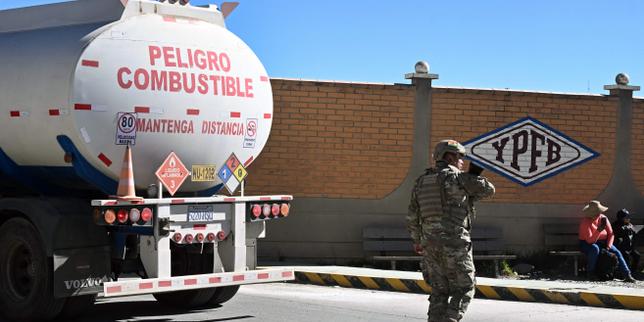
Bolivie : après avoir décrété létat dexception, le pouvoir parvient à lever progressivement les barrages routiers Une douzaine de blocages subsistaient, dimanche, en signe de contestation contre le président, Rodrigo Paz, qui a décrété, samedi, létat dexception. Des heurts entre policiers et paysans ont eu lieu dans le département de Cochabamba, bastion politique de lancien chef dEtat Evo Morales.
le monde · 3 months ago
Colombian President Petro urges Israelis to end Lebanon strikes Colombian President Gustavo Petro called on Israeli citizens Saturday to demand their government halt strikes on Lebanon, expressing full support for a recent US-Iran memorandum of understanding and criticizing the continuation of violence that has claimed thousands of lives since early March.
yenisafak · 3 months ago
Greece voices concern over Israel deporting union delegation Greeces Foreign Ministry on Sunday expressed concern after Israeli authorities denied entry to a delegation of Greek trade union representatives invited by Palestinian officials to Ramallah, deporting the group despite assurances that the citizens had complied with all entry procedures and declared their travel purpose.
yenisafak · 3 months ago
Le Liban, la poupée vaudou quIsraël et lIran plantent daiguilles pour torturer toute la région Parmi les Libanais, il courant de détester le Hezbollah qui a provoqué la destruction des villages du Sud, et de détester plus encore larmée israélienne qui les a rasés. Mais cest le malheur dêtre pris en étau entre les deux qui est le plus partagé.
liberation · 3 months ago
Israel Bars Greek Trade Union Delegation from Entering the West Bank Greeces Foreign Ministry expressed concern late Sunday after Israeli authorities denied entry to a Greek trade union delegation traveling to the West Bank and subsequently deported the group. The delegation, made up of Greek citizens representing trade unions, had been invited by the Palestinian side and was heading to Ramallah, the ministry said in a […]
greek reporter · 3 months ago