
Iran escalates World Cup visa dispute with U.S. after staff denied entry
Story Timeline
4 months · 3 summary articles
Iran snatches 2-2 draw with dramatic stoppage-time equaliser against New Zealand
FIFA pays Somali referee barred from U.S. full World Cup salary
Iran escalates World Cup visa dispute with U.S. after staff denied entry
Iran has turned to FIFA after the United States denied visas to 15 members of the Iranian national team’s support staff, escalating a diplomatic standoff just days before the 2026 World Cup kicks off in North America. The move comes as the host nation prepares to receive a team from a country it has been in a state of war with for decades, marking an unprecedented moment in World Cup history.
According to Iranian state broadcaster IRIB, the 15 staff members—including technical and medical personnel—were denied entry despite all players and coaching staff having secured visas . Iran’s national team has since relocated from a training camp in Antalya, Türkiye, to its base in Mexico, where it will remain until its matches in the U.S. Iran’s ambassador to Mexico confirmed that the team will be permitted to enter the U.S. only on match days and must return to Mexico the same day .
The restrictions have drawn sharp criticism from Iranian officials, who accuse Washington of politicizing the tournament. Iran’s foreign ministry has summoned the Swiss ambassador, who represents U.S. interests in Tehran, to protest the visa rejections . FIFA has yet to issue a formal response, but the situation threatens to overshadow the opening matches of a World Cup already under scrutiny for its logistical challenges.
Meanwhile, the Iranian squad arrived in Mexico on Saturday, completing a grueling 15-day preparation phase in Antalya. The team’s delayed entry into the U.S. adds another layer of complexity to an already demanding schedule, as Iran is set to face its first opponent in a high-pressure environment. The restrictions also raise concerns about the well-being of the team, particularly given the physical demands of World Cup football.
The visa issue is the latest in a series of diplomatic tensions between the U.S. and Iran, which have flared in recent months. It also underscores the geopolitical sensitivities surrounding the 2026 tournament, the first to be hosted across three countries—U.S., Canada, and Mexico—and featuring a record 48 teams. With kickoff just four days away, the episode serves as a stark reminder of how global politics can intrude even on the world’s most-watched sporting event.
For now, Iran’s players and coaching staff remain focused on the pitch, but the uncertainty surrounding their support team’s access to the U.S. casts a shadow over their preparations. As the World Cup prepares to unfold across a continent spanning three time zones, the episode highlights the delicate balance between sport and diplomacy in an era of heightened international tensions.
Follow us for live European news
- 3
- 1
- 1
- 1
- 1
- 1
- 1
2 further sources not geolocated
Articles

Coupe du Monde: léquipe iranienne, adversaire des Diables, arrivera ce dimanche au Mexique Léquipe iranienne de football est attendue dimanche au Mexique, où se trouve son camp de base pour la Coupe du monde, malgré le refus par les Etats-Unis, où elle doit disputer ses premiers matches, de délivrer des visas à certains membres de son encadrement. ...
la libre · 4 months ago

Werknemer kan vrij nemen om nachtje door te halen tijdens WK voetbal De wedstrijden tijdens het WK voetbal worden ook s ochtends en midden in de nacht gespeeld, terwijl er gewoon moet worden gewerkt. Toch hoeven werkgevers zich geen zorgen te maken over een hoger verzuim of minder productiviteit.
nu.nl · 4 months ago
Fußball-Nationalmannschaft: Der WM-Kontrast: Weinender Karl und Sané in der Jubeltraube Verdaut ist der Schock noch nicht. Vor allem nicht bei Lennart Karl. Reha statt WM heißt plötzlich sein Sommer-Programm. Tränen fließen. Andere nehmen seine Position ein, im Kader und auf dem Platz.
tagesspiegel · 4 months ago
Medir a vida em colheradas de FIFA A partir de certa idade, qualquer cronologia confiante é uma aldrabice. Mas um grupo de visionários inventou a solução mais eficaz para este problema: o torneio internacional de futebol. Crónica de Rogério Casanova
publico · 4 months ago
Soccer? Football! Der Wegweiser zur Fußball-WM [premium] Die Fußball-WM findet nach 1994 wieder in den USA statt, mit Mexiko und Kanada gibt es dazu zwei Co-Gastgeber. 48 Teams starten, 104 Spiele warten. Und die US-Justiz ermittelt gegen die Fifa.
die presse · 4 months ago
Fußball-WM: Irans Team darf nur am Spieltag in die USA Irans Nationalspieler dürfen nur für ihre WM-Spiele in die USA einreisen. Noch am selben Tag müssen sie in ihr Quartier im Nachbarland Mexiko zurückkehren.
die presse · 4 months ago

Hütter und die Eintracht: Die Rückkehr des Chefs Erfahrung statt Experimente: Die Eintracht hat ihr erstes Sommerrätsel gelöst. Ob die Rückkehr von Trainer Adi Hütter ein Erfolg wird, hängt aber vor allem an den Entscheidungen auf dem Transfermarkt.
faz · 4 months ago
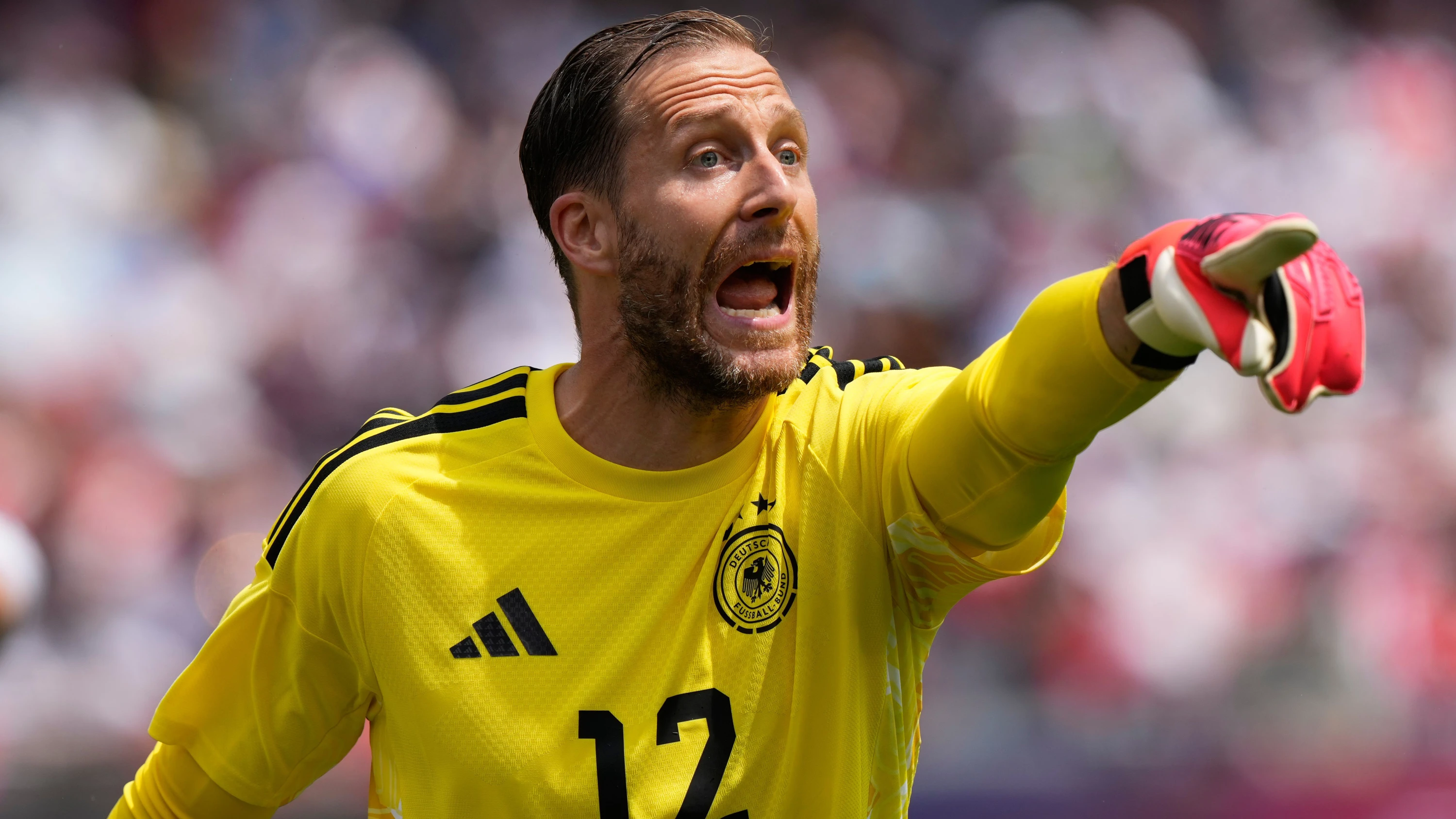
Torwartfrage im DFB-Team: „Das war nicht ganz cool von meinem Gefühl her Nach dem Testspielsieg gegen die USA äußert sich Oliver Baumann erstmals zu seiner Rückstufung im DFB-Tor. Beim WM-Auftakt soll er Platz machen für Manuel Neuer – vorausgesetzt, der wird rechtzeitig fit.
faz · 4 months ago
North Americas wide and wild World Cup will be an experience like no other | Emma Hayes Teams must be prepared for challenging travel and a cauldron of heat but will also encounter fantastic fans and a beautiful football cultureThis World Cup will be incomparable to anything we have seen before. Why? The pure scope of the tournament: 104 matches in three different countries played across 16 venues in three different time zones.If you have not travelled around the United States, it is hard to imagine just how vast this country is. The land mass of England could fit comfortably into the state of Georgia. Imagine a World Cup being played across Europe. Imagine having to playing a game in Siberia and then your next match in the Algarve. Fifa has done its best to minimise it, but travelling around America, Canada and Mexico will be intense. Fun, for sure, but it will be taxing for fans who are already being squeezed by high ticket prices. Continue reading...
theguardian · 4 months ago

Norway World Cup 2026 team guide Ståle Solbakken leads country to first major tournament in 26 years knowing that, with Erling Haaland up front, anything can happenThis article is part of the Guardians 2026 World Cup Experts Network, a cooperation between some of the best media organisations from the 48 countries who qualified. theguardian.com is running previews from three countries each day in the run-up to the tournament kicking off on 11 June. Continue reading...
theguardian · 4 months ago
Thousands join record-breaking human wave attempt in Mexico City ahead of World Cup Thousands of people gathered in Mexico City to attempt a Guinness World Record for the worlds largest human wave, days before the start of the 2026 FIFA World Cup.
euronews · 4 months ago
Vor dem WM-Auftakt in Mexiko wachsen die Sorgen um Sicherheit und Gewalt Die Fußball-WM in den USA, Kanada und Mexiko wird die größte Weltmeisterschaft aller Zeiten. Doch vor allem in Mexiko sorgen Sicherheitsrisiken, politische Proteste und die Gewalt der Drogenkartelle für Bedenken. Zudem warnen Experten vor extremen Temperaturen während des Turniers.
welt.de · 4 months ago
„Arschkalt im Flieger, sagt Nagelsmann mit krächzender Stimme Bundestrainer Julian Nagelsmann hat in den USA mit den Auswirkungen von Klimaanlagen zu kämpfen. Außerdem: Portugals Sieg im Test gegen Chile wird von einer unschönen Szene überschattet. Alle News im WM-Ticker.
welt.de · 4 months ago
Fußball-WM: DFB-Gegner Curaçao holt sich WM-Schwung: 4:0 gegen Aruba Sympathieträger sind die Fußballer von der Insel schon, nun haben sie sich Selbstvertrauen für den WM-Auftakt gegen Deutschland geholt.
tagesspiegel · 4 months ago
Iran team departs Türkiye for World Cup base amid visa delays Irans national football team departed Türkiye for Mexico on Saturday after completing a 15-day training camp in Antalya ahead of the 2026 FIFA World Cup, as 15 members of the delegation remain without US visas despite all players and coaching staff having secured entry permits, according to Irans state broadcaster IRIB.
yenisafak · 4 months ago
Iraqi star Hussein held seven hours at Chicago airport Iraqi striker Aymen Hussein was questioned for seven hours at Chicago airport upon arrival with the national squad, local media reported Saturday, forcing the team to return to its base without its leading forward ahead of upcoming World Cup warm-up fixtures.
yenisafak · 4 months ago
„Für Fußball-Deutschland ist es toll, diesen Spieler zu haben Oliver Baumann hat sich nach dem Sieg gegen die USA klar hinter die Mannschaft gestellt und die Torwartdebatte um Manuel Neuer für beendet erklärt. WELT-Reporter Christian Beilfuß lobt Baumanns professionelle und selbstlose Haltung als wichtiges Signal für das Team.
welt.de · 4 months ago

Curacao gewinnt letzten WM-Test gegen Aruba (Nummer 189 der Weltrangliste) Der erste Gruppengegner der Nationalelf gewinnt seinen letzten WM-Test. Doch Curaçaos Sieg gegen Aruba dürfte dem Team von Julian Nagelsmann wenig Sorgen bereiten, wie ein Blick auf die Weltrangliste zeigt.
welt.de · 4 months ago
DFB-Elf mit Sieg gegen die USA – Nagelsmann sieht noch Feinschliff nötig Die deutsche Nationalmannschaft hat ihre WM-Generalprobe gegen die USA mit 2:1 gewonnen. Die Treffer erzielten Kai Havertz und Leroy Sané. Vor dem Auftakt gegen Curaçao sieht Bundestrainer Julian Nagelsmann dennoch noch Verbesserungsbedarf.
welt.de · 4 months ago
„Da hat natürlich noch nicht alles gepasst Deutschland hat die WM-Generalprobe gegen die USA mit 2:1 gewonnen. Havertz und Sané trafen für die DFB-Elf. WELT-Reporter Christian Beilfuß sieht trotz einiger Schwächen in der Spielkontrolle vor allem die Erfolgsserie und die positiven Einzelauftritte als Mutmacher für das Turnier.
welt.de · 4 months ago
Fußball-Nationalmannschaft: Nagelsmanns WM-Lehren und Bulls-Besuch am freien Sonntag Nach dem Sieg gegen die USA gibt der Bundestrainer allen frei. Bei NBA-Stars können die Nationalspieler vorbeischauen. Nagelsmann vertieft sich vor dem Umzug ins WM-Hotel in letzte Analysen.
tagesspiegel · 4 months ago

📰 Iran says national team staff denied visas for World CupIts the latest diplomatic standoff between Washington and Tehran, just days before the World Cup kicks off in North America. Iran is accusing U.S. officials of denying visas to key staffers on its national soccer team ahead of the FIFA World Cup, which kicks off on North America… #UKNews #Europe
mastodon bot · 4 months ago