
Rescue operations halt as Himalayan barrier lake overflows threatening Nepal-Tibet border villages

Story Timeline
2 days · 3 summary articles
Rescue operations halt as Himalayan barrier lake overflows threatening Nepal-Tibet border villages
Glacial collapse triggers deadly floods in Nepal and Tibet: at least 165 dead, nearly 1,500 missing
ContinuationNepal flash flood kills at least 98, leaves hundreds missing including 384 tourists near Tibet border
The death toll from catastrophic floods and landslides along the Nepal-Tibet border has risen to at least 472, with over 1,400 people still missing, according to authorities in both countries. Nepal’s police confirmed 469 deaths in the country, while China reported three fatalities in Tibet .
Rescue operations were suspended on Friday after a barrier lake formed by a mudslide near the border overflowed, raising fears of further flooding. Chinese state media reported that the lake, containing over 2 million cubic meters of water, had begun breaching, prompting evacuations of 555 tourists and 499 local residents from Tibet’s Gyirong County . Nepal’s police issued warnings for residents in Rasuwa and Nuwakot districts to move to higher ground as water levels in rivers rose .
The disaster began Wednesday when a glacial collapse triggered a torrent of water and mud through the Lhende Khola and Trishuli river valleys, destroying villages and infrastructure. Among the missing are hundreds of foreign tourists, including at least 90 Americans, 260 in Tibet, and others from India, Australia, and European nations . Nepal’s army rescued 900 people, including 119 foreigners, from the hardest-hit areas, while helicopters airlifted survivors, such as Dibga Tamang, who told rescuers, “All my people are gone. There is no one left waiting for me” .
Nepal’s Foreign Ministry stated it did not require international search-and-rescue assistance, though it accepted monetary aid. “Offers of help are natural. Our security agencies are conducting operations. For now, we do not need such assistance,” a ministry spokesperson said . Chinese Premier Li Qiang visited the disaster zone in Tibet on Thursday, while Nepal’s Prime Minister Balendra Shah described conditions as severe .
Authorities in both countries warned of continued flood risks as heavy rain threatened to swell the barrier lakes further. The U.S. Geological Survey linked the initial disaster to a glacial collapse in the Himalayas .
Follow us for live European news
- 5
- 2
- 1
- 1
- 1
- 1
- 1
- 1
- 1
- 1
- 1
- 1
7 further sources not geolocated
Articles

China rushes to minimise risk from lakes formed by glacier debris near Nepal border China is racing to reduce the risk of more flooding at the disaster-stricken border crossing linking the Tibet region to Nepal after hundreds were killed in a flash flood on Wednesday. Nepal and China both warned on Thursday of fresh risks of flooding in the Himalayas, with debris dams which created two barrier lakes on […]
cyprus mail · about 3 hours ago

Nepal flood death toll hits 472 with over 1,000 missing The death toll from catastrophic flash floods sweeping through Nepal and southwestern China has climbed to 472, with authorities confirming more than 1,000 people remain unaccounted for across the Himalayan region as international rescue teams battle damaged infrastructure to reach isolated communities.
yenisafak · about 3 hours ago
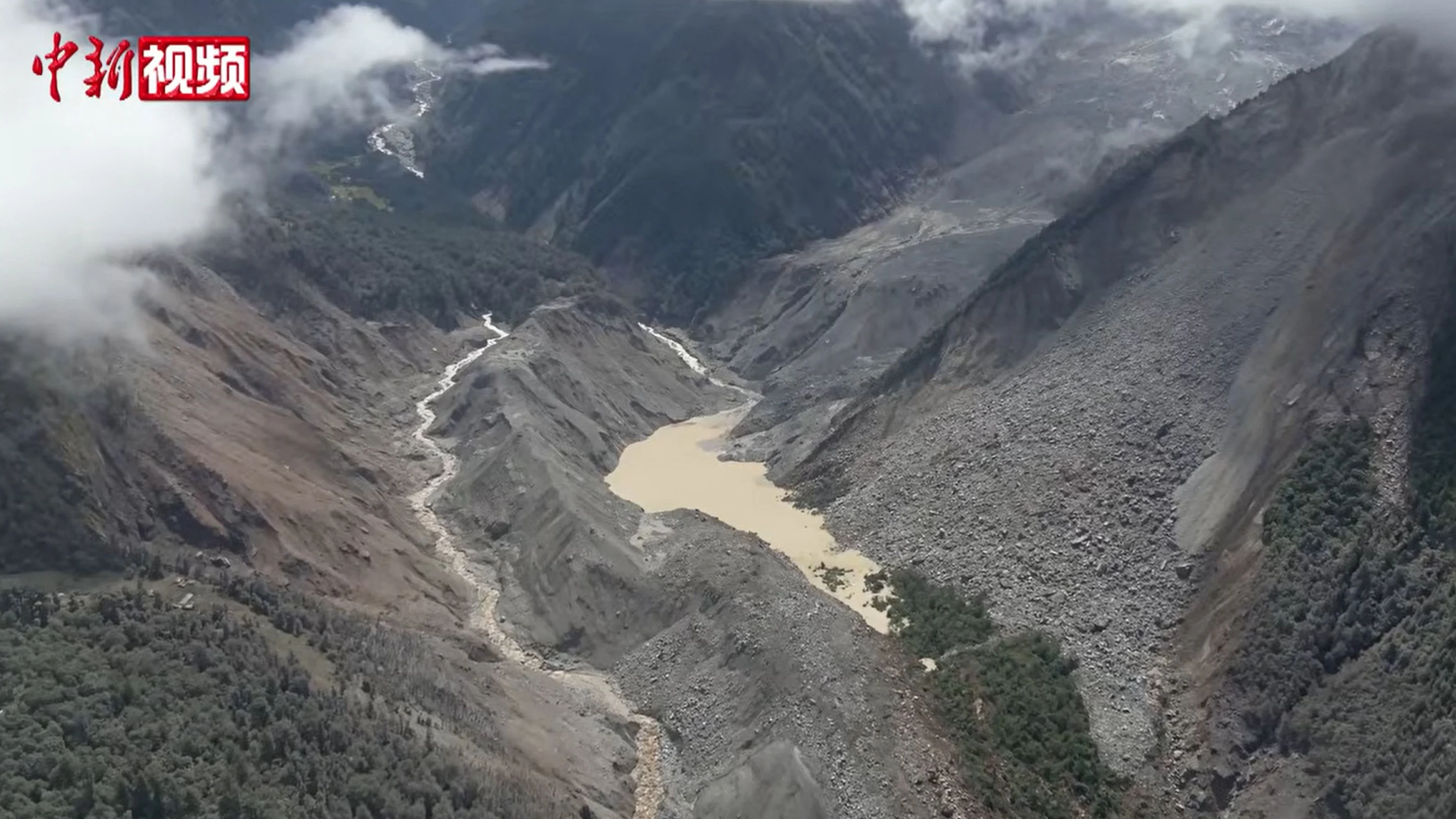
Nepal und Tibet: Angestauter See könnte neue Flut verursachen Anhaltender Regen könnte die Lage in der Katastrophenregion im Himalaya weiter verschärfen. Nach der Sturzflut steigt die Zahl der bestätigten Todesopfer auf mehr als 470. Viele Menschen werden noch vermisst.
faz · about 3 hours ago

BREAKING China pauses a rescue operation citing the high risk of renewed flooding in Tibet, where hundreds remain missing two days after a deadly mudslide, state media says
bluesky_AFP English · about 3 hours ago
⚡️🇳🇵 – The death toll from the floods in Nepal has risen to 469, and over 1,300 people, including around 700 foreigners, remain missing. The rainy weather has created worries that a dam created during the landslide in Chinas Gyirong County could breach and cause even more flooding while search and rescue operations continue. @GeoPWatch
telegram_GeoPWatch · about 3 hours ago
🔴 Nepal-Tibet live: China halts rescue at disaster epicentre over flood risk
france24 · about 3 hours ago
China suspends Nepal rescue efforts as lake overflows Nepal issues alert as emergency services race to save survivors of catastrophic flooding
financial times · about 3 hours ago

Nurse missing in Nepal-Tibet flash flood
news.yahoo.com · about 4 hours ago

Death Toll Rises as Rescuers Search for Victims of Nepal Flood More than 1,500 people are missing and at least 470 are confirmed dead following the devastating flood.
wsj · about 4 hours ago
At least 472 dead in disaster-hit Nepal and Tibet Devastating floods in Nepal and Tibet have claimed at least 472 lives, with Nepals death toll rising to at least 469 alongside three confirmed deaths in Tibet. More than 1,400 people remain missing, including hundreds of foreign tourists. The disaster struck when a wall of water and mud surged through the Lhende Khola river valley […]
cphpost · about 4 hours ago

Death toll in Nepal flood reaches 469, police say reut.rs/4gFMk9S
bluesky_Reuters · about 4 hours ago

China rushes to minimise risk from mountain barrier lake near border with Nepal reut.rs/3SZ5PSQ
bluesky_Reuters · about 4 hours ago
Sturzflut im Himalaya: Nepal warnt nach neuem Dammbruch in Katastrophengebiet
die zeit · about 4 hours ago

BREAKING Nepal police say at least 469 people have been killed in the devastating floods on the border region with Tibet
bluesky_AFP English · about 4 hours ago
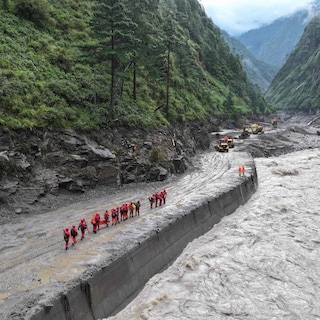
Live ramp Nepal en China: Dam in Tibet gebarsten, oproep om veiligheid op te zoeken
trouw · about 4 hours ago
Katastrophe im Himalaya: Zahl der Todesopfer steigt nach Sturzflut auf 472 – mehr als 1000 Menschen vermisst Die verheerende Sturzflut im Himalaya-Gebirge zwischen China und Nepal hinterließ eine Schneise der Zerstörung. Auch an Tag zwei nach der Katastrophe werden immer weitere Leichen geborgen.
tagesspiegel · about 4 hours ago
Nepal-Tibet live: China warns lake formed by mudslide on Nepal border could breach Chinese authorities warned Friday that a lake formed by a mudslide on the China-Nepal border could breach and send floodwaters downstream, threatening further damage. Water levels are expected to rise over the next three days, with 499 residents and 555 tourists already evacuated from the disaster zone. Follow our liveblog for the latest updates. 👉 Read more:
telegram_France 24 · about 4 hours ago
Lake formed by landslide on Nepal-Tibet border overflows, halting rescue work A lake formed by a landslide on the Nepal-China border started to overflow on Friday, putting at risk areas devastated by a flash flood two days ago and…
japantoday · about 4 hours ago
Death toll from Nepal-Tibet flood surpasses 470 as barrier lake threatens Over 1,500 people remain missing as rescue paused near the Nepal-China border amid fears of further flooding.
aljazeera · about 4 hours ago
Sucheinsatz in Tibet und Nepal ausgesetzt Nach der verheerenden Sturzflut in Nepal und Tibet ist wegen der Gefahr einer weiteren Sturzflut der Rettungseinsatz im Zentrum des Katastrophengebiets in Tibet unterbrochen worden. Ein See, der sich hinter Schlamm- und Geröllmassen aufgestaut habe, beginne, über die Ufer zu treten, berichtete der chinesische Staatssender CCTV am Freitag. Kurze Zeit später wurde auch der Rettungseinsatz im nepalesischen Distrikt Rasuwa vorübergehend gestoppt. Im Katastrophengebiet wurden bisher 472 Todesopfer geborgen.
orf.at · about 4 hours ago

Rescue stopped after dammed lake near Nepal border started overflowing reut.rs/4qH6Tah
bluesky_Reuters · about 4 hours ago

China warns lake formed by glacier debris near Nepal border starting to overflow
news.yahoo.com · about 4 hours ago
Hundreds killed and more than 1,000 missing after Himalayan flood Rescuers searched Himalayan valleys and hillsides on Thursday after a flash flood that killed at least 359 people and left nearly 1,000 missing, as Nepal and China warned…
japantoday · about 4 hours ago

Death toll reaches 469 as two Irish citizens listed among missing tourists after Nepal flooding The International Society for Krishna Consciousness said the two men were among a group of 17 people taking part in a pilgrimage.
thejournal · about 4 hours ago

Zahl der Toten steigt auf 469 – China unterbricht Rettungsarbeiten aus Furcht vor neuem Dammbruch Ein neuer See wächst an der Grenze zwischen Nepal und China, die Retter ziehen sich vorerst zurück. Nach der verheerenden Flutwelle warten Angehörige in aller Welt auf gute Nachrichten. Rund 1000 Menschen werden noch vermisst.
welt.de · about 4 hours ago
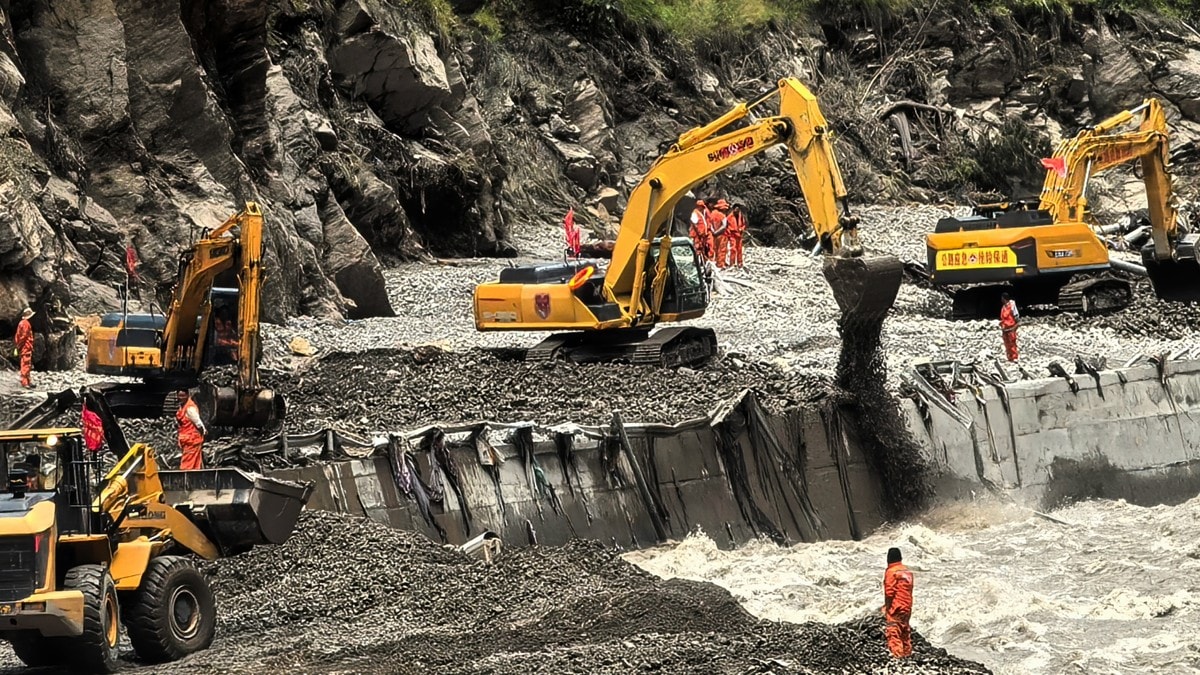
Fare for ny flom i Nepal Demningen på et vannmagasin i Nepal har bristet, melder distriktsmyndighetene. Både Kina og Nepal har stanset redningsarbeidet på grunn av faren for en ny flom.
nrk · about 4 hours ago
Nach Sturzflut in Nepal und Tibet: Überflutungsrisiko behindert Rettungseinsätze Zwei Tage nach der verheerenden Sturzflut im Himalaya ist die Zahl der Toten in Nepal nach Angaben der Behörden auf 469 gestiegen. Neue Überschwemmungen drohen. mehr...
taz.de · about 4 hours ago
Rettungseinsatz nach Sturzflut in Nepal wegen drohendem Dammbruch ausgesetzt Der See, der sich durch die Sturzflut gebildet hat, könnte bald neue Überflutungen verursachen. Die Zahl der Todesopfer ist auf mindestens 472 gestiegen, 1400 Personen gelten als vermisst
der standard · about 4 hours ago
Nepal-Tibet live: Rescuers halt operations as lake overflows in disaster zone Rescue teams have suspended operations on Friday in the heart of the Tibetan disaster zone as authorities confirm that a lake formed by a mudslide on the China-Nepal border has breached, threatening further damage. The devastating flooding in Nepal and Tibet has claimed more than 400 lives and left hundreds missing, with ongoing conditions complicating rescue efforts. Follow our liveblog for the latest updates.
france24 · about 4 hours ago

Flood risk forces halt to rescues in Tibet, as Nepal death toll rises to 469
bluesky_The Guardian · about 5 hours ago