
UK judge brands Palestine protesters as terrorists: landmark ruling sparks alarm
Story Timeline
4 months · 8 summary articles
A UK judge has for the first time applied a “terrorism connection” sentencing enhancement to criminal damage protesters, handing down custodial terms on Saturday to four Palestine Action activists convicted over a 2024 raid on an Elbit Systems arms factory in Bristol. Justice Johnson ruled that the August 2024 break-in, which caused serious damage and was explicitly intended to influence government policy, met the statutory threshold for terrorism-related aggravation under the Sentencing Act 2020. The four defendants—whose names were withheld pending sentencing remarks—now face extended determinate sentences, with legal observers noting this marks a landmark expansion of terrorism sentencing into protest-related conduct .
The ruling comes amid a parallel surge in far-right unrest across Northern Ireland, where police have traced coordinated rioting in Belfast to online agitation by foreign actors. Officers told the *Irish Times* that social media networks spanning Ireland, Britain and continental Europe were used to orchestrate attacks on migrant housing and police stations, with commanders describing the disturbances as “a modern-day pogrom” in working-class districts such as Glengormley .
In London, Metropolitan Police invoked a contested ban on Palestine Action to detain 72 supporters outside Woolwich Crown Court on Friday, where the activists were being sentenced. The force maintained the ban despite a High Court ruling earlier this year that found the proscription unlawful, prompting immediate legal challenges from civil liberties groups .
The combustible mix of protest and rioting has been further inflamed by viral misinformation. Researchers at the *Journal.ie* documented how Elon Musk’s X platform amplified decontextualised footage of a knife attack in Belfast—later revealed to involve a Sudanese refugee—to millions of users, fuelling demands for retributive violence .
Commentators warn that graphic imagery, once confined to courtrooms, now circulates unchecked on social feeds, reshaping public perception faster than institutions can correct the record. “Some politicians know images supersede inconvenient facts,” wrote Guardian assistant editor Jason Okundaye, “and Labour has no good response.” With by-elections looming, the episode underscores how digital virality is redefining both protest and policing in real time .
Follow us for live European news
- 2
- 1
- 1
- 1
- 1
1 further source not geolocated
Articles

72 arrested at London protest backing Palestine Action activists Metropolitan Police detained 72 people outside Woolwich Crown Court on Friday as hundreds gathered to support four activists facing sentencing for an Elbit Systems factory raid, with authorities enforcing a ban on the proscribed group despite a High Court ruling earlier this year that found the proscription unlawful.
yenisafak · 3 months ago
UK judge rules Elbit protesters face terrorism connection sentencing Justice Johnson said the Palestine Action activists convicted over the August 2024 raid on Elbits Bristol facility caused serious damage with intent to influence government policy, marking the first time in British legal history that criminal damage protesters face a "terrorism connection" sentencing enhancement.
yenisafak · 3 months ago
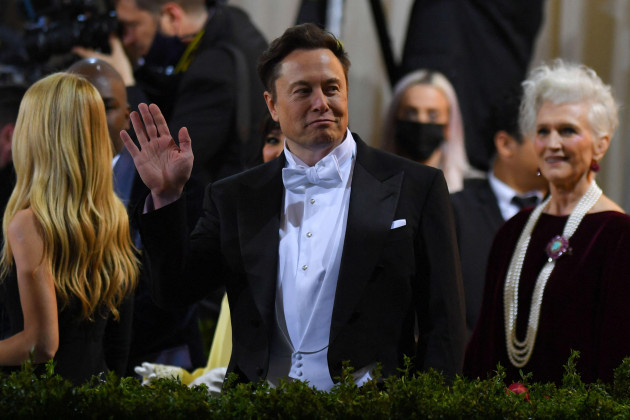
Researchers say Elon Musk instrumental in amplifying anti-migrant narratives after Belfast knife attack He used the Belfast tragedy to amplify anti-migrant narratives to millions of users, prompting endless calls for violence, said the tech watchdog.
thejournal · 3 months ago
The right has created a false reality – fuelled by toxic images delivered straight to your phone | Jason Okundaye After a week of violence and discord, this is clear: some politicians know images supersede inconvenient facts. And Labour has no good responseWhen voters in Makerfield head to the polls next week, their decision, as is increasingly the case across the nation, may come down to this: whether to be more swayed by a hopeful vision of the UK or by a narrative that defines the country as little more than the most shocking thing they have seen on their phone that day.That quandary has been sharpened by something that has quietly become a regular fixture of social media: members of the public are now consistently fed a stream of exceptional images and videos that once might have only been seen by investigators or from the inside of a courtroom. It is so regular that it has become banalised, whether its of robbers smashing up a jewellery shop, or of extreme and graphic assaults akin to snuff films.Jason Okundaye is a Guardian Opinion assistant editor Continue reading...
theguardian · 3 months ago
Riots and racism: why is the UK burning? Claims of two-tier policing and uncontrolled immigration may not be borne out by the facts, but that has not stopped them being played up for political endsAs the people of Glengormley, on the northern edge of Belfast, tidied up and prepared for more violence in the midst of what has been described as a modern-day pogrom, a court 500 miles away in Southampton, on the south coast of England, started to deal with its own outbreak of thuggery.The trigger for this weeks riots in the Northern Irish capital had been the image of a black assailant who appeared to be stabbing and slashing his supine white victim in the face and neck while shouting in Arabic. The suspect was later revealed to be a refugee from Sudan. Continue reading...
theguardian · 3 months ago
The X factor: how foreign agitators helped spark racist riots across the North Notable co-ordination via online social media activity from within North and outside the island of Ireland, say police
irish times · 3 months ago
UK court jails Palestine Action activists on terrorism charges UK court has sentenced four pro-Palestine activists to jail for a raid on an Israeli arms factory near Bristol in 2024.
aljazeera · 3 months ago
![Le rôle « déterminant » dElon Musk dans lamplification des discours xénophobes liés aux émeutes à Belfast « En tant que propriétaire de X et utilisateur le plus suivi, [Elon] Musk dispose dun pouvoir sans équivalent pour façonner ce que voient les internautes », relèvent les chercheurs de lONG Center for Countering Digital Hate. Le milliardaire avait appelé ses abonnés à protester et reposté des messages de leaders dextrême droite.](https://img.lemde.fr/2026/06/12/458/0/5500/2750/644/322/60/0/3e863fd_ftp-1-m9oeyp32fm09-2026-06-12t151918z-1906226523-rc2dslazylgw-rtrmadp-3-spacex-ipo.JPG)
Le rôle « déterminant » dElon Musk dans lamplification des discours xénophobes liés aux émeutes à Belfast « En tant que propriétaire de X et utilisateur le plus suivi, [Elon] Musk dispose dun pouvoir sans équivalent pour façonner ce que voient les internautes », relèvent les chercheurs de lONG Center for Countering Digital Hate. Le milliardaire avait appelé ses abonnés à protester et reposté des messages de leaders dextrême droite.
le monde · 4 months ago
The consequences of online race hatred are playing out on Belfasts streets Malign social media automates division — I saw the effects in our city this week
financial times · 4 months ago

Dutch far-right party pays damages to court artist after changing image with AI Geert Wilders PVV altered sketch of jailed Syrian brothers to make them look more menacingA Dutch court artist has received damages after an MP for the far-right Party for Freedom (PVV) used one of her drawings without permission and manipulated it with AI to make the subjects look more menacing.Petra Urban, a court artist for 19 years, was shocked to discover a drawing she had made last year of two Syrian brothers jailed for the murder of their sister had been reworked and used in a video on Instagram and Facebook by the partys Noord-Brabant region. Continue reading...
theguardian · 4 months ago