
Defence Secretary John Healey quits, accusing Starmer of failing Britains armed forces
Story Timeline
4 months · 6 summary articles
John Healey, Britain’s Defence Secretary, resigned on Thursday, delivering a scathing public rebuke to Prime Minister Keir Starmer and plunging the government into its deepest crisis yet. In a resignation letter posted on X, Healey accused Starmer of failing to provide the resources needed to defend the country, warning that the government’s Defence Investment Plan falls “well short of what is required at such a dangerous moment.” The move comes amid growing international threats and intensifies pressure on Starmer’s already fragile authority.
Healey’s departure marks the fourth cabinet resignation since Labour took power, and his criticism struck at the heart of Starmer’s leadership. In his letter, he stated that the prime minister and Chancellor Rachel Reeves were “unable and unwilling” to secure the essential budget for Britain’s armed forces, leaving the military vulnerable at a time of heightened global instability. The Defence Investment Plan, long delayed and now underfunded, has been a point of contention for months, with negotiations between the Ministry of Defence and the Treasury repeatedly stalling.
The resignation was met with immediate political fallout. Opposition parties, including the Conservatives, SNP, Reform, and Lib Dems, seized on the crisis to question Starmer’s competence. Labour MPs, too, have begun to voice concerns, with some calling for a rethink of defence spending priorities. The timing could not be worse: with a by-election looming and Starmer’s premiership under sustained attack, the loss of a key ally like Healey—once seen as a loyalist—signals deepening fractures within the government.
Analysts suggest Healey’s exit may be the final straw for a leadership already struggling to maintain control. His resignation letter, described by one commentator as “polite but deadly,” underscored the personal and political stakes. Unlike previous cabinet departures, Healey’s came without warning, catching even government insiders off guard. His absence from the Commons benches during Prime Minister’s Questions on Wednesday, where he stood apart from other ministers, now appears ominous in hindsight.
The broader context is one of mounting pressure on European defence budgets as Russia’s aggression in Ukraine and rising tensions in the Indo-Pacific demand urgent investment. Britain, like its allies, faces a stark choice: either scale back military ambitions or risk leaving the armed forces dangerously underprepared. Starmer’s government, which has promised fiscal discipline, now confronts a stark reality: national security cannot be deferred indefinitely.
For now, Starmer must navigate the fallout, with speculation already swirling about a potential reshuffle—or worse. But one thing is clear: Healey’s resignation has not only exposed the fragility of Starmer’s leadership but also the high cost of failing to match rhetoric with resources in an era of growing peril.
Follow us for live European news
- 3
- 2
- 2
- 1
- 1
- 1
- 1
- 1
- 1
- 1
- 1
- 1
2 further sources not geolocated
Articles

John Healeys resignation heralds the end for Keir Starmer Whatever chance there was of the PM clinging on seems gone now
new statesman · 4 months ago
Starmers leadership isnt sustainable Labour MPs react to John Healeys resignation
new statesman · 4 months ago
Britský ministr obrany Healey rezignoval. ‚Nebyl jste schopen vyčlenit prostředky, vzkázal Starmerovi Britský ministr obrany John Healey ve čtvrtek rezignoval kvůli sporu s premiérem Keirem Starmerem, který podle ministra nevyčlenil dostatek zdrojů potřebných k obraně země. Healey oznámil demisi na síti X. Britské ministerstvo obrany a ministerstvo financí již několik měsíců jednají o tom, jak naplnit rostoucí požadavky na zvýšení vojenských výdajů. Britský dlouhodobý plán investic do obrany je kvůli tomu odkládán již od loňského roku.
irozhlas.cz · 4 months ago
Regierungskrise in London: Britischer Verteidigungsminister tritt zurück Der britische Verteidigungsminister John Healey ist zurückgetreten. Healey begründete dies mit Keir Starmers Plänen für den Verteidigungsetat. mehr...
taz.de · 4 months ago
Ministrul britanic al Apărării a demisionat Secretarul Apărării din Marea Britanie, John Healey, a demisionat joi din guvernul aflat în dificultate al lui Keir Starmer, pe fondul unei dispute de lungă durată privind finanțarea forțelor armate ale țării. El și-a anunțat decizia pe rețelele de socializare, invocând lipsa de disponibilitate a prim-ministrului Keir Starmer și a Trezoreriei de a furniza resursele necesare pentru apărarea țării.
digi24 · 4 months ago
Defensieminister VK stapt op om geldtekort voor Britse strijdkrachten, heeft pittige kritiek op reeds verzwakte premier Starmer Defensieminister John Healey gold als een belangrijke bondgenoot van Keir Starmer. Zijn ongezouten ontslagbrief komt volgens Britse media dan ook als een verrassing – en bovendien op een kwetsbaar moment voor de premier.
nrc · 4 months ago
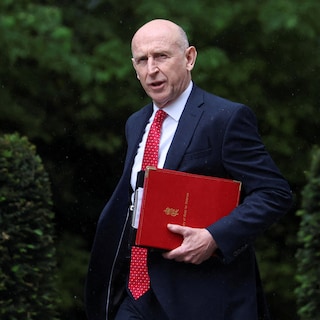
Britse defensieminister stapt op omdat zijn departement te weinig geld krijgt
de volkskrant · 4 months ago
Royaume-Uni: démission choc du ministre de la Défense, un nouveau coup dur pour Keir Starmer Très contesté depuis plusieurs semaines déjà, le Premier ministre britannique Keir Starmer subit une nouvelle épreuve avec lannonce, jeudi 11 juin, de la démission du ministre de la Défense John Healey. Ce dernier a exprimé son désaccord avec le chef du gouvernement travailliste sur le niveau des investissements requis dans le domaine militaire.
rfi.fr · 4 months ago

U.K. Defense Secretary Quits Over Lack of Military Spending Governments across Europe are trying to figure out how to fund a major overhaul of their militaries in the shadow of a bellicose Russia.
wsj · 4 months ago

Government will do all it can for festivals after ticket firm collapse, minister says One country music festival says its owed €135,000 after Irelands largest ticketing company went bust.
thejournal · 4 months ago
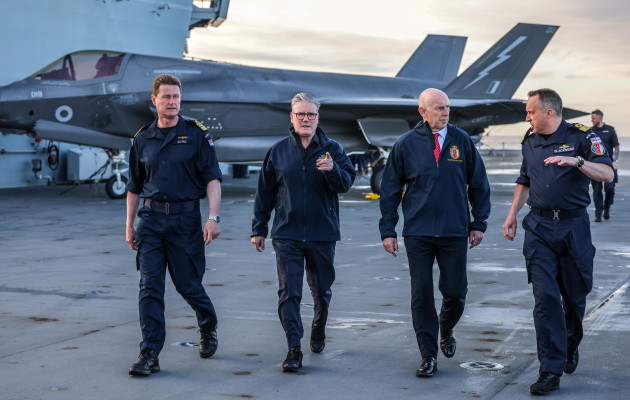
Starmer premiership falling apart as another minister quits and clock ticks down to byelection John Healey is the fourth cabinet minister to leave Starmers government since Labour came to power.
thejournal · 4 months ago
UK: Defense Secretary John Healey quits in spending dispute
gdeltproject.org · 4 months ago
UK defence minister quits, plunging PM Starmer deeper into leadership crisis - Breaking News
gdeltproject.org · 4 months ago
UK defence secretary resigns over spending plan John Healey says Keir Starmer unable and Treasury unwilling to provide essential budget
financial times · 4 months ago
Time to axe unfair pensions triple lock, says UKs cost of living tsar Iceland chair Lord Richard Walker, appointed by Starmer in February, calls system mathematically unsustainable
financial times · 4 months ago
TalTech wants to terminate ministry cooperation agreement over difference of views Tallinn University of Technology (TalTech) has proposed terminating its contract with the Ministry of Economic Affairs and Communications (MKM) to develop online courses for occupational health and safety specialists, citing significant differences between the parties views on the scope and methodology of the courses.
news.err · 4 months ago

Starmers premiership falling apart, opponents claim, after Healey resigns over defence funding – UK politics live Tories, SNP, Reform and Lib Dems all turn fire on PM with as Labour figures also call for greater defence spendingRyan Henderson, assistant chief constable for the Police Service of Northern Ireland, is about to hold a press conference about last nights rioting.Andy Burnham is facing criticism after saying that he thinks the Waspi women should be entitled to some compensation.Ill stick by the Waspi women because they deserve some recompense for the unfairness.One government figure decried Burnhams intervention as pathetic, adding: He cant say no to anyone.An ally of Sir Keir Starmer likened Burnhams economic agenda to that of hard-left former Labour leader Jeremy Corbyn, and argued that the mayors intervention would harm his chances of manoeuvring the prime minister out of Downing Street.Andy Burnhams continued support for Waspi women is both welcome and hugely refreshing. While some politicians have broken their promises, it takes real courage to speak out and say what millions of people across the country and hundreds of MPs from all parties already know - that 1950s-born women deserve justice.Andy has always recognised the unfair way in which state pension equalisation was introduced.As mayor of Greater Manchester, he supported Waspi women in the city-region with early access to concessionary travel, providing some recompense to them within affordability limits. Continue reading...
theguardian · 4 months ago

Polite but deadly: John Healey skewers Keir Starmer as he heads for the door | John Crace The defence secretarys departure was the wrong resignation at the worst possible time for the prime ministerUK politics live – latest updatesDuring Wednesdays prime ministers questions, the defence secretary was standing at the other end of the Commons, away from other cabinet members on the government frontbench. His expression gave nothing away as Keir Starmer and Kemi Badenoch blamed one another for spending too much on welfare and not enough on defence. In hindsight, he was possibly thinking to hell with both of them. Most defence secretaries go native sooner or later, imagining themselves to be embedded officers serving on the frontline. Tory Ben Wallace appeared to hate most of his cabinet colleagues by the time he resigned in 2023.Less than 24 hours after PMQs, Healey had also resigned, his departure being all the more powerful for being so unexpected. This exit seemed to come out of a clear blue sky. There had been no briefings to the media in the preceding days. No threats to stand down if his demands were not met. All the arguments had taken place behind closed doors. A determination to do the right thing throughout. Continue reading...
theguardian · 4 months ago

Healey quits as defence secretary in row with Starmer over military spending Minister accuses Keir Starmer of putting UKs security at risk at a time of growing international threatsUK politics live – latest updatesThe defence secretary, John Healey, has resigned over the governments military spending plans, accusing Keir Starmer and Rachel Reeves of putting the countrys security at risk at a time of growing international threats.In a blistering resignation letter that further undermines the prime ministers already fragile authority, Healey said the long-awaited defence investment plan (Dip) fell well short of what was needed to protect the UK at such a dangerous moment. Continue reading...
theguardian · 4 months ago
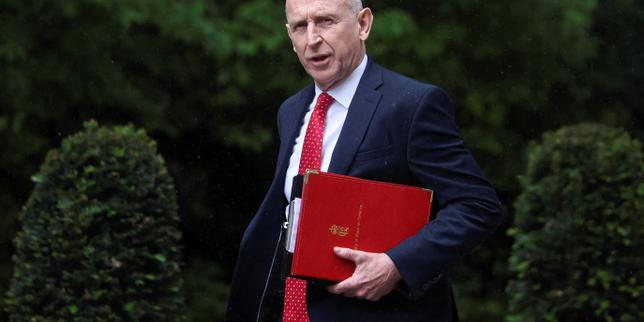
UK defense minister quits with stinging rebuke of PM Starmer John Healey accused UK Prime Minister Keir Starmer of failing to commit enough money to defense spending.
le monde · 4 months ago

Amaury Bertholomé, ancien chef de cabinet MR, dirigera Wallonie Entreprendre Cet ancien collaborateur parlementaire dirigeait le circuit de Spa-Francorchamps. ...
la libre · 4 months ago
Storbritanniens försvarsminister avgår Storbritanniens försvarsminister John Healey avgår meddelar han i ett brev till premiärminister Keir Starmer.
expressen · 4 months ago

El ministro de Defensa británico dimite por la falta de recursos para defender el país John Healey acusa a Keir Starmer de no facilitar la renovación del Ejército
la vanguardia · 4 months ago
Britse defensieminister stapt op vanwege onenigheid met Starmer over budget De Britse minister van Defensie John Healey stapt op, omdat hij het niet eens is met het budget dat de regering wil vrijmaken voor zijn ministerie. Volgens hem is het bedrag dat zijn ministerie de komende jaren krijgt niet voldoende.
nu.nl · 4 months ago
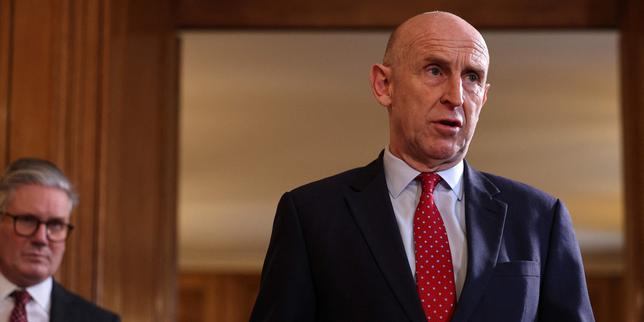
Royaume-Uni : le ministre de la défense, John Healey, en désaccord avec Keir Starmer, démissionne Le ministre de la défense britannique a annoncé jeudi sa démission, exprimant son désaccord à propos dun plan dinvestissement à long terme dans la défense.
le monde · 4 months ago